Artwork
Untitled
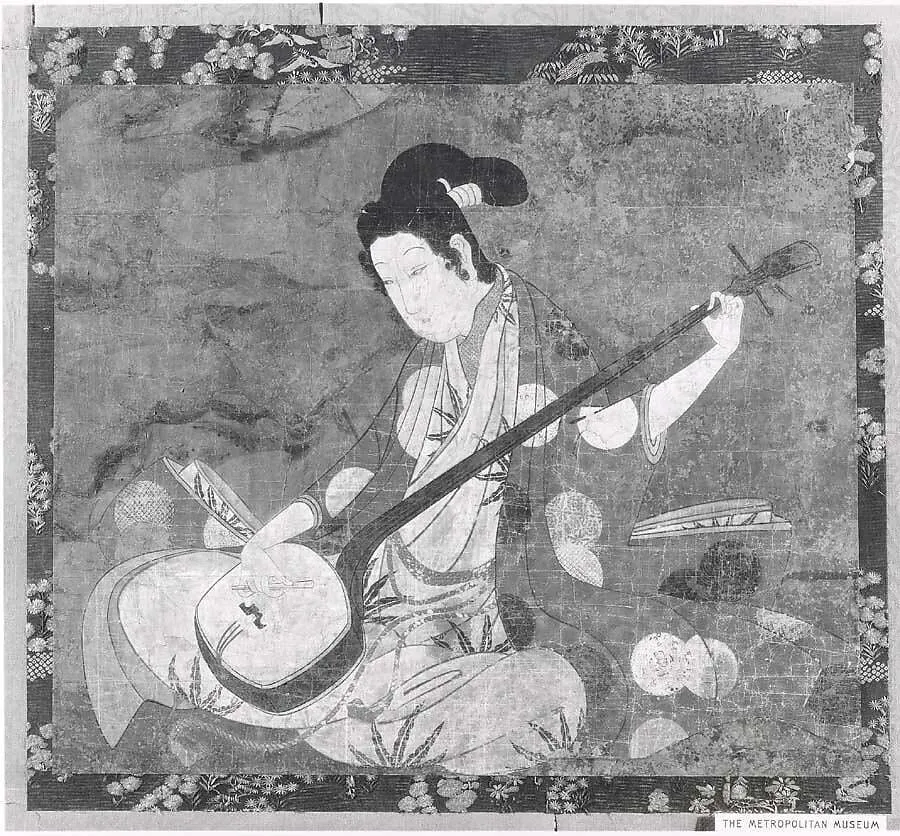
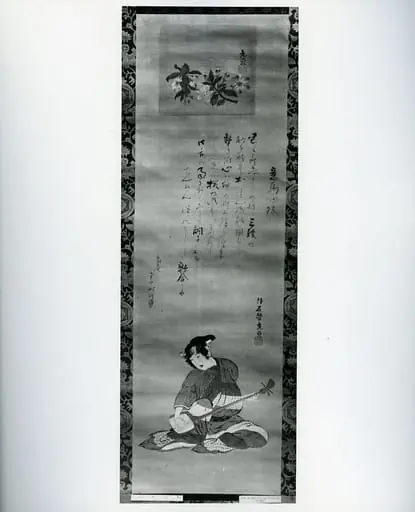
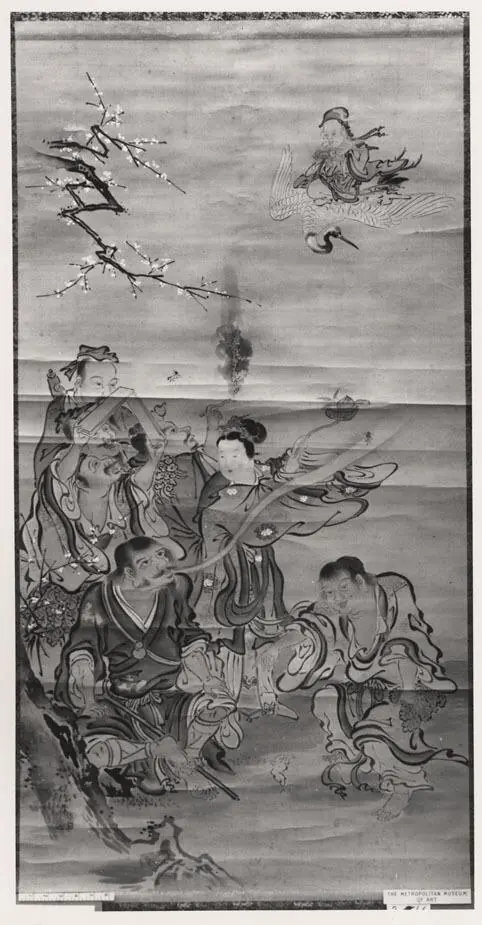
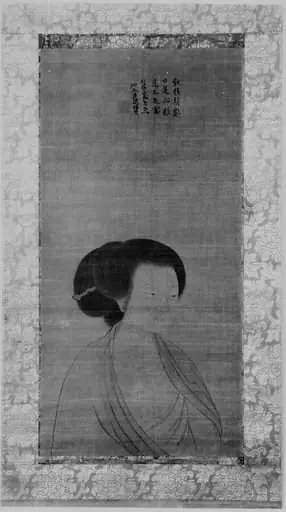
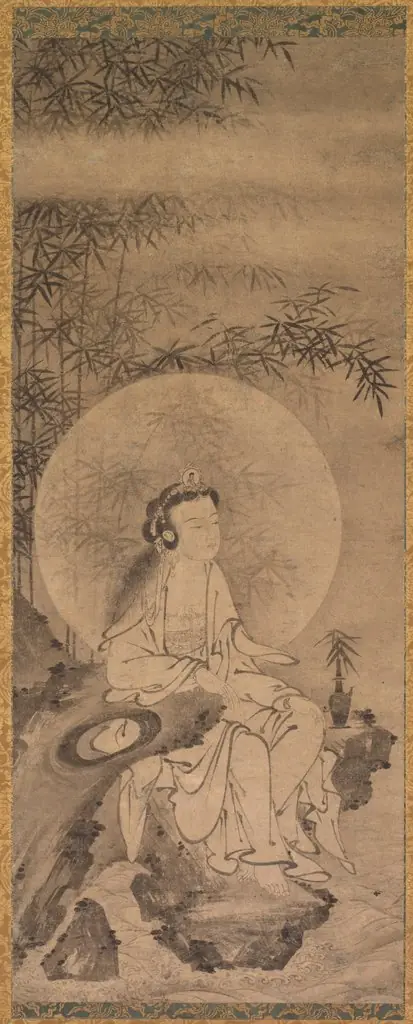
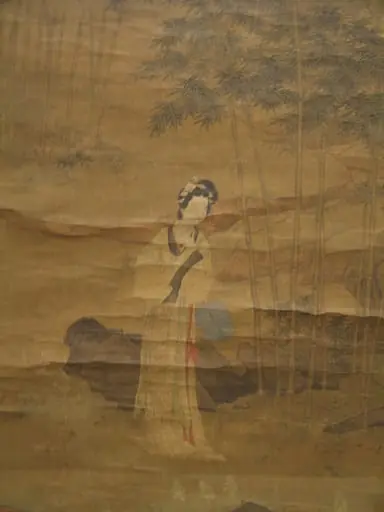
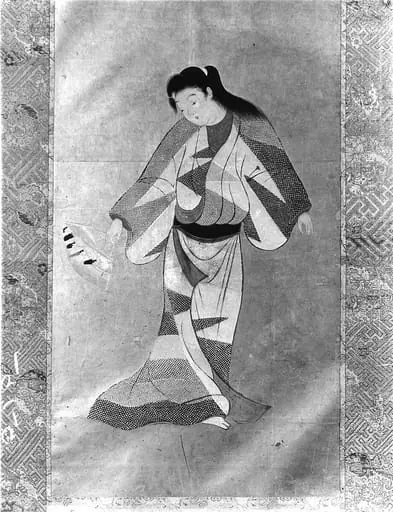
Untitled is an ink painting. It dates from 1638 and is held in the collection of the Metropolitan Museum of Art. This work consists of a remounted fragment of a traditional Japanese folding screen, rendered in ink and color on paper.
About this work
Overview
This work consists of a remounted fragment of a traditional Japanese folding screen, rendered in ink and color on paper. The scene captures a seated woman gently plucking a three‑stringed shamisen, while a backdrop of stylized bamboo and clouds recedes behind her. The piece is presented as a standalone panel after being detached from its original larger composition.
Subject & Meaning
The central figure engages in a quiet musical activity, suggesting themes of domestic leisure and cultural refinement. The surrounding bamboo and cloud motifs, rendered in soft ink washes, evoke a serene natural setting, reinforcing the contemplative mood of the scene.
Technique & Style
Executed with brushwork typical of Japanese screen painting, the artist employed delicate ink lines and subtle color washes to define both figure and landscape. The composition balances detailed rendering of the musician’s hands with the more atmospheric treatment of the background elements.
History & Provenance
The original creator and precise date of the screen remain unidentified. At some point the larger screen suffered damage, and this segment was cut from the whole and adhered to a new backing for preservation, leaving faint crease marks that hint at its former folded state.
Context
Folding screens (byōbu) were commonly used in Japanese interiors to partition space and display decorative art. Musical subjects, especially the shamisen, frequently appeared in such works, reflecting the instrument’s popularity among both aristocratic and common households during the Edo period.
Artist & collection