Artwork
Untitled
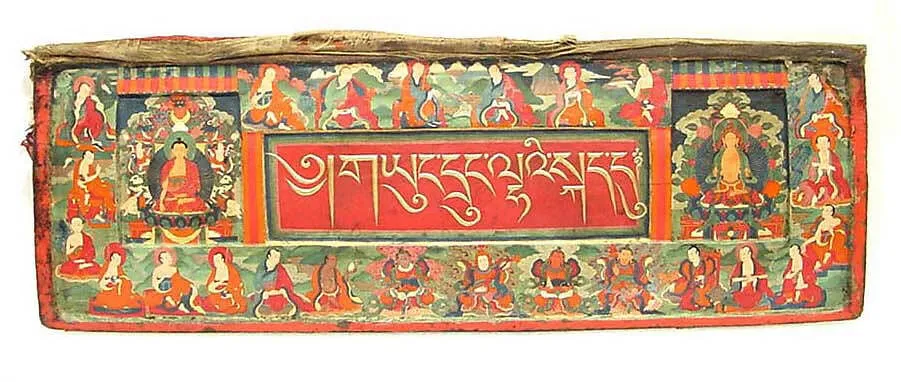
Untitled is a distemper painting. It dates from 1683 and is held in the collection of the Metropolitan Museum of Art.
About this work
Overview
The work is a painted silk cover executed in distemper on board, measuring a modest size that allows for an intricate arrangement of miniature scenes.
The work is a painted silk cover executed in distemper on board, measuring a modest size that allows for an intricate arrangement of miniature scenes. Central to the composition is a vivid red banner bearing gold lettering, surrounded by rows of figures in varied postures and attire. At the upper edge, two large golden Buddhas face each other, flanked by smaller attendant figures set within cloud motifs and throne-like platforms. The border is outlined in alternating red and green bands, punctuated with tiny floral and animal motifs.
Subject & Meaning
The central banner, inscribed in an archaic script, likely conveys a devotional text or title, anchoring the visual narrative in a religious context. The paired Buddhas, rendered in gold, suggest a duality common in Buddhist iconography, perhaps representing complementary aspects of enlightenment. Surrounding the central motif, the multitude of robed and brightly clothed figures—some kneeling, others standing—evoke a gathering of devotees, celestial beings, or monastic participants, reinforcing the work’s ceremonial function.
Technique & Style
Distemper, a water‑based pigment mixed with a binding agent, is applied to a prepared board and then covered with silk, creating a smooth yet absorbent surface for fine detailing. The artist employs a vivid palette of reds, golds, greens, and blues, achieving contrast through flat color fields and delicate line work. The composition is densely packed, with repetitive motifs and miniature figures rendered in a stylized, ornamental manner characteristic of Tibetan thangka traditions.
Context
The combination of silk, gold, and Buddhist iconography places the piece within the visual culture of Himalayan religious art, where painted covers were used to adorn sacred texts, altars, or ritual objects. The presence of both large and diminutive figures, as well as the use of an old script, points to a specific liturgical or monastic setting, likely intended for contemplation or as a visual aid during devotional practice.
Artist & collection

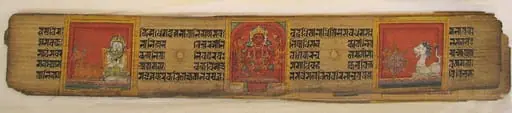 Untitled
 Untitled
 Untitled
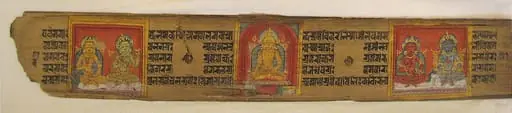 Untitled
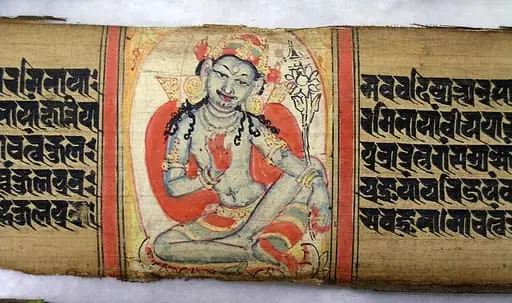
 Prajnaparamita flanked by a white female figure and a white bodhisattva, folio 90 (recto), from a Manuscript of the Perfection of Wisdom in Eight Thousand Lines (Ashtasahasrika Prajnaparamita-sutra)
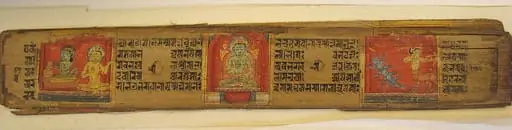
 Bodhisattva Manjushri with two forms of Avalokiteshvara, folio 348 (recto) from a Gandavyuha-sutra (Scripture of the Supreme Array)
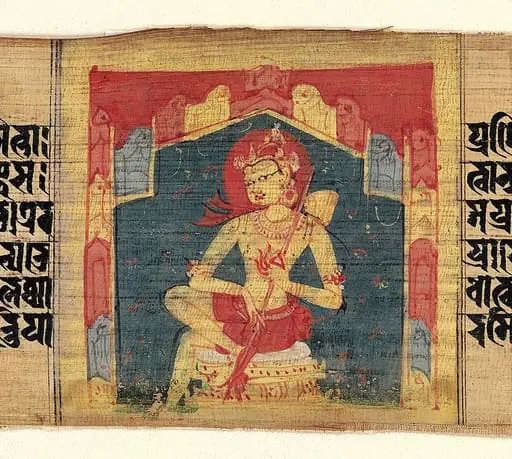 Untitled