Artwork
Untitled
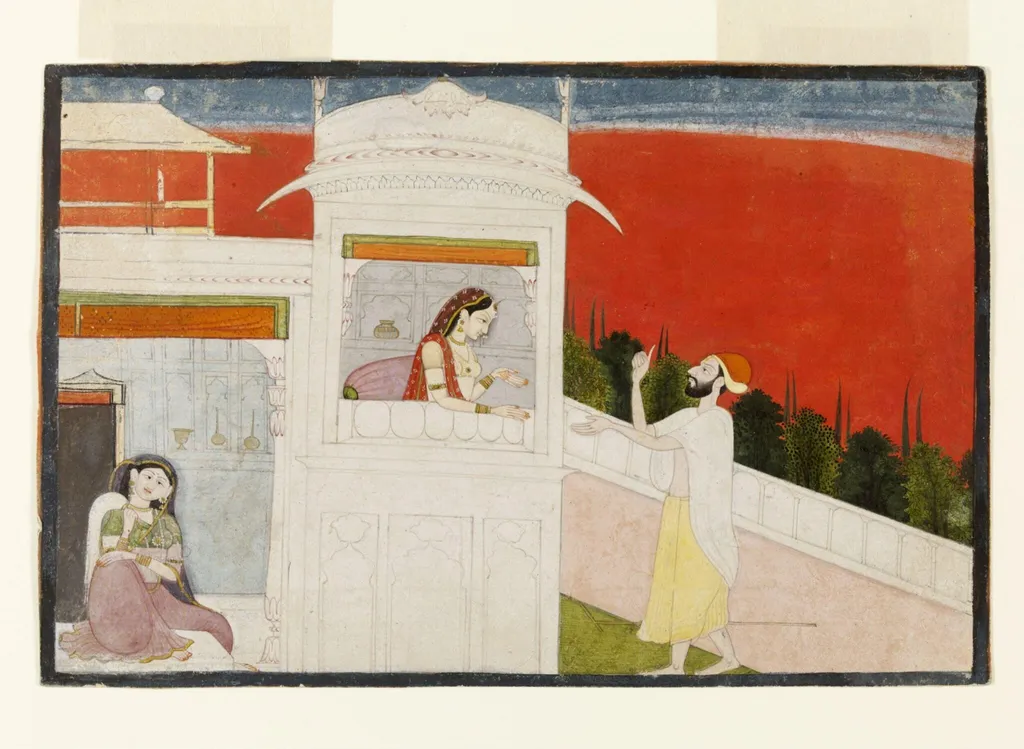
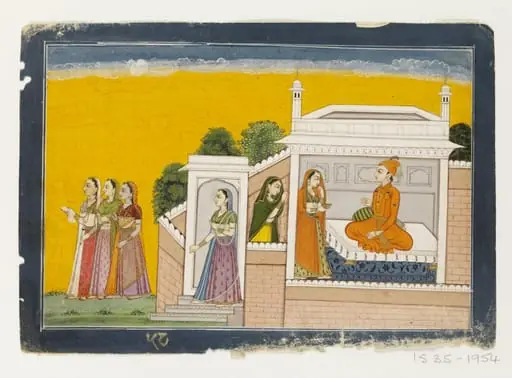
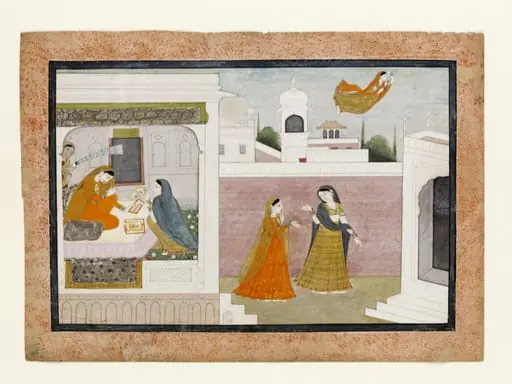
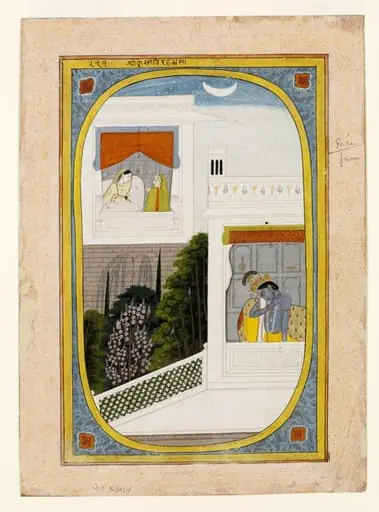
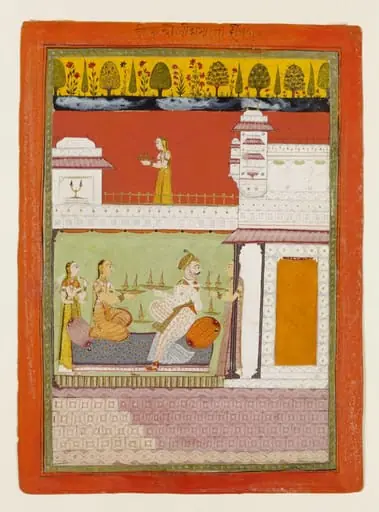
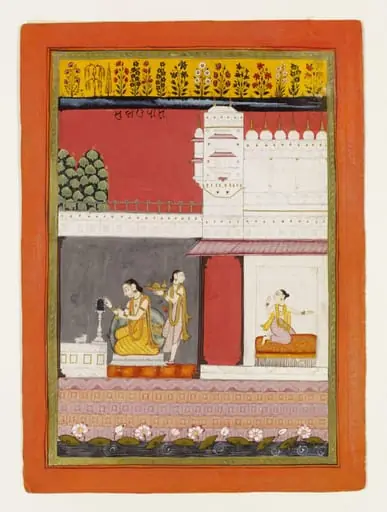
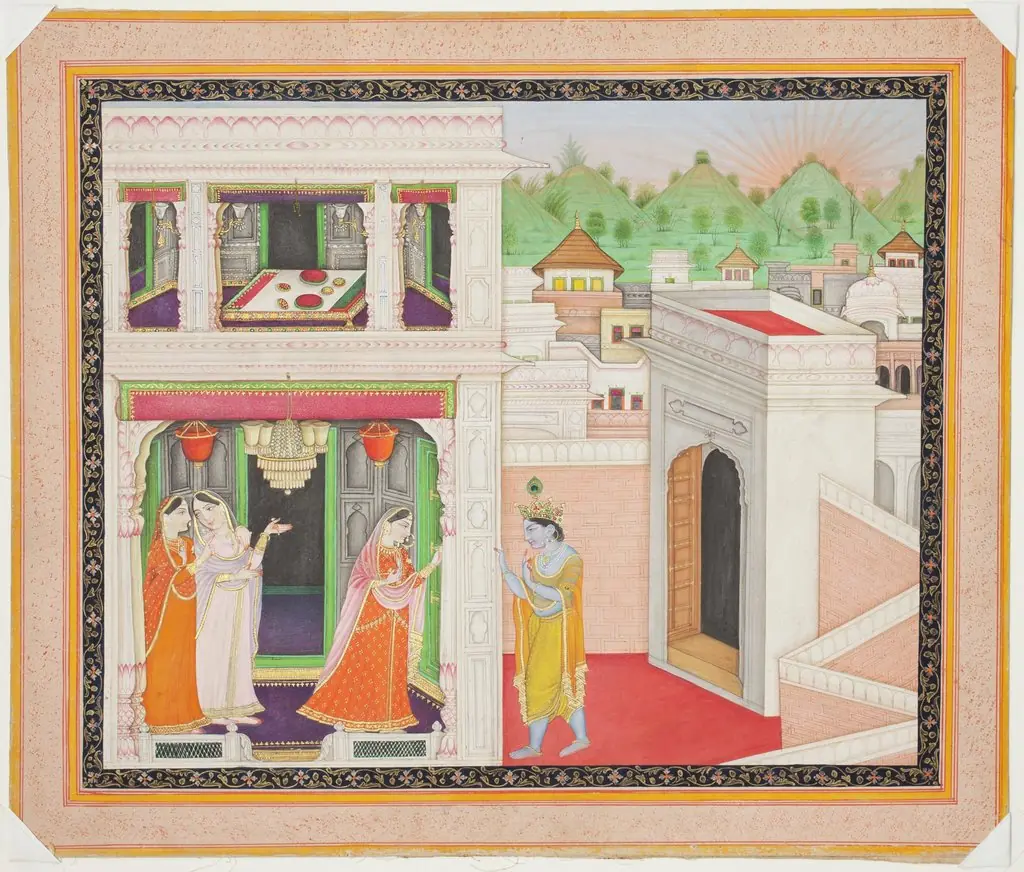
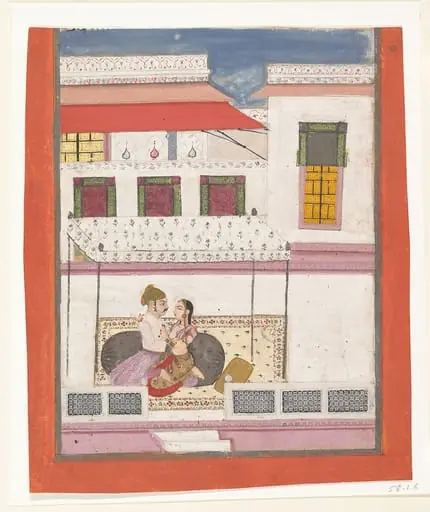
Untitled is a paint painting by the Rococo painting artist Unknown. It dates from 1775 and is held in the collection of the Victoria and Albert Museum. This painting depicts a moment from the Hindu legend of Krishna and Rukmini, specifically the event known as Rukmini-Harana.
About this work
Overview
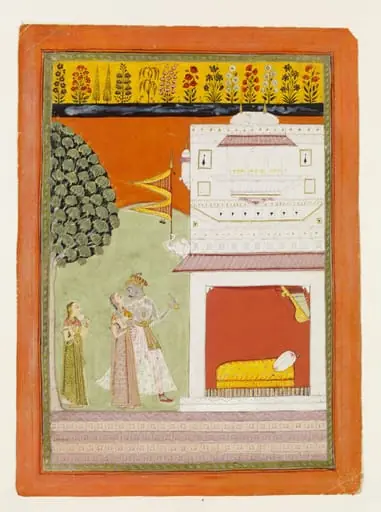
This painting depicts a moment from the Hindu legend of Krishna and Rukmini, specifically the event known as Rukmini-Harana. It captures Rukmini in a pavilion as she receives a message from Krishna’s envoy, announcing his plan to rescue her from an unwanted marriage. The composition centers on emotional anticipation, framed by a vivid red backdrop that heightens the intensity of the moment.
Subject & Meaning
Rukmini, depicted with quiet joy, listens to Krishna’s messenger, whose raised hand signals verbal communication. The scene conveys her relief and devotion, as Krishna’s intervention represents divine love overcoming social obligation. The narrative underscores themes of agency and spiritual union, with Rukmini’s consent central to the legend’s moral framework.
Technique & Style
The artist employs a flat, saturated red background to isolate the figures and amplify emotional tone. There is no use of chiaroscuro; instead, modeling is achieved through subtle tonal shifts and outlined forms. The figures are rendered with delicate lines and minimal depth, typical of regional Indian miniature traditions that prioritize symbolic expression over naturalism.
History & Provenance
The work originates from a Pahari school of painting, likely from the early 18th century in the Himalayan foothills. Such miniatures were often commissioned by royal patrons to illustrate devotional texts. While its exact provenance is unrecorded, stylistic elements align with workshops active in Basohli or Guler, known for their bold color use and narrative clarity.
Context
The Rukmini-Harana was a popular subject in devotional art across North India, reflecting bhakti traditions that emphasized personal devotion over ritual. Paintings like this served both as religious aids and courtly luxuries, reinforcing cultural ideals of love, duty, and divine intervention in human affairs.
Legacy
This painting contributes to a broader visual language of Hindu mythology in miniature art, influencing later regional styles. Its emotional directness and symbolic color use remain studied for how they convey spiritual narratives without reliance on Western naturalistic conventions, preserving a distinct aesthetic lineage.
Artist & collection

 Domestic Scene
 Giacomo and Cardinal Marco, investing Andrea, Abbot of San Zeno, with his Benefice
 The Nymph of Fontainebleau
 Portrait of a Woman
 Madonna and Child with Saints in the Enclosed Garden
 Venus and Minerva
 Family Group of Four on Sofa
 Wall painting from Room H of the Villa of P. Fannius Synistor at Boscoreale