Artwork
Humayan
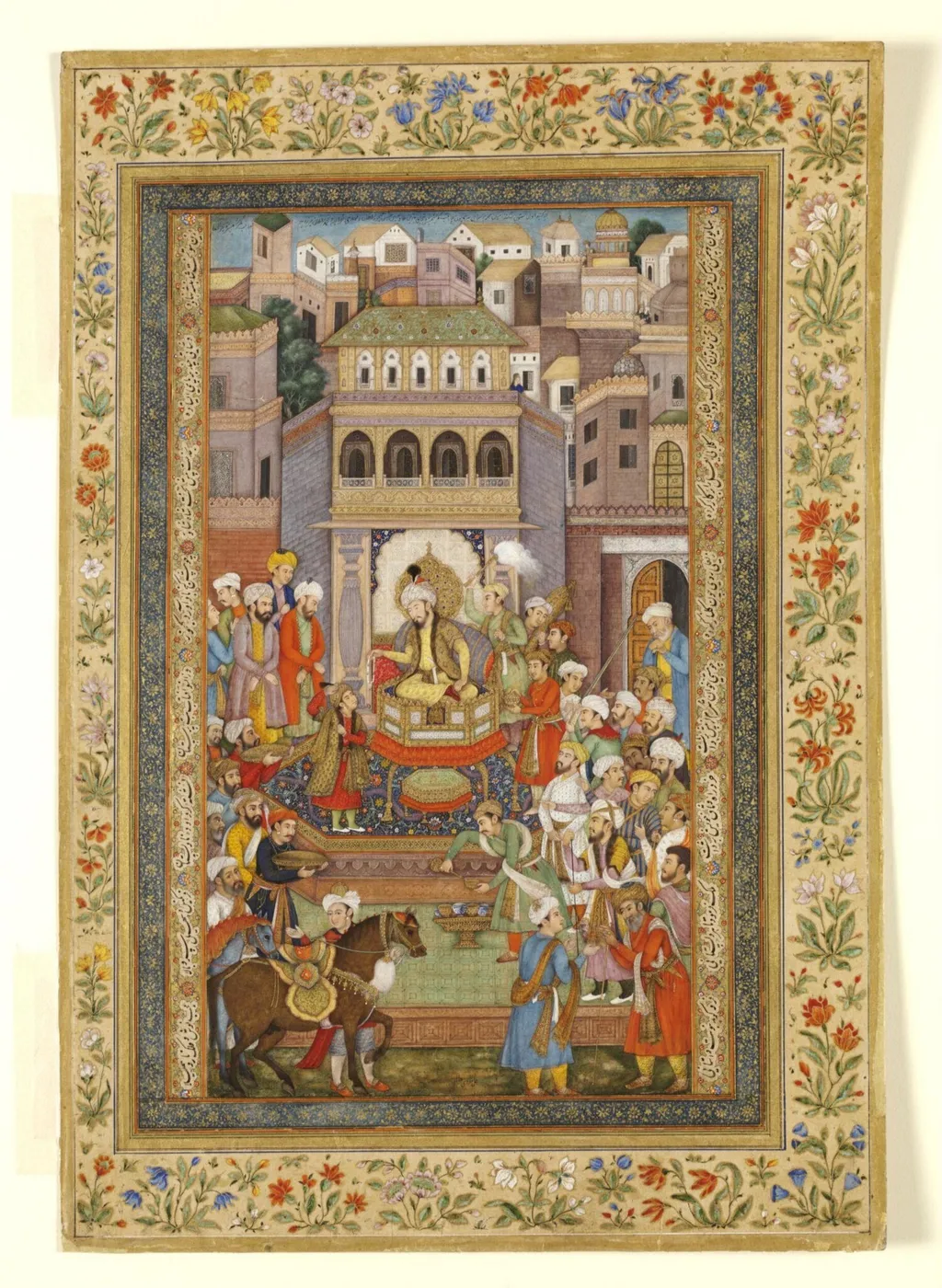
Humayan is a paint painting by the Mughal Painting artist Unknown. It dates from 1800 and is held in the collection of the Victoria and Albert Museum.
About this work
Overview
The work portrays the ceremonial gathering that marked Emperor Humayun’s accession, presenting a bustling court scene framed by a cityscape of domes and minarets beneath a clear sky. Central to the composition is a dignified figure on a raised platform, surrounded by attendants in vivid robes, creating a sense of formal celebration and public homage.
Subject & Meaning
At the heart of the painting is the newly crowned ruler, identified by his elaborate attire and the white object he holds, likely a symbol of authority. The surrounding figures—kneeling, standing, and presenting documents or gifts—convey the ritual of loyalty and the administrative procedures that accompanied a Mughal coronation.
Technique & Style
Executed in opaque watercolour enriched with gold leaf on paper, the image combines delicate washes with luminous accents. The artist employs bright, saturated pigments for the costumes and intricate floral borders, while the gold highlights emphasize the regal platform and architectural details, reflecting a decorative aesthetic typical of South Asian courtly art.
History & Provenance
The painting is a later copy of a 17th‑century original, produced to preserve the visual record of Humayun’s accession ceremony. It entered the museum’s collection through the 1920‑21 bequest of Harriet Sarah, Baroness Wantage, who contributed several works of Asian art during that period.
Context
Humayun’s accession durbar was a pivotal event in Mughal history, marking the restoration of imperial authority after a period of exile. Such courtly depictions served both as documentation of state rituals and as visual propaganda, reinforcing the legitimacy of the ruler through elaborate pageantry.
Artist & collection

 Domestic Scene
 Giacomo and Cardinal Marco, investing Andrea, Abbot of San Zeno, with his Benefice
 The Nymph of Fontainebleau
 Portrait of a Woman
 Madonna and Child with Saints in the Enclosed Garden
 Venus and Minerva
 Family Group of Four on Sofa
 Wall painting from Room H of the Villa of P. Fannius Synistor at Boscoreale
 Untitled
 Narada and Suka
 Krishna and Raja Bhishmaka
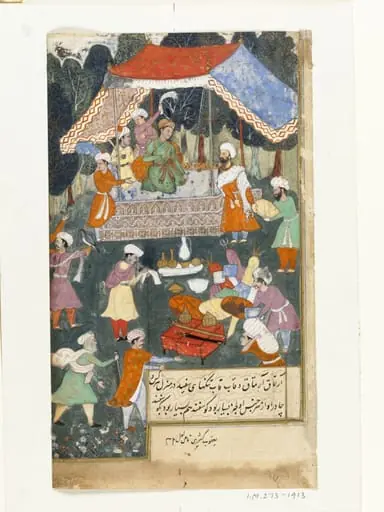 Untitled
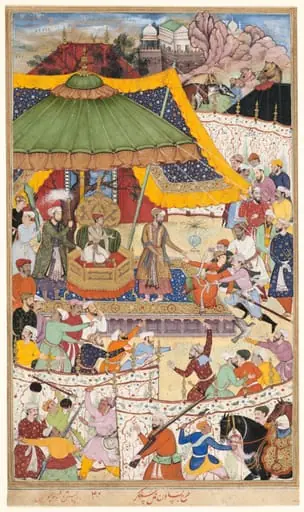 The Young Emperor Akbar Arrests the Insolent Shah Abu’l-Maali, Page from a Manuscript of the Akbarnama
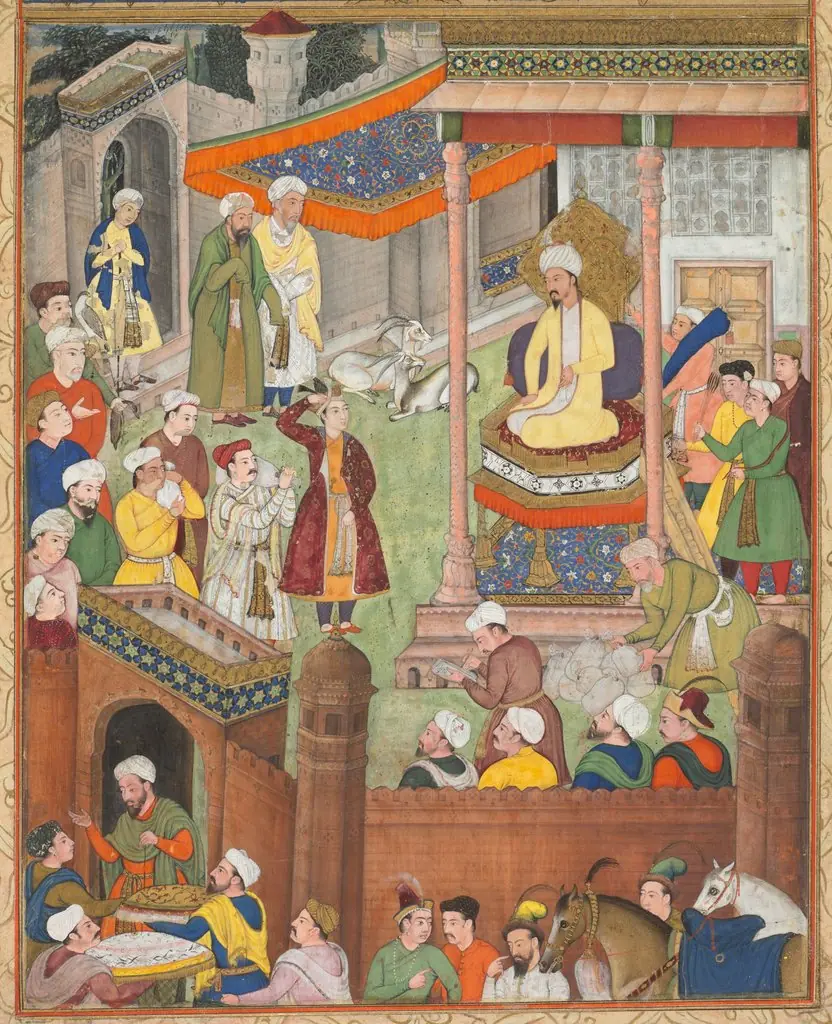 Babur receives booty and Humayun’s salute after the victory over Sultan Ibrahim in 1526, from an Akbar-nama (Book of Akbar) of Abu’l Fazl (Indian, 1551–1602)
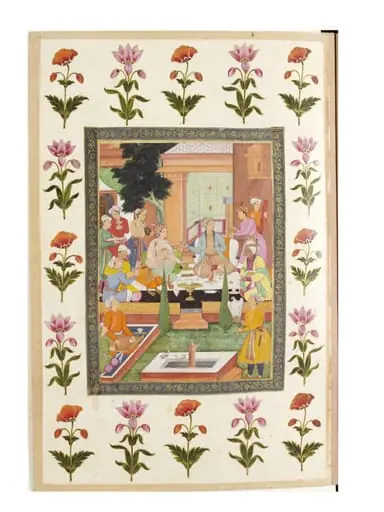 Untitled
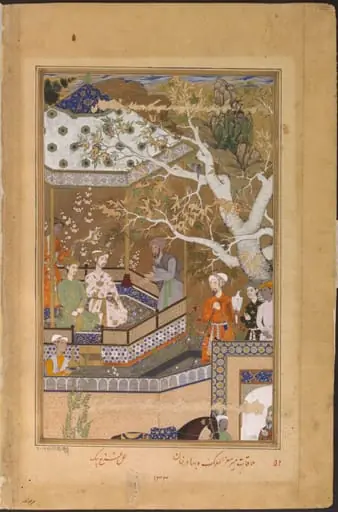 Mir Muizzu'l Mulk and Bahadur Khan
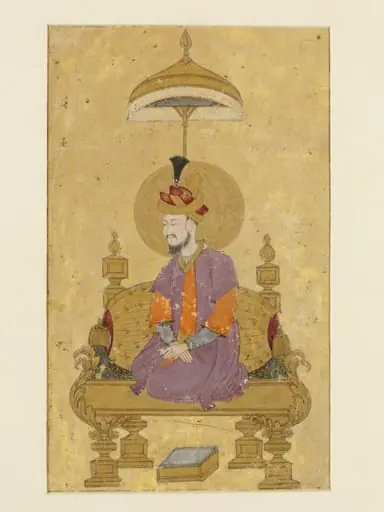 Emperor Humayan
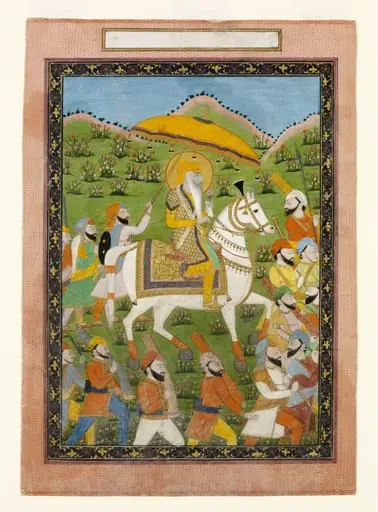 Maharaja Ranjit Singh