Artwork
Untitled
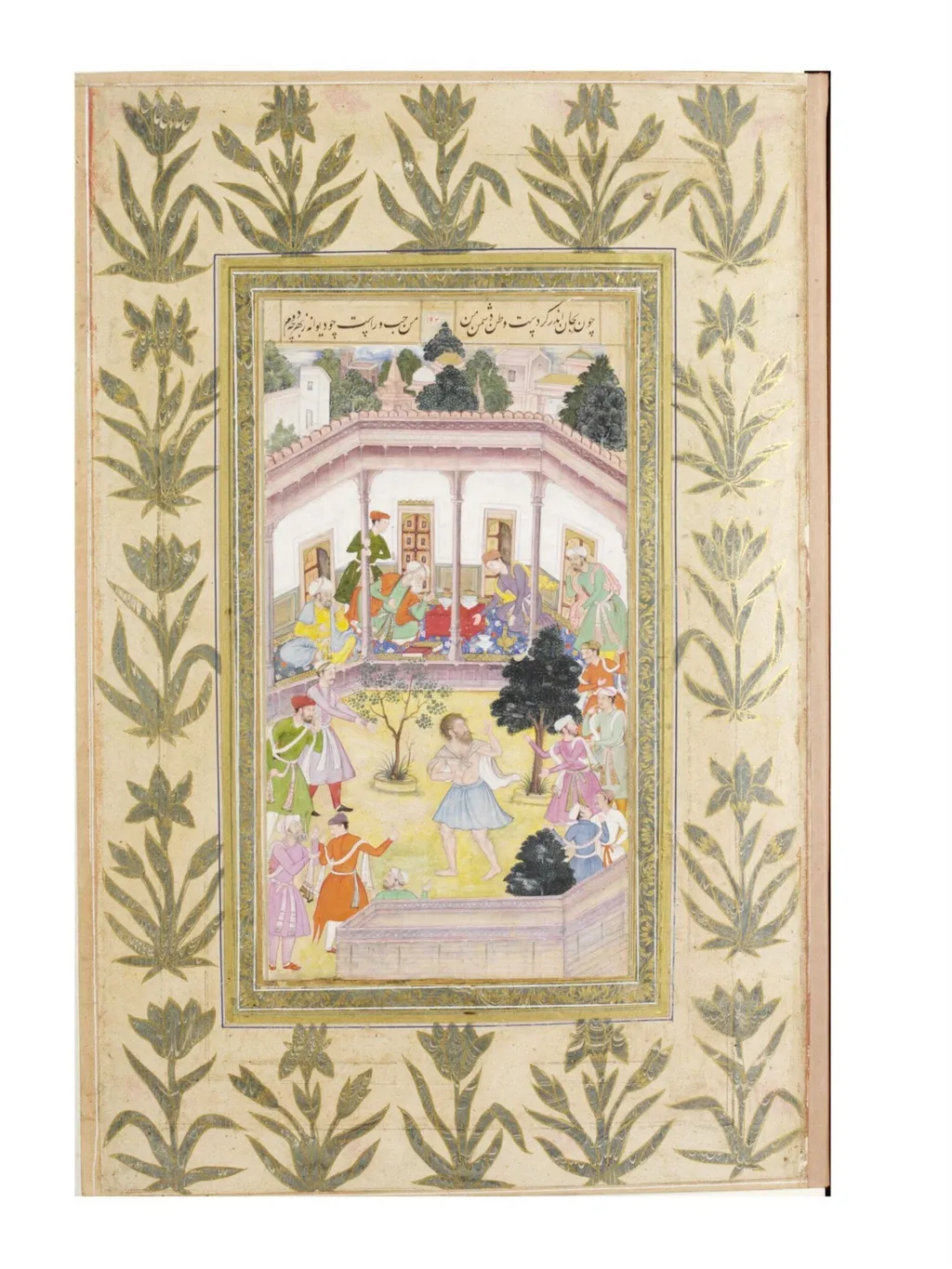
Untitled is a paint painting by the Baroque artist Unknown. It dates from 1600 and is held in the collection of the Victoria and Albert Museum. The miniature is an opaque watercolor and gold work on paper, measuring a modest size typical of Mughal albums.
About this work
Overview
It portrays a bustling courtyard scene where a dervish’s arrival draws attention, while nearby a columned pavilion hosts a conversation between two scholars.
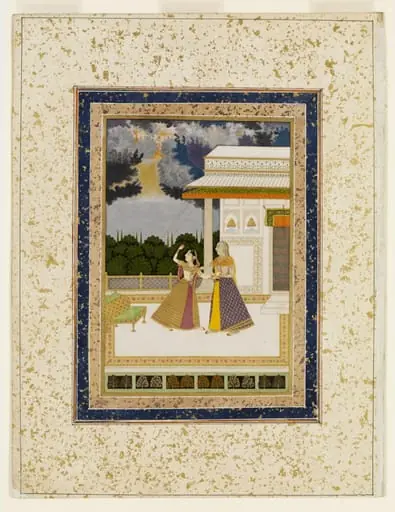
The miniature is an opaque watercolor and gold work on paper, measuring a modest size typical of Mughal albums. It portrays a bustling courtyard scene where a dervish’s arrival draws attention, while nearby a columned pavilion hosts a conversation between two scholars. Above the figures, a landscape of buildings and trees is set within two panels of poetic text, all framed by elaborate gold and colored borders.
Subject & Meaning
The central narrative captures a moment of social interaction: the dervish, a figure of spiritual significance, is highlighted in the courtyard, contrasting with the scholarly dialogue in the pavilion. The surrounding landscape and poetic inscriptions suggest a literary or courtly context, linking the visual scene to contemporary poetic themes and the patron’s cultural interests.
Technique & Style
Executed with opaque watercolor and gold leaf, the miniature displays fine brushwork and a vivid palette of reds, greens, blues, and turquoise. The composition is bounded by an inner gold scroll border on dark blue, accented with turquoise and orange outlines, and an outer ivory margin adorned with stylized lilies and irises rendered to imitate marbled paper. Additional paper strips and a pinkish‑buff gutter frame the image, emphasizing its album format.
History & Provenance
The piece belongs to the Small Clive Album, a Mughal compilation of sixty‑two leaves containing miniatures, drawings, and studies. The album was likely presented by the Nawab of Avadh to Lord Clive between 1765 and 1767. After changing hands, it was recorded in the collection of Powis Castle before being sold in 195.
Context
Created during the later Mughal period, the work reflects the court’s interest in combining Persianate literary motifs with detailed observational painting. The inclusion of scholarly figures, a dervish, and poetic text aligns with the era’s emphasis on intellectual and spiritual themes within elite visual culture.
Artist & collection

 Domestic Scene
 Giacomo and Cardinal Marco, investing Andrea, Abbot of San Zeno, with his Benefice
 The Nymph of Fontainebleau
 Portrait of a Woman
 Madonna and Child with Saints in the Enclosed Garden
 Venus and Minerva
 Family Group of Four on Sofa
 Wall painting from Room H of the Villa of P. Fannius Synistor at Boscoreale
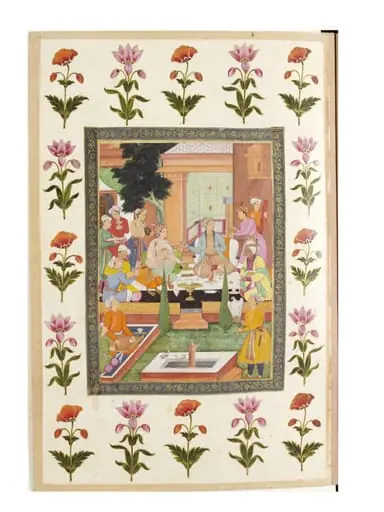 Untitled
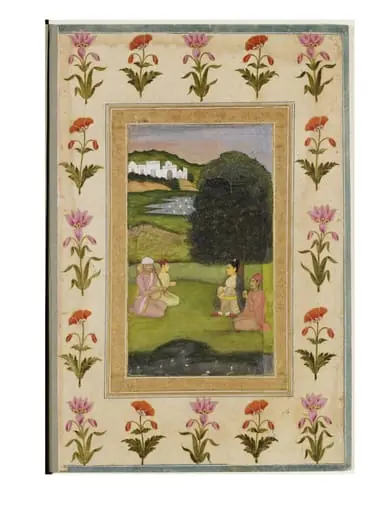 listening to music at sunset.
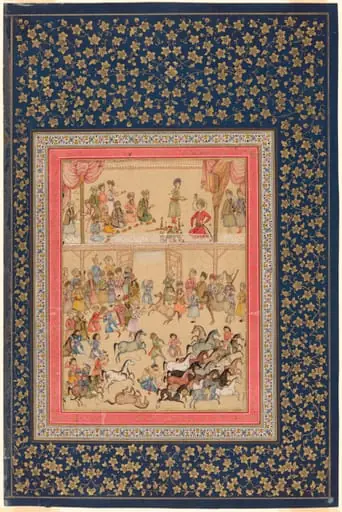 Royal Horse Inspection
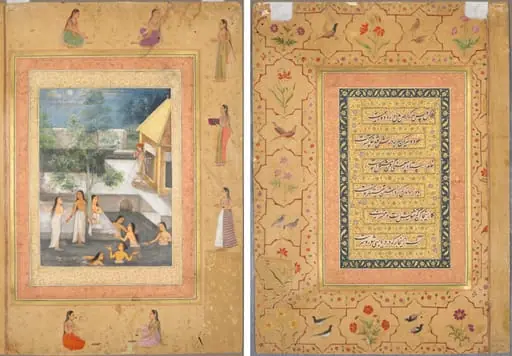 Leaf from the Late Shah Jahan Album: Harem Night-Bathing Scene (recto); Calligraphy Framed by an Ornamental Border of Flowers and Birds (verso)
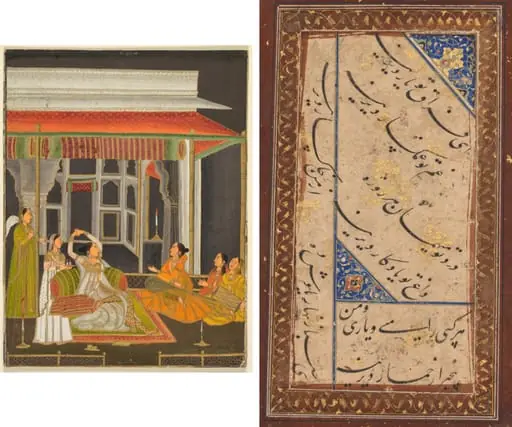 A princess on a terrace with attendants at night (recto); Calligraphy (verso)
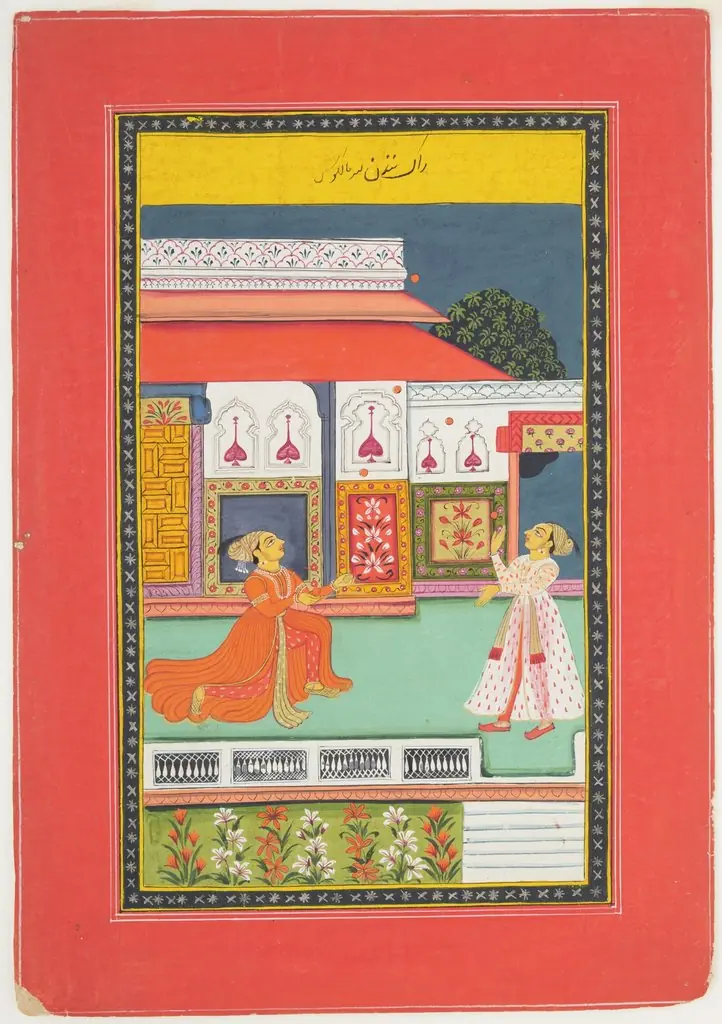 Princes Juggling Balls in Courtyard
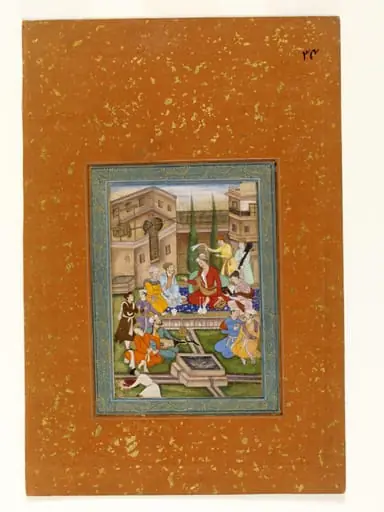 Akbar
Akbar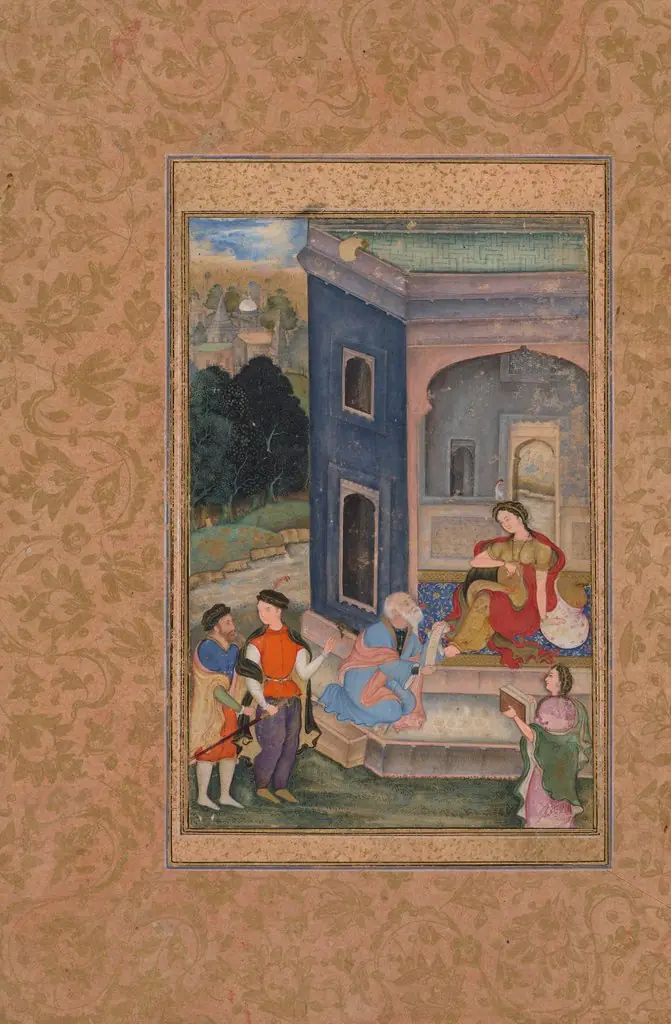 European Costume Scene
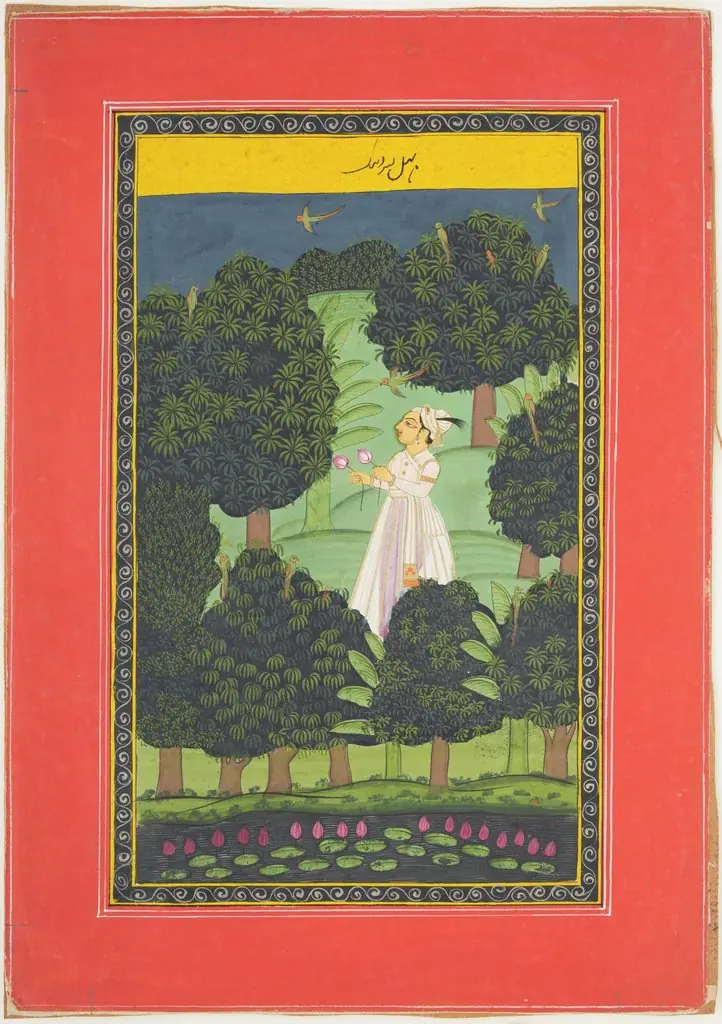 Prince with Two Lotus Blooms in Forest
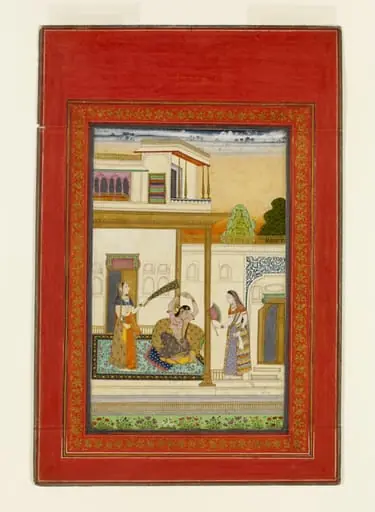 Purvi Ragini
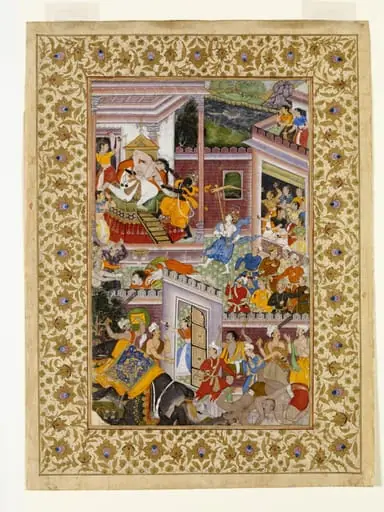 Krishna kills his uncle, the tyrant ruler Kamsa
 Madhumadhavi Ragini