Artwork
A princess on a terrace with attendants at night (recto); Calligraphy (verso)
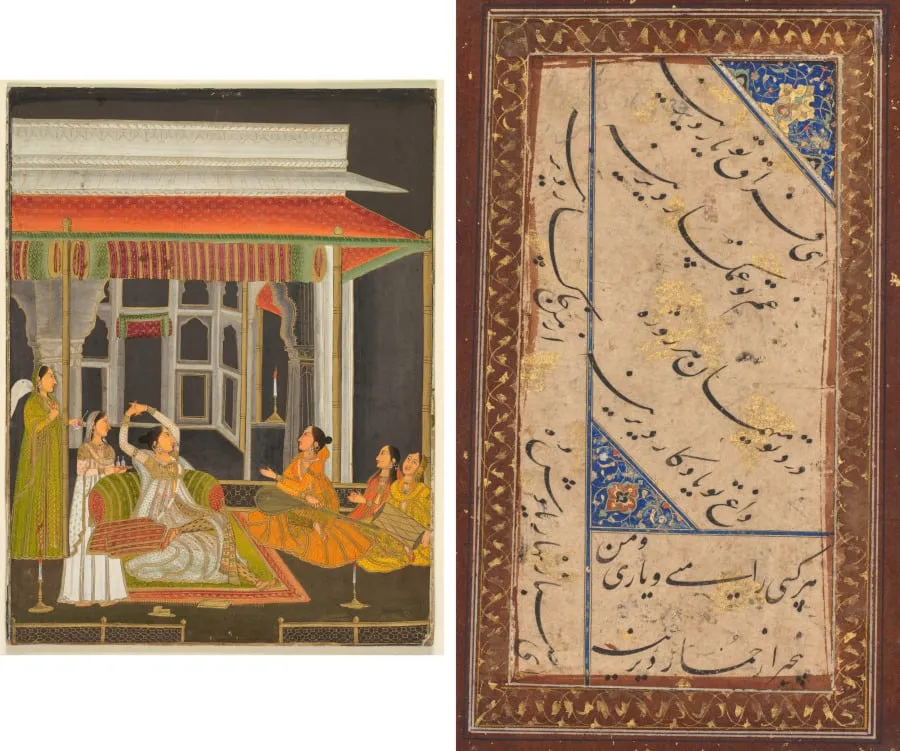
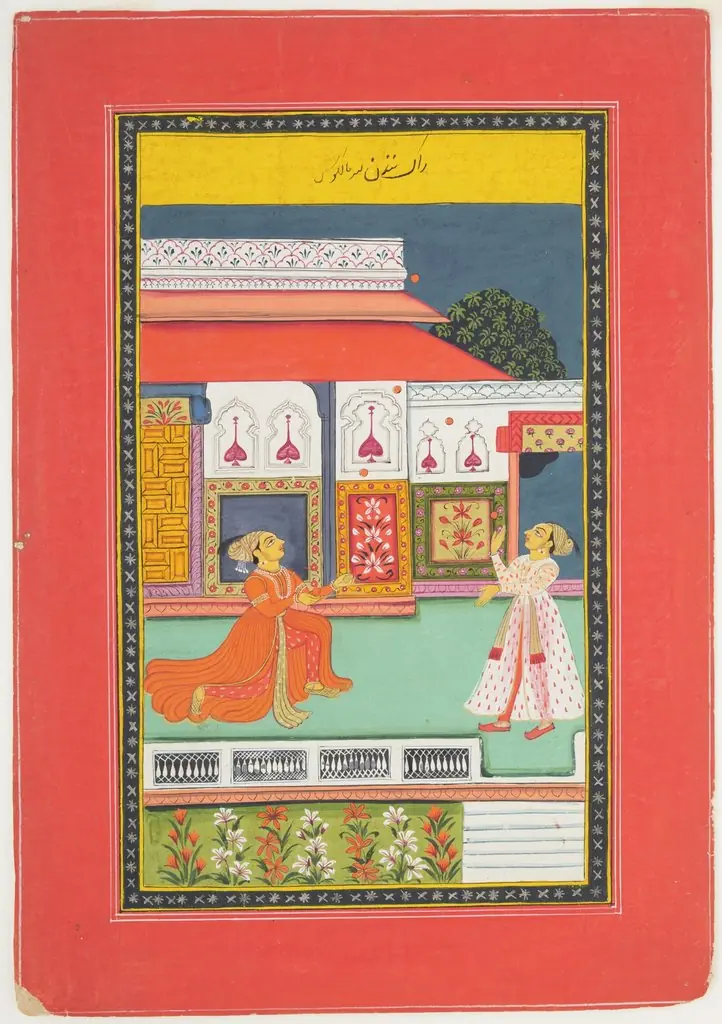
A princess on a terrace with attendants at night (recto); Calligraphy (verso) is an unspecified painting by the Mughal Painting artist Unknown. It dates from 1760 and is held in the collection of the Cleveland Museum of Art.
About this work
Overview
The composition captures a private, intimate moment, typical of aristocratic visual culture at the time.
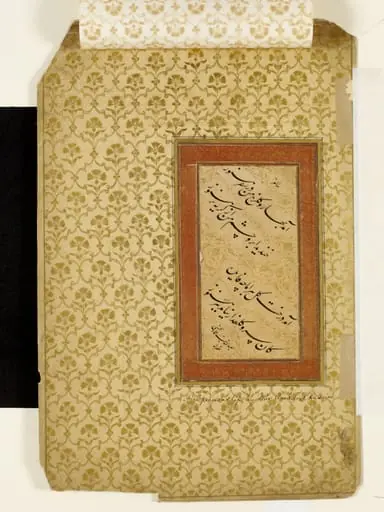
This double-sided work features a nocturnal scene of a royal woman on a palace terrace, accompanied by attendants and musicians, on the recto, with calligraphy on the verso. Created in 18th-century northern India, it reflects the refined aesthetic of courtly painting traditions that flourished under Mughal influence and its regional offshoots. The composition captures a private, intimate moment, typical of aristocratic visual culture at the time.
Subject & Meaning
The central figure, a royal woman, assumes a pose of elegant elongation, echoing poetic conventions that idealized feminine grace in Indian literature. Surrounded by attendants holding wine vessels and musical instruments, the scene evokes leisure and refined pleasure within the secluded spaces of the zenana. The imagery does not depict ritual or narrative but rather an idealized moment of quiet indulgence, affirming status through cultivated refinement.
Technique & Style
The painting employs fine brushwork to render intricate textile patterns and delicate facial features, characteristic of late Mughal and post-Mughal court styles. Soft, diffused lighting contrasts with the dark foliage behind the terrace, creating a serene nocturnal atmosphere. The use of muted tones and subtle gradations enhances the intimacy of the scene, while the calligraphy on the reverse suggests the work was valued as much for its textual as its visual content.
History & Provenance
Produced during the 18th century, likely in a regional court influenced by Mughal aesthetics, the painting reflects the persistence of imperial visual traditions after the central authority of Delhi waned. Its survival as a double-sided object indicates it was carefully preserved, possibly as part of a personal album or courtly collection. The presence of calligraphy implies it may have been intended for contemplative viewing rather than public display.
Context
Artistic depictions of royal women in private, pleasure-filled settings became widespread in northern India during this period, inspired by the court of Muhammad Shah. These scenes, often set in moonlit gardens or terraces, served as visual poetry, aligning with literary traditions that celebrated beauty, music, and solitude. They reveal how elite identity was constructed through controlled, aestheticized environments rather than public spectacle.
Legacy
This work exemplifies the enduring influence of Mughal visual language in regional courts, where artists adapted imperial motifs to local tastes. Its focus on quiet, personal moments helped shape a distinct genre of Indian painting that emphasized emotional nuance over grandeur. Such images remain valuable for understanding how gender, space, and power were visually negotiated in pre-colonial Indian society.
Artist & collection

 Domestic Scene
 Giacomo and Cardinal Marco, investing Andrea, Abbot of San Zeno, with his Benefice
 The Nymph of Fontainebleau
 Portrait of a Woman
 Madonna and Child with Saints in the Enclosed Garden
 Venus and Minerva
 Family Group of Four on Sofa
 Wall painting from Room H of the Villa of P. Fannius Synistor at Boscoreale
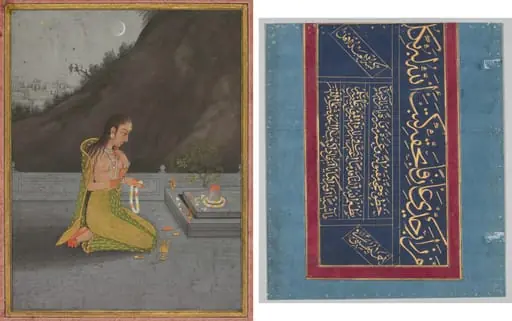 A night scene of Shiva puja (recto); Calligraphy (verso)
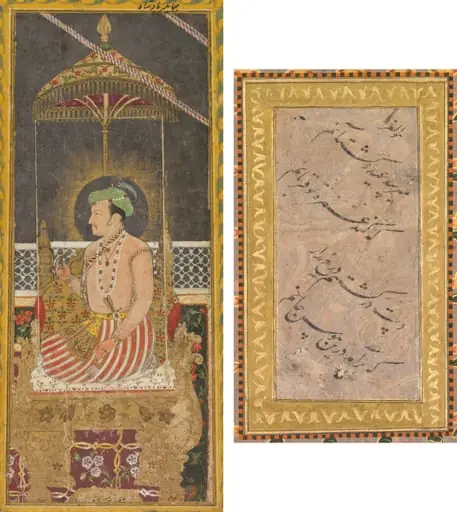 Posthumous portrait of Emperor Jahangir under a canopy (recto); Calligraphy (verso)
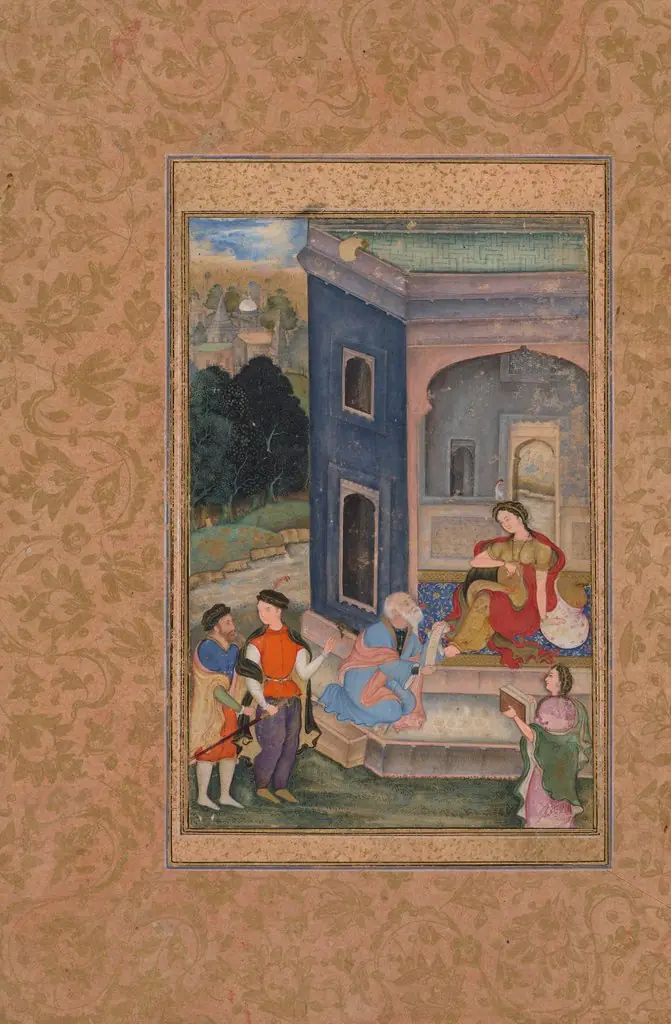 European Costume Scene
 Portrait of Raja Ram Singh of Amber (r. 1667-1688) with a Deccan Sword (recto); Calligraphy (verso)
 Untitled
 Kabir and Two Followers on a Terrace (recto); Calligraphy (verso)
 Ramakali Ragini
 Princes Juggling Balls in Courtyard
 Untitled
 Untitled