Artwork
Untitled
Untitled is an unspecified painting. It dates from 600 and is held in the collection of the Metropolitan Museum of Art.
About this work
Overview
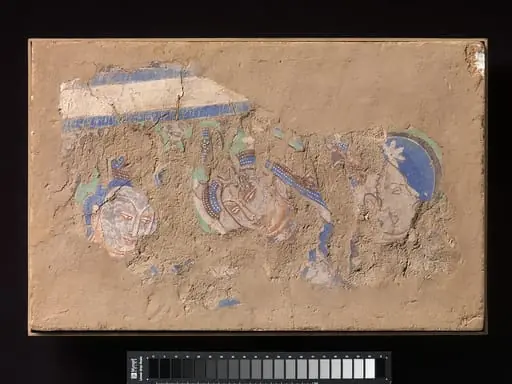
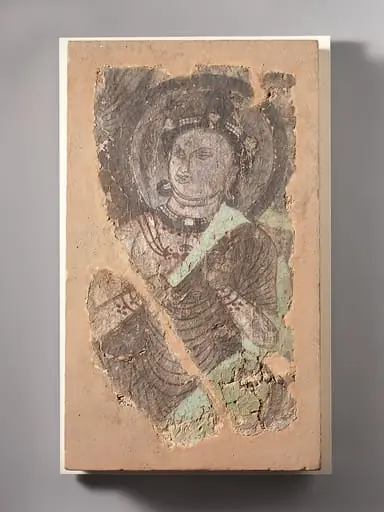
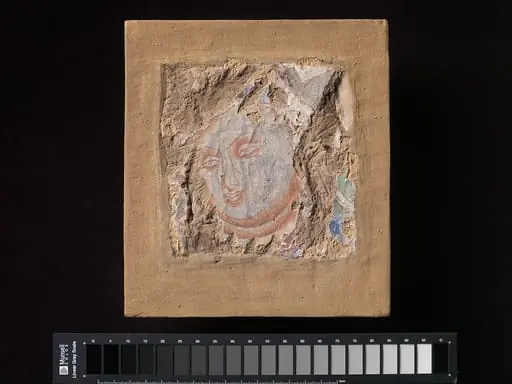
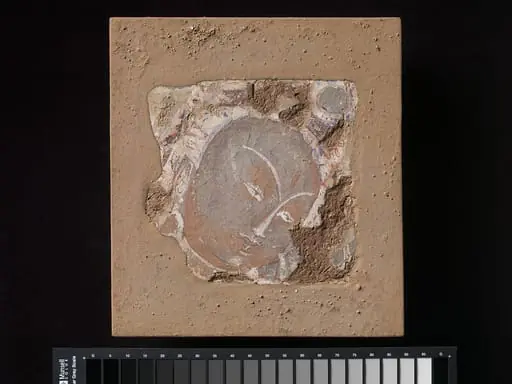
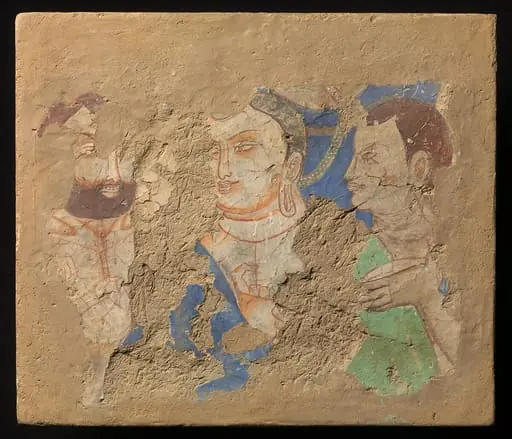
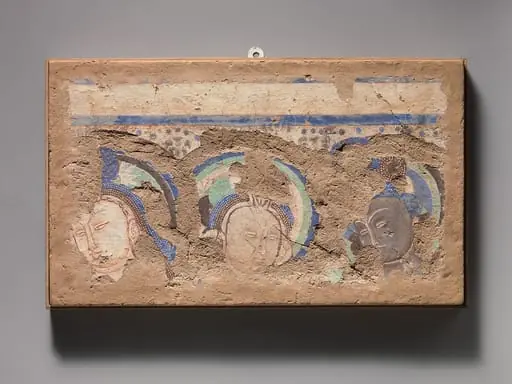
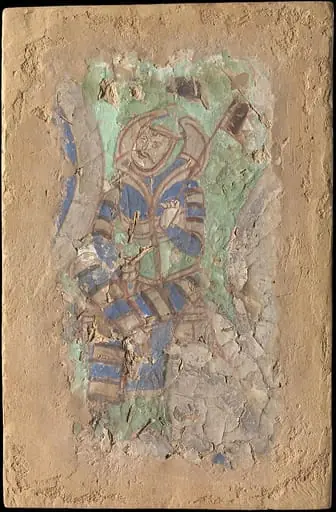
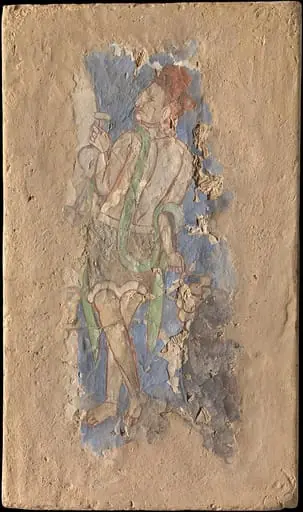
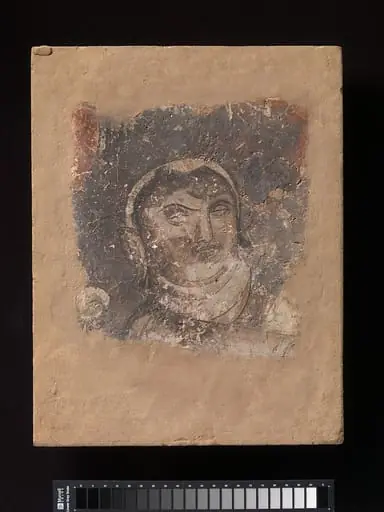
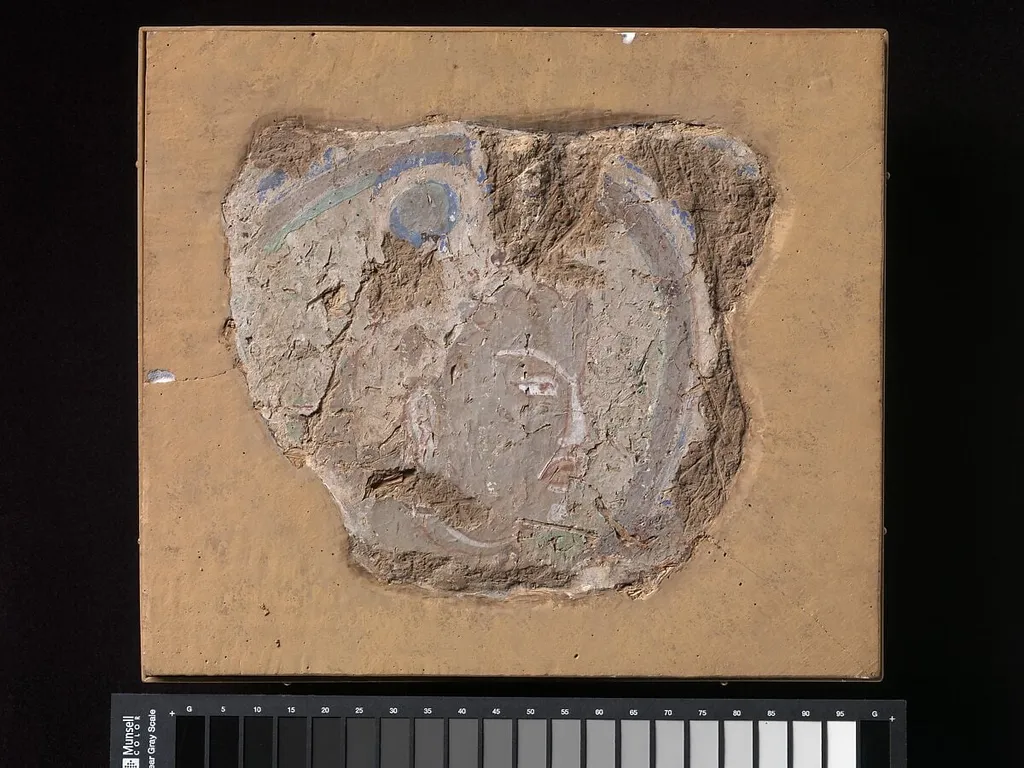
This untitled painting presents a solitary human head, rendered with pigments directly onto a mud plaster surface. Originating from a larger Buddhist mural within a cave temple in China's Xinjiang region, this fragment offers a glimpse into ancient religious artistry. Despite its age of approximately 1,400 years, the artwork retains its vibrant colors, a testament to its remarkable preservation.
Subject & Meaning
The depicted face exudes a serene composure, characterized by its half-closed eyes and a subtle, gentle smile. This expression suggests a state of inner peace or meditation, aligning with its original function as part of a sacred Buddhist space. Such imagery would have contributed to the contemplative atmosphere of the cave temple, guiding devotees towards spiritual reflection.
Technique & Style
Created using pigments applied to a rough mud plaster, the artwork demonstrates a direct and enduring artistic method. The simplicity of the rendering, focusing on the calm features of the face, reflects a style common in religious murals of the period. The durability of these materials and techniques has allowed the colors to remain remarkably bright over centuries.
History & Provenance
This artwork is a surviving portion of what was once an extensive mural adorning a Buddhist cave temple in Xinjiang, China. Its exact creator remains unknown, a common circumstance for many ancient religious works. Dating back approximately 1,400 years, this fragment provides valuable insight into the artistic traditions and spiritual practices of the region during that era.
Context
The exceptional preservation of the painting's vivid colors is primarily attributed to the arid climate of the Xinjiang desert. The dry air within the cave temple environment acted as a natural safeguard, protecting the delicate pigments and mud plaster from moisture and decay. This environmental factor allowed the artwork to endure for over a millennium, maintaining its original brightness.
Artist & collection