Artwork
Untitled (British soldiers, man on palequin, and indgenous workers, recto)
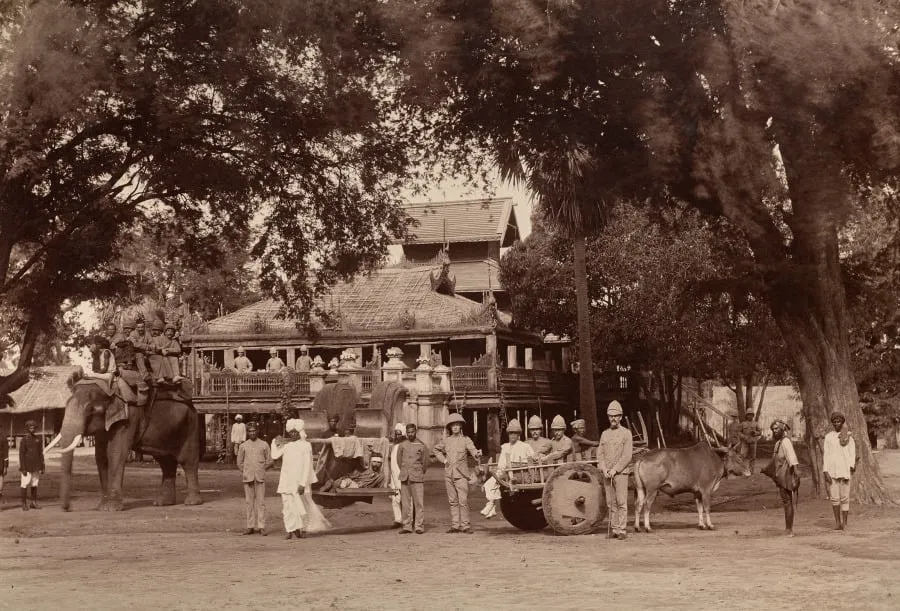
Untitled (British soldiers, man on palequin, and indgenous workers, recto) is a photography by the Impressionist artist Unknown. It dates from 1880 and is held in the collection of the Cleveland Museum of Art. This photograph captures a scene of colonial-era labor and movement in a tropical setting.
About this work
Overview
The composition reflects daily activity in a colonial context, with attention to the textures of clothing and foliage.
This photograph captures a scene of colonial-era labor and movement in a tropical setting. A man is seated on a palanquin carried by workers, while another rides an elephant nearby. Figures in varied attire stand or move around a multi-tiered building with a tiled roof, surrounded by palm trees. The composition reflects daily activity in a colonial context, with attention to the textures of clothing and foliage.
Subject & Meaning
The image depicts a hierarchy of movement and labor: an elite figure transported on a palanquin, laborers pushing a cart, and others observing or working. The presence of an elephant and the architectural style suggest a South or Southeast Asian location under British administration. The scene conveys social stratification and the routine of colonial infrastructure without overt narrative or symbolism.
Technique & Style
Rendered in photographic form, the image relies on natural light and sharp detail to document the scene. The composition balances figures and architecture, with depth created by the building’s receding levels and the positioning of trees. Clothing patterns and leaf textures are rendered with clarity, emphasizing observational accuracy over artistic embellishment.
History & Provenance
The photograph likely dates to the late 19th or early 20th century, produced by a British colonial photographer or official. It was probably taken in India or a similar region, documenting administrative or ceremonial activity. Its survival suggests archival use, possibly for ethnographic or administrative records rather than artistic intent.
Context
This image reflects the visual culture of British colonial documentation, where photography served to record local customs, labor, and architecture. The setting aligns with colonial urban centers where indigenous workers supported European administrative functions. The presence of both local and colonial figures underscores the layered social structure of the time.
Legacy
As a historical document, the photograph contributes to studies of colonial visual representation and labor practices. It is not associated with artistic movements like Impressionism, as its purpose was documentary. Today, it is valued for its evidentiary quality, offering insight into the material and social conditions of its era.
Artist & collection

 Domestic Scene
 Giacomo and Cardinal Marco, investing Andrea, Abbot of San Zeno, with his Benefice
 The Nymph of Fontainebleau
 Portrait of a Woman
 Madonna and Child with Saints in the Enclosed Garden
 Venus and Minerva
 Family Group of Four on Sofa
 Wall painting from Room H of the Villa of P. Fannius Synistor at Boscoreale
 Untitled (recto)
 Reverend Loche at Neemuch
 Major Creagh's home, Mhon (verso)
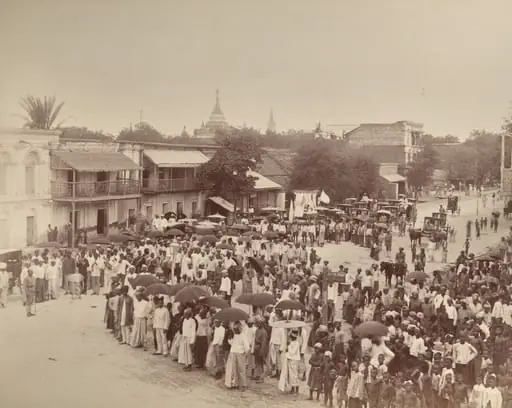 Untitled (procession or crowd) (verso)
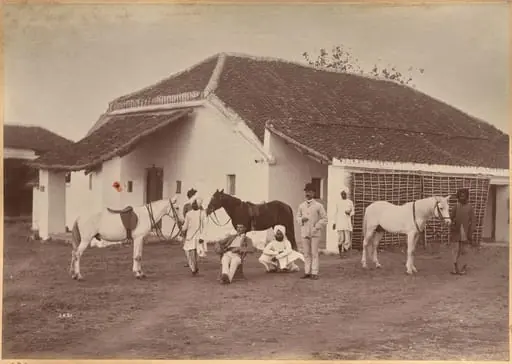 Captain Harris and Ruston, Jhansi
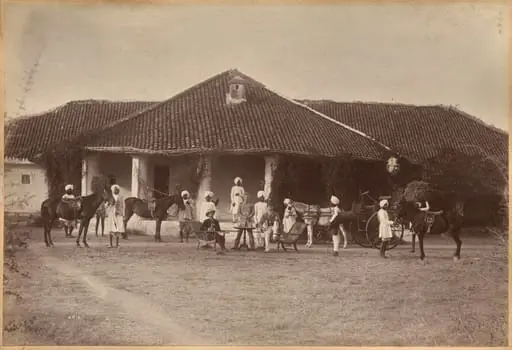 Dr. Morris and party, Jhansi (recto)
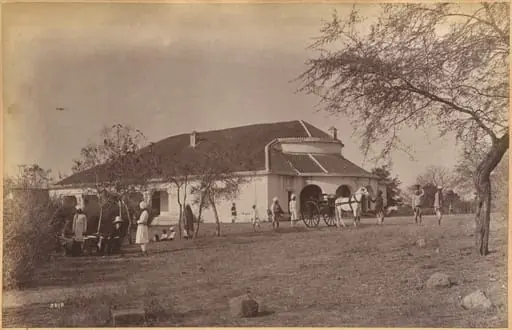 Reverend Holcomb's Bungalow (verso, top)
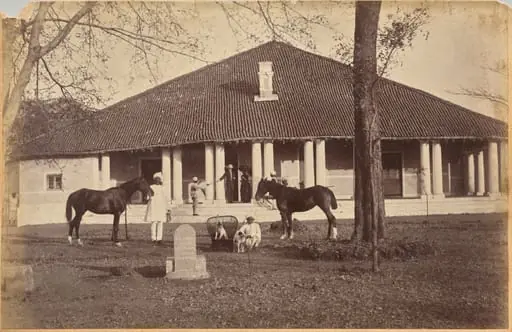 Captain Falkner's Bungalow, Neemuch (recto, top)
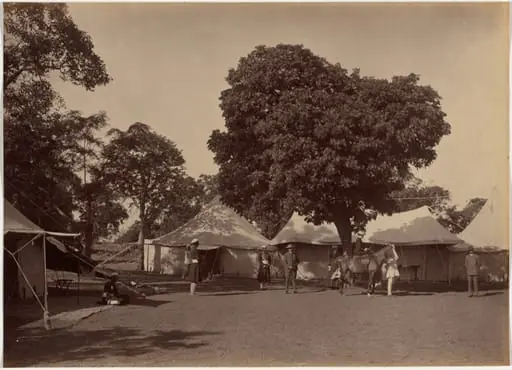 Major Martelli's Camp at Mhow
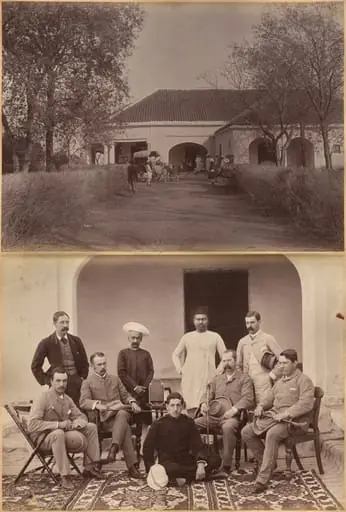 Civil officers at Jhansi (recto); Mr. William's House, Jhansi (verso)