Artwork
Captain Falkner's Bungalow, Neemuch (recto, top)
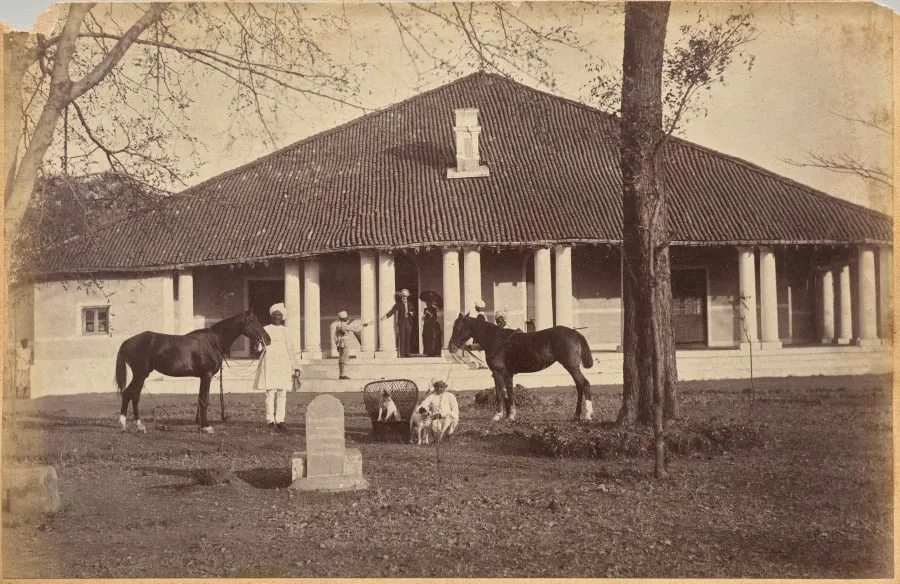
Captain Falkner's Bungalow, Neemuch (recto, top) is a photography by the Impressionist artist Raja Deen Dayal. It dates from 1884 and is held in the collection of the Cleveland Museum of Art. This photograph is one of approximately 105 images compiled in a now-disassembled album, created between 1885 and 1887 in India.
About this work
The man who took it, Raja Deen Dayal, was one of the first Indian photographers to work for British officials.
A white bungalow sits behind a low stone wall, shaded by tall trees. A British officer in a dark uniform leans against the wall, one hand in his pocket.
This photo was taken when cameras were rare in India. The man who took it, Raja Deen Dayal, was one of the first Indian photographers to work for British officials. He made pictures like this one for visitors who wanted to remember their time there.
To see more of his work, look up Raja Deen Dayal (Indian, 1844–1905).
Overview
This photograph is one of approximately 105 images compiled in a now-disassembled album, created between 1885 and 1887 in India. It captures a British colonial residence in Neemuch, likely commissioned by a British official as a personal memento. The album reflects the visual culture of British residents in India during the late 19th century, documenting architecture and daily life through the lens of a skilled Indian photographer.
Subject & Meaning
The image shows a white bungalow enclosed by a low stone wall, surrounded by dense trees that soften the structure’s form. A British officer, dressed in a dark uniform, stands casually against the wall, one hand in his pocket. The pose and setting suggest a moment of quiet ownership, framing the bungalow as both a domestic space and a symbol of colonial presence in the Indian landscape.
Technique & Style
The photograph exhibits careful composition and controlled lighting, typical of studio-influenced outdoor work of the period. The clarity of detail in the architecture and foliage indicates the use of a large-format camera and slow emulsion plates. Shadows are rendered with precision, emphasizing texture and spatial depth, reflecting the technical maturity of late 19th-century photographic practice in India.
History & Provenance
The photograph was taken by Raja Deen Dayal, one of the earliest prominent Indian photographers to serve British patrons. It was originally part of a personal album likely assembled around 1888 for a British civil servant. The museum holds another 37 images from the same collection, suggesting the album was curated as a cohesive record of the photographer’s work for colonial clients during this period.
Context
During the 1880s, photography in India was still a relatively new medium, especially among local populations. Deen Dayal’s work bridged colonial demand and Indian technical expertise, offering British visitors visual souvenirs that reinforced their experiences. His studio became a trusted source for portraits and architectural views, shaping how colonial life was documented and remembered.
Legacy
Raja Deen Dayal’s photographs remain significant as early examples of Indian photographers operating within the colonial visual economy. His images provide a dual perspective: they satisfy British tastes while preserving the Indian landscape and built environment with technical rigor. His career helped establish photography as a professional field in India and expanded the role of Indian artists in documenting their own society.
Artist & collection

Artist
Raja Lala Deen Dayal, famously known as Raja Deen Dayal) was an Indian photographer.

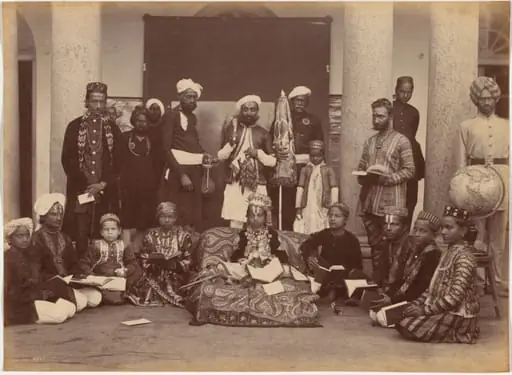 Maharaja of Rewa and Classmates
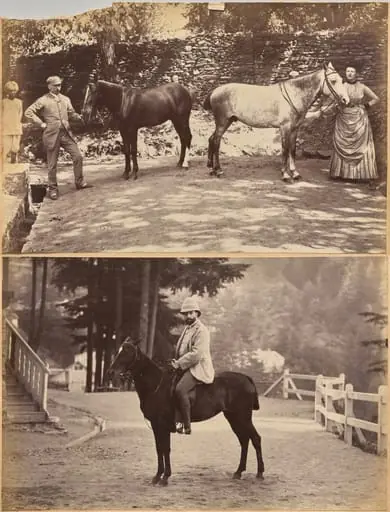 Col. F. G. Oldham (recto, top); Mr. Nowell, Shimla (recto, bottom)
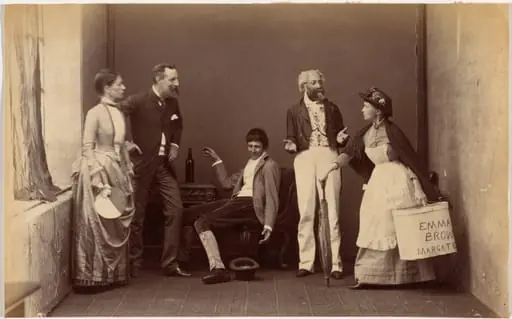 Fancy Group, Indore I
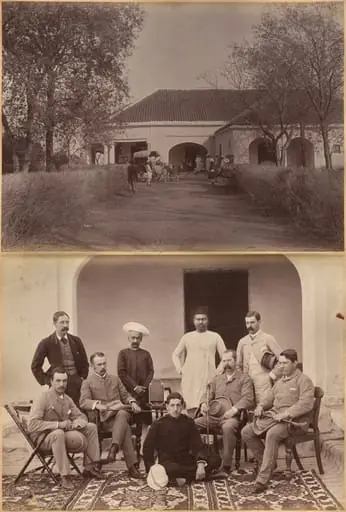 Civil officers at Jhansi (recto); Mr. William's House, Jhansi (verso)
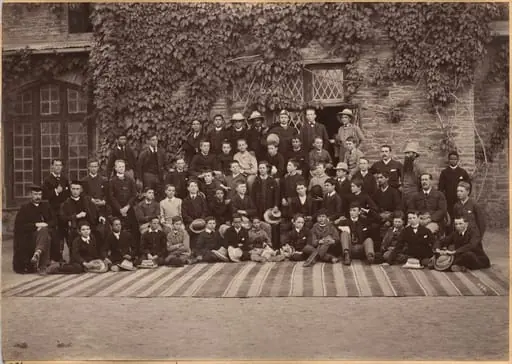 Middle Class Students and Staff, Bishop Cotton School, Shimla (verso)
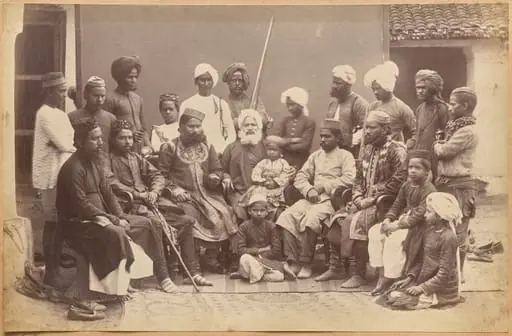 Mowhri Rahman Alli Khan family, Rewa (recto, bottom)
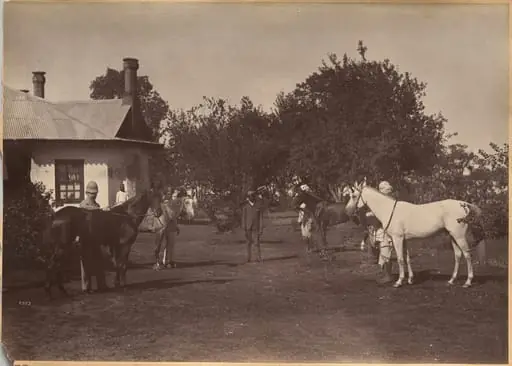 Lord William Beresford's horses
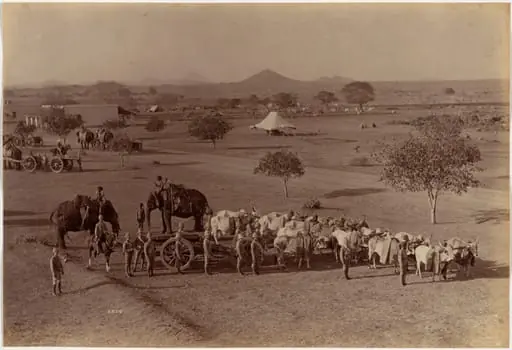 Heavy Field Battery, Jhansi
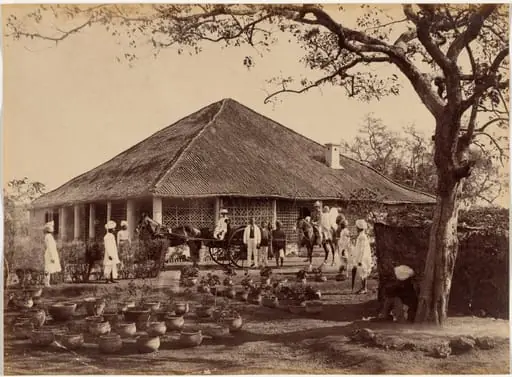 Reverend Loche at Neemuch
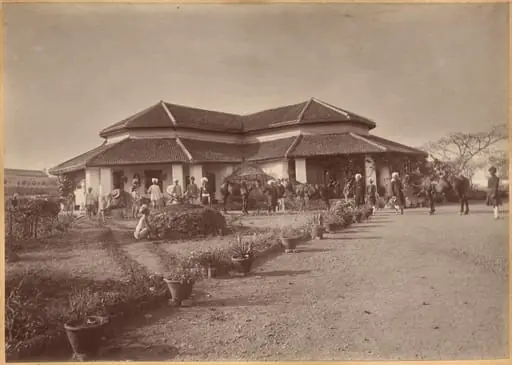 Major Creagh's home, Mhon (verso)
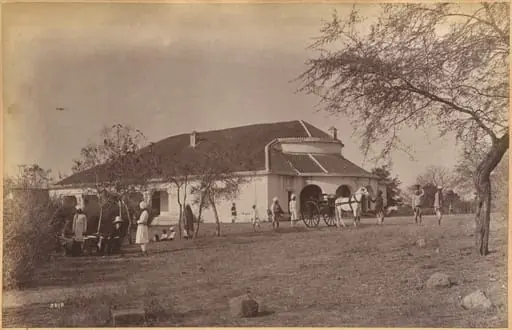 Reverend Holcomb's Bungalow (verso, top)
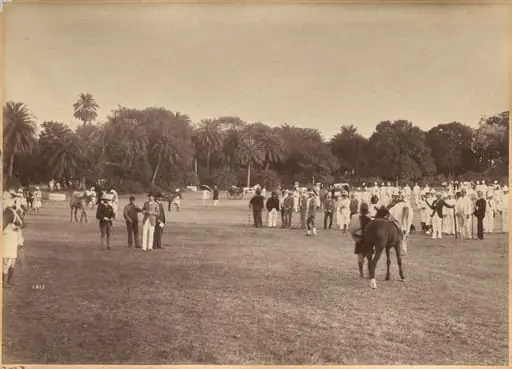 Judging at the Horseshow at Jhansi
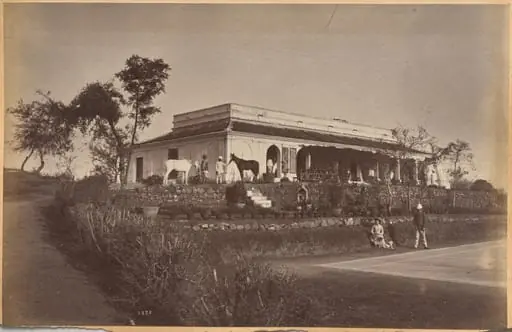 Untitled (verso, bottom)
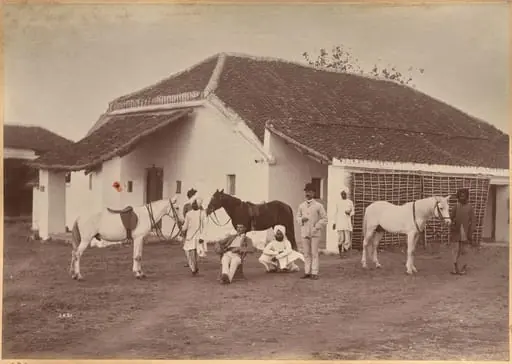 Captain Harris and Ruston, Jhansi
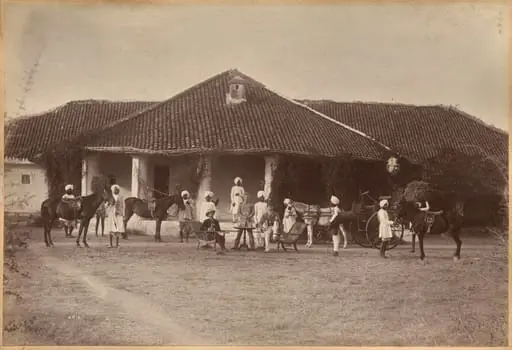 Dr. Morris and party, Jhansi (recto)
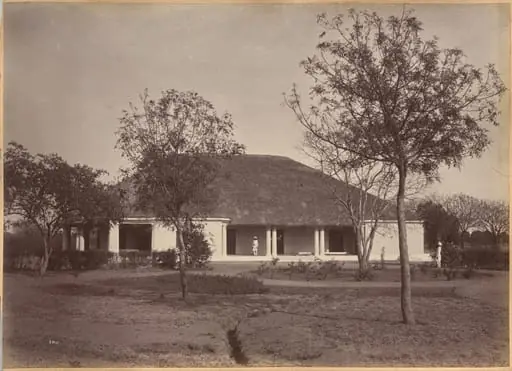 Commissioner's house, Jhansi (recto)
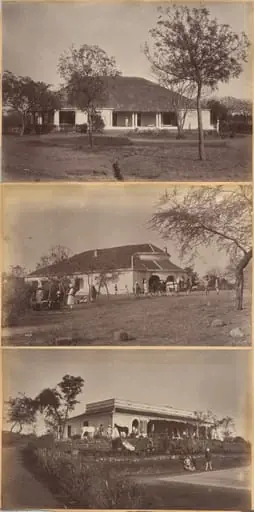 Commissioner's house, Jhansi (recto); Reverend Holcomb's Bungalow (verso, top); Untitled (verso, bottom)
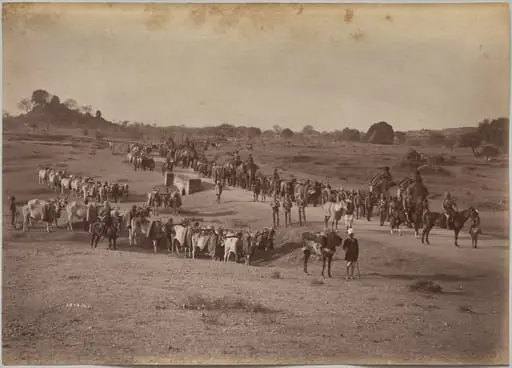 Elephant Battery on March at Jhansi
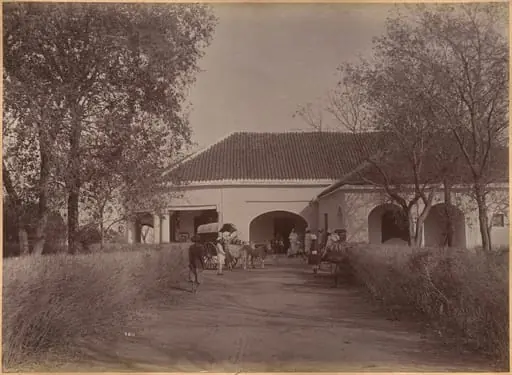 Mr. William's House, Jhansi (verso)