Artwork
Gautama
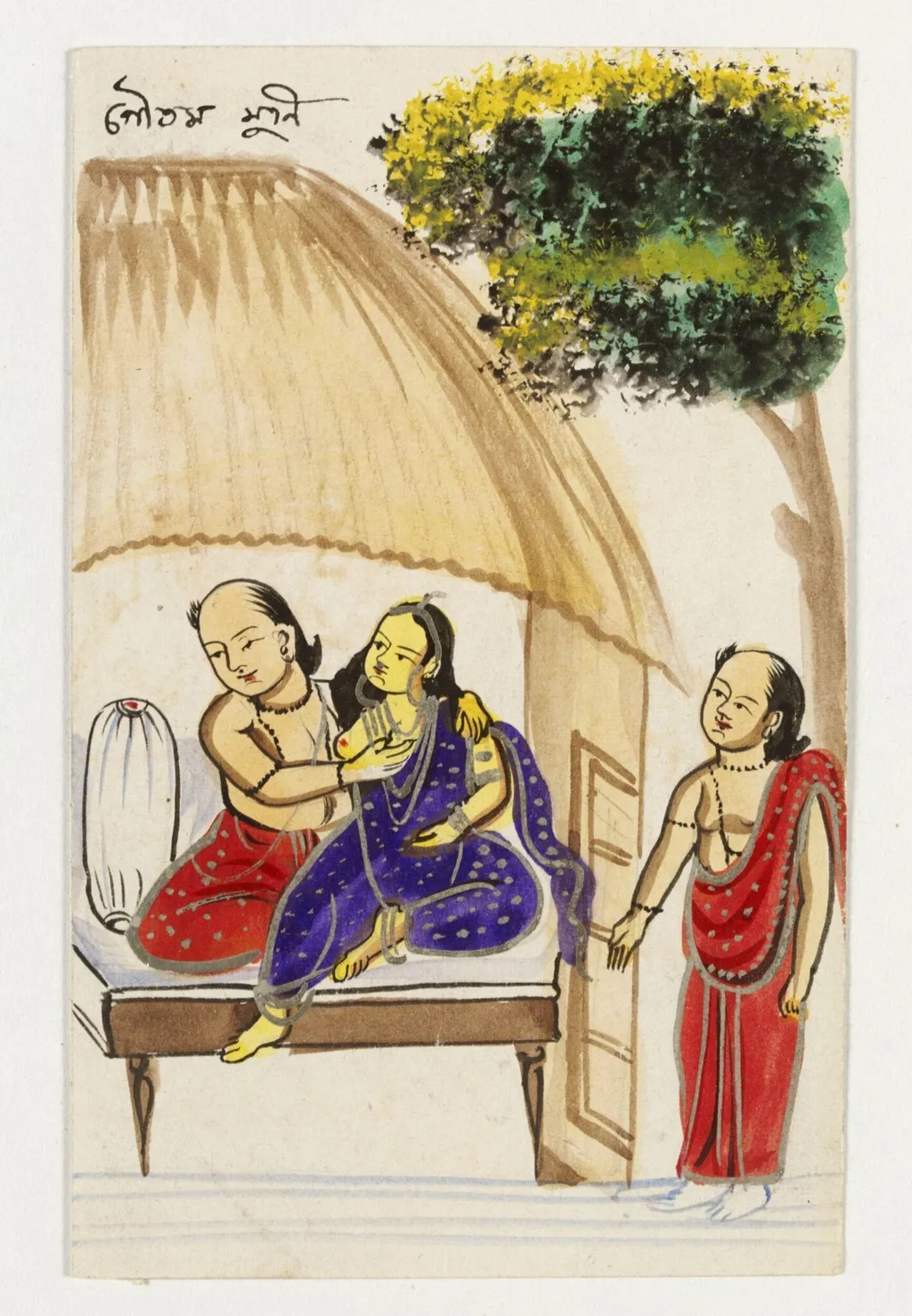
Gautama is a paint painting by the Impressionist artist Unknown. It dates from 1890 and is held in the collection of the Victoria and Albert Museum.
About this work
Overview
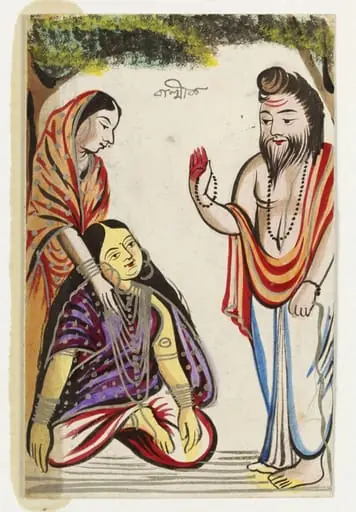
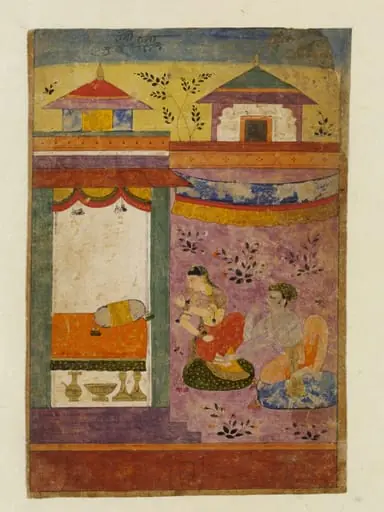
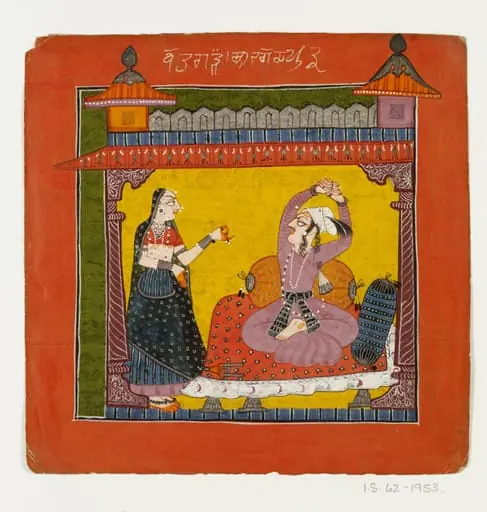
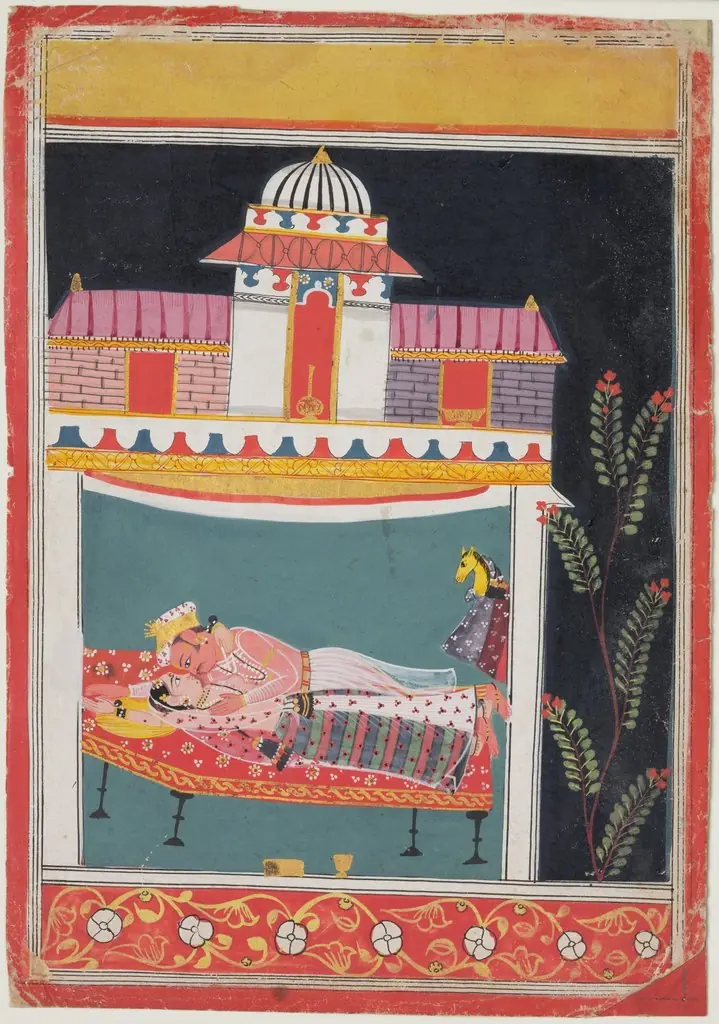
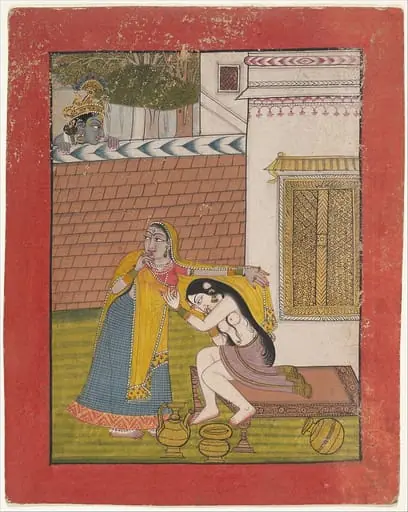
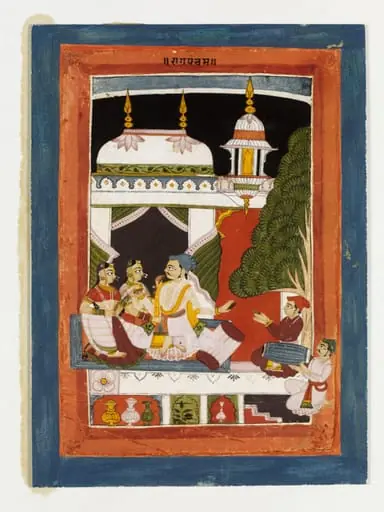
Created in 1890 by an unidentified artist, this watercolor and tin alloy work on cardboard portrays a domestic interior associated with the sage Gautama. The composition centers on a seated couple within a modest hut, accompanied by a standing figure, all rendered in a calm, intimate setting.
Subject & Meaning
The central figures are a woman in a blue sari embellished with gold dots and a man in a white shirt with red trousers, suggesting a marital or familial relationship. A second male figure in a red robe stands nearby, observing the pair, hinting at a narrative of companionship or ritual within a household context.
Technique & Style
The piece combines watercolor washes with tin alloy accents, producing subtle tonal variations and a warm glow. The artist employs a limited palette of reds, blues, and earth tones, while the delicate handling of light enhances the sense of tranquility in the interior space.
History & Provenance
The work is dated to the late nineteenth century, a period when Indian-themed subjects were popular among European painters. Its authorship remains unknown, and it has been catalogued primarily under the title "Gautama," with the name inscribed in a non‑Latin script at the upper left.
Context
The depiction reflects contemporary interest in Eastern philosophy and domestic life, aligning with Orientalist trends that romanticized Indian settings. The inclusion of traditional clothing and a thatched roof situates the scene within a rural Indian milieu, offering a glimpse of everyday life linked to the figure of Gautama.
Artist & collection

 Domestic Scene
 Giacomo and Cardinal Marco, investing Andrea, Abbot of San Zeno, with his Benefice
 The Nymph of Fontainebleau
 Portrait of a Woman
 Madonna and Child with Saints in the Enclosed Garden
 Venus and Minerva
 Family Group of Four on Sofa
 Wall painting from Room H of the Villa of P. Fannius Synistor at Boscoreale