Artwork
Vamana
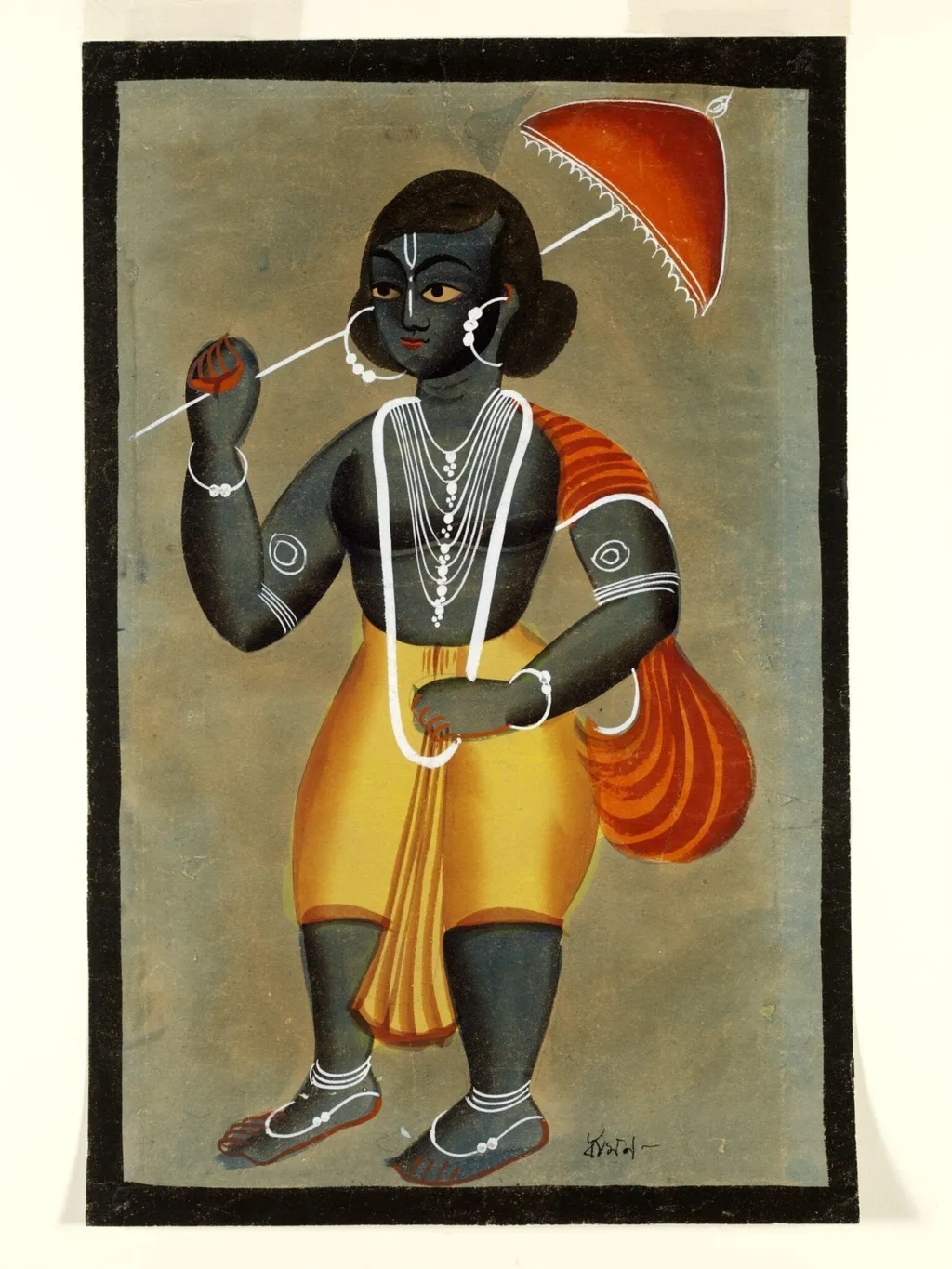
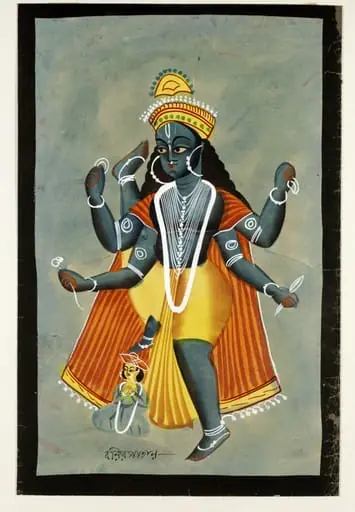
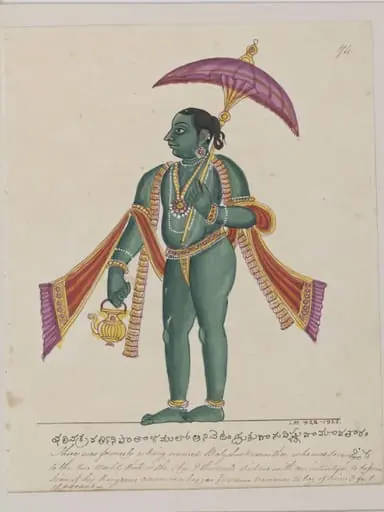
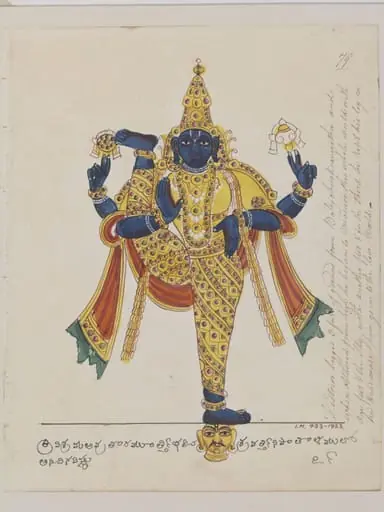
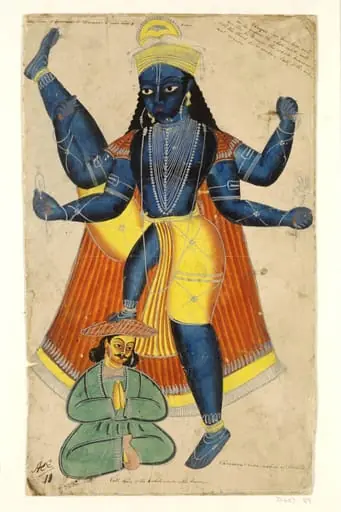
Vamana is a paint painting by the Impressionist artist Unknown. It dates from 1885 and is held in the collection of the Victoria and Albert Museum.
About this work
Overview
The work’s origins may trace to India, as Steele’s grandmother lived there, suggesting possible local acquisition or commission.
Created in 1885, this painting depicts Vamana, the fifth avatar of Vishnu, rendered in opaque watercolour on paper. It entered the collection in 1894 after being acquired from Miss M. Steele, who inherited it from her mother, a Cambridge-based Sanskrit scholar. The work’s origins may trace to India, as Steele’s grandmother lived there, suggesting possible local acquisition or commission. The medium and format reflect a tradition of portable devotional imagery common in 19th-century South Asian art.
Subject & Meaning
Vamana, depicted as a dwarf Brahmin, represents Vishnu’s intervention to restore cosmic order by reclaiming the three worlds from the demon king Bali. The raised right hand signifies blessing or the act of measurement, while the left hand resting on the abdomen conveys calm authority. The red umbrella above the shoulder denotes royal or divine status, and the white markings on the forehead and limbs align with traditional iconography of Vishnu’s avatars, emphasizing spiritual purity and divine identity.
Technique & Style
The painting employs opaque watercolour on paper, a technique common in Indian miniature and devotional traditions. Figures are rendered with precise, flat planes of color and minimal shading, avoiding the chiaroscuro of European Realism. The background is a uniform light brown, focusing attention on the figure. Decorative details—jewelry, clothing patterns, and symbolic markings—are rendered with fine brushwork, reflecting regional aesthetic conventions rather than Western naturalism.
History & Provenance
The painting was acquired by the collection in 1894 from Miss M. Steele, whose mother was a scholar of Sanskrit texts at Cambridge. Steele noted that her grandmother had lived in India, implying the work may have been collected during British colonial presence there. Its journey from India to England reflects broader patterns of cultural artifact migration in the 19th century, often tied to familial networks and scholarly interest in South Asian religious traditions.
Context
In late 19th-century India, devotional paintings like this were produced for both local worship and export to European collectors. While Western Realism emphasized lifelike detail, this work adheres to iconographic norms of Hindu art, prioritizing symbolic clarity over naturalism. Its creation coincided with growing colonial interest in Indian religions, leading to increased documentation and collection of religious imagery by both scholars and institutions abroad.
Legacy
This painting contributes to the historical record of how Hindu iconography was preserved and transmitted outside India during the colonial period. Its presence in a Western collection underscores the role of private collectors and scholars in shaping early museum holdings of South Asian art. Though not widely known, it remains a tangible link between devotional practice, familial heritage, and cross-cultural exchange in the 19th century.
Artist & collection

 Domestic Scene
 Giacomo and Cardinal Marco, investing Andrea, Abbot of San Zeno, with his Benefice
 The Nymph of Fontainebleau
 Portrait of a Woman
 Madonna and Child with Saints in the Enclosed Garden
 Venus and Minerva
 Family Group of Four on Sofa
 Wall painting from Room H of the Villa of P. Fannius Synistor at Boscoreale