Artwork
Vamana and Bali
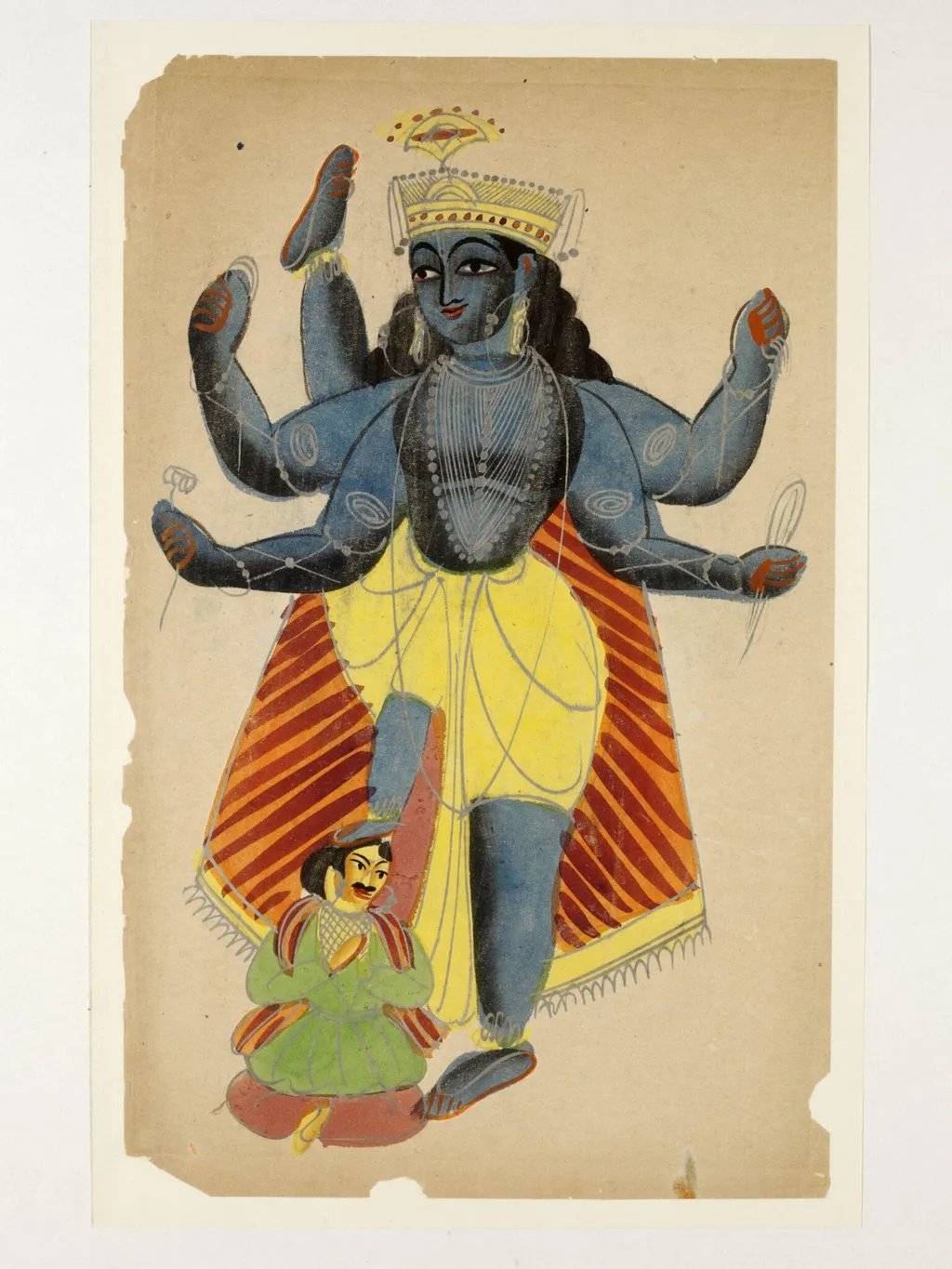
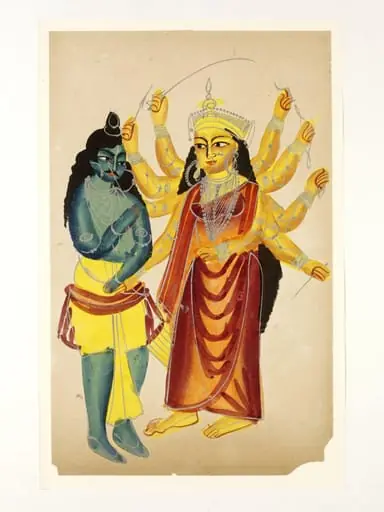
Vamana and Bali is a paint painting by the Impressionist artist Unknown. It dates from 1890 and is held in the collection of the Victoria and Albert Museum.
About this work
Overview
Executed in the Kalighat style, it features vivid pigments and fluid, expressive lines typical of 19th-century Calcutta artists.
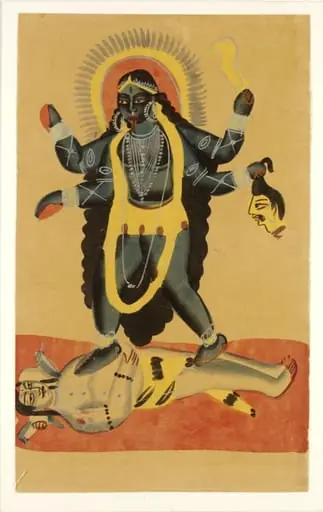
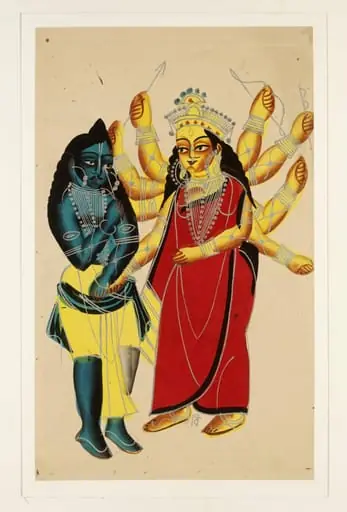
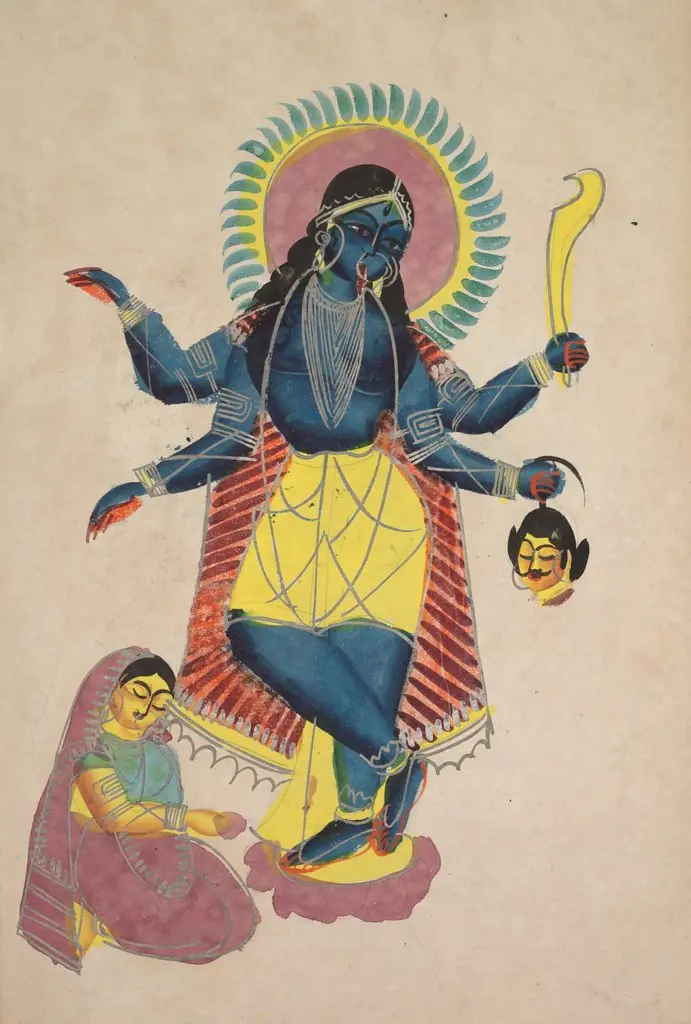
This watercolour and tin-alloy painting on paper portrays the Hindu mythological episode of Vamana and Bali. Executed in the Kalighat style, it features vivid pigments and fluid, expressive lines typical of 19th-century Calcutta artists. The work was donated to the collection in 1955 by M. N. Varvill, Esq., and reflects the commercial religious art produced near the Kalighat temple for pilgrims and urban patrons.
Subject & Meaning
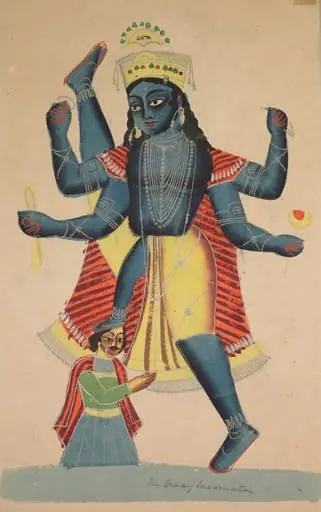
The scene illustrates the dwarf avatar of Vishnu, Vamana, claiming the three worlds from the benevolent demon king Bali. Vamana, depicted with four arms and a towering stance, strides over Bali, who kneels in surrender, offering his head. The moment symbolizes divine authority and the triumph of dharma, while also conveying humility and devotion. The narrative was widely recognized in Bengal, making it a popular subject for devotional imagery.
Technique & Style
The painting employs bold, unmodulated colours and strong black outlines, hallmarks of Kalighat art. Forms are simplified, with minimal detail in anatomy and drapery, emphasizing clarity and visual impact. Tin-alloy particles in the paint create a subtle shimmer, enhancing the divine presence of Vamana. The brushwork is swift and confident, suggesting production for a mass market rather than private devotion.
History & Provenance
Created in mid-19th century Calcutta, the painting emerged from a community of patuas who migrated from rural Bengal to serve urban audiences near the Kalighat temple. It was acquired by M. N. Varvill, a British colonial-era resident, and donated to the collection in 1955. Its survival reflects the transition of folk art from religious commerce to institutional preservation.
Context
Kalighat paintings responded to the cultural shifts of colonial Calcutta, blending traditional Hindu iconography with contemporary urban life. Artists adapted their style to appeal to both local devotees and European collectors, often depicting mythological, social, and satirical themes. This work belongs to a genre that documented changing identities, where sacred narratives coexisted with critiques of modernity.
Legacy
As one of many Kalighat works preserved in public collections, this painting contributes to the understanding of 19th-century Indian visual culture. It exemplifies how folk traditions evolved under colonial influence, maintaining religious themes while adopting new materials and audiences. Its presence in institutional holdings underscores its role in bridging indigenous art practices and modern museology.
Artist & collection

 Domestic Scene
 Giacomo and Cardinal Marco, investing Andrea, Abbot of San Zeno, with his Benefice
 The Nymph of Fontainebleau
 Portrait of a Woman
 Madonna and Child with Saints in the Enclosed Garden
 Venus and Minerva
 Family Group of Four on Sofa
 Wall painting from Room H of the Villa of P. Fannius Synistor at Boscoreale