Artwork
Vas cu corpul foarte bombat în partea superioară, cu un gât scurt și profilat, cu gura foarte lată, buza evazată și rotunjită. Din buză pornește o toartă care se unește cu corpul sub diametrul maxim. Vasul este smălțuit în interior și exterior (doar partea superioară). Este decorat cu motive geometrice: trei linii concentrice pe umăr și o linie scurtă orizontală pe toartă. Cromatica: fond: cărămiziu; motive: alb,.
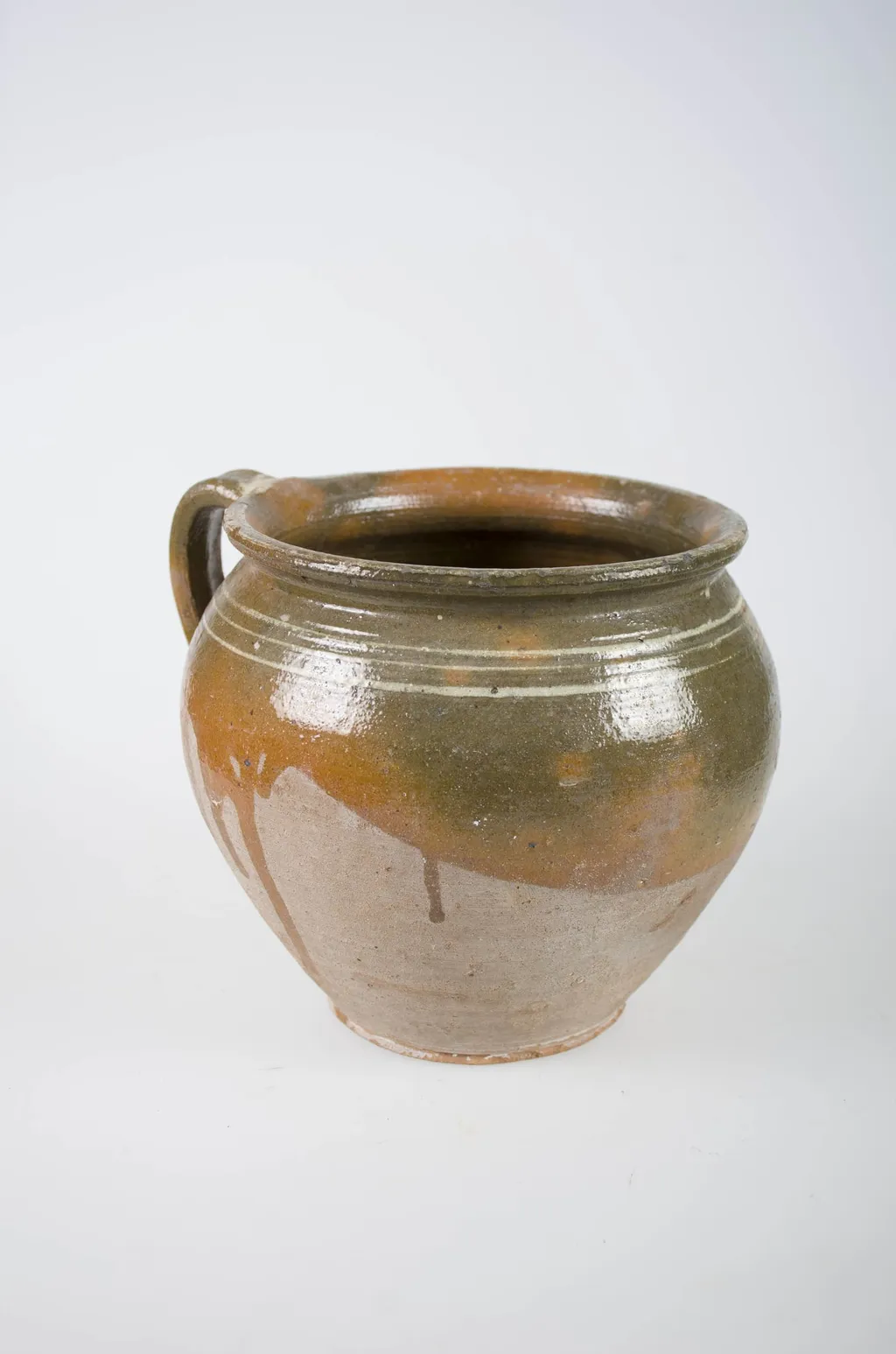
Vas cu corpul foarte bombat în partea superioară, cu un gât scurt și profilat, cu gura foarte lată, buza evazată și rotunjită. Din buză pornește o toartă care se unește cu corpul sub diametrul maxim. Vasul este smălțuit în interior și exterior (doar partea superioară). Este decorat cu motive geometrice: trei linii concentrice pe umăr și o linie scurtă orizontală pe toartă. Cromatica: fond: cărămiziu; motive: alb,. is a photography by Unknown. It dates from 1850 and is held in the collection of the ASTRA National Museum Complex. The vessel is a clay pot characterized by a markedly swollen upper body, a short, tapered neck, and a broad, rounded rim.
About this work
Overview
The vessel is a clay pot characterized by a markedly swollen upper body, a short, tapered neck, and a broad, rounded rim. A handle originates at the rim, arches downward, and reconnects with the body near its widest point. The interior and the rim are glazed, while the remaining surface retains the natural brick‑red hue of the clay.
Technique & Style
Both the interior and the upper rim are covered with a clear glaze, contrasting with the unglazed body. Decorative treatment consists of minimal geometric motifs: three concentric lines positioned on the shoulder and a short horizontal line applied to the handle. The color scheme pairs a reddish‑brown clay background with white glaze accents.
Subject & Meaning
The simple geometric ornamentation and functional form suggest the pot was intended for practical purposes such as storage or serving, rather than ceremonial use. The emphasis on a wide opening and sturdy base indicates suitability for handling substantial quantities of material.
Context
The vessel belongs to a tradition of utilitarian pottery where glazing is applied selectively to protect interior surfaces and accentuate the rim. The use of concentric lines and a solitary horizontal stroke reflects a broader regional aesthetic that favors restrained, repetitive patterns on everyday objects.
Artist & collection

 Domestic Scene
 Giacomo and Cardinal Marco, investing Andrea, Abbot of San Zeno, with his Benefice
 The Nymph of Fontainebleau
 Portrait of a Woman
 Madonna and Child with Saints in the Enclosed Garden
 Venus and Minerva
 Family Group of Four on Sofa
 Wall painting from Room H of the Villa of P. Fannius Synistor at Boscoreale
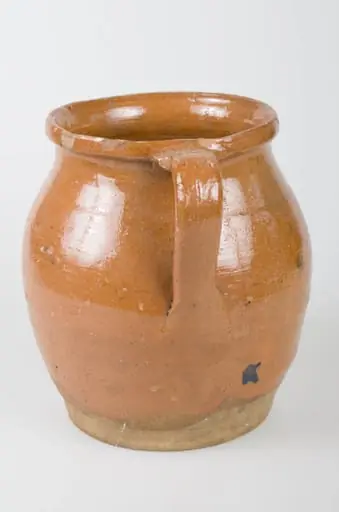 Vas bombat în partea mediană și cu buza răsfrântă spre exterior, gât scurt, smălțuit. Prezintă o toartă ce leagă marginea vasului cu partea de diametru maxim. Pe cea mai mare parte a vasului decor având în plan central o floare cu petale maron și punct albastru în mijloc, peste care se sprapun motive palmate în alb, întreg registrul fiind încadrat de alte linii palamte în albastru ce radiază din floare, și câte o linie ondulată albă și albastră dispuse în partea superioară, respectiv inferioară. Prezintă urme de uzură funcțională. Cromatică: fond: cărămiziu; motive: albastru; maro; alb.
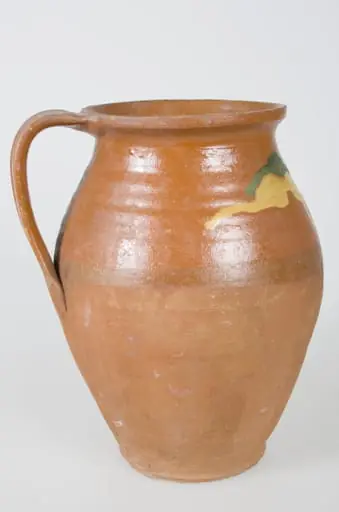 Vas bombat în partea mediană și cu buza evazată, smălțuit în jumătatea superioară. Prezintă o toartă ce leagă buza vasului de partea mediană. Decorații frontale realizate prin stropire, sub forma a două linii suprapuse și neregulate dispuse orizontal. Cromatică: fond cărămiziu; motive: verde; galben.
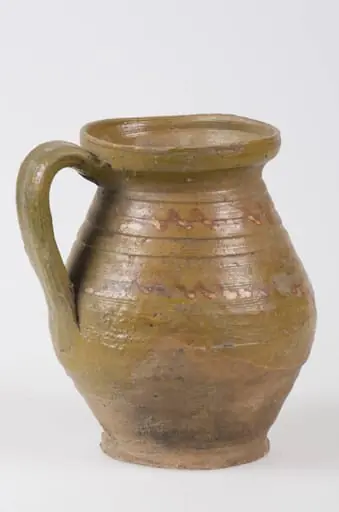 Vas bitronconic cu gât scurt și foarte profilat, cu gura înaltă și dreaptă. Prezintă o toartă care pleacă de sub buză și se unește cu corpul sub zona diametrului maxim. Este smălțuit în interior și la exterior (parțial nesmălțuit în partea de jos). În partea superioară prezintă un decor geometric realizat din cinci linii incizate și două linii în val pictate. Toarta este decorată cu puncte. Cromatică: fond: cărămiziu și pe alocuri verziu; motive: alb; maroniu. Prezintă uzură funcțională.
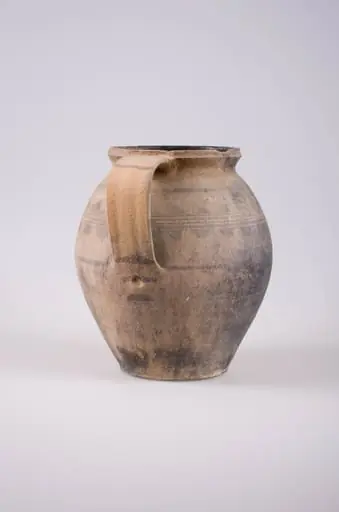 Oală borcan cu corp pântecos bombat cu gât profilat, cu buza evazată tăiată drept și toartă lată. Decorat în partea superioară cu cinci linii ușor adâncite realizate cu piaptănul care secționează un val pictat realizat cu degetul încadrate de două linii maro-roșcat. Toarta prezintă două caneluri este decorată cu o linie în partea superioară și trei linii în partea inferioară. Cromatică: fond: cărămiziu; motive: maro-roșcat. Prezintă urme de ardere secundară.
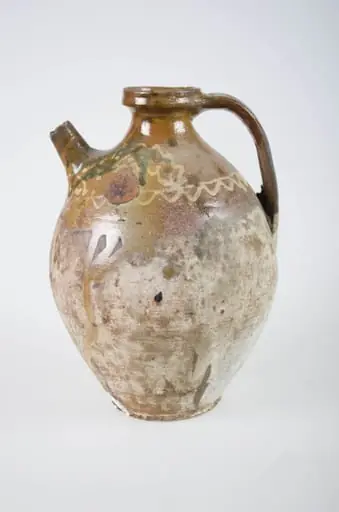 Vas de formă ovoidală cu gât lung, cu gura largă și buza înălțată. Prezintă o toartă care pleacă din gura vasului și se unește cu corpul în zona diametrului maxim. Din umăr, în partea opusă torții pleacă o țâță scurtă (burciuc). Vasul este smălțuit pe exterior în partea superioară unde prezintă și un decor format din motive geometrice: linie și linie în val deasupra cărora se regăsesc motive florale. Cromatica: fond: cărămiziu; motiver: alb-gălbui, verde. Prezintă uzură funcțională.
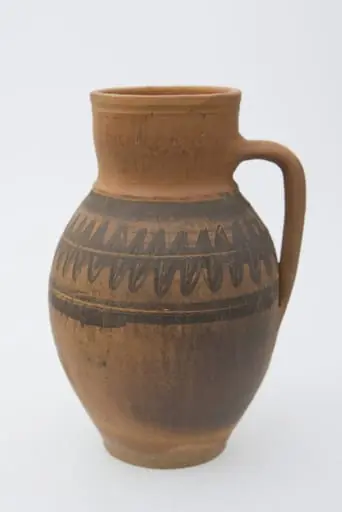 Recipient sferoidal, bombat în partea mediană, gât puțin adunat și gura largă. Prezintă toartă laterală ce leagă partea inferioară a gâtului cu partea de diametru maxim al ulciorului. Decor în partea superioară a vasului compus din linii orizontale dintr-o bandă zimțată neagră ce ilustrează motivul ”dintelui de lup'' (linie frântă în unghi ascuțit), încadratată de două linii dispuse circular. Peste linia zimțată se suprapune o linie trasată în humă, precum și incizii superficiale ce urmăresc conturul motivului decorativ. Cromatică: fond: rosu-cărămiziu; motive: negru.
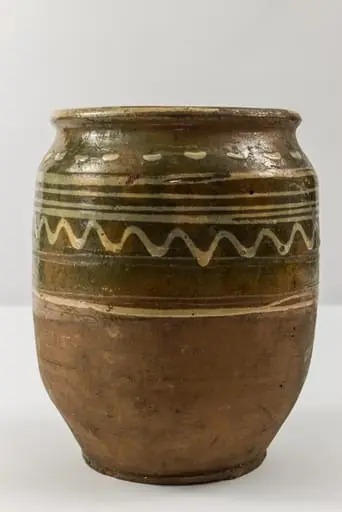 Piesă din lut modelat la roată, smălțuită în interior și parțial în exterior, de formă aproape cilindrică, cu pereții ușor îngustați spre bază, cu gură ușor răsfrântă. Decorul vasului este dispus pe suprafața exterioară, de la mijloc în sus, astfel: o dungă albă, un registru cu motivul valul, un grup de cinci cercuri concentrice, un registru cu motive liniare și punctiforme. Cromatică: maro, ocru, verde, alb.
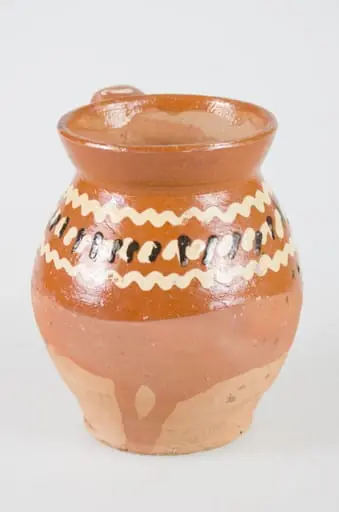 Recipientul este realizat din lut, are dimensiuni mici și formă bitronconică, cu gura mai largă decât baza și fundul plat. Obiectul este smălțuit la exterior, pe doar două treimi din suprafață. Acesta este prevăzut cu o toartă care pleacă din buză până aproape de partea inferioară a vasului. Cana este ornamenată în partea superioară cu pensula, cu motive geometrice: linii alternante albe și negre, dispuse oblic, încadrate de două rânduri de valuri pictate în alb. Din punct de vedere al cromaticii distingem fondul cărămiziu pe care sunt pictate motive cu alb și negru.
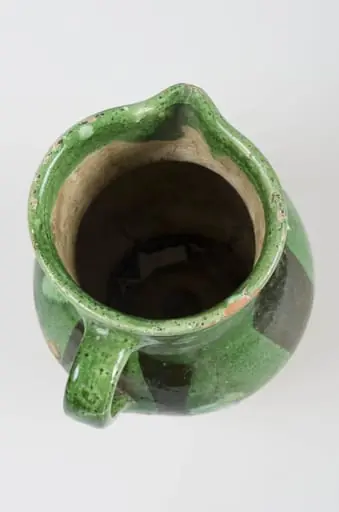 Cană modelată la roată, arsă și smălțuită. Ornamentată cu puncte, picățele, interior nesmălțuit. Vasul prezintă un cioc la buză și o toartă ce pleacă de sub gât și se uneste cu corpul aproape de zona diametrului maxim. Cromatică: verde; maro; roșu-cărămiziu.
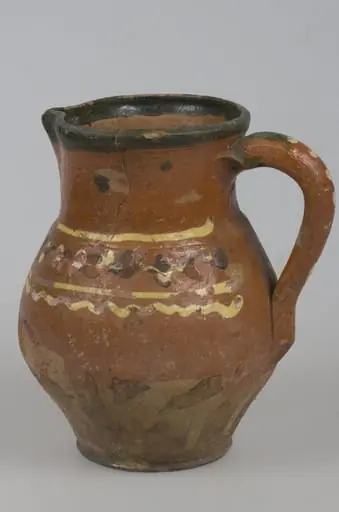 Vas de lut de mici dimensiuni, bombat, cu gât lung și puțin evazat, cu gură largă și cioc de scurgere. Toarta pornește de sub gură și coboară până în zona diametrului maxim al vasului. Este smălțuit în interior și exterior. Decorul dispus pe umărul vasului este format din: motive florale: o cunună din frunze încadrată de motive geometrice: o linie circulară în partea superioară și o linie circulară și una în val în partea inferioară. Buza vasului este vopsită în interior și exterior. Toarta este decorată cu puncte de culoare albă. Cromatică: fond: cărămiziu; motive: alb; verde; negru.
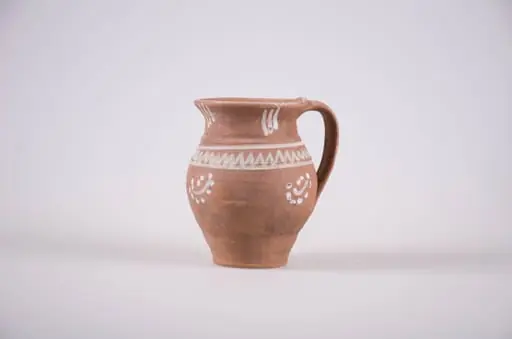 Recipient bitronconic cu gura largă. Prezintă toartă laterală care pleacă din buză până la diametrul maxim al vasului. Decor geometrizant pe partea superioară a vasului și pe toartă; linii paralele, cercuri, linie ondulată, puncte. Cromatică: fond: cărămiziu; motive trasate cu angobă albă. Vasul este nesmălțuit.
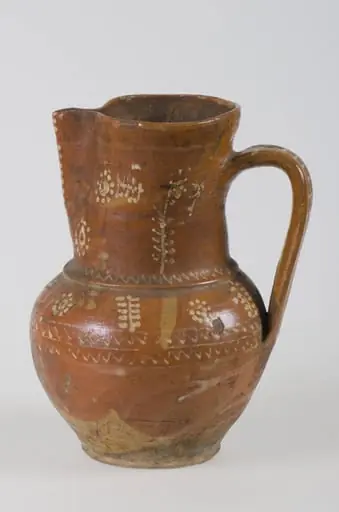 Cană înaltă cu o toartă și gura ovoidală terminată cu un cioc pe partea opusă torții. Toarta pornește de sub gură și se termină sub diametrul maxim al vasului. Smălțuită exterior. Decorată pe toată suprafața cu motive florale stilizate, motive fitomorfe (frunze stilizate) și motive geometrice: linie, linie ondulată, punct. Cromatică: fond: maroniu; motive: alb.