Artwork
Vas de formă tronconică și buza rotunjită, smălțuit în interior. În interior marginile conturate cu două linii dispuse circular, una neagră pe buza vasului, iar cealaltă albă. Pe pereții interiori prezintă un decor format dintr-o floare stilizată. Cromatică: fond: brun; motive: verde; alb; negru.
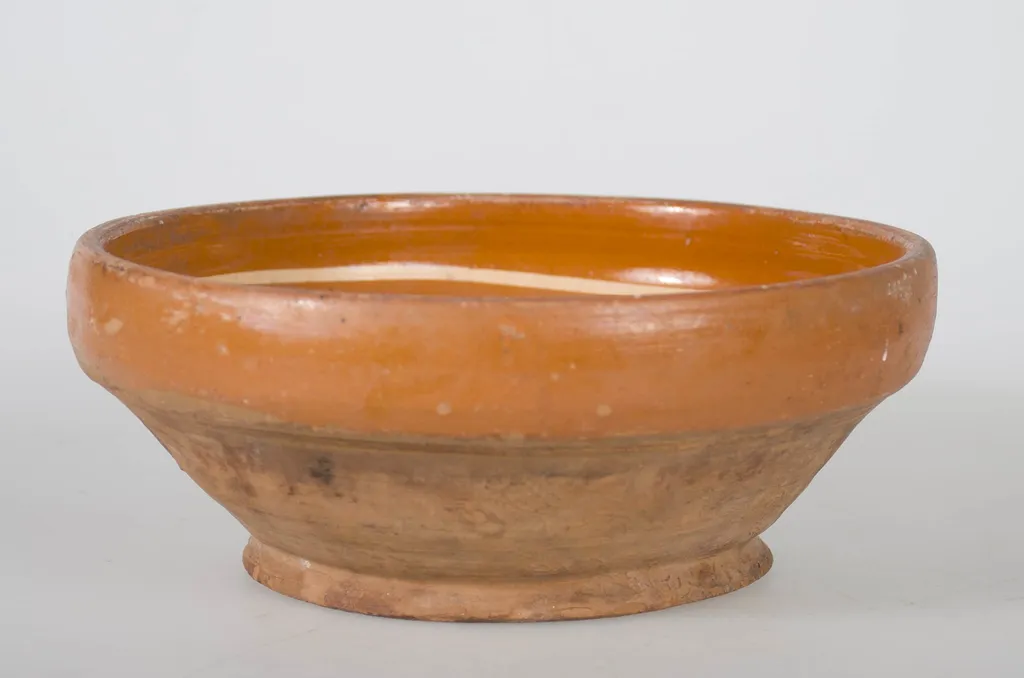
Vas de formă tronconică și buza rotunjită, smălțuit în interior. În interior marginile conturate cu două linii dispuse circular, una neagră pe buza vasului, iar cealaltă albă. Pe pereții interiori prezintă un decor format dintr-o floare stilizată. Cromatică: fond: brun; motive: verde; alb; negru. is a photography by Unknown. It dates from 1850 and is held in the collection of the ASTRA National Museum Complex.
About this work
Overview
This ceramic vessel features a conical form with a rounded rim, crafted from fired clay and glazed internally with a smooth, light brown finish.
This ceramic vessel features a conical form with a rounded rim, crafted from fired clay and glazed internally with a smooth, light brown finish. Its exterior bears a darker brown glaze, creating a subtle contrast. The interior surface is minimally decorated, emphasizing form over ornamentation, with a single stylized floral motif positioned along the upper wall, framed by two concentric lines—one black, one white—tracing the rim’s edge.
Subject & Meaning
The central decoration is a simplified floral pattern rendered in green, white, and black pigments. Its abstract nature suggests symbolic intent rather than naturalistic representation, possibly reflecting regional motifs tied to fertility, seasonal cycles, or domestic ritual. The restraint in design implies a functional object imbued with cultural significance, where ornamentation served both aesthetic and ceremonial purposes without overt narrative.
Technique & Style
The vessel was formed from hand-modeled clay, then coated with a glossy glaze applied internally to seal and enhance durability. Decoration was painted with mineral-based pigments before firing, using fine brushes or tools to achieve crisp, linear details. The use of contrasting colors—black, white, and green—on a brown ground reflects a deliberate chromatic economy, typical of utilitarian ceramics where visual clarity was prioritized over complexity.
History & Provenance
Though specific origins are unrecorded, the vessel’s form and decoration align with early to medieval ceramic traditions from Eastern Europe, particularly among communities practicing localized pottery techniques. Its preservation suggests it was carefully used or stored, possibly in domestic or ritual contexts. The Museum of Ethnography holds similar examples, indicating its cultural lineage within regional ceramic practices.
Context
This bowl likely belonged to a household or community where ceramics served daily functions—storage, serving, or ritual use. The internal glaze prevented leakage, while the decorative band near the rim may have marked its use in communal or ceremonial settings. Similar vessels from the region indicate a shared visual language among neighboring groups, where ornamentation was subtle but culturally coded.
Legacy
Though not widely documented in major art historical narratives, such vessels contribute to understanding everyday material culture in pre-modern societies. Their survival in museum collections underscores their value as artifacts of domestic life, offering insight into aesthetic preferences, technical skills, and symbolic systems of communities that left few written records.
Artist & collection

 Domestic Scene
 Giacomo and Cardinal Marco, investing Andrea, Abbot of San Zeno, with his Benefice
 The Nymph of Fontainebleau
 Portrait of a Woman
 Madonna and Child with Saints in the Enclosed Garden
 Venus and Minerva
 Family Group of Four on Sofa
 Wall painting from Room H of the Villa of P. Fannius Synistor at Boscoreale
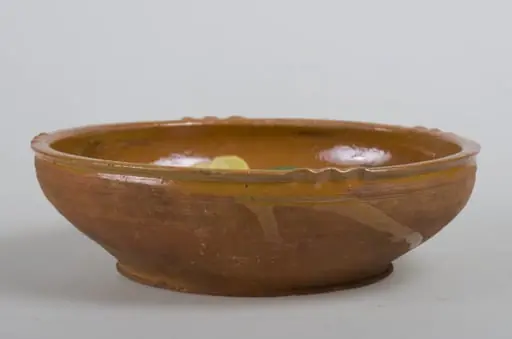 Blidul de formă tronconică este adânc, smălțuit pe interior, ornamentat cu motive florale si aviforme, neornamentat la exterior. Obiectul este smălțuit, la exterior, doar pe buză. Tot la exterior, sub buză, este incizată o linie circulară. Vasul prezintă pe buză decor alveolat. Fundul este circular și prevăzut cu două orificii pentru agățare. Cromatică: fond: cărămiziu; decor: verde; galben; maro.
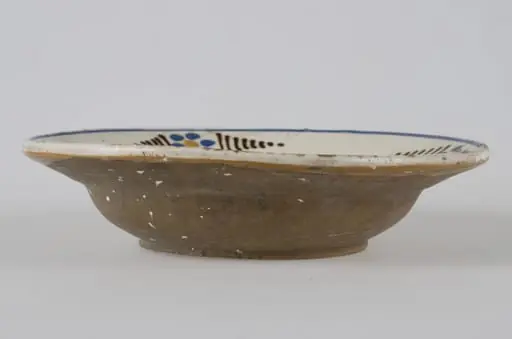 Vas adânc din lut, de formă tronconică, cu marginea evazată. Pe fundalul de culoare albă este decorat cu motive geometrice: linie circulară, linii curbe, puncte pe buza vasului; motive vegetale și florale, pe centrul vasului. Cromatică: fond: alb; motive: albastru; verde; maro; cărămiziu.
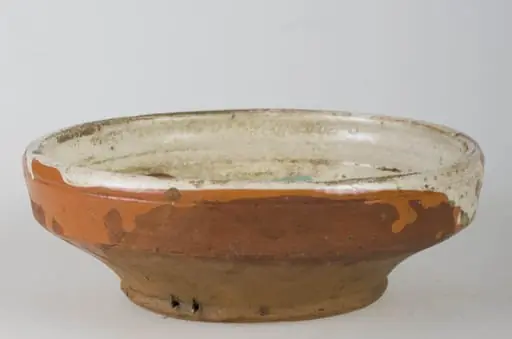 Blidul de formă tronconică este adânc, smălțuit la interior. Acesta este ornamentat cu motive florale, având cu buza înaltă. Totuși, este neornamentat la exterior, fiind smălțuit (la exterior) doar pe buză. Pe exteriorul buzei este incizată o linie. Fundul obiectului are formă circulară, fiind prevăzut cu două orificii pentru prindere. Cromatică: fond: cărămiziu (exterior); alb (interior); decor: verde; albastru; cărămiziu.
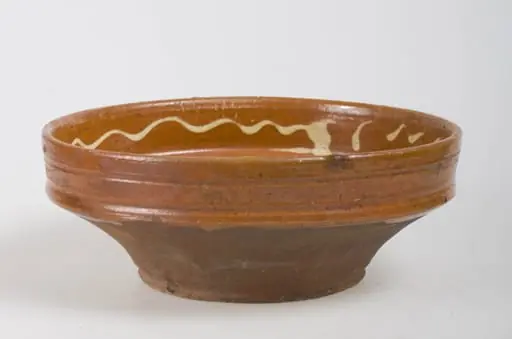 Blidul de formă tronconică, adânc, cu buza înaltă; ornamentat cu motive florale, liniare și curbilinii. Motivele floral vegetale sunt dispuse într-un registru continuu pe fundul vasului și pe diameterul maxim. Acesta prezintă și motive geometrice reprezentate prin linia vălurită dispusă pe interiorul buzei. Obiectul este smălțuit la exterior doar pe buză. Pe exteriorul buzei sunt incizate două linii. Fundul este inelar și prevăzut cu două orificii pentru agățare. Cromatică: fond: cărămiziu; decor: alb; verde; albastru; maro.
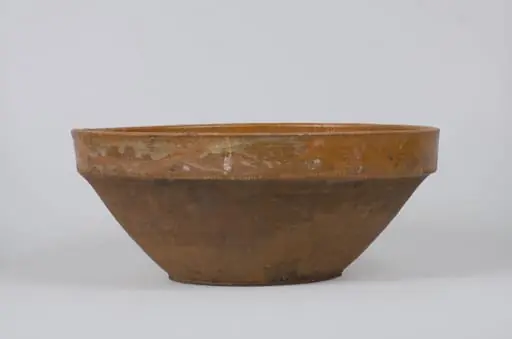 Vas de formă tronconică, foarte adâncită, cu buza înălțată. Este smălțuit în interior și exterior. În zona mediană interioară a vasului se identifică un registru decorativ alcătuit din motive florale și vegetale stilizate, geometrice (punctul și cercul) iar pe fundul vasului se identifică un cerc realizat din puncte. Motivele decorative sunt realizate prin pictare, foarte șterse. Cromatică: fond cărămiziu; verde; galben.
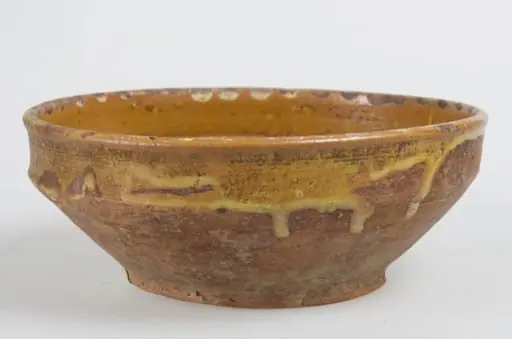 Blidul de formă tronconică este adânc, smălțuit pe interior. Obiectul prezintă ornamente cu motive florale, având buza înaltă. La exterior obiectul nu prezintă ornamente. Vasul este smălțuit la exterior doar pe buză. Acesta prezintă puncte pictate cu pensula pe buză, la interior. Fundul vasului este circular și este prevăzut cu două orificii pentru agățare. Cromatică: fond: cărămiziu; decor: verde; alb; ocru; maro.
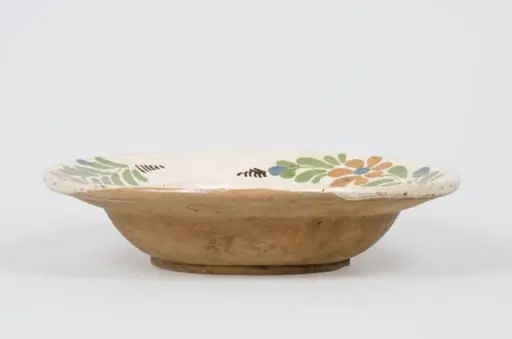 Vas de formă tronconică, adâncit smălțuit în interior. Acesta este decorat pe margine cu motive vegetale și florale pe un registru dispus în zona diametrului maxim. Cromatică: fond cărămiziu (exterior); fond alb (interior); verde; maro; albastru.
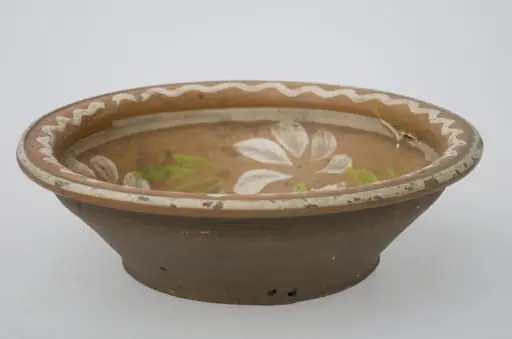 Vas adânc de formă tronconică, cu marginea bombată și evazată marcată de o linie în relief. Smălțuit numai în interior. Prezintă decor floral, iar pe margine două cercuri încadrează o linie frântâ. Cromatică: fond: cărămiziu; motive: alb, verde.
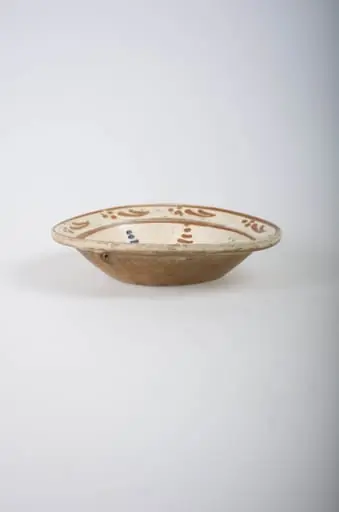 Blid de formă tronconică, smălțuit cu decor amplasat pe toată suprafața, format din motive astrale: stea și motive vegetale. Cromatica: fond: crem; decor: cărămiziu, albastru, verde.
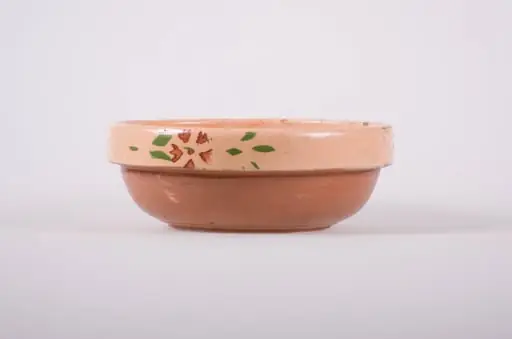 Vas de formă tronconică, adâncit, cu buza foarte înaltă; pe fund are găuri pentru agățare. Este smălțuit interior și exterior. Decorat cu motive geometrice: linie; motive florale. Cromatică: fond; crem; motive: maron; verde.