Artwork
vas decorativ
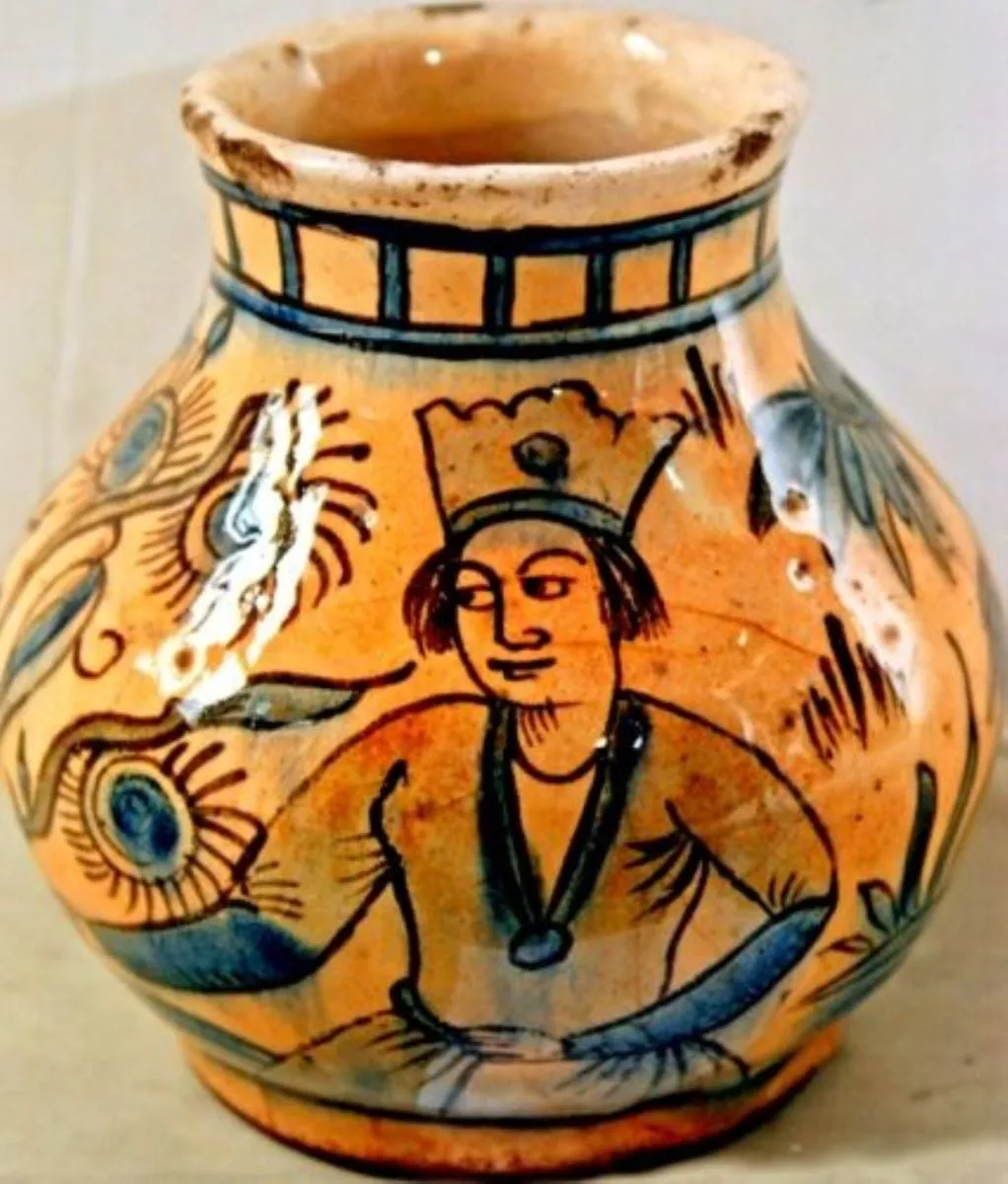
vas decorativ is a photography by Unknown. It dates from 1650 and is held in the collection of the Romanian Academy in Bucharest. This image captures a decorated ceramic vase, rendered in a photograph that emphasizes its surface details.
About this work
Overview
Its decoration features a single human figure, depicted in profile, wearing a crown and flowing robe, suggesting ceremonial or royal significance.
This image captures a decorated ceramic vase, rendered in a photograph that emphasizes its surface details. The vessel is primarily orange with selective blue highlights, suggesting a deliberate color scheme. Its decoration features a single human figure, depicted in profile, wearing a crown and flowing robe, suggesting ceremonial or royal significance. The object held in the figure’s left hand resembles a solar disc, reinforcing symbolic associations with authority.
Subject & Meaning
The central figure, adorned with regalia, likely represents a ruler or divine intermediary. The sun-like object held in the hand may symbolize dominion over natural forces, a common motif in ancient iconography linking leadership with celestial power. The absence of other figures or narrative elements focuses attention on the individual’s status, suggesting the vase served a ritual or commemorative function rather than a purely decorative one.
Technique & Style
The decoration was applied using slip painting or incised techniques common in pre-modern ceramic traditions, with pigment applied before firing to achieve durable color contrast. The stylized rendering of the figure—elongated proportions, simplified features, and flat perspective—reflects a symbolic rather than naturalistic approach. The limited palette of orange and blue indicates intentional restraint, possibly tied to available pigments or cultural aesthetic norms.
History & Provenance
The specific origin of the vase is not documented in the provided details, but its visual language aligns with ancient Near Eastern or Mediterranean ceramic traditions. Its preservation and photographic documentation suggest it entered a museum or private collection in the modern era. The Museum of Ethnography, referenced in the note, may hold comparable examples from similar cultural contexts.
Context
Vases of this type were often used in religious rites, elite burials, or as offerings in ancient societies. The depiction of a solar symbol alongside royal imagery reflects a broader pattern in early civilizations where rulers claimed divine sanction through association with celestial bodies. Similar motifs appear on pottery from Mesopotamia, Egypt, and the Aegean, indicating shared symbolic vocabularies across regions.
Legacy
Though the vase itself may not be widely known, its imagery contributes to the broader understanding of how ancient cultures visualized power. Its survival and documentation allow modern viewers to trace the continuity of symbolic representation—from ritual objects to museum displays. Such artifacts remain vital for studying the intersection of art, authority, and cosmology in pre-industrial societies.
Artist & collection
 Domestic Scene
 Giacomo and Cardinal Marco, investing Andrea, Abbot of San Zeno, with his Benefice
 The Nymph of Fontainebleau
 Portrait of a Woman
 Madonna and Child with Saints in the Enclosed Garden
 Venus and Minerva
 Family Group of Four on Sofa
 Wall painting from Room H of the Villa of P. Fannius Synistor at Boscoreale
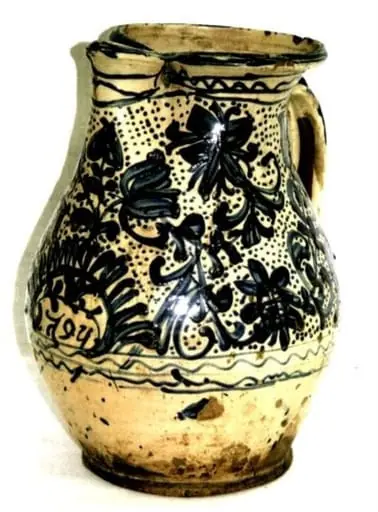 cană de bere
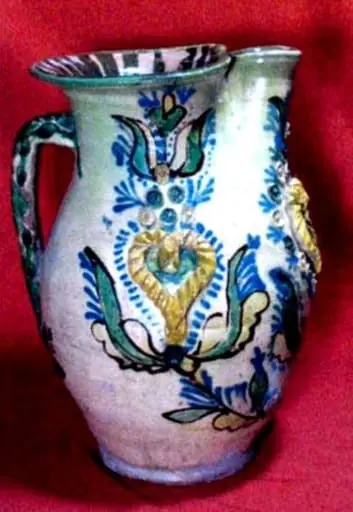 cană
cană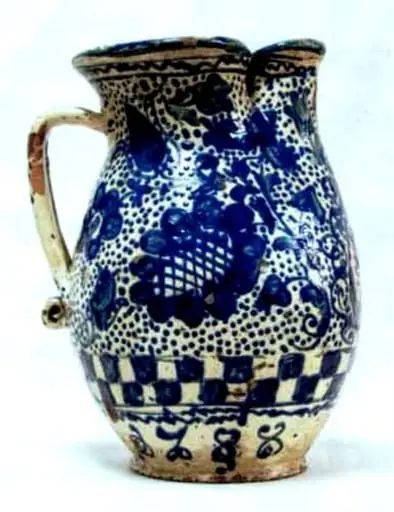 cană de vin
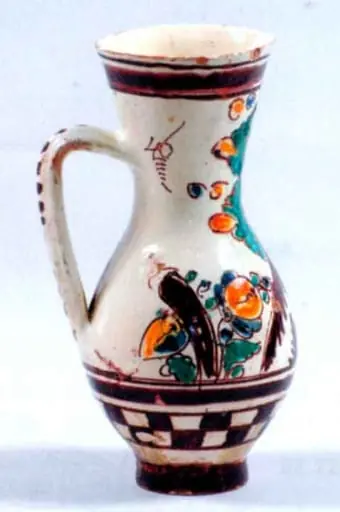 canceu
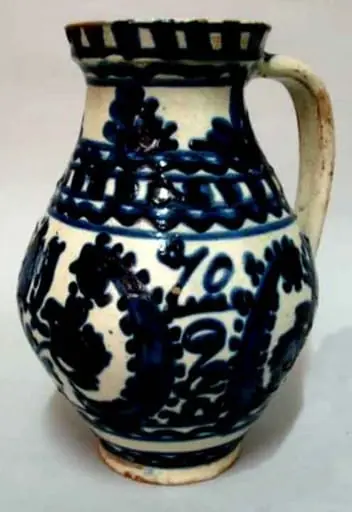 cană de vin
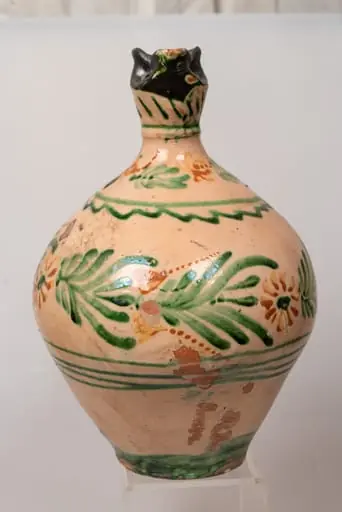 Piesă cu corp sfericl bombat, cu gât profilat, cu gât și gură îngustă, bilobată, cu cior. Din pântecul vasului pornește o toartă tubulară cu orificiu pronunțat pentru băut (cu țâță), care se unește cu vasul sub buza acestuia. Fața exterioară a ulciorului este angobată cu un strat de humă albă, peste care este pictat decorul, cu pensula și cu cornul, astfel: pe partea superioară a vasului, între două grupări de linii concentrice apare o bandă decorată cu motiv floral (o floare rotundă cu multe petale) alternând cu motivul fitomorf caracteristic centrului: frunze alungite, de culoare verde. Pe cant, delimitată de banda decorativă de pe burta vasului de către două linii concentrice, realizate drept și în valuri, este dispusă o bandă decorativă mai îngustă, cu motiv floral și motiv fitomorf delimitat de gât de un brâu colorat. Sub buza bilobată sunt realizate o serie de linii oblice paralele pictate, care continuă pe toată suprafața torții. Fundul vasului este marcat cu o bandă lată orizontală, pictată. Cromatica: alb, maro, verde. Vasul este acoperit cu un strat de smalț transparent.
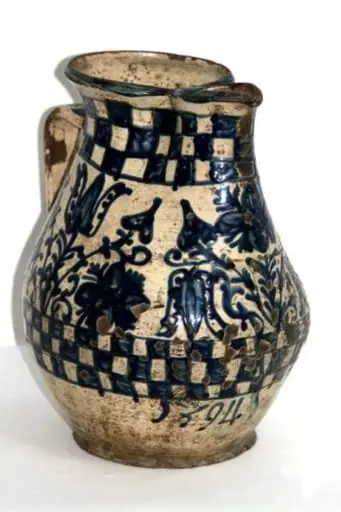 cană cu cioc