Artwork
View of the Custom House and Douana of London
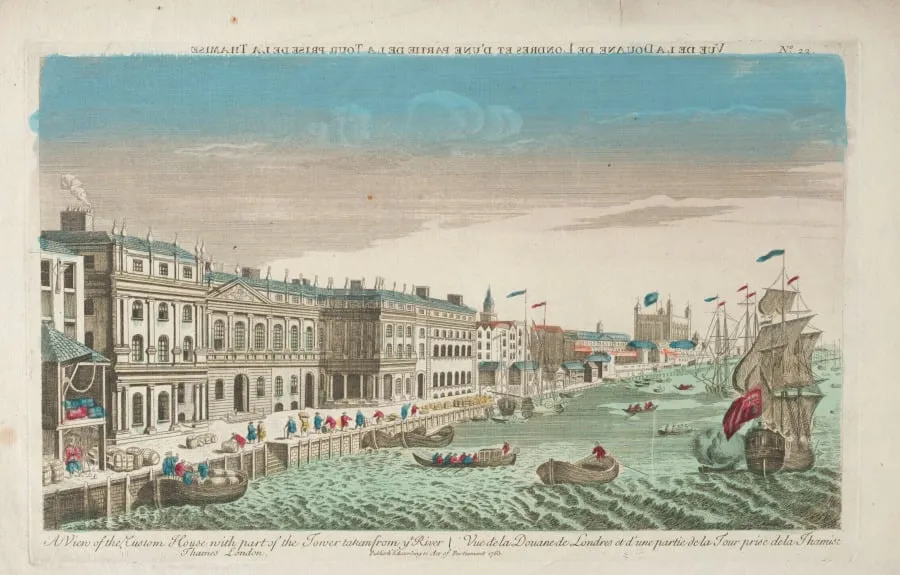
View of the Custom House and Douana of London is a print by the Romanticist artist Unknown. It dates from 1763 and is held in the collection of the Cleveland Museum of Art.
About this work
Overview
This print depicts the Thames riverside near London’s Custom House, capturing the bustling activity of a working port in the early 19th century.
This print depicts the Thames riverside near London’s Custom House, capturing the bustling activity of a working port in the early 19th century. The composition emphasizes movement and scale, with vessels of varying sizes dotting the water and a prominent white administrative building anchoring the left side. Distant towers and layered buildings establish depth, while the sky and water are rendered with muted, atmospheric tones that suggest a transitional time of day.
Subject & Meaning
The scene portrays London as a center of commerce, with ships bearing flags indicating international trade and boats ferrying goods and people along the river. The Custom House, a symbol of state authority over maritime commerce, stands as a quiet counterpoint to the lively activity around it. The image reflects the economic vitality of the port without overt sentiment, presenting industry as an ordinary, ongoing rhythm of urban life.
Technique & Style
The artist employs soft washes and delicate tonal gradations to suggest atmospheric perspective, particularly in the hazy sky and rippling water. Details like flags and masts are rendered with precision, while broader forms are loosely defined, creating a balance between realism and impressionistic effect. The use of light, rather than sharp lines, defines form and space, aligning with Romantic-era tendencies to evoke mood over rigid detail.
History & Provenance
Created during a period of rapid expansion in British maritime trade, the print likely originated as a topographical record or commercial illustration. It may have been produced for a publisher specializing in urban views, intended for a domestic or international audience interested in London’s growing global role. No definitive record of the artist or original publication survives, but similar works circulated in the 1820s–1840s.
Context
At the time, London’s port was the busiest in the world, and the Custom House served as the administrative heart of customs collection. River traffic was dense with merchant vessels, ferries, and smaller craft, all regulated by state officials. The image reflects this reality without idealization, contrasting with more romanticized depictions of nature or ruins that dominated fine art of the era.
Legacy
Though not widely exhibited today, the print contributes to a broader visual archive of 19th-century London’s waterfront. It offers a quiet, unembellished record of urban industry, preserving details of ship design, architecture, and river life that later photographs would capture more precisely. Its value lies in its unpretentious documentation of a pivotal economic landscape.
Artist & collection

 Domestic Scene
 Giacomo and Cardinal Marco, investing Andrea, Abbot of San Zeno, with his Benefice
 The Nymph of Fontainebleau
 Portrait of a Woman
 Madonna and Child with Saints in the Enclosed Garden
 Venus and Minerva
 Family Group of Four on Sofa
 Wall painting from Room H of the Villa of P. Fannius Synistor at Boscoreale
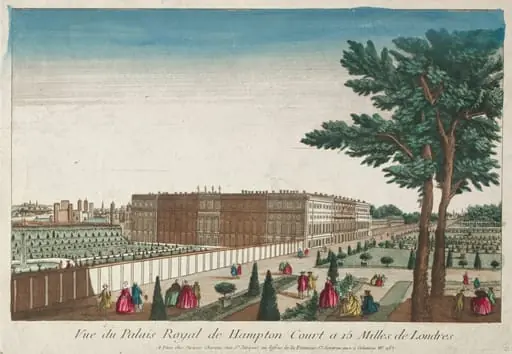 View of the Royal Palace of Hampton Court
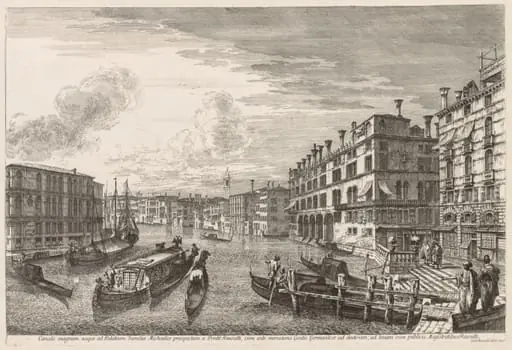 Views of Venice: Grand Canal
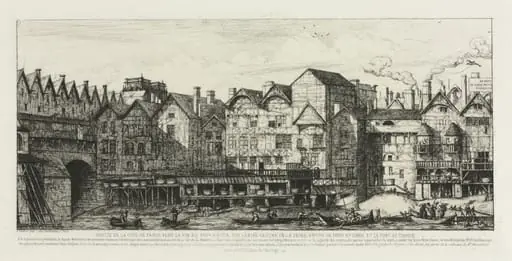 Part of the City of Paris at the End of the Seventeenth Century
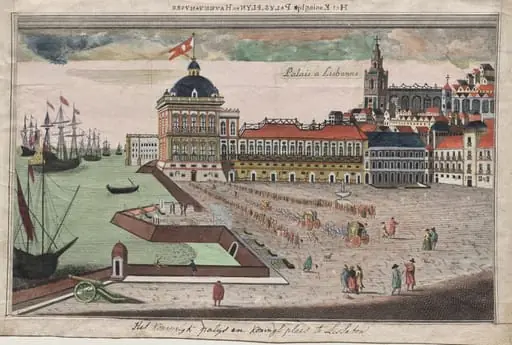 Vista y Prospettiva del Palacio del Rey de Portugal en Lisbona
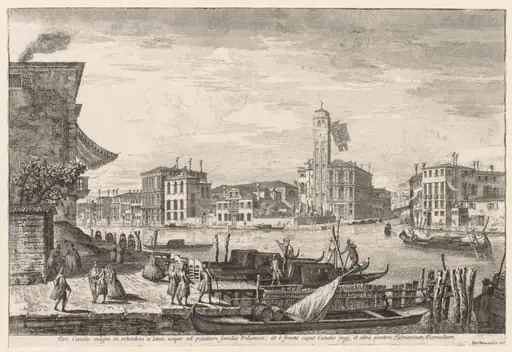 Views of Venice: Cannaregio
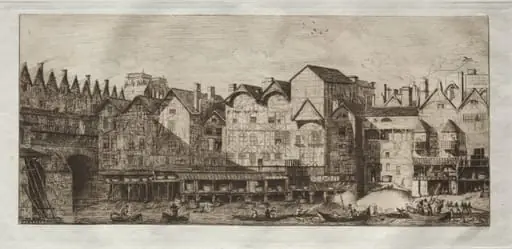 Partie de la cité vers la fin du XVIIe siècle
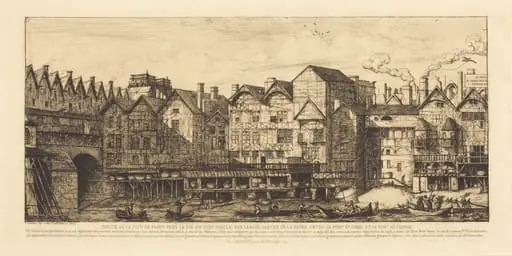 Partie de la Cité vers la fin du XVIIe siècle (View of the City of Paris Towards the Close of the XVIIth Century)