Artwork
View of the Royal Palace of Hampton Court
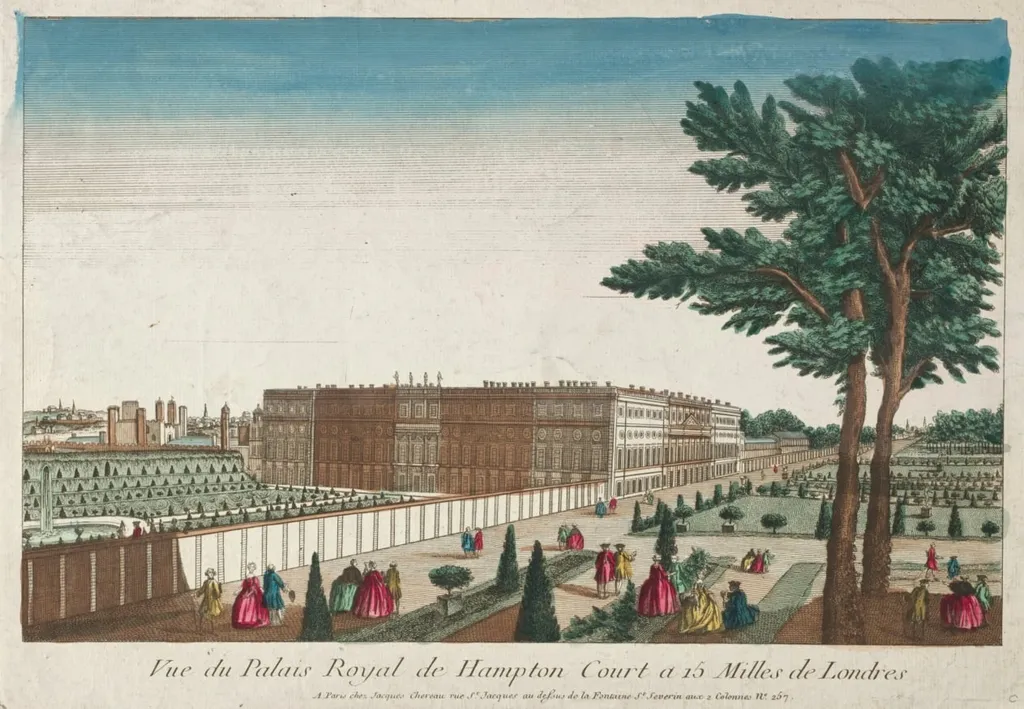
View of the Royal Palace of Hampton Court is a print by the Baroque artist Unknown. It dates from 1750 and is held in the collection of the Cleveland Museum of Art.
About this work
You see a sunny day at Hampton Court Palace: red brick, tall windows, and a long gravel drive leading to the entrance.
You see a sunny day at Hampton Court Palace: red brick, tall windows, and a long gravel drive leading to the entrance.
This painting is one of the few that show the palace before the Victorians added towers and fancy stonework. The artist stood far enough back to include the whole building, so the trees look like tiny broccoli florets.
If you like this quiet view of 18th-century England, look up more paintings tagged “england, 18th century.”
Overview
The print presents a sunlit perspective of Hampton Court Palace, emphasizing its red‑brick façade, tall windows and the long gravel drive that leads to the main entrance. The composition captures the entire structure from a distance, allowing the surrounding trees to appear as small, clustered forms against the sky.
Subject & Meaning
Depicting the palace before the later Victorian embellishments, the image offers a rare visual record of its earlier, more restrained architecture. The tranquil setting and clear daylight convey an atmosphere of 18th‑century English serenity, inviting viewers to imagine the site as it appeared prior to later ornamental additions.
Technique & Style
Executed as a print, the work relies on precise line work to delineate the building’s brickwork and windows, while tonal shading suggests the sun’s illumination. The distant trees are rendered in simplified, rounded shapes that resemble miniature broccoli heads, a stylistic choice that balances detail with the broad vista.
History & Provenance
The piece belongs to a limited group of visual sources that document Hampton Court before the 19th‑century modifications. Its survival provides scholars with comparative material for studying the palace’s architectural evolution and the changing aesthetic preferences of English landscape representation.
Artist & collection

 Domestic Scene
 Giacomo and Cardinal Marco, investing Andrea, Abbot of San Zeno, with his Benefice
 The Nymph of Fontainebleau
 Portrait of a Woman
 Madonna and Child with Saints in the Enclosed Garden
 Venus and Minerva
 Family Group of Four on Sofa
 Wall painting from Room H of the Villa of P. Fannius Synistor at Boscoreale
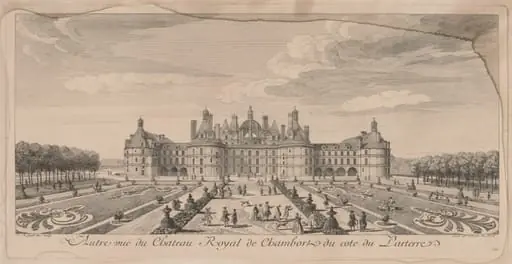 Chateau Chambord from the Gardens
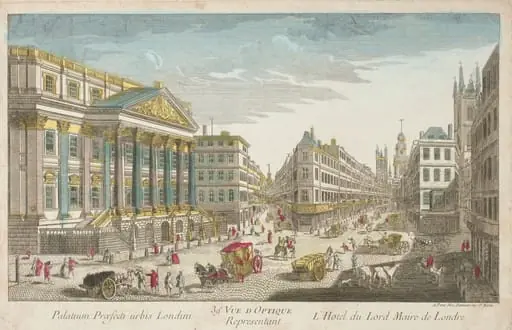 Residence of the Lord Mayor of London
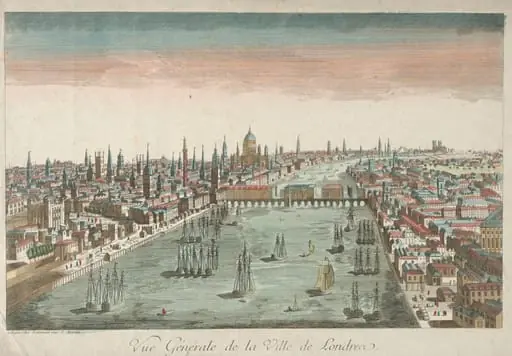 General View of London
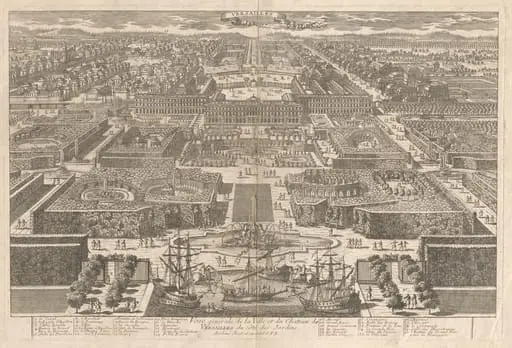 Veüe générale de la Ville et du Chateau de Versailles du côté des Jardins (View of Versailles)
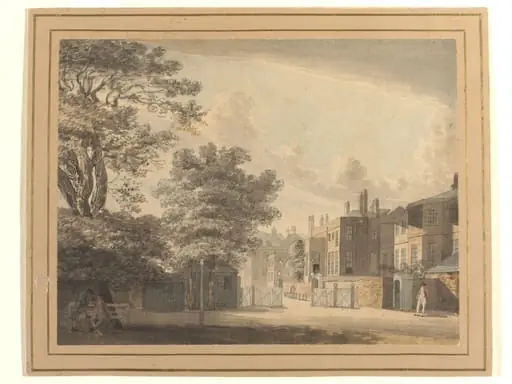 Birdcage Walk, London
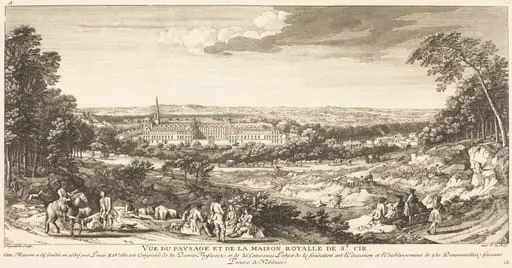 Vue du Paysage de la Maison Royalle de Saint Cir
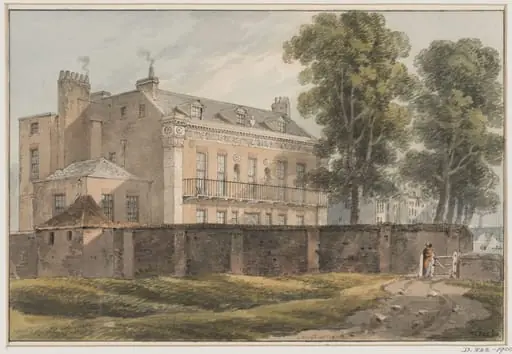 Peterborough House, Millbank, Westminster
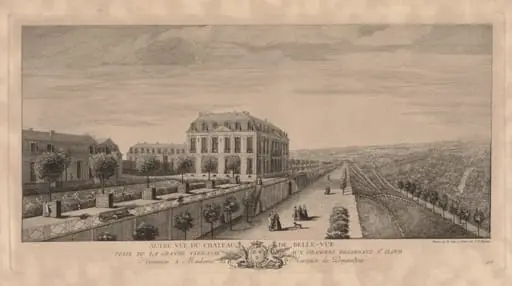 Chateau Bellevue
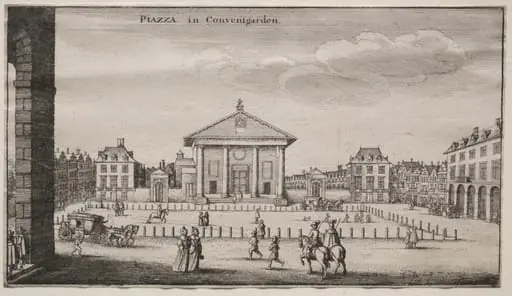 Views of London: The Piazza in Covent Garden
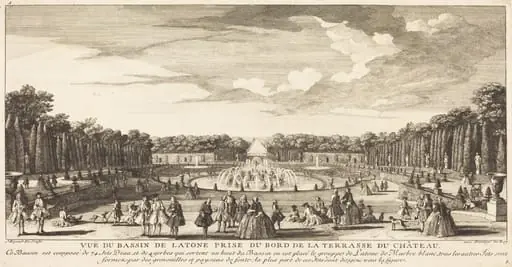 Vue du Bassin de Latone Prise du Bord de la Terrasse du Chateau
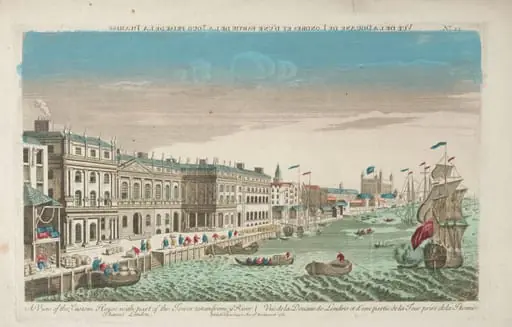 View of the Custom House and Douana of London
 View of the City and London Bridge