Artwork
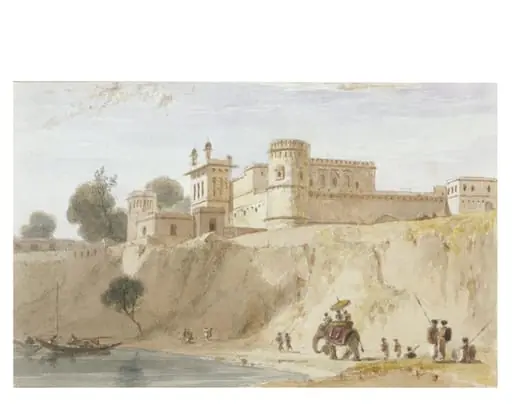
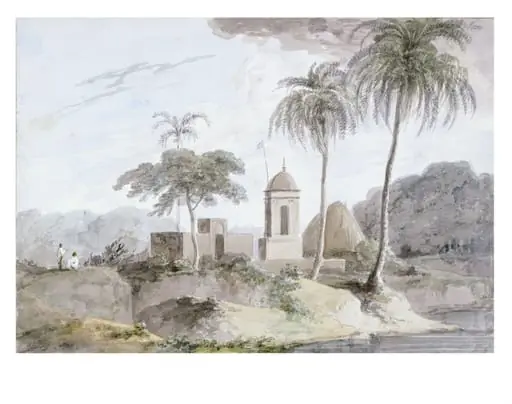
View of the Old Fort, Calcutta
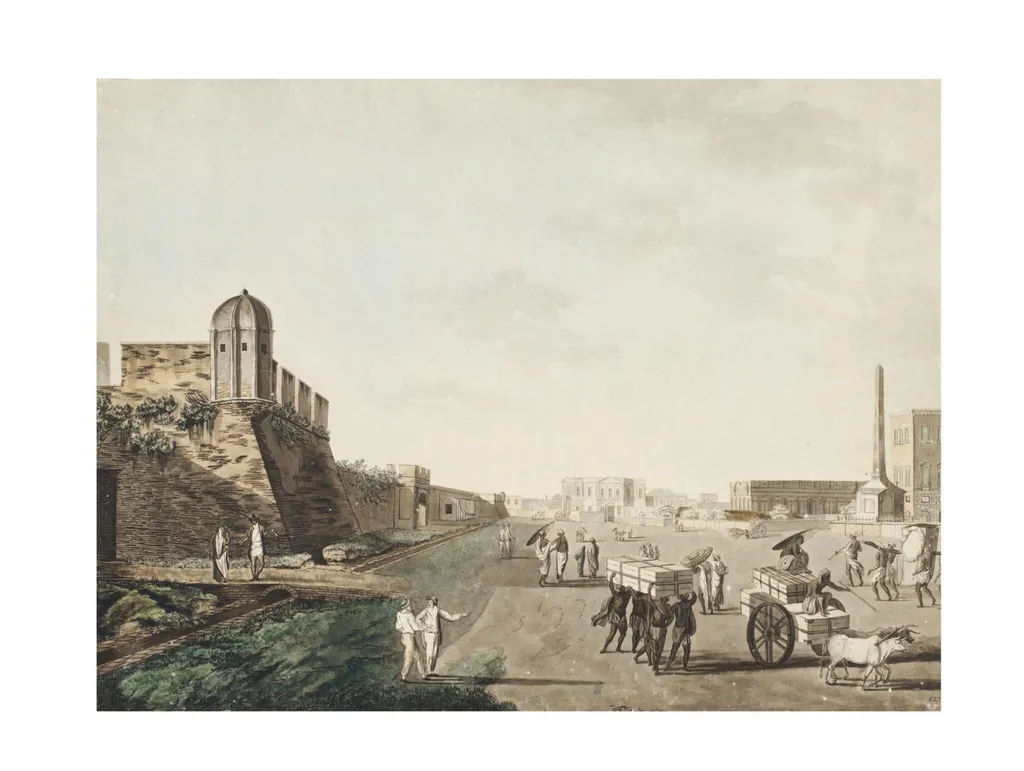
View of the Old Fort, Calcutta is a watercolor work on paper by Unknown. It dates from 1750 and is held in the collection of the Victoria and Albert Museum.
About this work
Overview
This watercolor depicts a bustling thoroughfare in late 18th-century Calcutta, capturing daily life along a road leading toward a fortified structure.
This watercolor depicts a bustling thoroughfare in late 18th-century Calcutta, capturing daily life along a road leading toward a fortified structure. The scene is rendered in delicate washes, with soft tonal gradations suggesting atmospheric depth and the dryness of the urban environment. Figures move along the path, engaged in commerce and transit, while architectural elements frame the composition with quiet symmetry.
Subject & Meaning
The painting presents a snapshot of colonial Calcutta’s urban fabric, where local activity unfolds near a British military installation. The presence of carts drawn by goats, pedestrians carrying goods, and modest buildings reflects the hybrid character of the city. The fort and obelisk serve as markers of authority and commemoration, subtly anchoring the scene within a colonial hierarchy.
Technique & Style
The artist employed transparent watercolor washes to build subtle layers of tone, avoiding heavy outlines. Light shading defines the textures of stone walls, thatched roofs, and dusty ground, while pale hues for sky and architecture create a sense of heat and distance. The composition balances movement in the foreground with static monuments, using spatial recession to guide the viewer’s eye.
History & Provenance
The work originates from the British colonial period in India, likely produced by an artist working in Calcutta during the late 1700s. It entered the collection of the Victoria and Albert Museum through documented acquisitions of Indian topographical watercolors, a genre favored by European residents for documenting the landscape and urban life of the subcontinent.
Context
During this era, watercolor views of Indian cities were commissioned by British officials and traders as records of place and power. Calcutta, as the capital of British India, attracted artists who documented its evolving streetscapes. This piece reflects both the physical reality of the city and the colonial gaze that sought to order and observe its complexity.
Legacy
As a representative of early colonial topographical art, the painting contributes to the historical record of urban life in South Asia under British administration. It remains a primary visual source for scholars studying the material culture and spatial organization of 18th-century Calcutta, preserved for its documentary value rather than aesthetic novelty.
Artist & collection

 Domestic Scene
 Giacomo and Cardinal Marco, investing Andrea, Abbot of San Zeno, with his Benefice
 The Nymph of Fontainebleau
 Portrait of a Woman
 Madonna and Child with Saints in the Enclosed Garden
 Venus and Minerva
 Family Group of Four on Sofa
 Wall painting from Room H of the Villa of P. Fannius Synistor at Boscoreale
![Topçular Barracks on the outskirts of Pera[?], by Anonymous Greek artist](https://artifactworldgallery.com/img/anonymous-greek-artist--topcular-barracks-on-the-outskirts-of-pera--81cd3e7e912c2328-w320.webp)