Artwork
Untitled
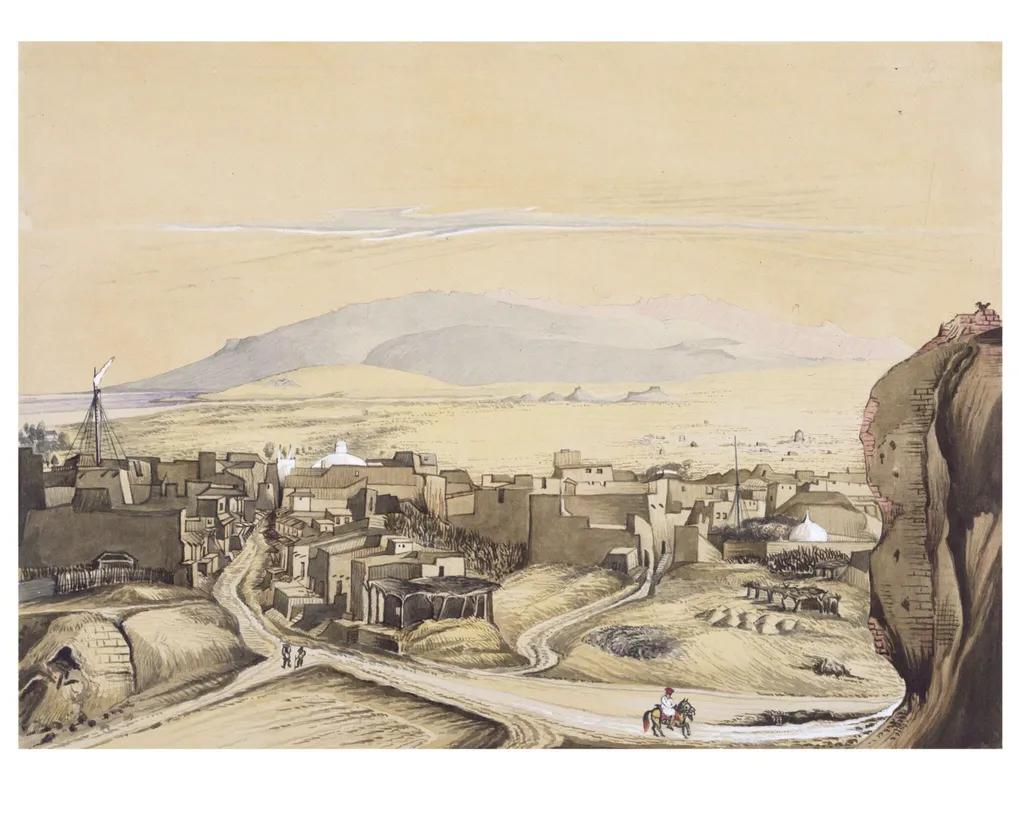
Untitled is a paint painting by H. F. Ainslie. It is held in the collection of the Victoria and Albert Museum. This watercolor by H.
About this work
Overview
The scene presents a settlement nestled against arid hills, its architecture low and unadorned, blending into the natural terrain.
This watercolor by H. F. Ainslie captures the desert town of Sewan in Sindh, Pakistan, with quiet precision. The scene presents a settlement nestled against arid hills, its architecture low and unadorned, blending into the natural terrain. A solitary horseman travels a narrow path, while distant mountains dissolve into a pale sky. Subtle shifts in light and muted tones convey the intensity of the sun and the stillness of the environment.
Subject & Meaning
The painting portrays Sewan as a quiet, isolated settlement shaped by its arid surroundings. The lone rider suggests human presence without narrative drama, emphasizing endurance rather than activity. Windmills and small vessels near the water hint at local subsistence, while the absence of crowds or grand structures reflects a landscape defined by restraint and adaptation to scarcity.
Technique & Style
Ainslie employed soft washes and restrained color to evoke the dry, sun-baked terrain. The palette favors pale ochres, grays, and washed blues, avoiding sharp contrasts. Light falls unevenly across the buildings and slopes, creating delicate shadows that suggest time of day without explicit indication. The brushwork is loose yet controlled, preserving the atmospheric haze of the desert.
History & Provenance
Created during the British colonial period, the work likely stems from Ainslie’s travels in Sindh as part of administrative or surveying duties. It was acquired by the Victoria and Albert Museum, where it remains among other topographical watercolors documenting South Asian landscapes under imperial observation. Its origin reflects a tradition of visual record-keeping tied to colonial geography.
Context
In the 19th century, British officers and surveyors frequently produced watercolors of South Asian towns as both personal records and official documentation. Sewan’s depiction aligns with this practice, emphasizing topography and settlement patterns over cultural detail. Such works served practical purposes in mapping and administration, while also shaping European perceptions of the region’s austerity and order.
Legacy
The painting endures as a quiet example of colonial-era topographical art, valued for its observational clarity rather than artistic innovation. It contributes to a broader archive of South Asian landscapes recorded by outsiders, offering insight into how environments were visually categorized during imperial expansion. Its preservation in the V&A ensures continued access for study and historical reflection.
Artist & collection
Artist
H. F. Ainslie painted the quiet corners of London’s backstreets, turning gaslit alleys into glowing rectangles of color. He worked fast, often finishing a canvas in an afternoon, leaving just enough brushwork for you to…

 Bethany
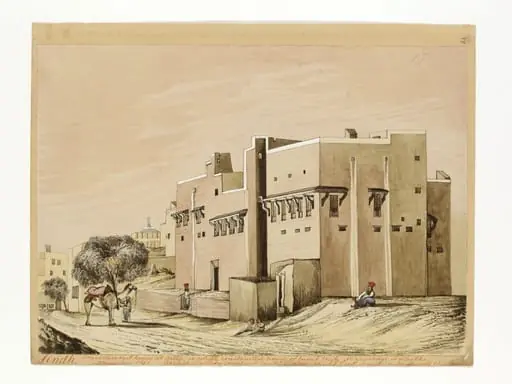 Exterior of the traveller's rest house, formerly the East India Company's Factory, Tatta
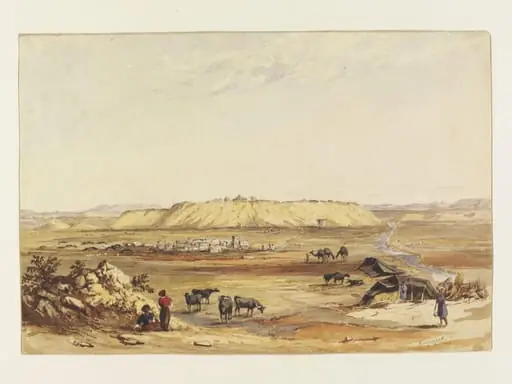 Kouyunjick
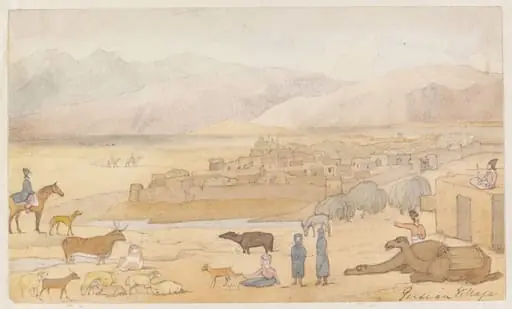 Persian Village
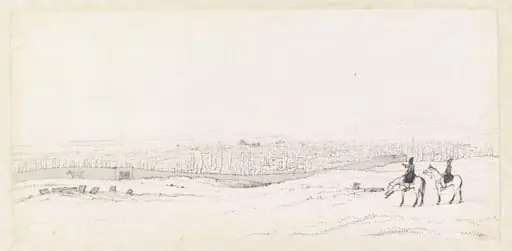 Tabriz
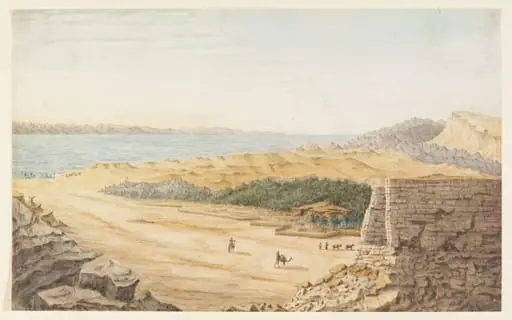 Ancient Ruins in the land of Edom above the bed of a valley and Arab Date gardens
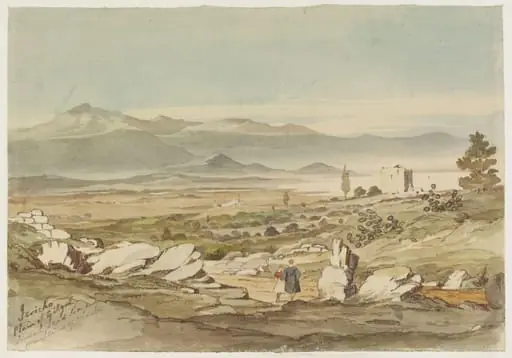 Jericho Plain of Gilgal, Jordan, Dead Sea, and Mountains of Moab
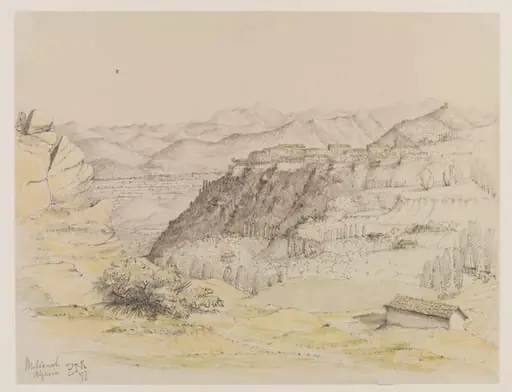 Milianah Algeria
![Cairo, the Nile, and the Pyramids of Gizeh. from the Moccat[e]m, by Unknown](https://artifactworldgallery.com/img/unknown--cairo-the-nile-and-the-pyramids-of-gizeh-from-the-moccat-e-m--6e7774624f6a7e54-w320.webp) Cairo, the Nile, and the Pyramids of Gizeh. from the Moccat[e]m
Cairo, the Nile, and the Pyramids of Gizeh. from the Moccat[e]m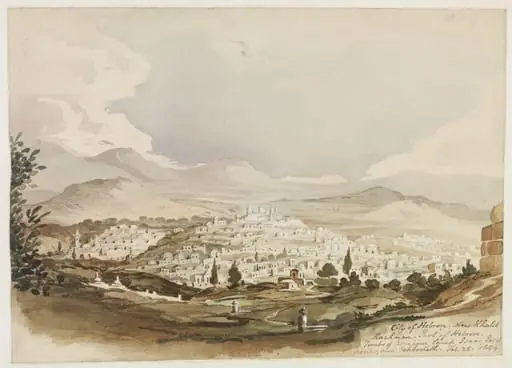 City of Hebron - Now Khalil Rachman - Pool of Hebron. Tombs of Abraham, Sarah, Isaac, Jacob, Abner, and Ishbosheth
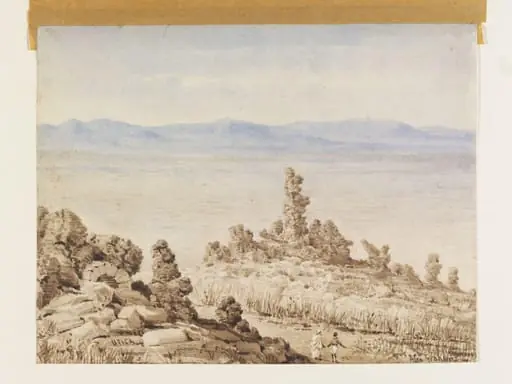 Utica
Utica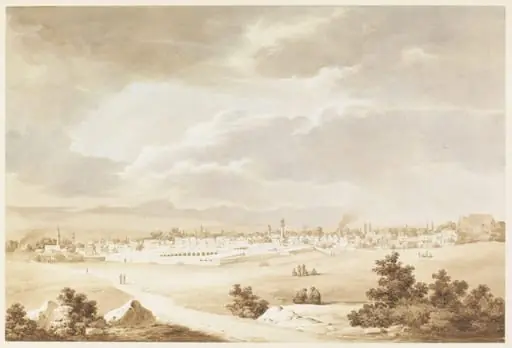 Tarsus