Artwork
Vishnu as Kurma
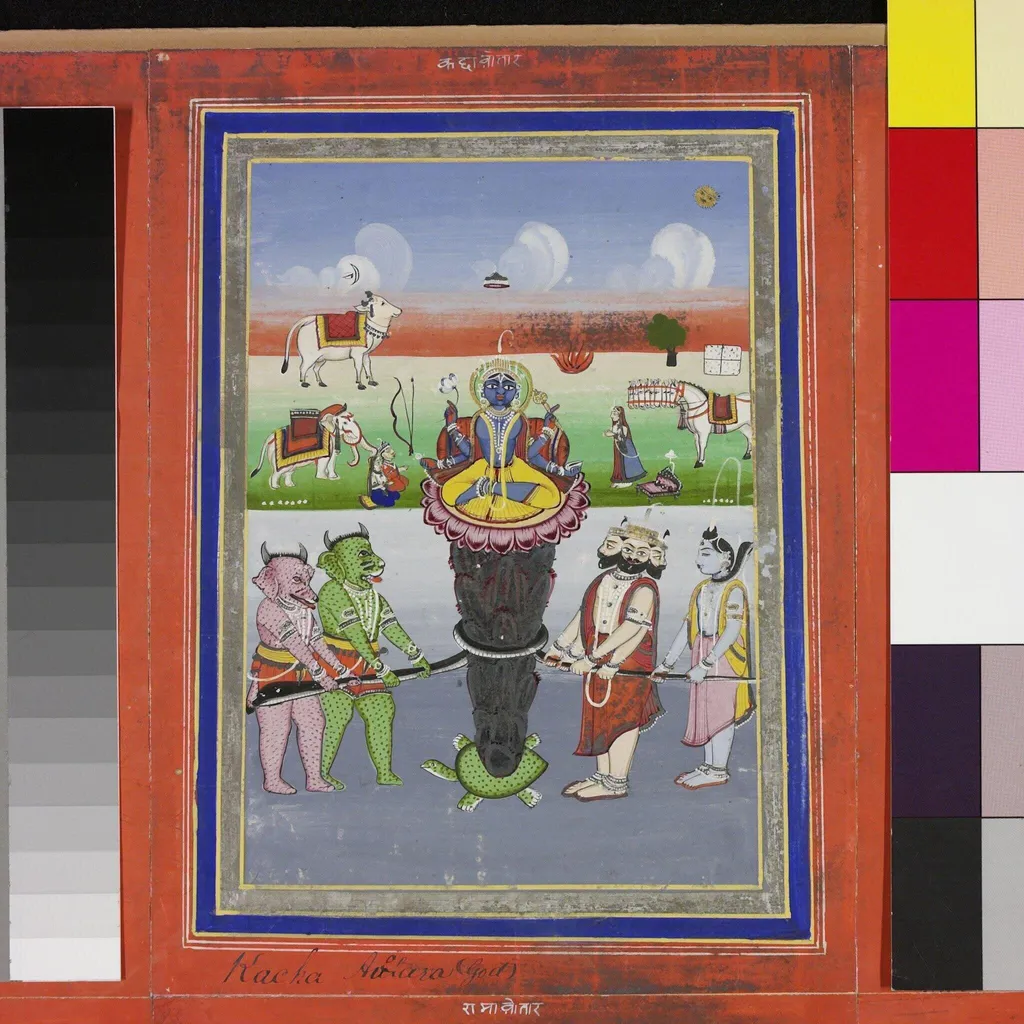
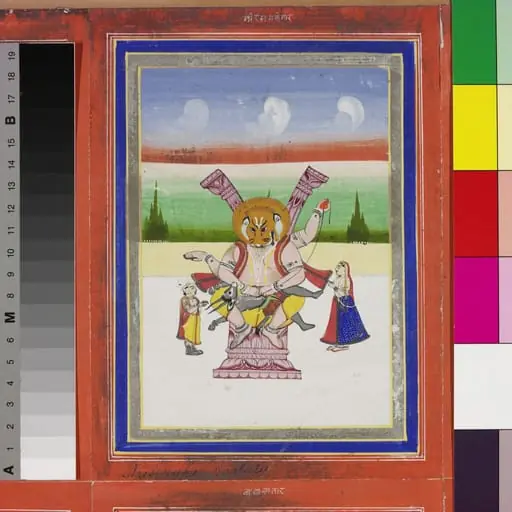
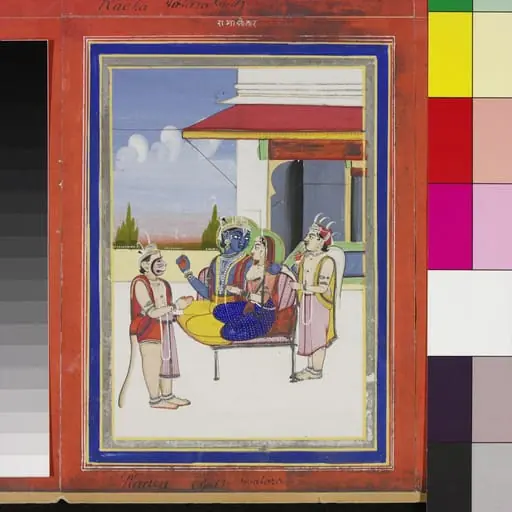
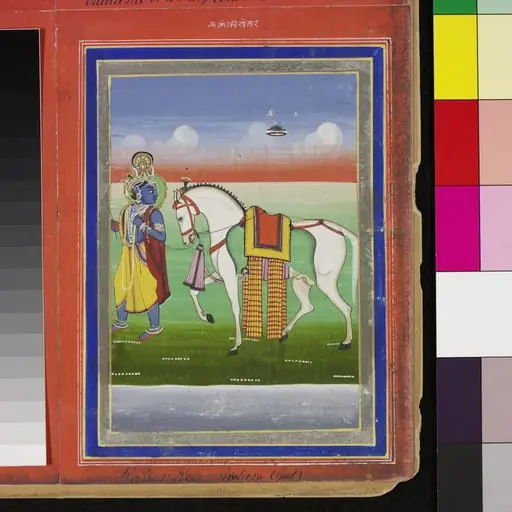
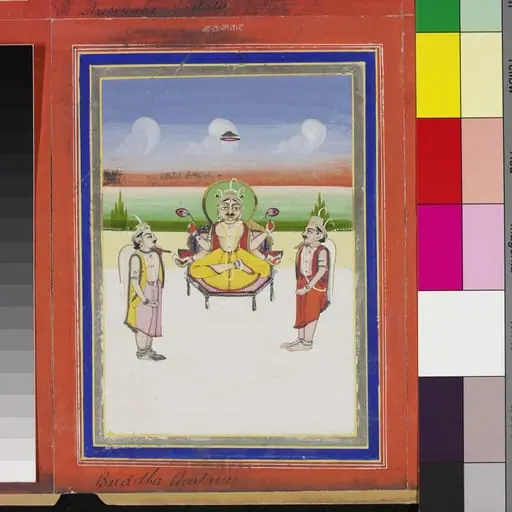
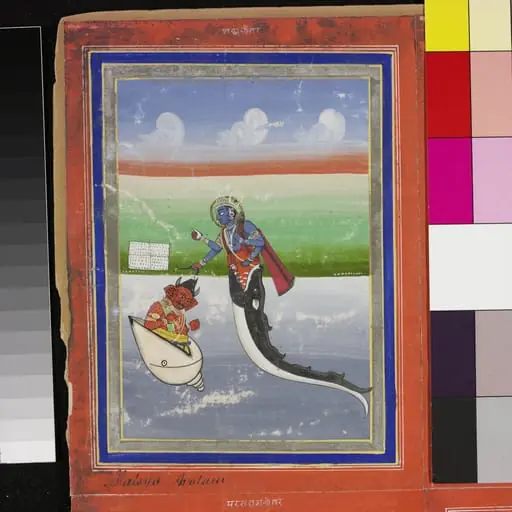
Vishnu as Kurma is a paint painting by Unknown. It dates from 1850 and is held in the collection of the Victoria and Albert Museum.
About this work
Overview
The composition is framed by a bold red and blue border, typical of Pahari or Rajasthani miniature traditions, emphasizing sacred geometry and symbolic order.
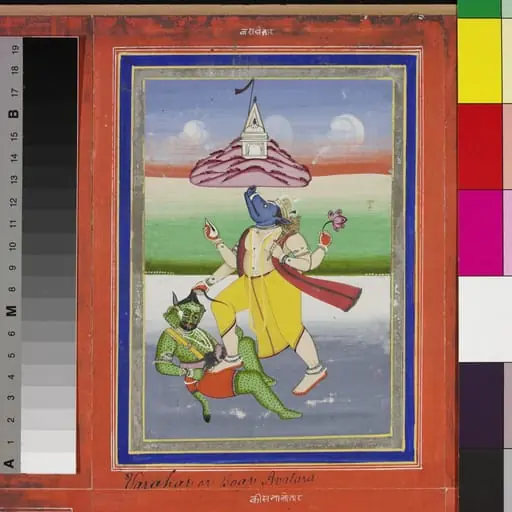
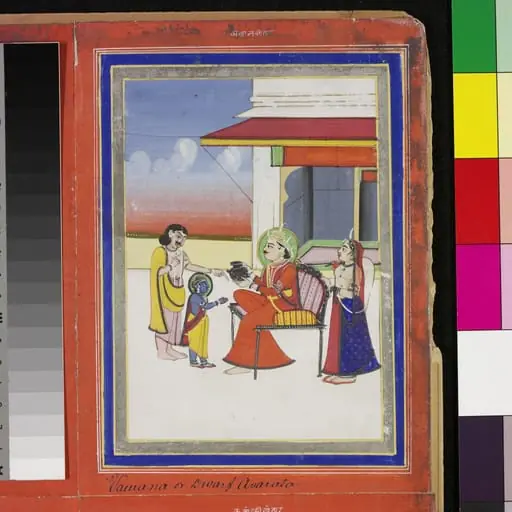
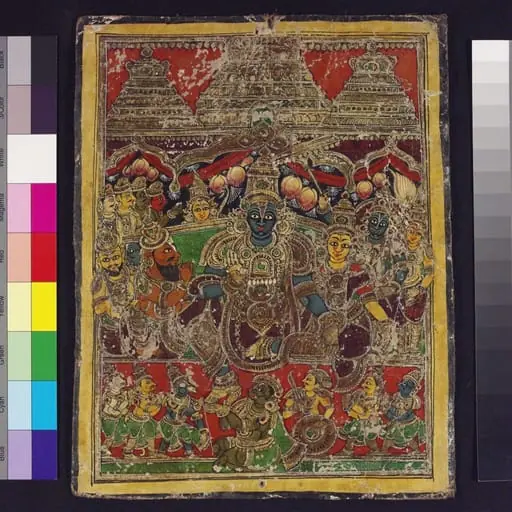
This opaque watercolour on paper illustrates Vishnu’s Kurma avatar, the tortoise incarnation, during the mythic churning of the ocean of milk. The scene centers on Vishnu’s support of Mount Mandara, used as a churning rod, while divine and demonic forces pull the serpent Vasuki to extract amrita. The composition is framed by a bold red and blue border, typical of Pahari or Rajasthani miniature traditions, emphasizing sacred geometry and symbolic order.
Subject & Meaning
The painting depicts a pivotal moment in Hindu cosmology: the cooperative effort between gods and demons to retrieve lost treasures, including the elixir of immortality. Vishnu, as Kurma, embodies stability and divine intervention, bearing the weight of the mountain to sustain the cosmic process. The lotus-adorned turtle shell signifies purity emerging from chaos, reinforcing themes of balance and renewal through divine support.
Technique & Style
Executed in opaque watercolour, the work employs fine brushwork and layered pigments to render intricate details. Figures are stylized with elongated proportions and vivid hues—deep blues for Vishnu, earthy greens for the mountain and creatures—contrasting against warm reds and golds. The border’s thick, rhythmic lines frame the scene with ceremonial gravity, reflecting regional miniature painting conventions that prioritize symbolic clarity over naturalism.
History & Provenance
Though the exact origin and patron are undocumented, the style aligns with late 17th- to early 18th-century North Indian court workshops, likely from the Pahari or Rajasthani regions. Such paintings were often created for devotional use or royal collections, commissioned to illustrate Puranic narratives. The painting’s preservation suggests it was valued within a religious or aristocratic context, possibly part of a larger illustrated manuscript series.
Context
This image belongs to a broader tradition of Hindu devotional art that visualized epic and Puranic stories for ritual and educational purposes. The depiction of gods, demons, and celestial beings in shared action reflects a worldview where cosmic order emerges from cooperation—even between opposing forces. The inclusion of attendant deities’ mounts above the scene reinforces the interconnectedness of divine realms and earthly events.
Legacy
Works like this contributed to the enduring visual language of Vaishnavism in South Asian art. Their precise iconography and symbolic composition influenced later manuscript illustrations and temple murals. While no longer central to worship, such paintings remain important cultural artifacts, studied for their narrative depth and technical refinement within the history of Indian miniature painting.
Artist & collection

 Domestic Scene
 Giacomo and Cardinal Marco, investing Andrea, Abbot of San Zeno, with his Benefice
 The Nymph of Fontainebleau
 Portrait of a Woman
 Madonna and Child with Saints in the Enclosed Garden
 Venus and Minerva
 Family Group of Four on Sofa
 Wall painting from Room H of the Villa of P. Fannius Synistor at Boscoreale