Artwork
Vishnu with Hanuman and attendants
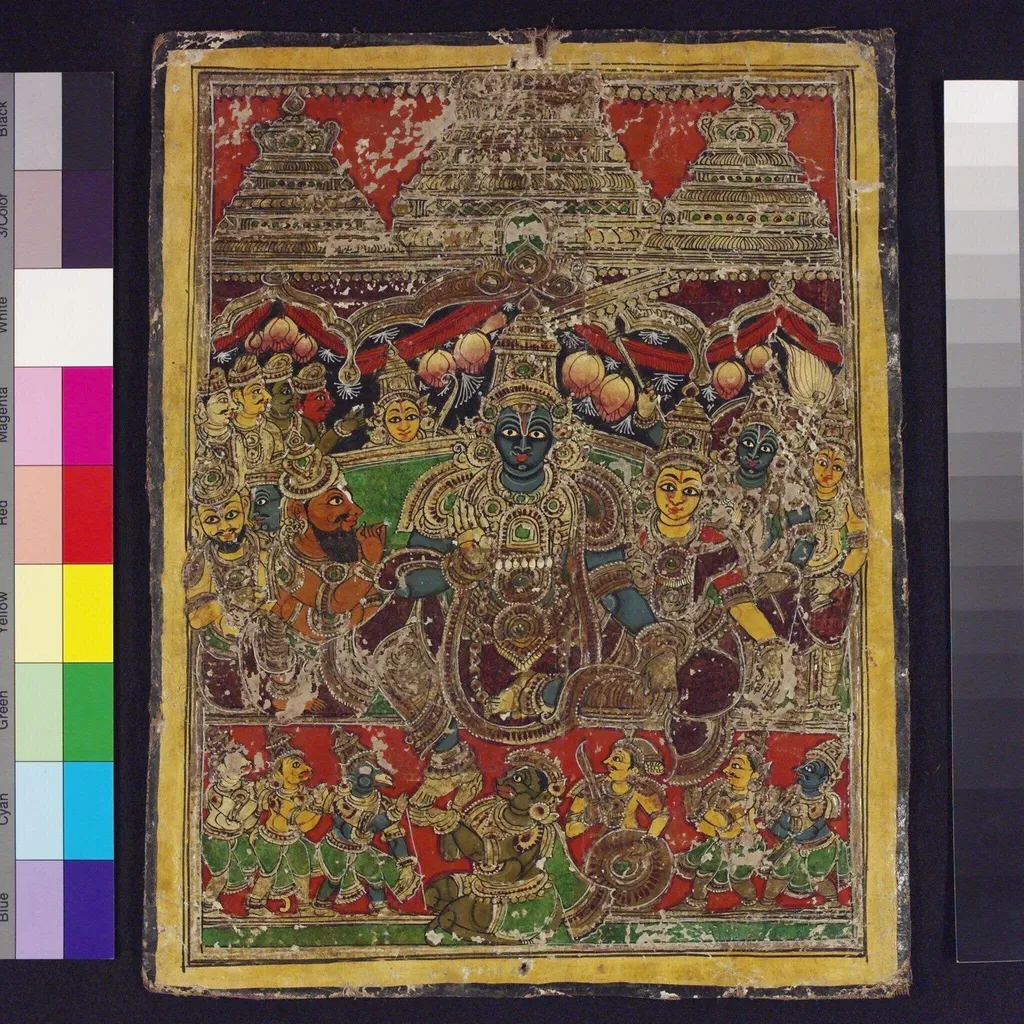
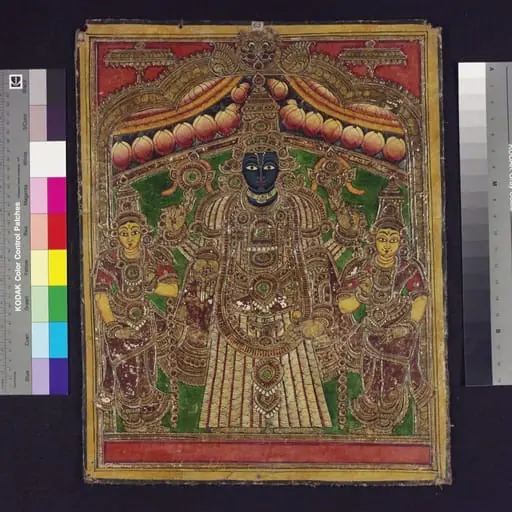
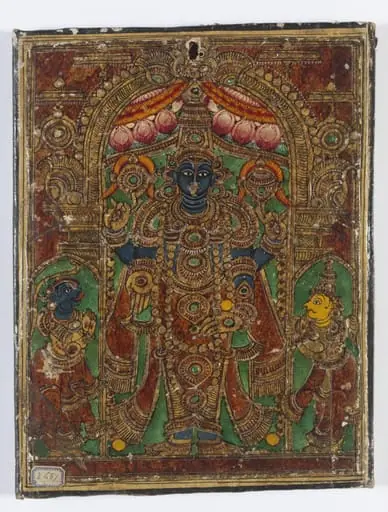
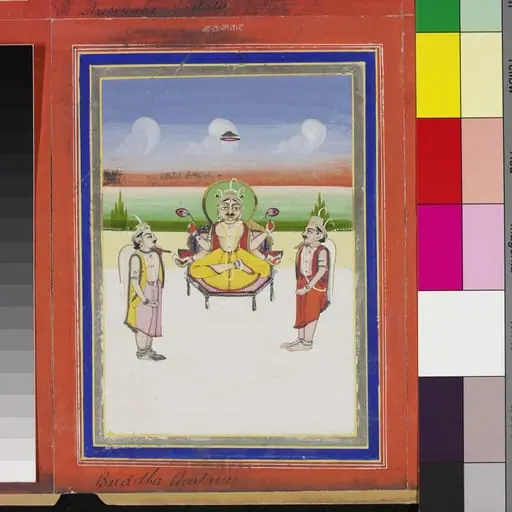
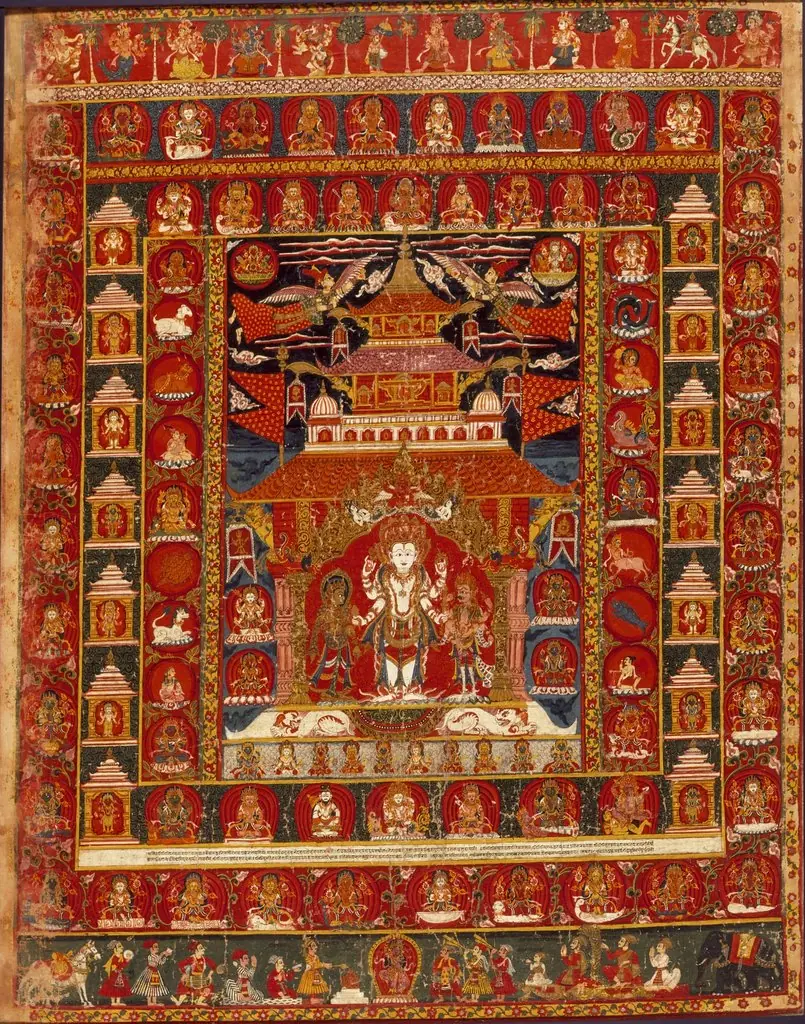
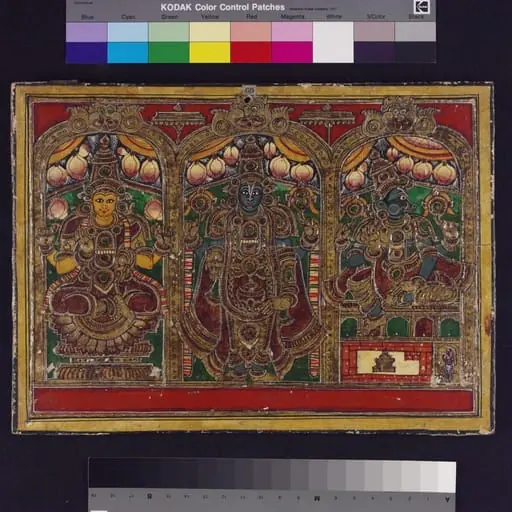
Vishnu with Hanuman and attendants is a paint painting by the Impressionist artist Pir Bux. It dates from 1850 and is held in the collection of the Victoria and Albert Museum. This 19th-century Indian painting presents a vibrant, densely populated scene centered on a regal figure.
About this work
Overview
This 19th-century Indian painting presents a vibrant, densely populated scene centered on a regal figure. Executed in bold, bright colors with extensive gold accents, the work showcases a hierarchical composition with multiple layers of figures and intricate architectural details.
Subject & Meaning
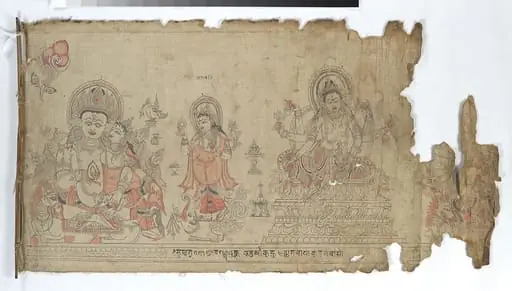
The central figure, identified as Vishnu, is depicted in a temple setting, indicating his divine status. His entourage, including a consort, attendants, and Hanuman (supporting Vishnu's right foot), emphasizes the deity's importance and reverence within the Hindu pantheon.
Technique & Style
Characterized by bold colors (notably greens, reds, and blues) and liberal use of gold, the painting reflects a traditional Indian aesthetic. The layered, staged arrangement of figures and the detailed, ornate background suggest a style that prioritizes visual richness and narrative clarity.
History & Provenance
Attributed to the artist Pir Bux, this painting is dated to 1850, placing it within the broader context of 19th-century Indian art production. However, specific details about its commission, original location, or early ownership history are not provided.
Context
Works like this were often created for religious or ceremonial contexts, given their thematic focus and ornate style. The painting's style and subject matter align with traditions of Hindu devotional art, though its exact purpose or audience remains unspecified.
Artist & collection
Artist
Pir Bux made ink drawings of places and scenes around 1850 Punjab. Their surviving sheets show Chiniot’s riverfront and a vivid Vishnu surrounded by Hanuman and attendants. Look at Chiniot’s walls, arched doorways and…