Artwork
Visiting a friend in the mountains
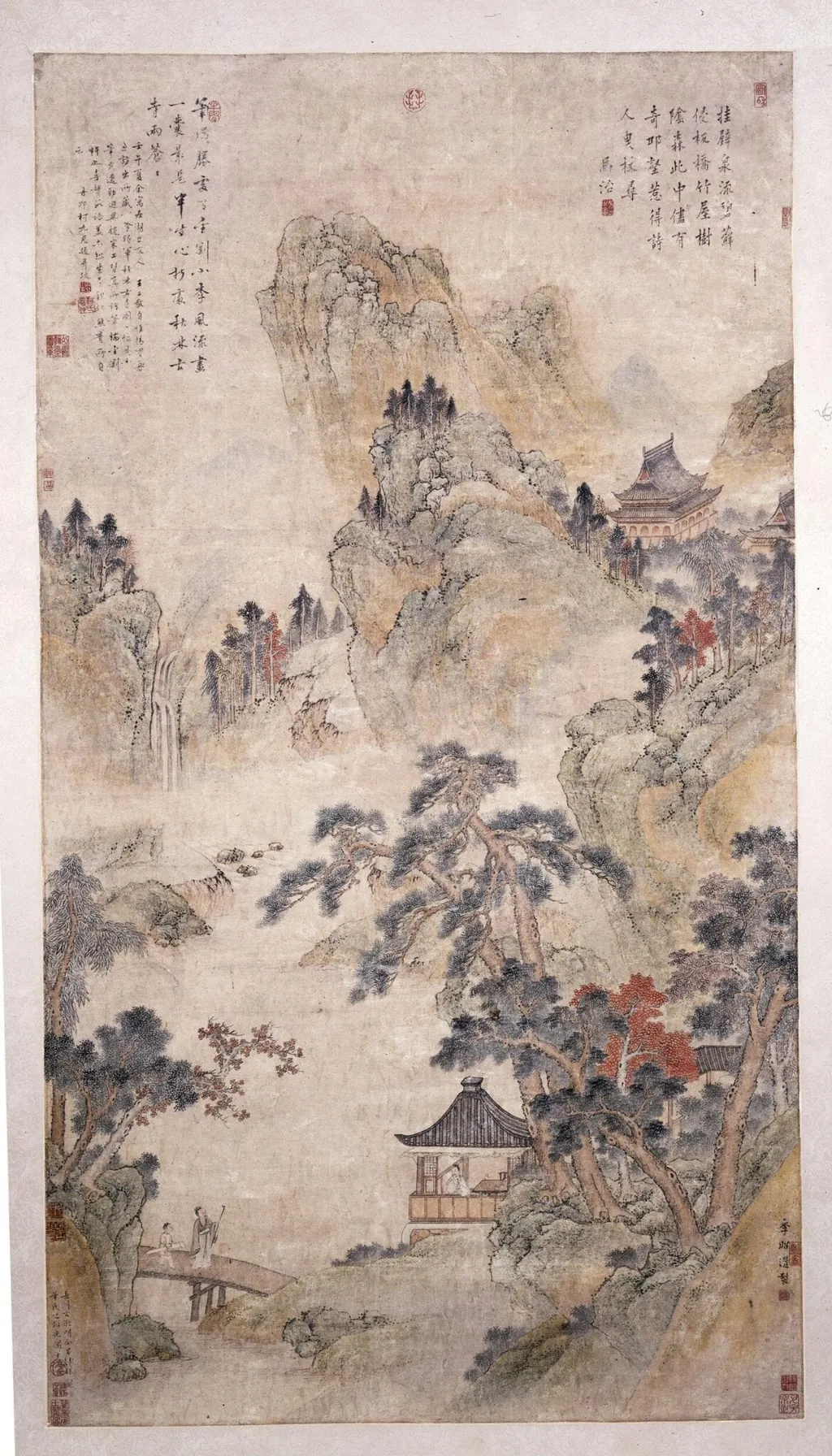
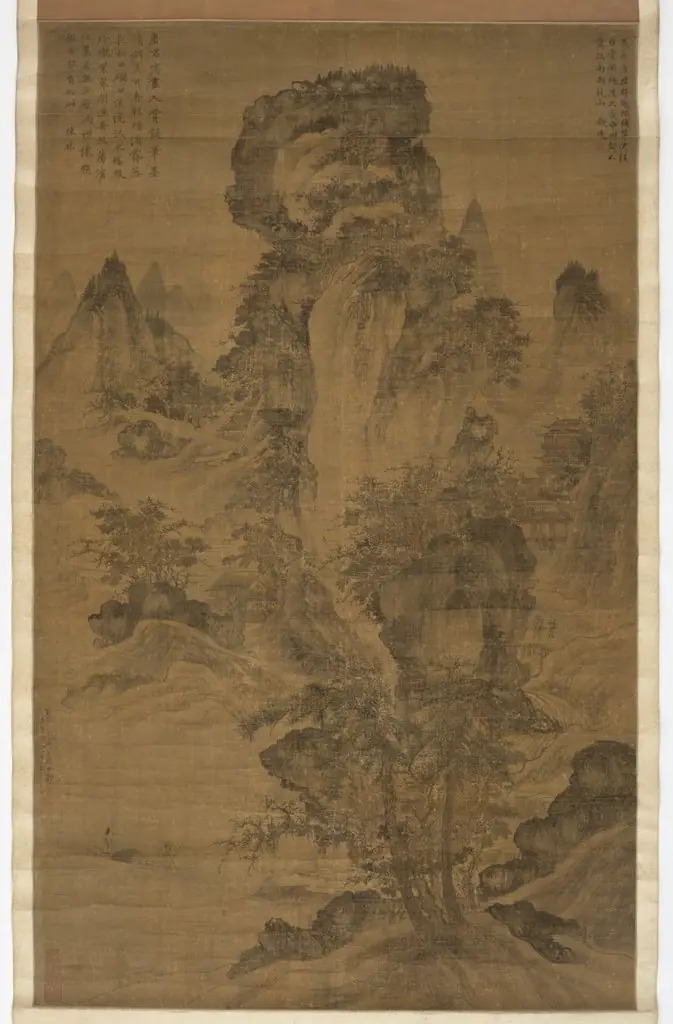
Visiting a friend in the mountains is a paint painting by the Renaissance artist Unknown. It dates from 1550 and is held in the collection of the Victoria and Albert Museum. This large hanging scroll, created in the late Ming period, captures a quiet moment of social visitation in a mountainous landscape.
About this work
Overview
Though falsely attributed to the Tang dynasty painter Li Zhaodao, its style and execution align with 16th- to early 17th-century Ming conventions.
This large hanging scroll, created in the late Ming period, captures a quiet moment of social visitation in a mountainous landscape. Though falsely attributed to the Tang dynasty painter Li Zhaodao, its style and execution align with 16th- to early 17th-century Ming conventions. The work includes forged seals and inscriptions by revered earlier connoisseurs, reflecting a common practice among collectors who valued provenance as much as artistic merit.
Subject & Meaning
The scene portrays a scholar and his attendant traveling to a secluded mountain cottage to visit a friend. The tranquil setting, with winding paths and modest architecture, reflects the literati ideal of retreat from worldly affairs. Such visits symbolized intellectual camaraderie and the cultivation of personal relationships within nature, central themes in Ming-era Confucian and Daoist thought.
Technique & Style
The painting employs traditional ink and color on silk, with delicate brushwork defining distant peaks and textured foliage. Unlike Tang dynasty models, the composition lacks monumental scale or rigid formalism; instead, it favors atmospheric depth and naturalistic detail. The artist’s focus on spatial recession and subtle tonal gradations reflects Ming landscape conventions rather than earlier revivalist styles.
History & Provenance
The scroll bears forged signatures and seals attributed to Tang and Yuan dynasty figures, including Ke Jusi and Wen Zhengming. These additions were likely inserted by later hands to enhance the work’s value and legitimacy. The presence of such forgeries indicates that Ming collectors prioritized textual authentication over stylistic accuracy, often valuing the historical pedigree of an object more than its original authorship.
Context
During the late Ming, scholarly elites cultivated a taste for antiquarian artifacts and painted scrolls that evoked past dynasties. While genuine Tang works were rare, the market rewarded pieces that appeared historically layered. This painting’s deceptive inscriptions reveal how cultural prestige was constructed through association, not authenticity, reflecting broader trends in Ming collecting practices.
Legacy
The work stands as an example of how artistic forgery in Ming China was not merely deceptive but culturally meaningful. By layering false inscriptions onto a competent landscape, the forger participated in a tradition where historical legitimacy was as important as aesthetic quality. Today, such works offer insight into the complex relationship between art, authority, and perception in premodern China.
Artist & collection

 Domestic Scene
 Giacomo and Cardinal Marco, investing Andrea, Abbot of San Zeno, with his Benefice
 The Nymph of Fontainebleau
 Portrait of a Woman
 Madonna and Child with Saints in the Enclosed Garden
 Venus and Minerva
 Family Group of Four on Sofa
 Wall painting from Room H of the Villa of P. Fannius Synistor at Boscoreale
 The Peach Blossom Spring 桃花源圖
 Quiet Life in a Wooded Glen
 清 陸漢 山水八開 冊|Eight landscapes
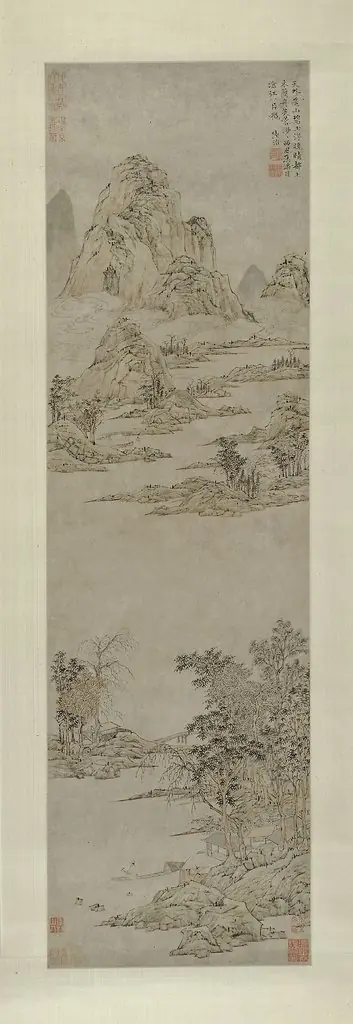 Pulling Oars under Clearing Autumn Skies (Distant Mountains)
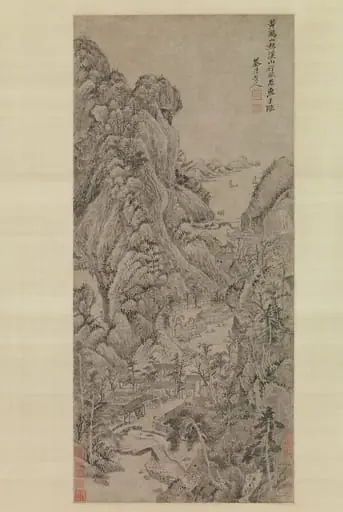 清 吳歷 倣王蒙溪山行旅圖 軸|Travelers among Streams and Mountains
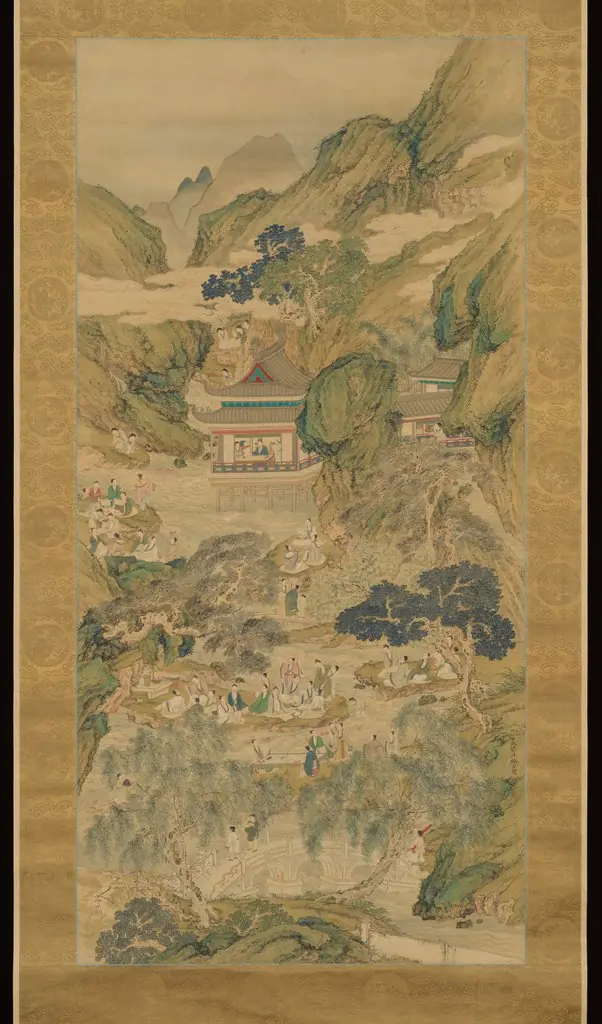 Lanting Gathering in Blue and Green 青緑蘭亭脩禊図 (Seiryoku rantei shūkei zu)
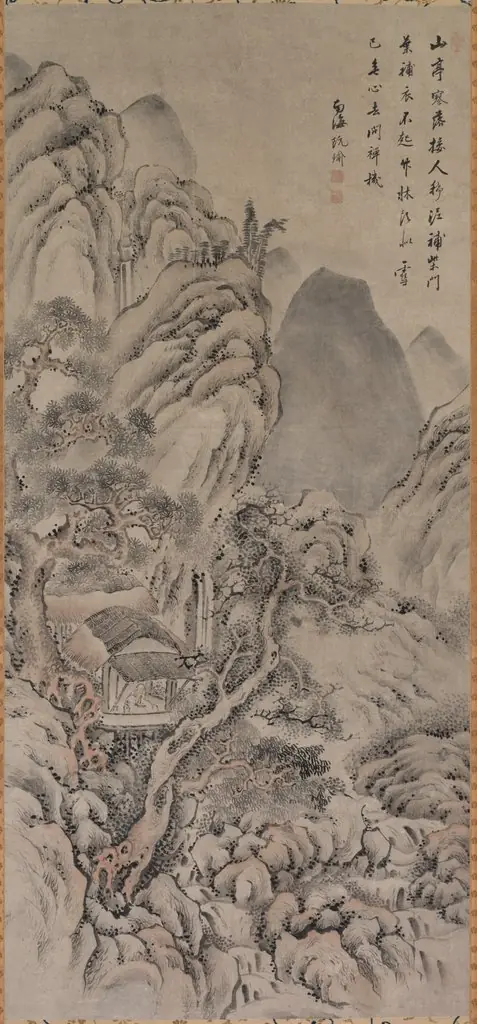 Landscape
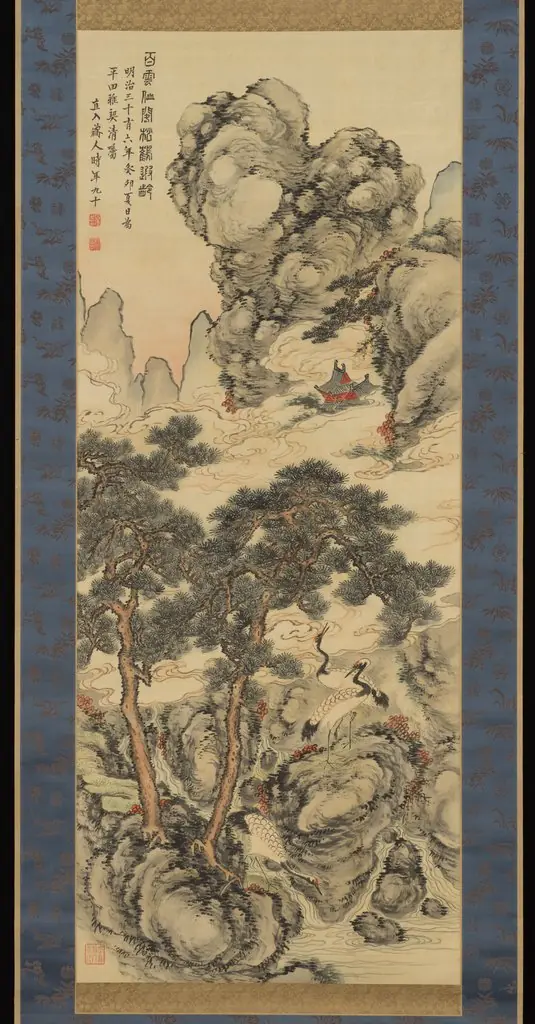 Pines and Cranes of Longevity 松鶴遐齢図
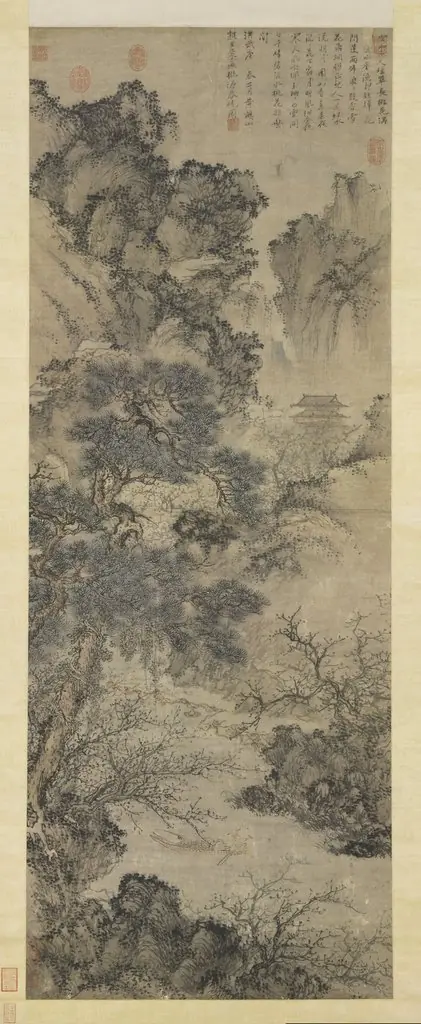 Vernal Dawn at the Peach Blossom Spring
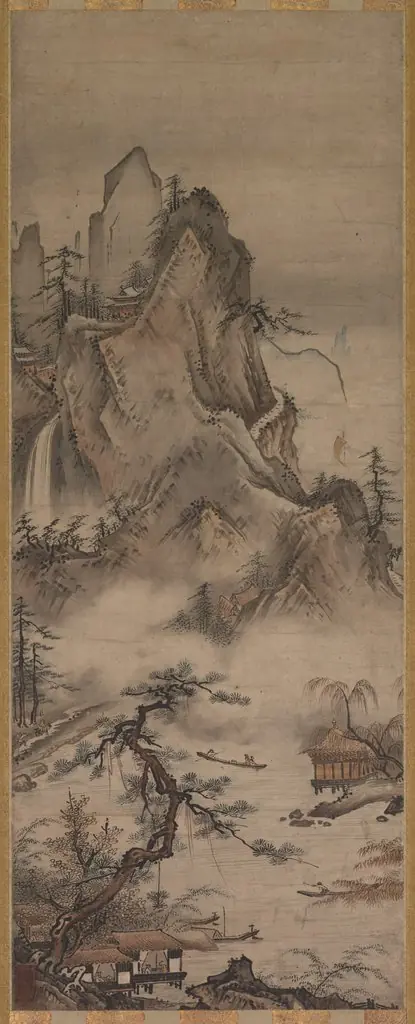 Landscape
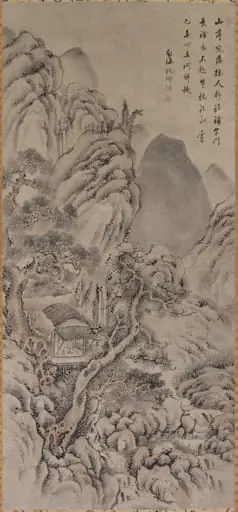 Landscape
 Fishing on an Autumn River