Artwork
Guilin Boat
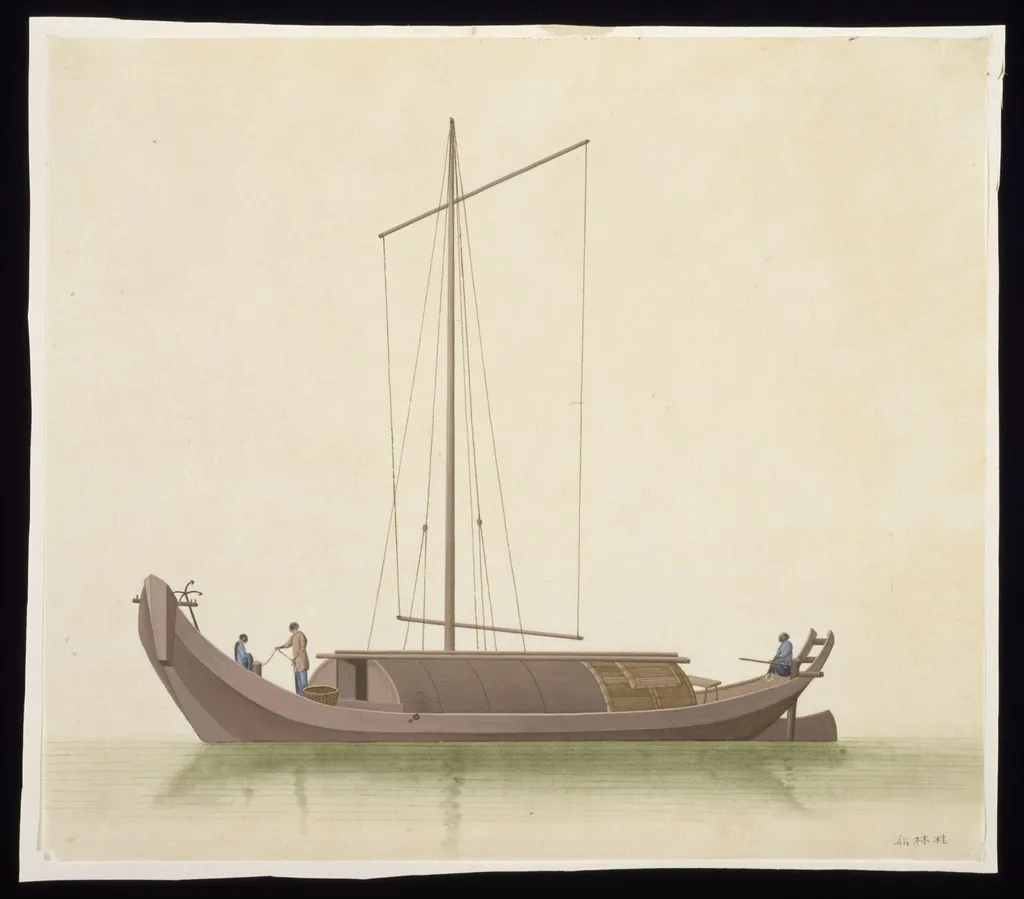
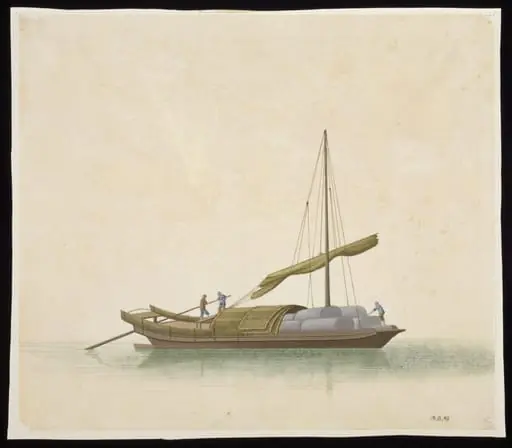
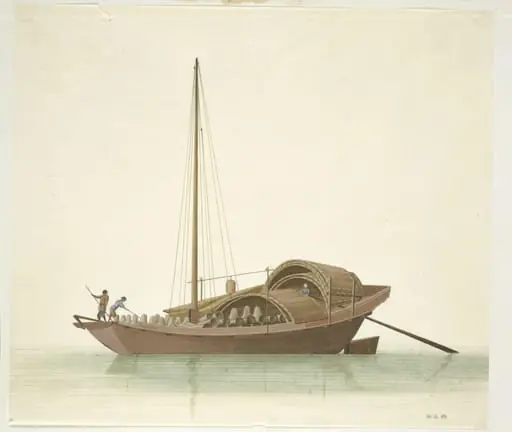
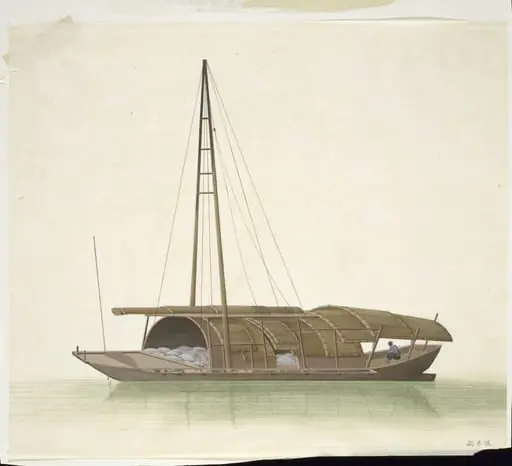
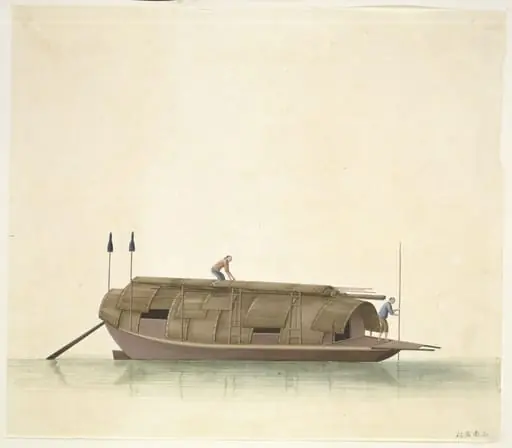
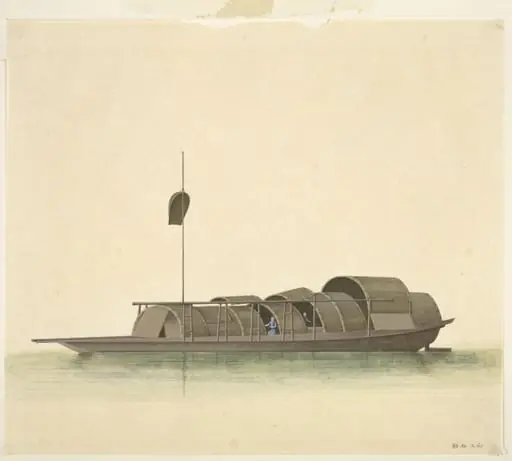
Guilin Boat is a paint painting by the Romanticist artist Unknown. It dates from 1810 and is held in the collection of the Victoria and Albert Museum. This painting belongs to a series of fifty works documenting rivercraft along the Pearl River.
About this work
Overview
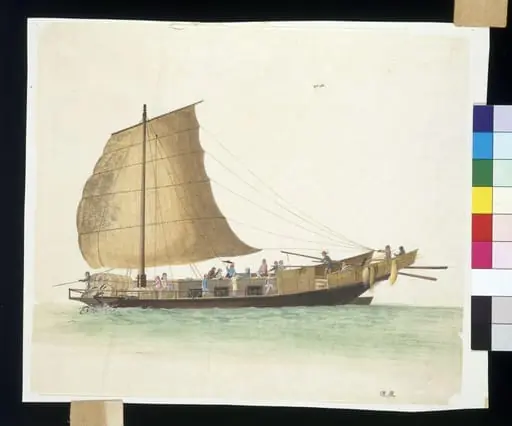
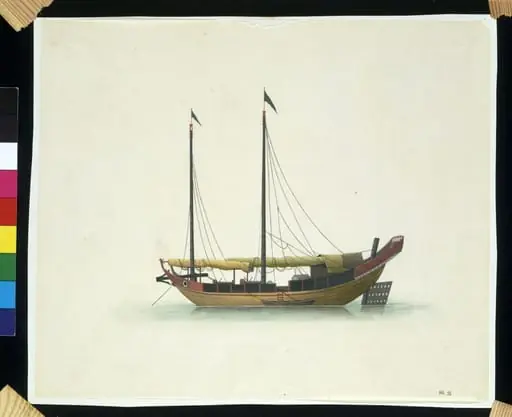
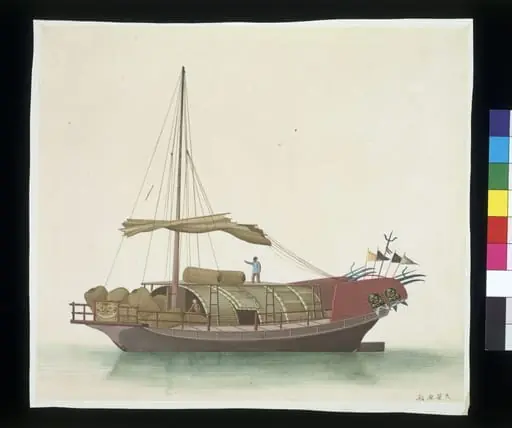
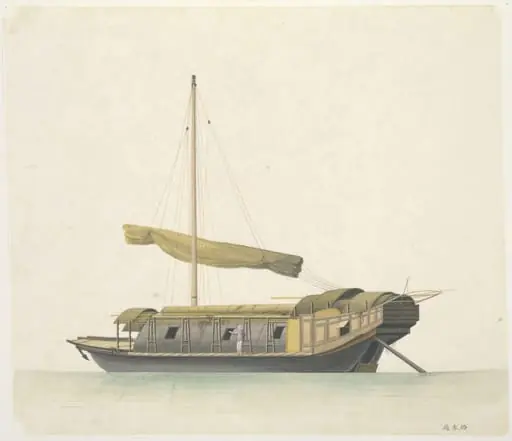
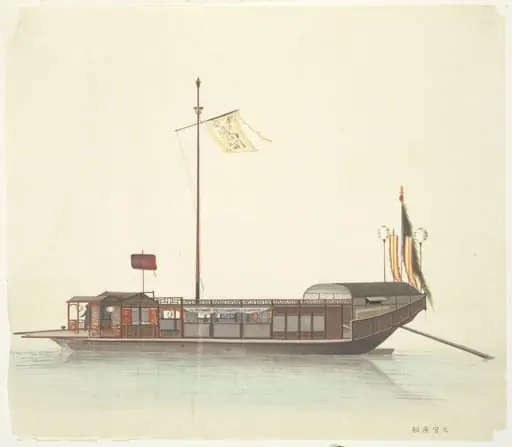
This painting belongs to a series of fifty works documenting rivercraft along the Pearl River. Created for commercial sale, it captures a specific type of vessel associated with Guilin, a city in Guangxi. The image reflects the visual culture of southern China in the late 18th century, where such paintings served as affordable mementos for foreign visitors and local traders alike.
Subject & Meaning
The depicted boat, named for its origin in Guilin, was used for transport between Guangxi and Guangdong provinces. Its presence in the series underscores the region’s reliance on waterways for commerce and daily life. The vessel’s design and occupation reflect a mobile, densely populated riverine society, where even small boats functioned as homes and workplaces.
Technique & Style
The painting employs a straightforward, unadorned approach, prioritizing clarity over detail. The wooden hull and green-pitched roof are rendered with minimal shading or perspective, consistent with folk or trade art conventions. This simplicity allowed for efficient reproduction, supporting the series’ role as mass-produced souvenirs rather than fine art.
History & Provenance
The work likely originated in Canton during the late 1700s, a period of increased foreign trade. It may have been acquired by Lord George Macartney, Britain’s first envoy to China, whose writings describe the river’s crowded vessel traffic. The painting’s survival suggests it traveled beyond China, entering European collections through diplomatic or commercial channels.
Context
The Pearl River at this time hosted thousands of boats, from cargo carriers to floating homes. Guilin’s vessels were part of a regional network connecting inland markets to the port of Canton. These paintings documented a way of life shaped by water, responding to both local needs and the curiosity of foreign observers seeking tangible records of Chinese river culture.
Legacy
Though produced for commercial purposes, these images now offer insight into the material culture and mobility of the time.
The series remains a valuable record of 18th-century riverine transport in southern China. Though produced for commercial purposes, these images now offer insight into the material culture and mobility of the time. Surviving examples, including this one, are held in institutions such as the Victoria and Albert Museum, where they inform historical understanding beyond their original souvenir function.
Artist & collection

 Domestic Scene
 Giacomo and Cardinal Marco, investing Andrea, Abbot of San Zeno, with his Benefice
 The Nymph of Fontainebleau
 Portrait of a Woman
 Madonna and Child with Saints in the Enclosed Garden
 Venus and Minerva
 Family Group of Four on Sofa
 Wall painting from Room H of the Villa of P. Fannius Synistor at Boscoreale