Artwork
Porcelain Shop in Canton
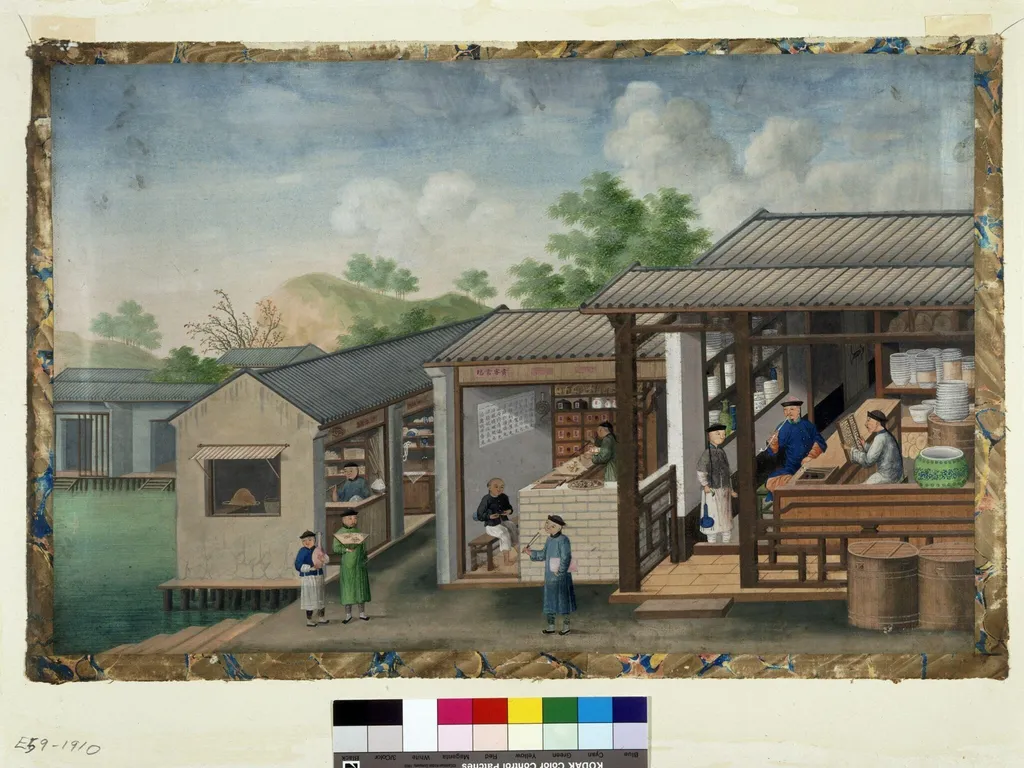
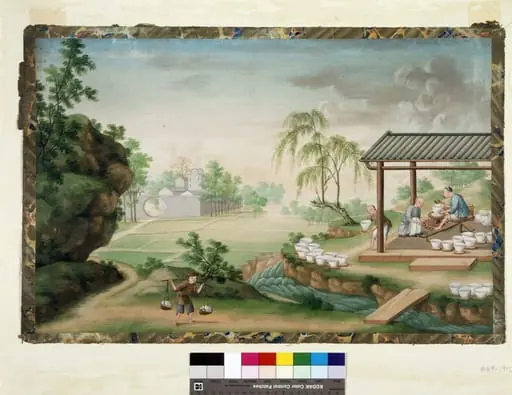
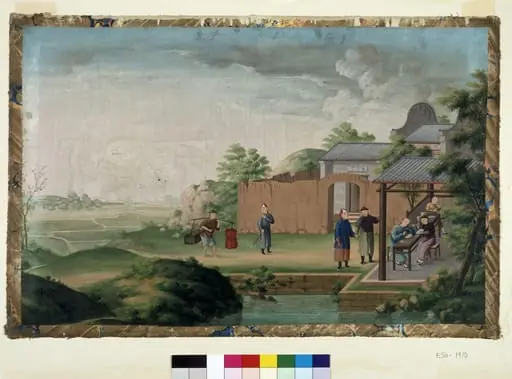
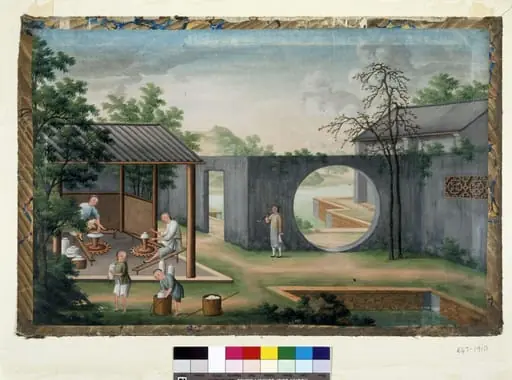
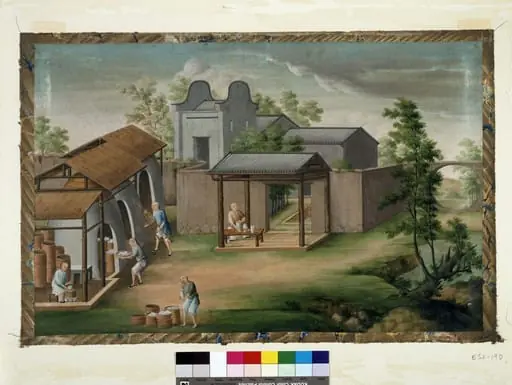
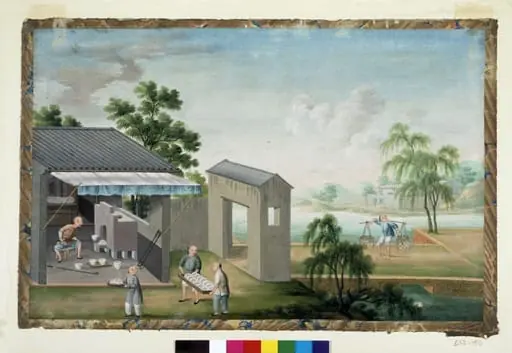
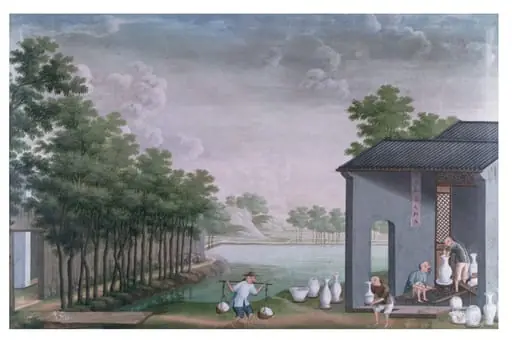
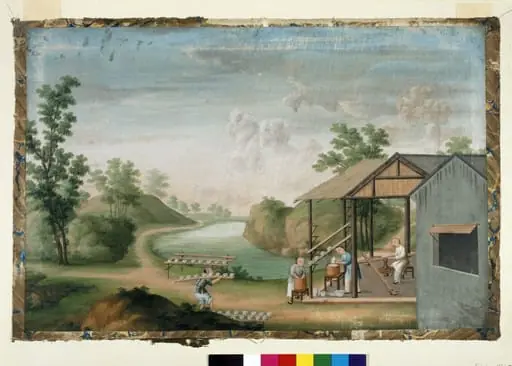
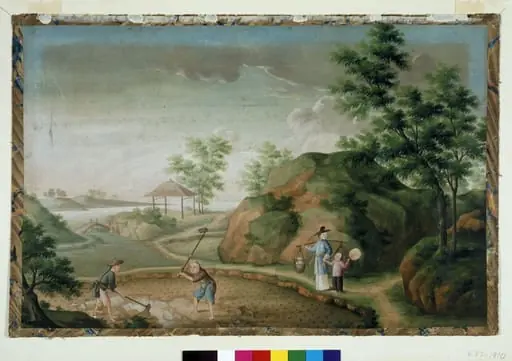
Porcelain Shop in Canton is a paint painting by the Rococo painting artist Unknown. It dates from 1780 and is held in the collection of the Victoria and Albert Museum. This painting is one of twenty-four works documenting the porcelain production process in 18th-century China.
About this work
Overview
This painting is one of twenty-four works documenting the porcelain production process in 18th-century China. It focuses on a retail establishment in Canton, where finished ceramics were displayed and sold. Created for European audiences, the scene offers a rare glimpse into the commercial side of a trade that fascinated the West due to its technological secrecy.
Subject & Meaning
The scene depicts a tidy interior with shelves lined in blue-and-white porcelain wares, a clerk attending customers, and a view of the harbor beyond the doorway. It conveys the organized commerce behind porcelain’s global appeal. For Europeans, who lacked the knowledge to replicate the material, the image served as both documentation and a window into an elusive craft.
Technique & Style
Rendered in a precise, observational style, the painting uses clear lines and muted tones to emphasize architectural detail and object arrangement. The composition balances interior order with the open horizon of the harbor, suggesting the link between production and export. The focus on everyday activity reflects a documentary intent rather than idealized grandeur.
History & Provenance
The painting was likely produced in Canton for export to Europe during the Qing dynasty, when demand for Chinese porcelain outstripped local supply.
The painting was likely produced in Canton for export to Europe during the Qing dynasty, when demand for Chinese porcelain outstripped local supply. Such sets were commissioned by merchants or collectors seeking to understand the origins of a luxury commodity. Many of these works entered European collections through trade networks, with some now held in institutions like the Victoria and Albert Museum.
Context
Before European manufacturers discovered the formula for hard-paste porcelain in the early 1700s, China was the sole source. These paintings responded to intense curiosity about production methods. They were not merely decorative but functioned as visual guides, demystifying a process shrouded in mystery and contributing to the cultural exchange between East and West.
Legacy
The series of which this painting is part remains a valuable historical record of China’s ceramic trade. It captures a moment before industrial replication altered global markets. Today, these works are studied for their ethnographic detail and as artifacts of early global commerce, offering insight into how knowledge was visually transmitted across continents.
Artist & collection

 Domestic Scene
 Giacomo and Cardinal Marco, investing Andrea, Abbot of San Zeno, with his Benefice
 The Nymph of Fontainebleau
 Portrait of a Woman
 Madonna and Child with Saints in the Enclosed Garden
 Venus and Minerva
 Family Group of Four on Sofa
 Wall painting from Room H of the Villa of P. Fannius Synistor at Boscoreale