Artwork
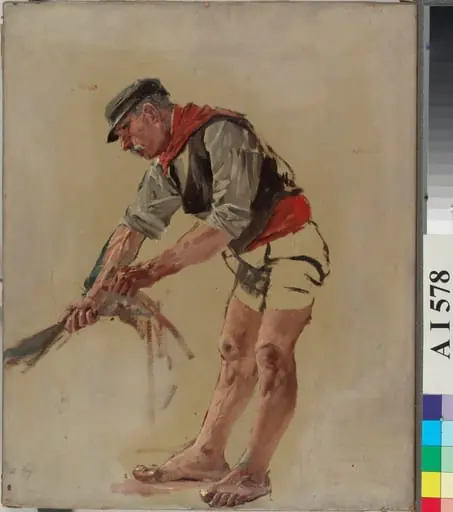
Kaksi italialaista kalastajaa, harjoitelma Nuotanveto Korsikan rannikolla-nimistä maalausta varten
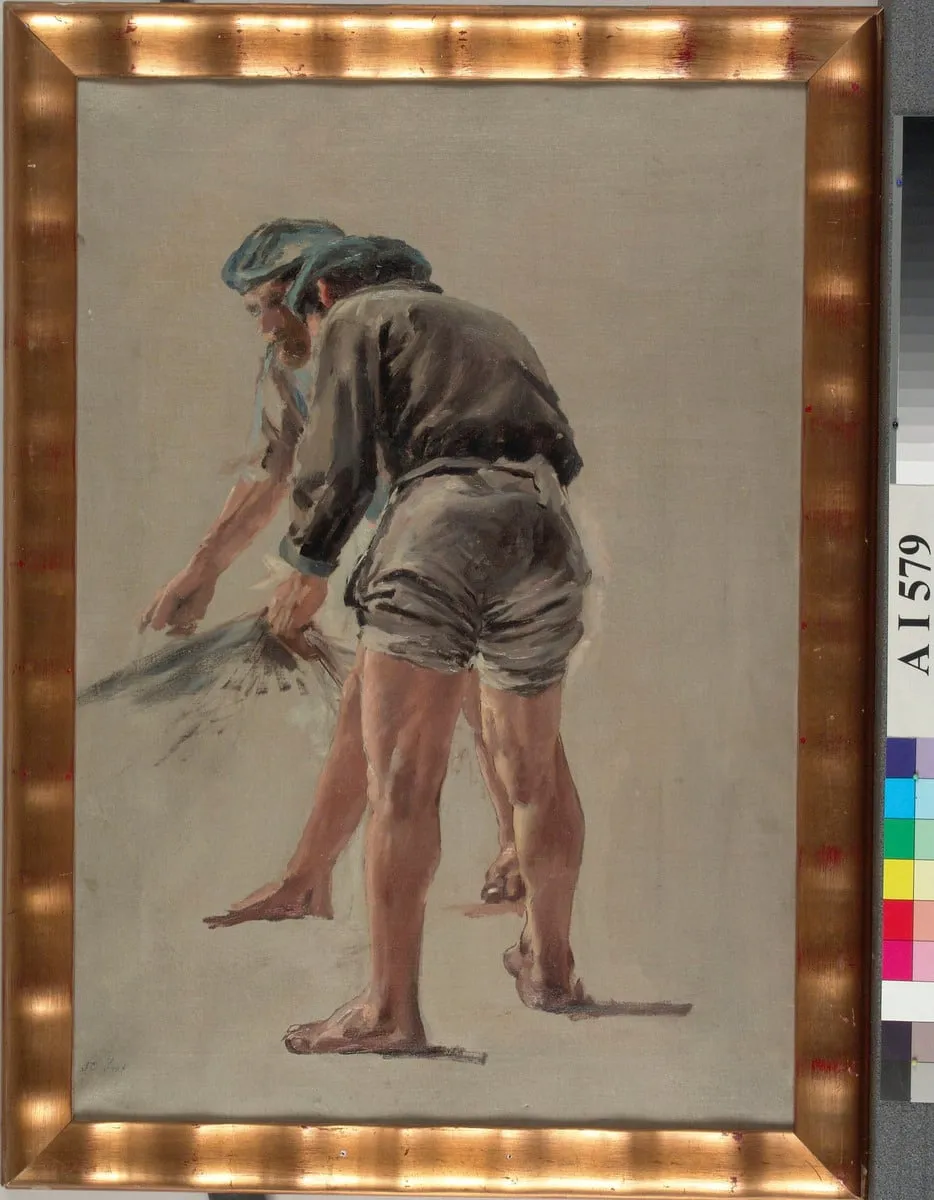
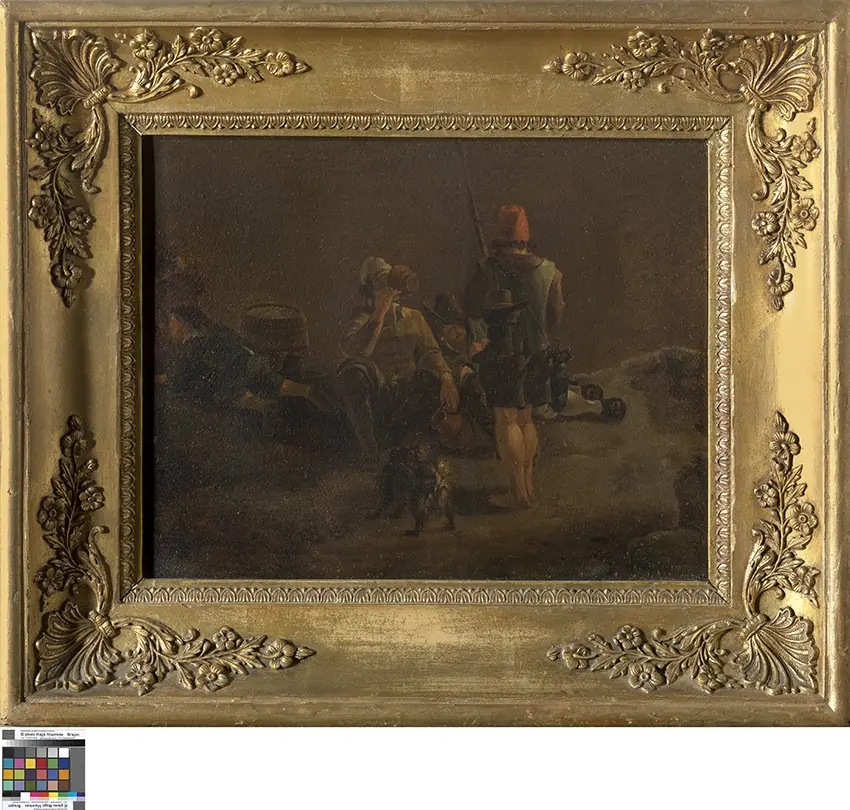
Kaksi italialaista kalastajaa, harjoitelma Nuotanveto Korsikan rannikolla-nimistä maalausta varten is an unspecified painting by Aukusti Uotila. It is held in the collection of the Finnish National Gallery. This study, created in preparation for a larger work, depicts a single figure of a fisherman on the Corsican coast.
About this work
Overview
The figure’s bare feet and loose garments suggest labor and exposure to the elements, while the plain background isolates him as a study in form and movement.
This study, created in preparation for a larger work, depicts a single figure of a fisherman on the Corsican coast. Rendered with rapid, expressive brushwork, the painting emphasizes physical posture and tactile texture over detailed narrative. The figure’s bare feet and loose garments suggest labor and exposure to the elements, while the plain background isolates him as a study in form and movement.
Subject & Meaning
The figure represents a working fisherman, likely local to the Mediterranean coast, engaged in the act of handling fishing gear. His wrapped head and bare skin imply adaptation to sun and sea, while the tool in his hands—possibly a net or pole—hints at daily ritual rather than dramatic action. The image conveys quiet endurance, not heroism, grounding its subject in the rhythm of coastal labor.
Technique & Style
The artist employed loose, energetic brushstrokes to model form and suggest motion, avoiding smooth finishes in favor of visible texture. Thick applications of paint, particularly on the figure’s limbs and clothing, create a tactile surface. Muted earth tones dominate, with the exception of a vivid blue headwrap that draws attention without disrupting the overall restraint of the palette.
History & Provenance
This work originated as a preparatory study for a larger composition titled 'Kaksi italialaista kalastajaa, harjoitelma Nuotanveto Korsikan rannikolla.' Its function was to explore posture and lighting before committing to the final piece. It remained in the artist’s possession or within close circles, likely never intended for public exhibition during its creation.
Context
Created during a period when artists increasingly turned to everyday laborers as subjects, this study reflects broader 19th-century interests in realism and ethnographic observation. The Corsican setting aligns with a trend of Northern European painters seeking authentic coastal life beyond urban centers, valuing direct experience over idealized scenes.
Legacy
Though not widely exhibited, this study exemplifies the artist’s commitment to capturing transient movement and physical presence through direct observation. Its emphasis on brushwork and materiality influenced later approaches to figure studies, particularly among artists exploring impasto and expressive mark-making as vehicles for emotional and physical truth.
Artist & collection