Artwork
Sukkaa kutova tyttö
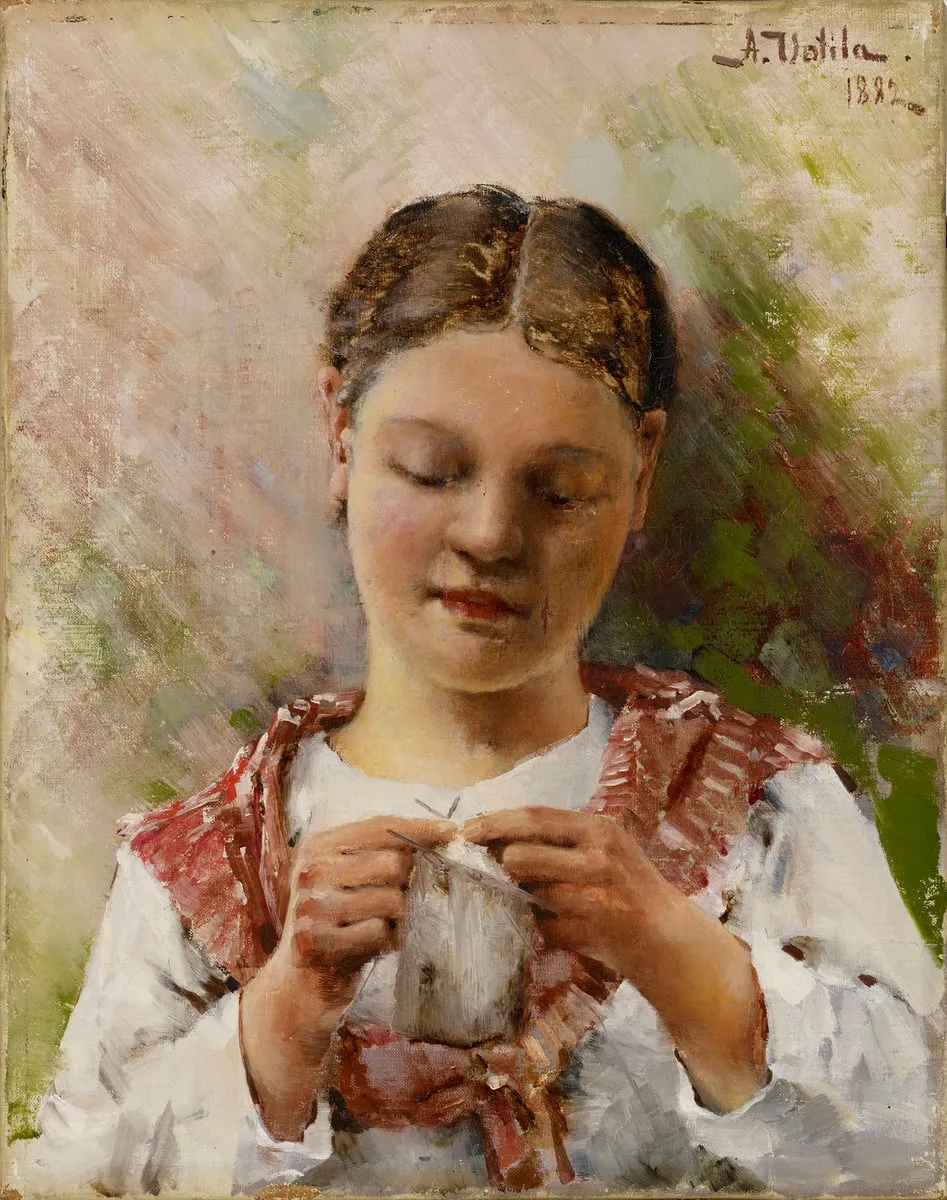
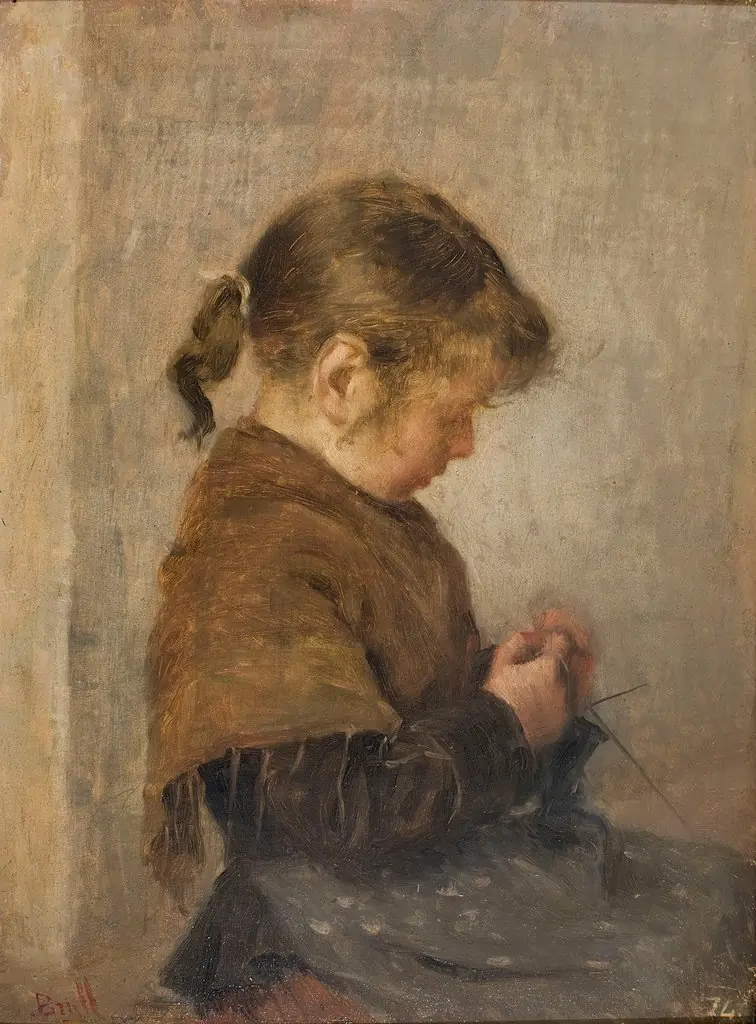
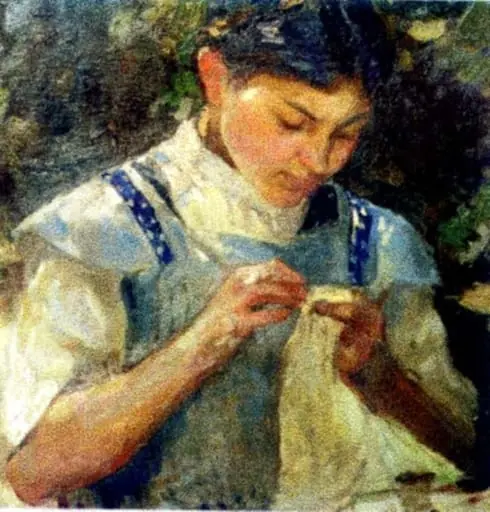
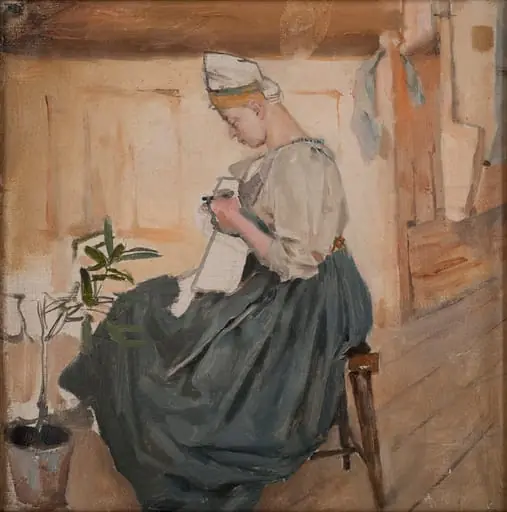
Sukkaa kutova tyttö is an unspecified painting by Aukusti Uotila. It is held in the collection of the Finnish National Gallery. The painting portrays a young girl absorbed in the quiet act of knitting.
About this work
Overview
Dressed in a white shirt and red vest, with dark hair neatly pulled back, she sits in stillness, her hands carefully manipulating yarn and needles.
The painting portrays a young girl absorbed in the quiet act of knitting. Dressed in a white shirt and red vest, with dark hair neatly pulled back, she sits in stillness, her hands carefully manipulating yarn and needles. The background softly transitions between muted pinks, greens, and browns, framing her without distraction. The scene emphasizes concentration and calm, rendering an ordinary moment with deliberate tenderness.
Subject & Meaning
The subject is a solitary girl engaged in a domestic task, offering no narrative beyond her focused presence. Her downward gaze and still posture suggest introspection and routine rather than performance. The absence of context or symbolism points to an appreciation of quiet labor, valuing the dignity of everyday rituals over dramatic storytelling.
Technique & Style
The artist employs subtle tonal gradations to model the girl’s form, with light gently defining her hands and face. The background’s soft color blending avoids sharp contrasts, enhancing the sense of intimacy. While chiaroscuro is present, it is restrained—used to heighten focus on the knitting motion rather than to create dramatic depth.
History & Provenance
The painting’s origin and early ownership are not documented in available records. It appears to have been created during a period when intimate domestic scenes were gaining attention among regional artists, though no exhibition history or collector lineage is publicly established.
Context
Created amid late 19th- to early 20th-century trends favoring quiet realism, the work aligns with broader movements that elevated ordinary life as worthy of artistic attention. Similar themes appear in Nordic and Central European art of the time, where rural and domestic subjects were rendered with restrained emotion and attention to texture.
Legacy
The painting remains a quiet example of genre realism, admired for its sensitivity to gesture and atmosphere. Though not widely reproduced or studied, it contributes to a larger body of work that redefined the value of stillness and routine in visual culture, influencing later depictions of private moments.
Artist & collection