Artwork
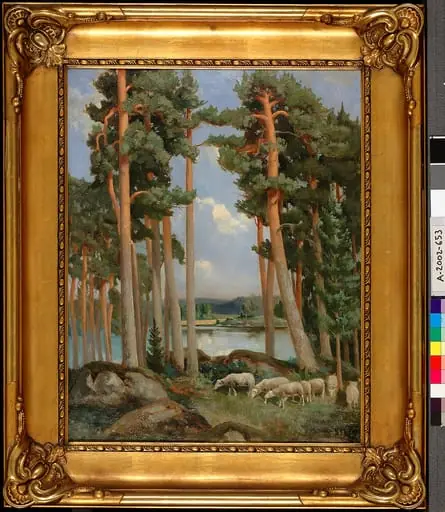
Lammaspaimen
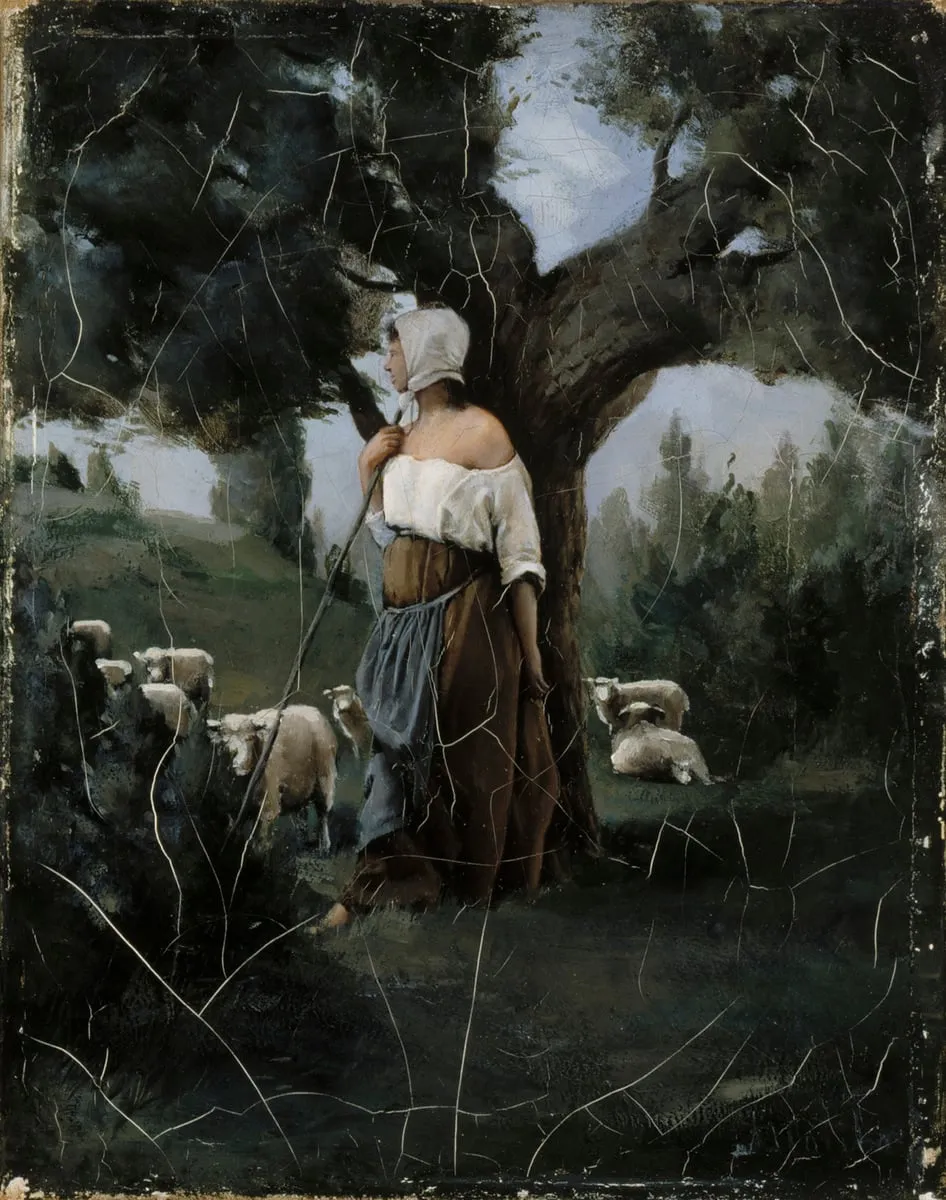
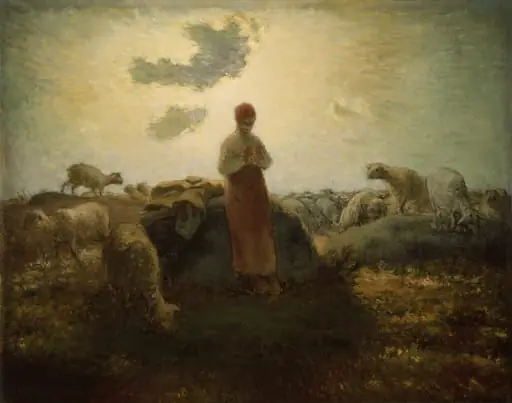
Lammaspaimen is an unspecified painting by Aukusti Uotila. It is held in the collection of the Finnish National Gallery.
About this work
Overview
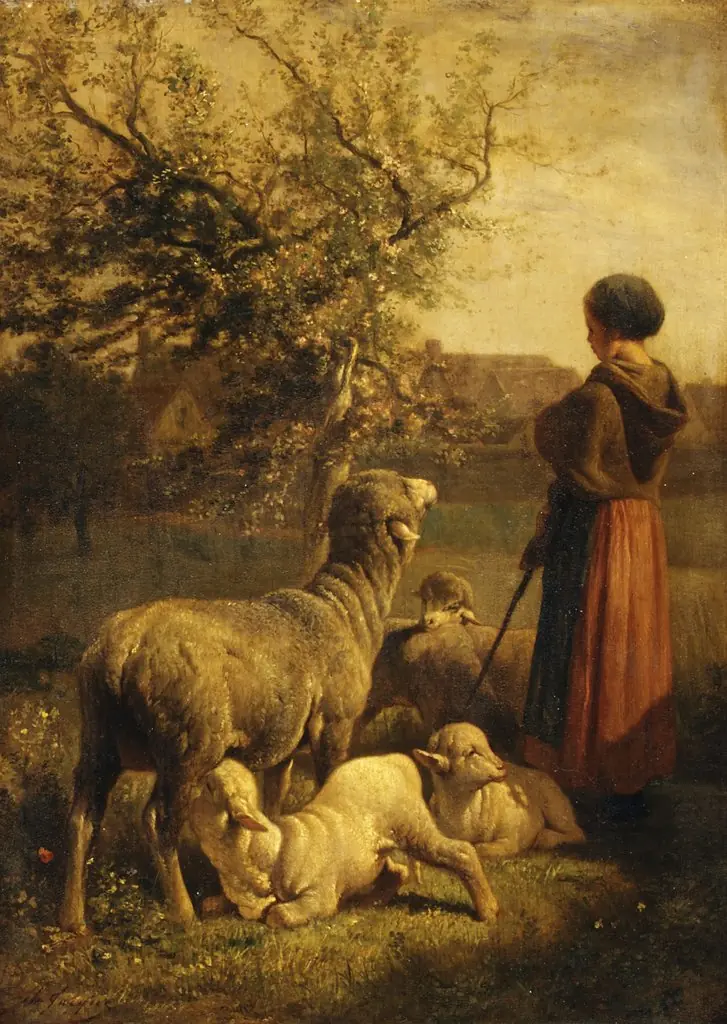
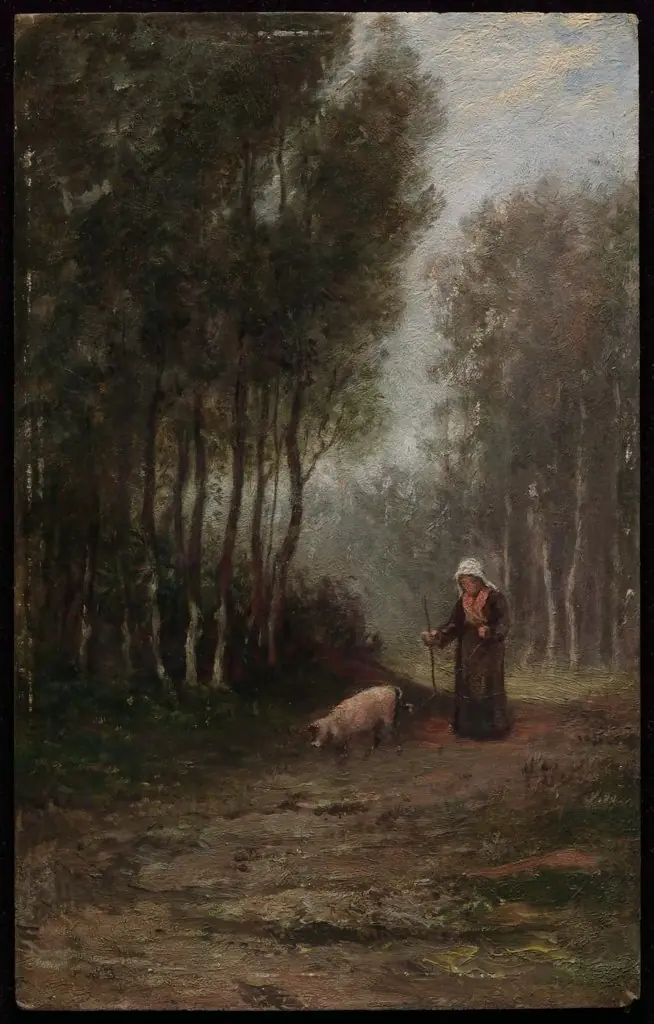
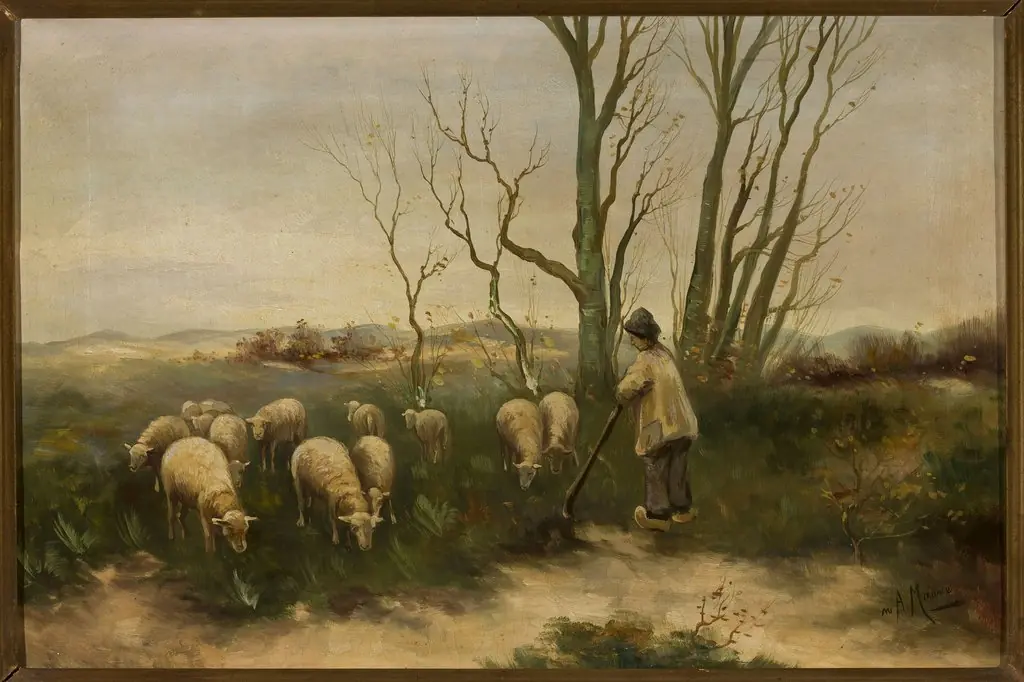
This small-scale painting depicts a solitary shepherdess in a wooded setting, her figure rendered with quiet stillness amid a group of grazing sheep. The surface shows age through fine, web-like craquelure, suggesting it was painted on wood or canvas centuries ago. The composition emphasizes solitude and routine, with no narrative action—only the quiet rhythm of her vigil.
Subject & Meaning
The woman, dressed in plain garments and a simple cap, embodies rural labor with dignity. Her leaning staff and attentive posture suggest watchfulness over her flock, not rest. The dim, enclosed forest setting removes her from village or farm, isolating her in a timeless, almost meditative space. The scene reflects an idealized but unromanticized view of pastoral life.
Technique & Style
The artist uses chiaroscuro to define form, with the shepherdess illuminated against a dark, receding background. Soft modeling of her dress and the sheep’s wool contrasts with the harsher texture of the tree bark and ground. Brushwork is restrained, avoiding flourish; details are suggested rather than rendered, enhancing the sense of quietude and age.
History & Provenance
The painting’s origin is undocumented, but its materials and style align with Northern European folk or devotional art from the late 16th to early 17th century. Its survival with significant craquelure indicates it was preserved, possibly in a private collection or rural church, rather than displayed publicly. No known records trace its early ownership.
Context
During this period, pastoral imagery often carried religious or moral undertones, symbolizing innocence or divine care. Yet this work avoids allegory—there are no angels, symbols, or biblical references. It instead mirrors the daily reality of shepherding in remote areas, where such labor was essential, unglamorous, and rarely recorded in art.
Legacy
Though not widely known, the painting contributes to a quiet tradition of European rural portraiture that values observation over drama. Its endurance lies in its restraint: a moment of labor, preserved without embellishment, offering a glimpse into lives seldom honored in art history.
Artist & collection