Artwork
Bincombe Church
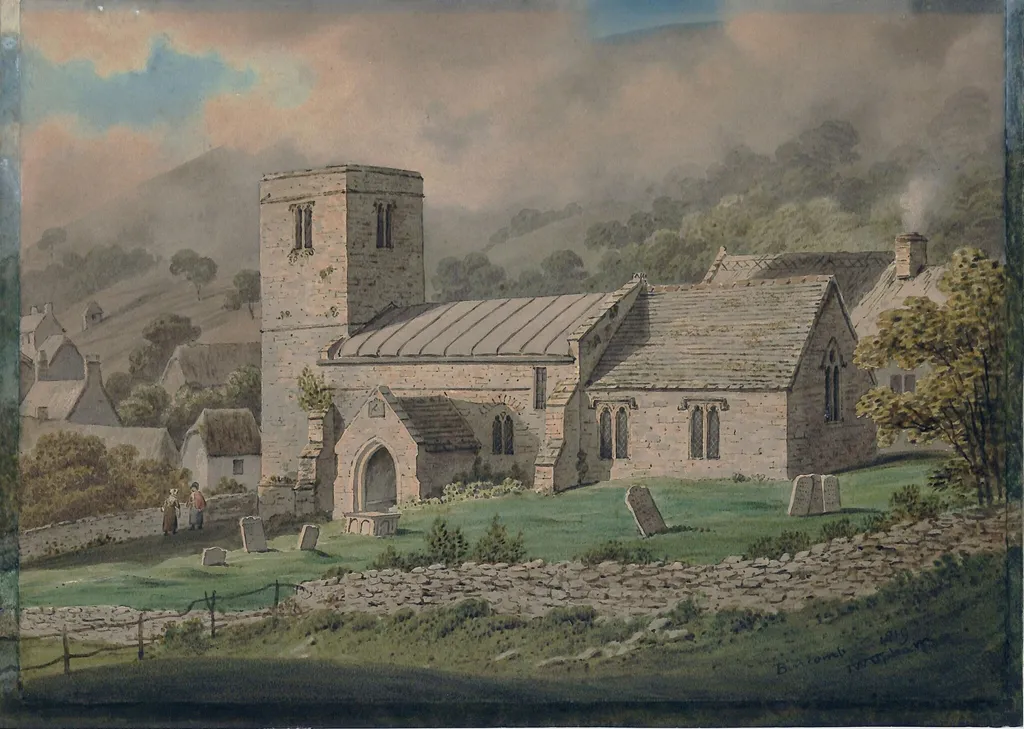
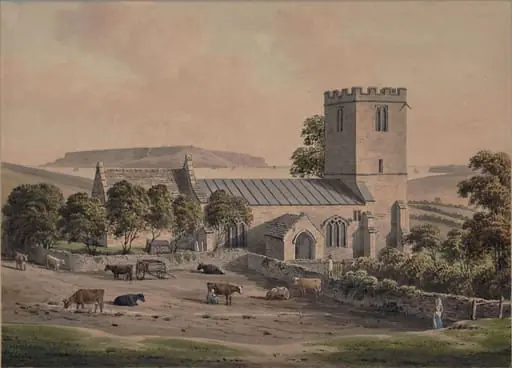
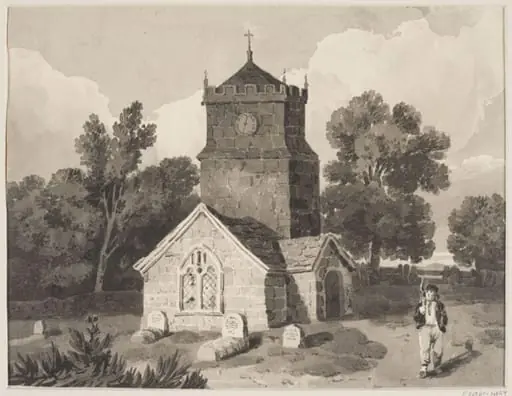
Bincombe Church is a watercolor work on paper by the Romanticist artist John William Upham. It dates from 1819 and is held in the collection of the Victoria and Albert Museum.
About this work
Overview
The work is part of the Victoria and Albert Museum’s collection and exemplifies early 19th-century topographical watercolor practice.
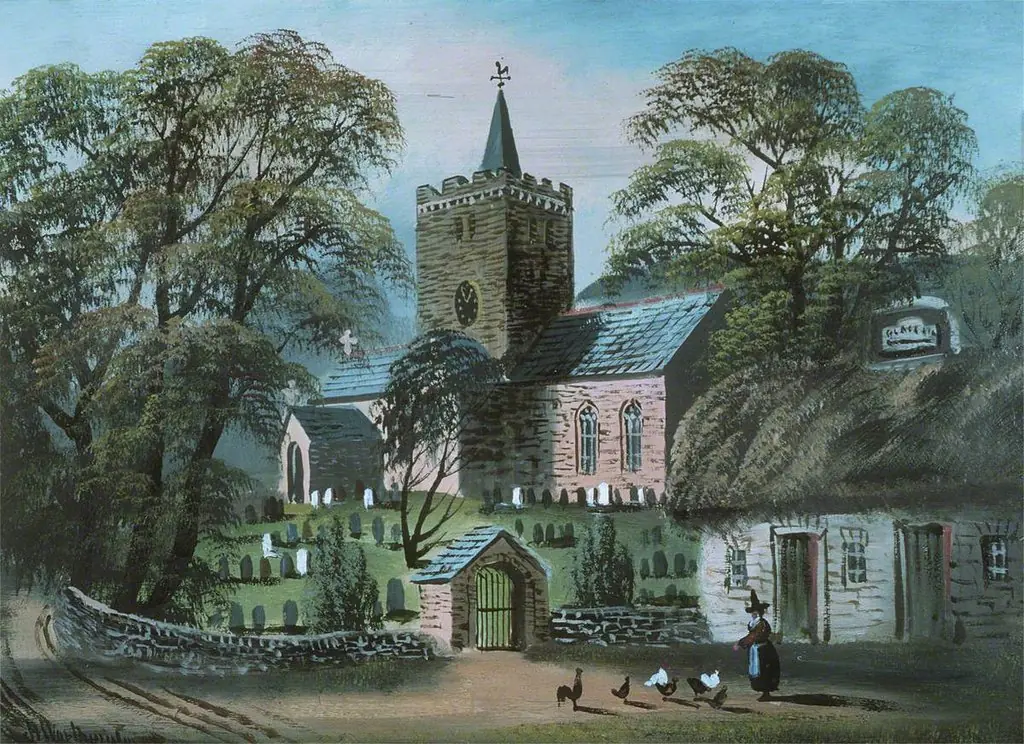
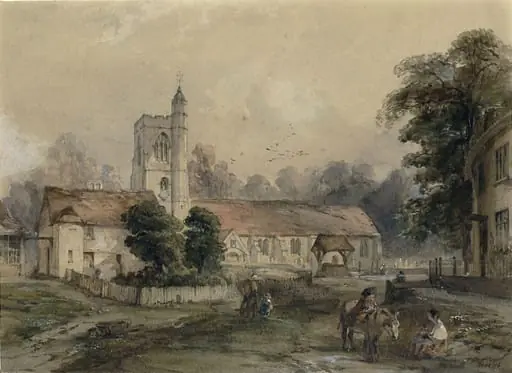
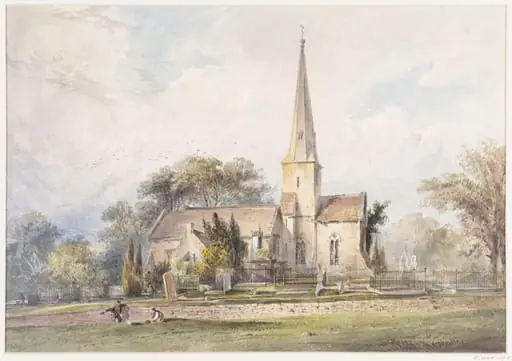
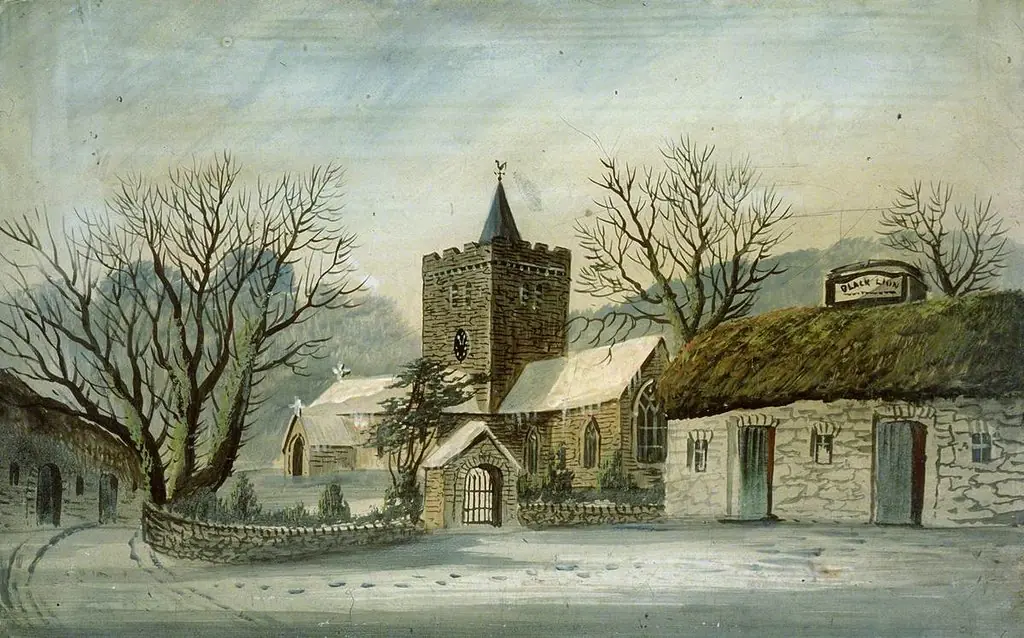
Painted in 1819 by John William Upham, Bincombe Church is a watercolor depiction of a rural English parish. The work is part of the Victoria and Albert Museum’s collection and exemplifies early 19th-century topographical watercolor practice. Its quiet composition and restrained palette reflect a focus on observed detail rather than dramatic flourish, aligning with the period’s interest in everyday landscapes.
Subject & Meaning
The painting centers on a modest stone church with a square tower, surrounded by a small graveyard and low stone wall. Two figures near the entrance suggest quiet devotion or daily ritual. Thatched cottages and scattered trees frame the scene, emphasizing community and continuity. The absence of grandeur or narrative tension invites contemplation of ordinary life, grounding the sacred in the familiar rhythms of village existence.
Technique & Style
Upham employed transparent watercolor washes to render subtle shifts in light and texture. Soft gradients define the rolling hills and the church’s weathered stonework, while delicate brushwork suggests foliage and the roughness of thatch. The muted tones—ochres, greys, and pale greens—create a sense of stillness. The technique avoids bold outlines, allowing forms to emerge through layered transparency, characteristic of watercolor’s capacity for atmospheric nuance.
History & Provenance
Created in 1819, the painting entered the Victoria and Albert Museum’s collection through its long-standing acquisition of British watercolors. Its provenance prior to museum acquisition is not widely documented, but it likely circulated among private collectors interested in regional topography. The work’s survival and preservation reflect the growing institutional interest in watercolor as a serious medium during the 19th century.
Context
In the early 1800s, British artists increasingly turned to local landscapes as subjects worthy of artistic attention. Romantic ideals influenced this shift, valuing quiet nature and vernacular architecture over classical grandeur. Upham’s work fits within this trend, capturing the spiritual and emotional resonance of rural life without overt sentimentality, aligning with contemporaries who sought truth in the unadorned.
Legacy
Bincombe Church stands as a quiet example of the watercolor tradition that documented England’s countryside with precision and restraint. While not widely known today, it contributes to the broader understanding of how ordinary places were rendered with dignity during a period of rapid social change. Its preservation in a major museum affirms its role in the historical record of British landscape art.
Artist & collection