Artwork
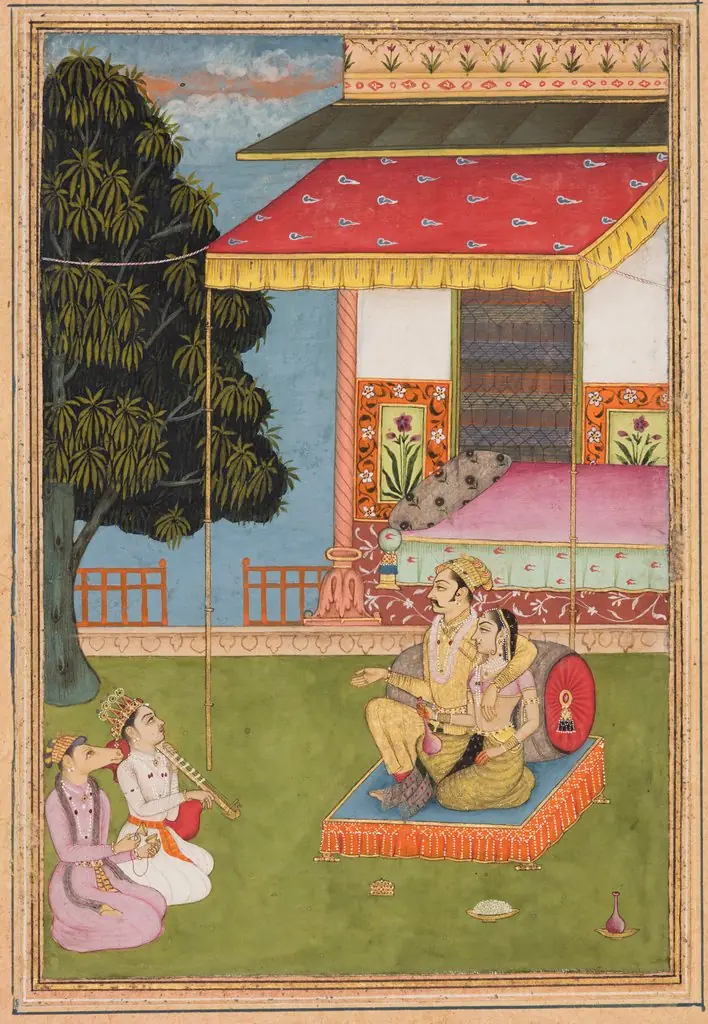
Maharaja Shri Anand Singh-ji and His Consort
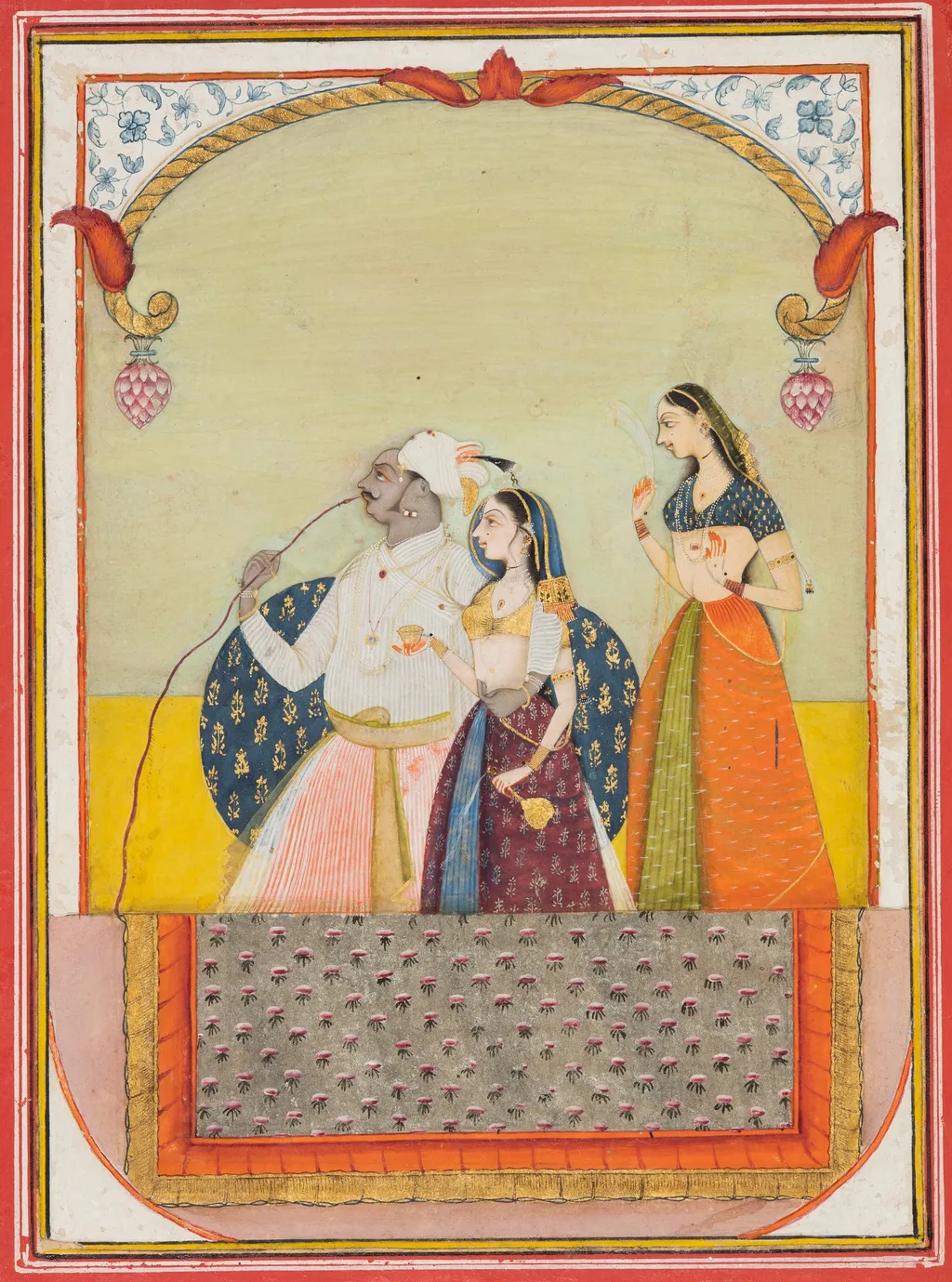
Maharaja Shri Anand Singh-ji and His Consort is an unspecified painting by the Mughal Painting artist Ustad Murad. It dates from 1729 and is held in the collection of the Cleveland Museum of Art.
About this work
Overview
Created in 1729 by the artist known as Ustad Murad, this oil painting portrays a regal trio positioned before an ornate carpet. The work is part of the collection of the Cleveland Museum of Art, where it is displayed as an example of early eighteenth‑century court portraiture from the Indian subcontinent.
Subject & Meaning
The central figure is a male courtier, identified by his title as Maharaja Shri Anand Singh‑ji, accompanied by two female figures, likely his consort and a close attendant. Their dignified stance and the inclusion of a hookah suggest a scene of leisure and authority within a private royal setting.
Technique & Style
Murad employs a vivid palette, rendering the garments in saturated reds, blues, oranges and greens, while the patterned carpet beneath them features delicate pink blossoms on a muted gray ground. Fine brushwork delineates the decorative arch and floral motifs on the yellow wall, emphasizing the luxurious material culture of the period.
History & Provenance
Since its creation, the painting has remained in private collections before entering the Cleveland Museum of Art’s holdings. The museum acquired the work as part of a broader effort to represent South Asian courtly art within its global assemblage, though specific acquisition details are not publicly recorded.
Context
The composition reflects the artistic conventions of Mughal‑influenced portraiture, where rulers and their families were depicted with elaborate textiles and ornamental interiors. The inclusion of a hookah and richly patterned surroundings aligns with contemporary visual codes that signified wealth, refinement, and the patron’s cultivated taste.
Artist & collection