Artwork
東都名所 神田明神境内雪晴之図|“Clear Weather after Snow in the Precincts of the Kanda Myōjin Shrine” (Kanda Myōjin keidai yukibare no zu), from the series Famous Places in the Eastern Capital (Tōto meisho)
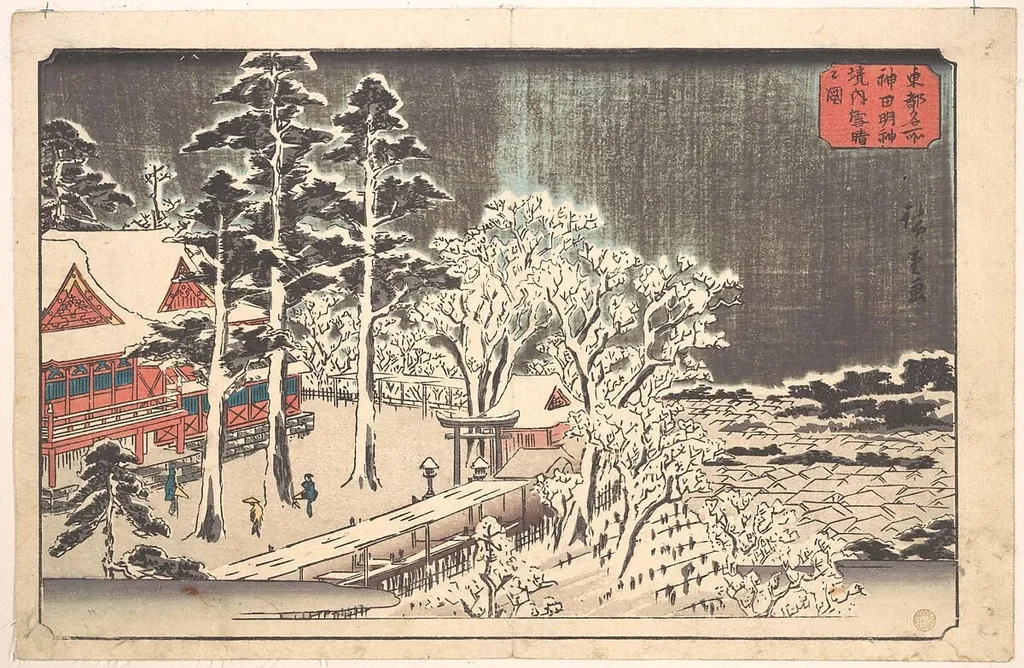
東都名所 神田明神境内雪晴之図|“Clear Weather after Snow in the Precincts of the Kanda Myōjin Shrine” (Kanda Myōjin keidai yukibare no zu), from the series Famous Places in the Eastern Capital (Tōto meisho) is an ink print by the Romanticist artist Utagawa Hiroshige. It dates from 1841 and is held in the collection of the Metropolitan Museum of Art.
About this work
Overview
Created in 1841 by Utagawa Hiroshige, this woodblock print is part of the series 'Famous Places in the Eastern Capital,' which documents notable sites in Edo.
Created in 1841 by Utagawa Hiroshige, this woodblock print is part of the series 'Famous Places in the Eastern Capital,' which documents notable sites in Edo. The scene captures the quiet aftermath of snowfall at Kanda Myōjin Shrine, a Shinto site in the city’s northern district. Hiroshige’s composition emphasizes stillness and seasonal transition, aligning with the series’ broader aim to portray Edo’s evolving urban and natural landscapes through the lens of everyday observation.
Subject & Meaning
The print portrays the shrine’s red-painted buildings and snow-laden trees under a clear winter sky, with a few figures moving along the path. These small human elements ground the scene in daily life, suggesting ritual visits or quiet contemplation after the storm. The absence of grandeur or spectacle shifts focus to the quiet beauty of ordinary moments, reflecting a cultural appreciation for transience and seasonal change central to Edo-period aesthetics.
Technique & Style
Hiroshige employed layered woodblock printing to achieve subtle gradations of color—blues, greens, and browns—suggesting depth and atmospheric haze. The use of minimal detail in figures and architecture contrasts with the textured rendering of snow and bark, enhancing the sense of calm. His signature soft edges and muted palette avoid dramatic contrast, instead cultivating a meditative tone that distinguishes his later landscapes from the bolder compositions of earlier ukiyo-e traditions.
History & Provenance
Produced during the late Edo period, this print was part of a commercially successful series commissioned by publisher Hoeidō. It circulated widely among Edo’s middle class, who collected such prints as both souvenirs and artistic objects. Though originally printed in multiple copies, surviving examples are now held in major museum collections, including the Museum of Fine Arts, Boston, and the British Museum, reflecting its enduring presence in global print collections.
Context
Hiroshige’s series emerged as Edo’s urban identity expanded, with residents increasingly viewing their city through the lens of pilgrimage and seasonal ritual. Unlike earlier ukiyo-e focused on courtesans or actors, this work reflects a growing interest in nature and place. The Kanda Myōjin Shrine, a site of local devotion, was one of many landmarks chosen to represent Edo’s spiritual and topographical character, blending religious significance with civic pride.
Legacy
This print exemplifies Hiroshige’s role in transforming ukiyo-e from genre-focused imagery to landscape-centered narratives. His atmospheric approach influenced later Western artists, including the Impressionists, who admired his compositional restraint and sensitivity to light. While not the most famous of his works, it remains a quiet testament to his ability to elevate the mundane into enduring visual poetry, securing his place as a pivotal figure in Japanese printmaking history.
Artist & collection
Artist
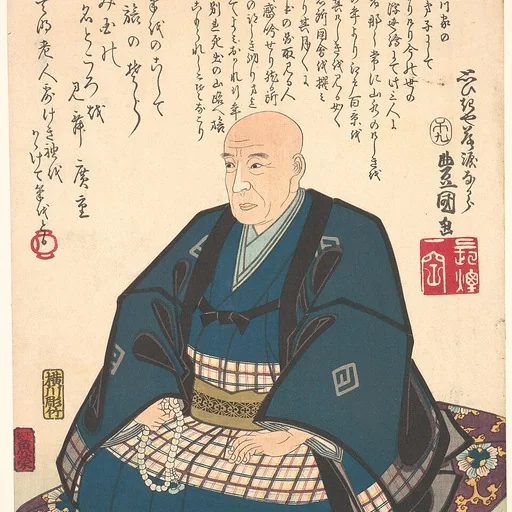
Utagawa Hiroshige (歌川 広重) or Andō Hiroshige (安藤 広重), born Andō Tokutarō (安藤 徳太郎; 1797 – 12 October 1858), was a Japanese ukiyo-e artist, considered the last great master of that tradition.

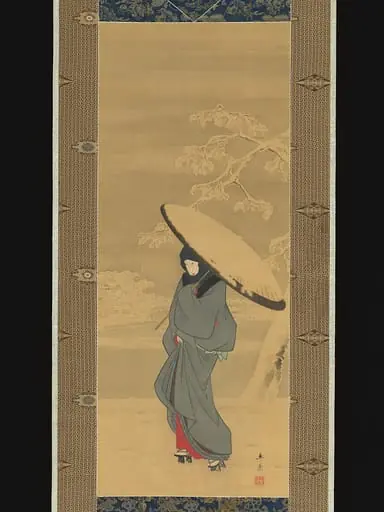
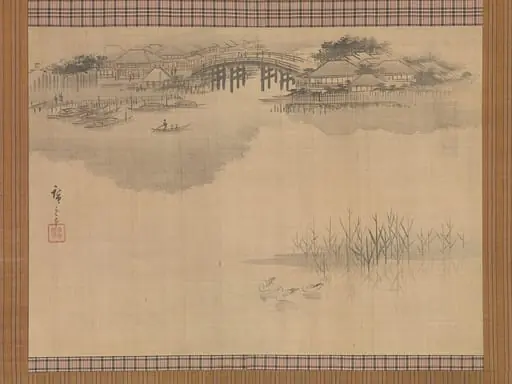
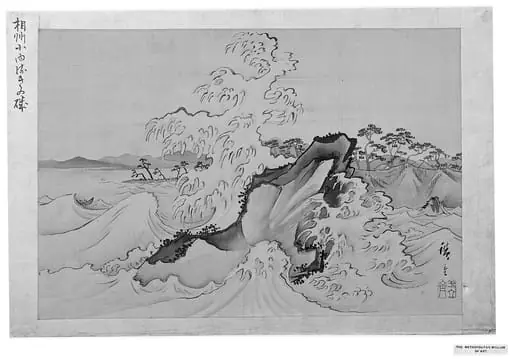
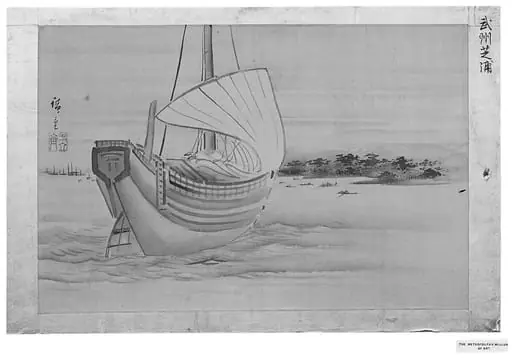
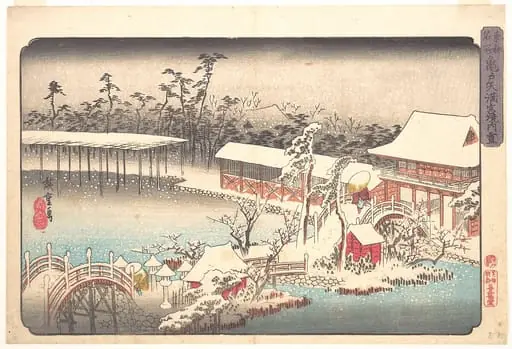 Kameido Tenmangu keidai no yuki|東都名所 亀戸天満宮境内雪|Tenmangū Shrine at Kameido in Snow
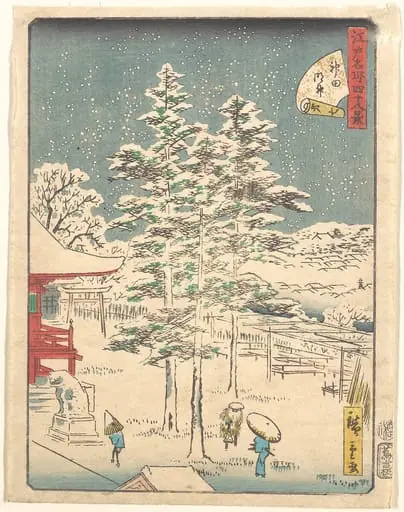 江戸名所四十八景 神田明神|Kanda Temple Snow
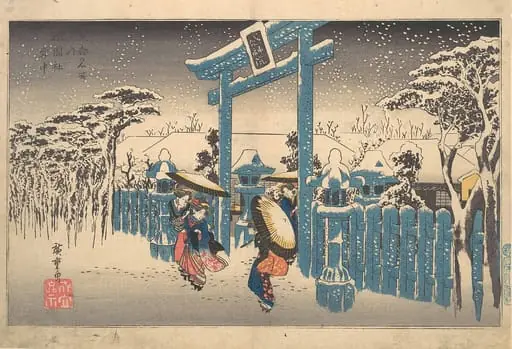 歌川広重画 「京都名所之内 祇園社雪中」|The Gion Shrine in Snow, from the series Famous Views of Kyoto (Kyōto meisho no uchi)
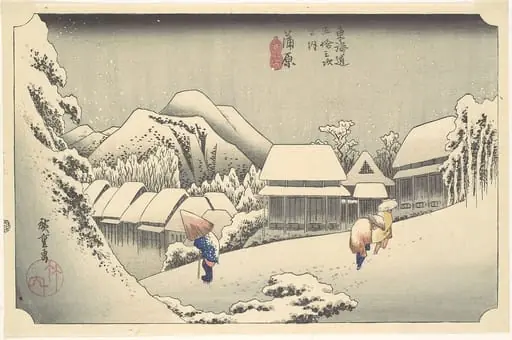 東海道五十三次之内 蒲原 夜の雪|Evening Snow at Kanbara, from the series "Fifty-three Stations of the Tōkaidō"
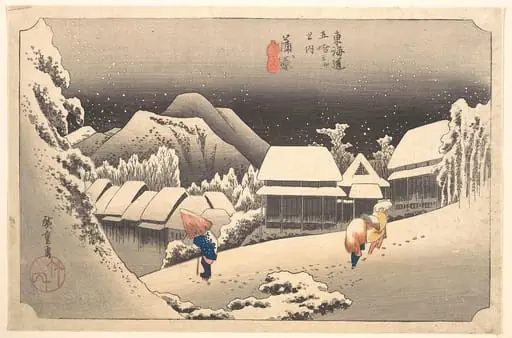 東海道五十三次之内 蒲原 夜の雪|Evening Snow
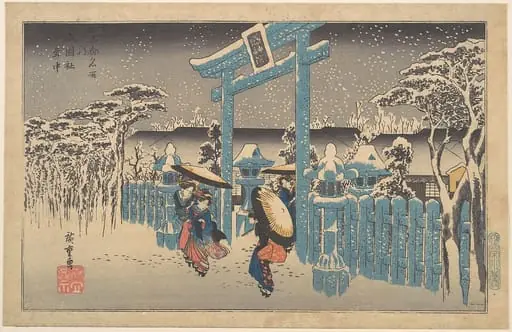 京都名所之内 祇園社雪中|Gion Shrine in Snow
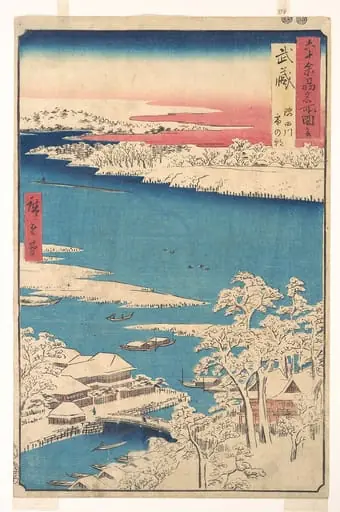 六十余州名所図会 武蔵 隅田川 雪の朝|Morning after a Snowfall, the Sumida River, Musashi Province, from the series Views of Famous Places in the Sixty-Odd Provinces
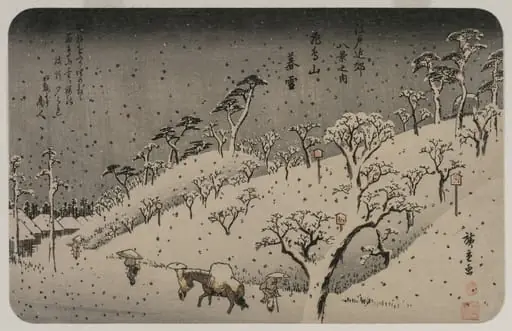 Evening Snow at Asuka Hill, from the series Eight Views of the Environs of Edo
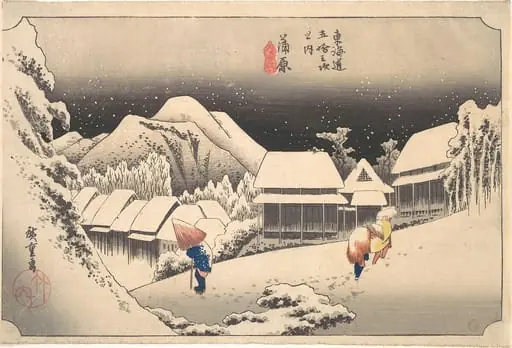 東海道五十三次之内 蒲原 夜の雪|A Snowy Evening at Kambara Station
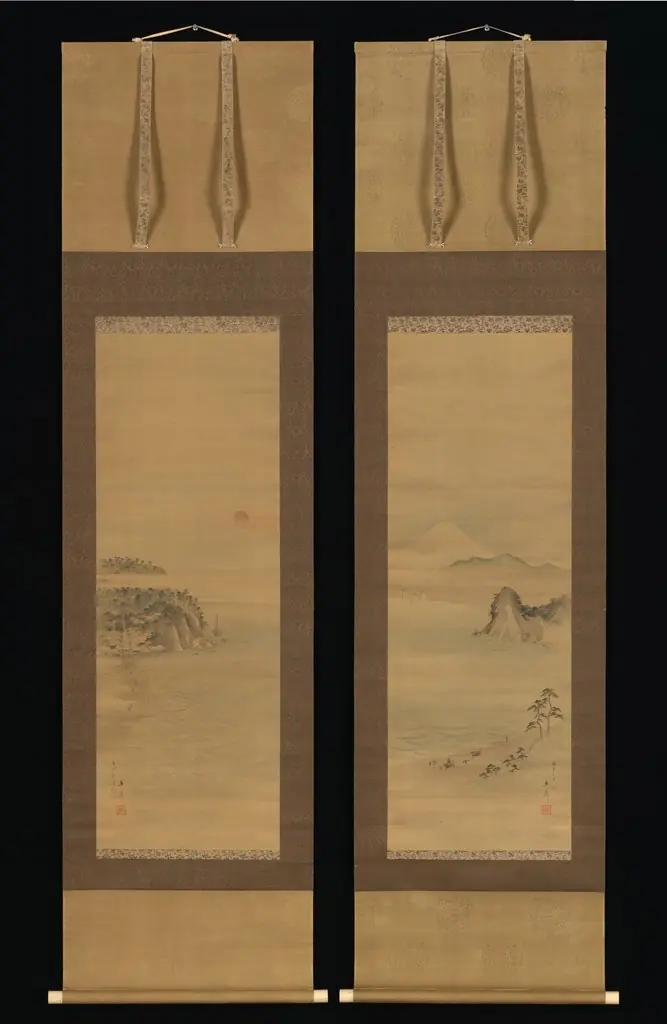
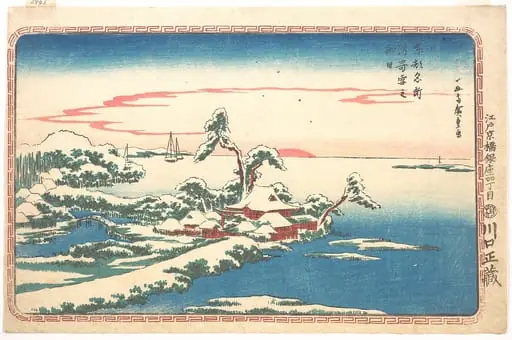 Susaki yuki no hatsuhi|東都名所 洲崎雪之初日|New Year's Sunrise after Snow at Susaki
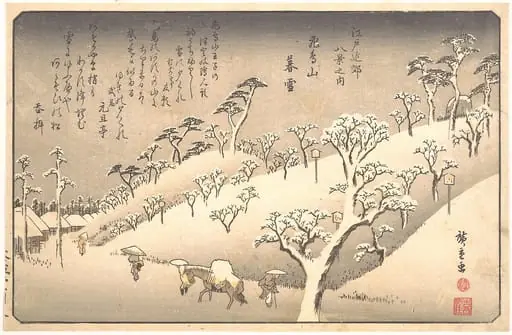 Asukayama Bosetsu|江戸近郊八景之内 飛鳥山暮雪|Asukayama in the Snow at Evening
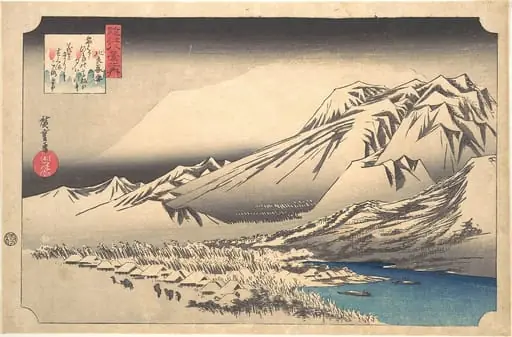 Hira no Bosetsu|近江八景の内 比良暮雪|Evening Snow on Mount Hira