Artwork
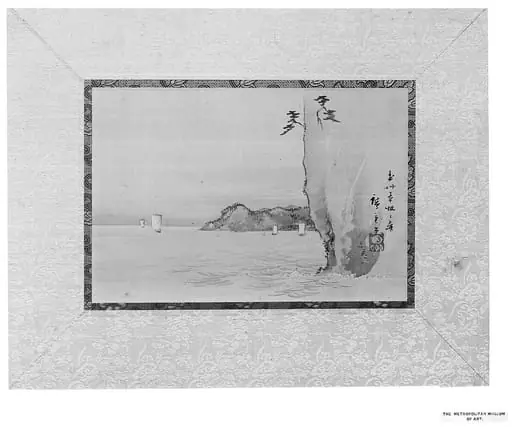
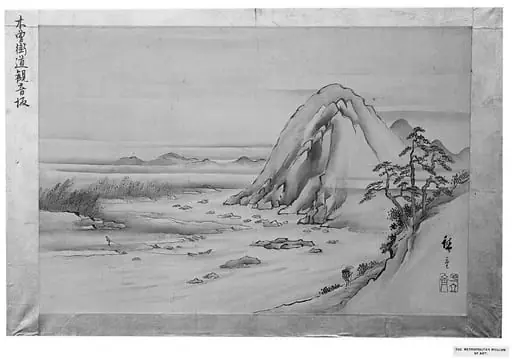
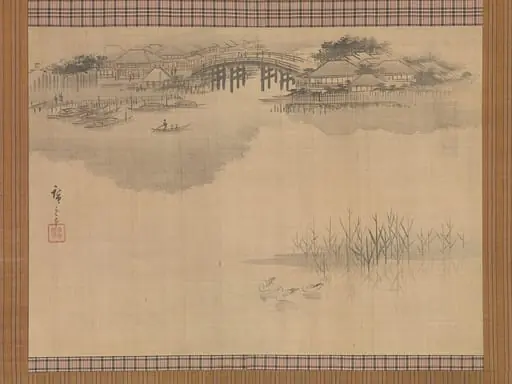
東海道五十三次之内 江尻 清水之湊遠望|Ejiri
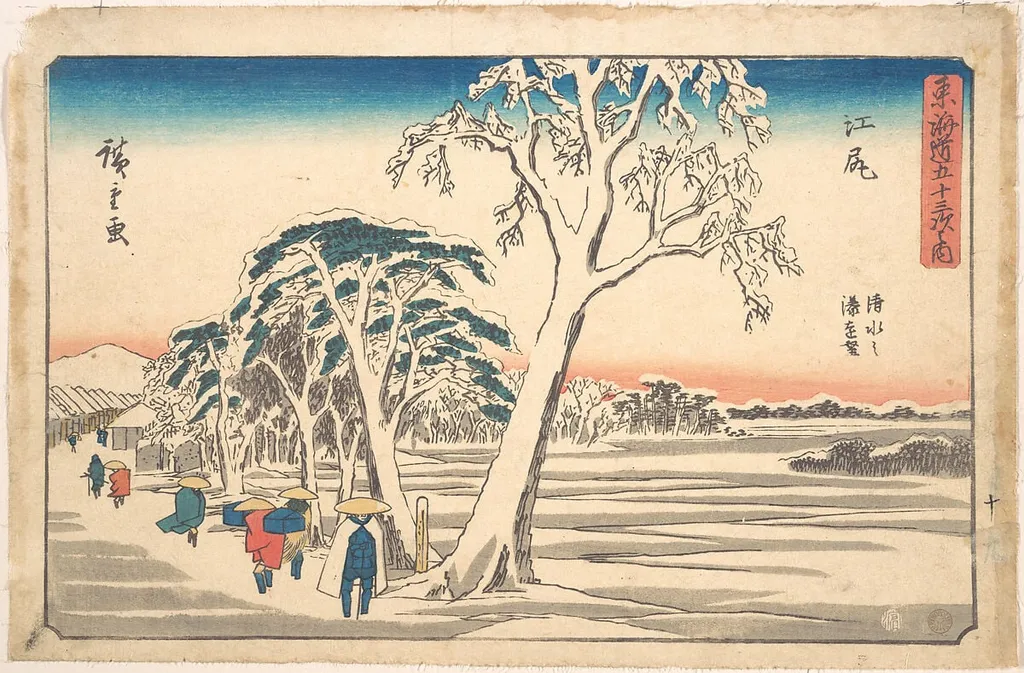
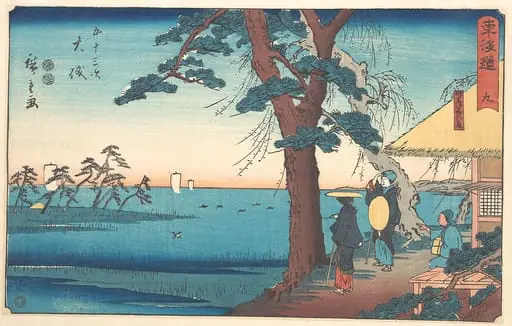
東海道五十三次之内 江尻 清水之湊遠望|Ejiri is an ink print by the Romanticist artist Utagawa Hiroshige. It dates from 1842 and is held in the collection of the Metropolitan Museum of Art.
About this work
Overview
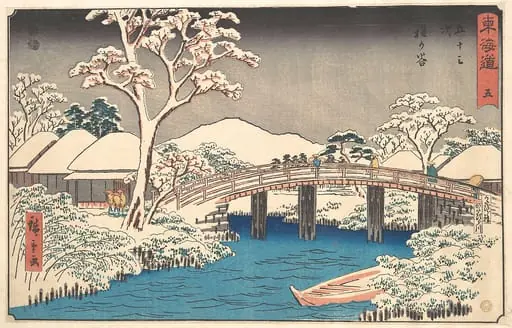
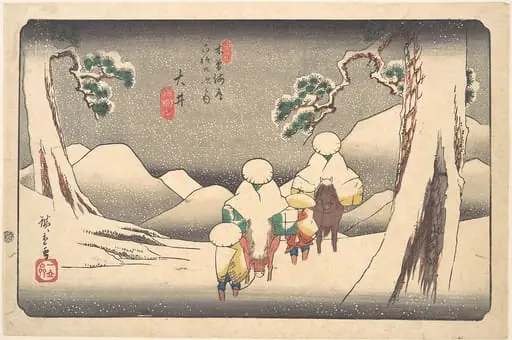
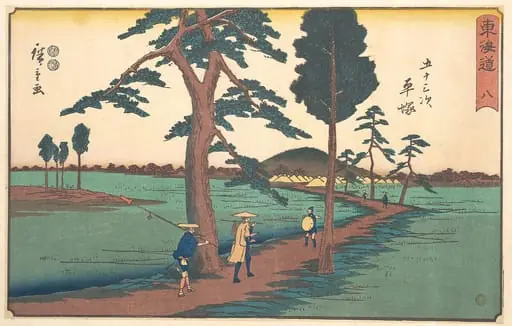
Created circa 1842 by Utagawa Hiroshige, this horizontal woodblock print belongs to his celebrated series *The Fifty‑three Stations of the Tōkaidō*. Executed with ink and color on paper, it depicts the coastal settlement of Ejiri as seen from the Tōkaidō road, offering a tranquil view of a river, distant hills and a modest village beyond.
Subject & Meaning
The composition presents a quiet stretch of the highway flanked by leaf‑less trees, a few wayfarers in traditional hats and robes, and a river that mirrors the sky. The soft blue‑to‑pink gradient of the heavens suggests early evening, while the distant village under low hills conveys the ordinary yet essential nature of travel in Edo‑period Japan.
Technique & Style
Hiroshige employs the ukiyo‑e woodblock method, using clean, linear brushwork to render the trees and figures while layering muted pigments for atmospheric depth. The limited palette and subtle gradations of color create a sense of distance, a hallmark of his landscape approach that emphasizes mood over detailed narrative.
History & Provenance
Printed as part of the *Fifty‑three Stations* series, the work circulated widely in the 1840s, reaching both domestic collectors and foreign audiences intrigued by Japanese prints. Original impressions remain in several museum collections, and the image continues to be reproduced in scholarly editions of Hiroshige’s oeuvre.
Artist & collection
Artist
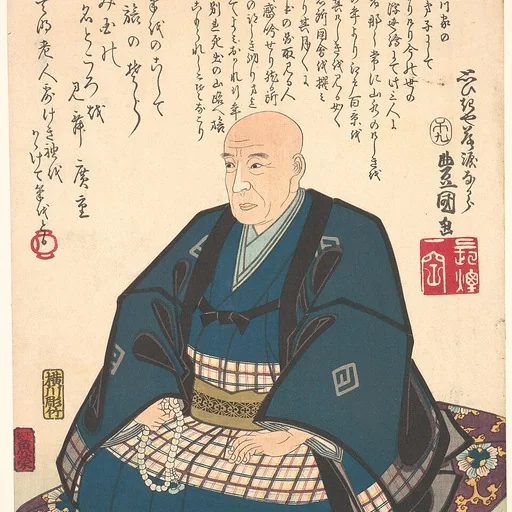
Utagawa Hiroshige (歌川 広重) or Andō Hiroshige (安藤 広重), born Andō Tokutarō (安藤 徳太郎; 1797 – 12 October 1858), was a Japanese ukiyo-e artist, considered the last great master of that tradition.