Artwork
近江八景之内 唐崎夜雨|Evening Rain on the Karasaki Pine
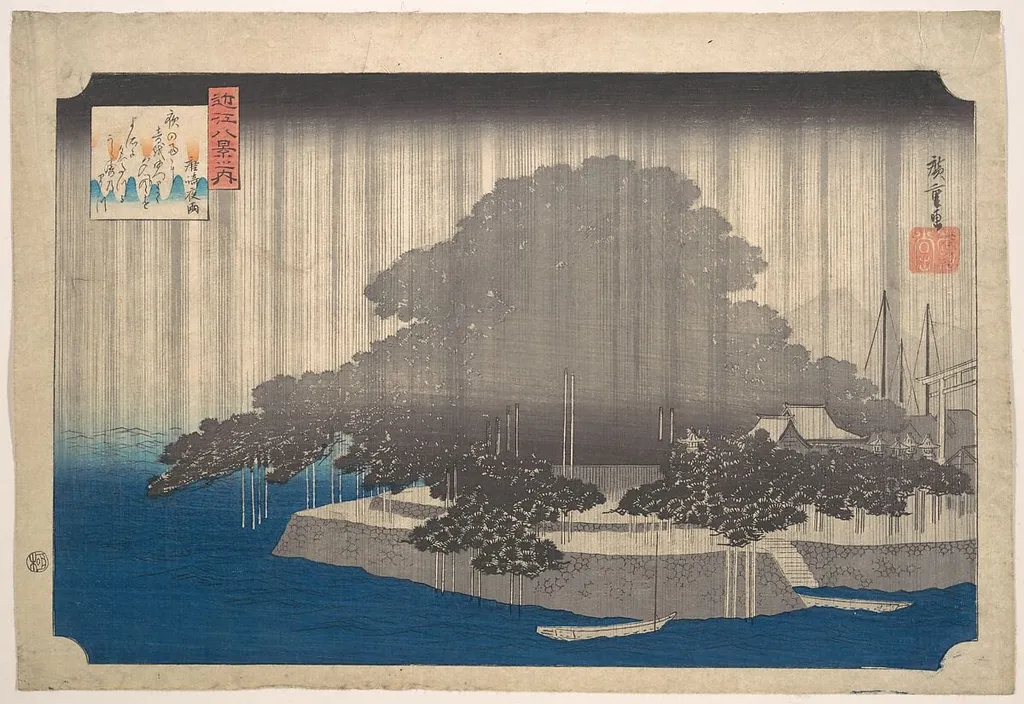
近江八景之内 唐崎夜雨|Evening Rain on the Karasaki Pine is an ink print by the Romanticist artist Utagawa Hiroshige. It dates from 1828 and is held in the collection of the Metropolitan Museum of Art.
About this work
Overview
Created in 1828 by Utagawa Hiroshige, this woodblock print is part of the *Eight Views of Ōmi* series, a set of landscapes inspired by classical Chinese poetic themes adapted to Japanese scenery. Rendered in ink and color on paper, the work exemplifies Hiroshige’s focus on natural atmosphere and seasonal mood, distinguishing his approach within the ukiyo-e tradition.
Subject & Meaning
The scene depicts Karasaki, a lakeside location in Ōmi Province, during a quiet evening rain. A solitary pine tree on a small island dominates the composition, its branches reaching outward as if embracing the falling rain. Sparse boats on the water and distant buildings suggest human presence without disruption, reinforcing a contemplative tone tied to the poetic tradition of the Eight Views.
Technique & Style
Hiroshige employed fine, vertical lines to suggest steady rain, using subtle gradations of gray ink to convey overcast skies. The pine tree is rendered with controlled brushwork, its form softened by the moisture-laden air. Color is restrained—delicate blues and greens enhance the dampness without overwhelming the monochrome base, reflecting the Edo-period aesthetic of understated elegance.
History & Provenance
The print was produced during Hiroshige’s early career, shortly before his breakthrough with *The Fifty-three Stations of the Tōkaidō*. As part of a regional landscape series, it was likely printed in limited quantities for local collectors. Its survival in good condition reflects its appeal among connoisseurs of nature-themed prints in the late Edo period.
Context
The *Eight Views of Ōmi* drew from a Chinese literary tradition adapted in Japan to celebrate specific scenic spots around Lake Biwa. These views were popular subjects in poetry and painting, and Hiroshige’s prints helped standardize their visual representation. His version emphasizes quietude over grandeur, aligning with Edo-period tastes for intimate, emotionally resonant landscapes.
Legacy
Though less widely known than his Tōkaidō series, this print contributed to Hiroshige’s reputation for evoking weather and mood through minimal means. Later artists and Western impressionists studied his use of atmosphere and composition, and the *Eight Views of Ōmi* remain referenced in Japanese art education as models of lyrical landscape design.
Artist & collection
Artist
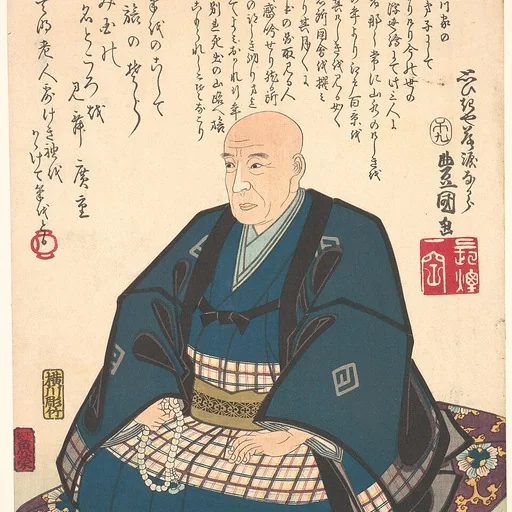
Utagawa Hiroshige (歌川 広重) or Andō Hiroshige (安藤 広重), born Andō Tokutarō (安藤 徳太郎; 1797 – 12 October 1858), was a Japanese ukiyo-e artist, considered the last great master of that tradition.

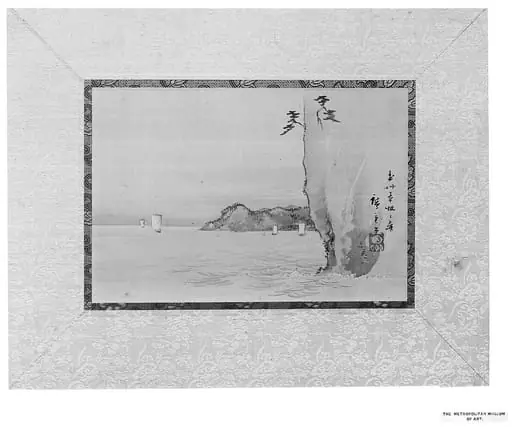
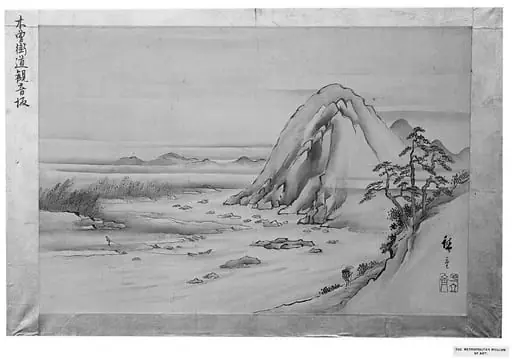
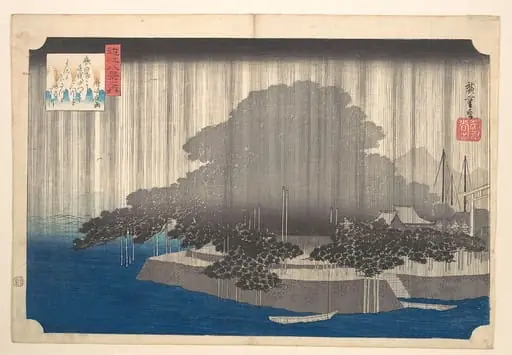 近江八景之内 唐崎夜雨|Evening Rain at Karasaki-Pine Tree
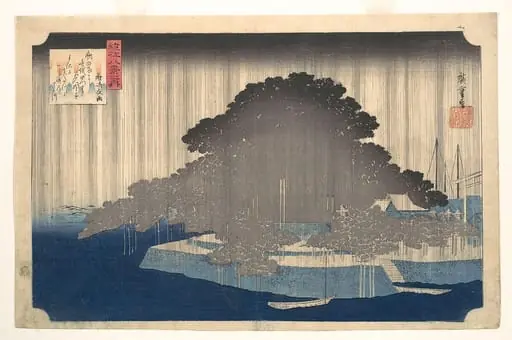 Karasaki no Yau|近江八景の内 唐崎夜雨|Evening Rain at Karasaki, Pine Tree
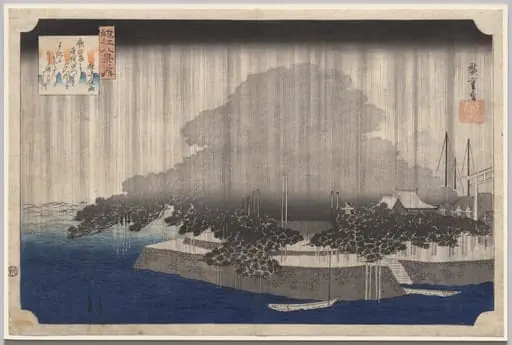 Night Rain at Karasaki, from Eight Views of Ōmi
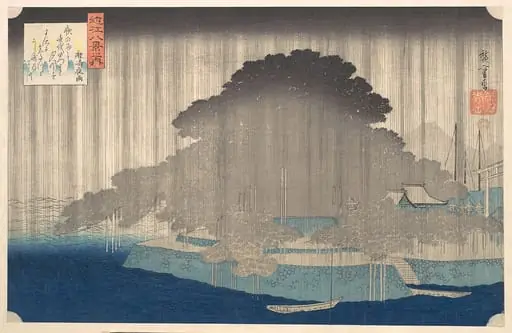 歌川広重画 「近江八景之内 唐崎夜雨」|Night Rain at Karasaki, from the series Eight Views of Ōmi (Ōmi hakkei no uchi)
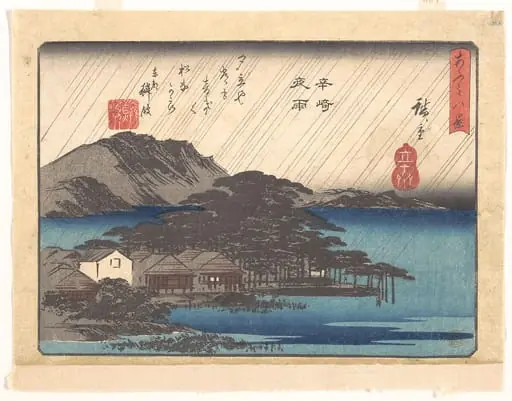 歌川広重画 「あふみ八景 辛崎夜雨」|Evening Rain at Karasaki, from the series Eight Views of Ōmi (Ōmi hakkei)
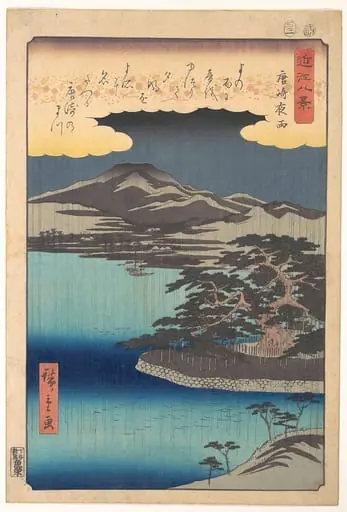 Karasaki ya'u|近江八景 唐崎夜雨|Pine Tree at Karasaki
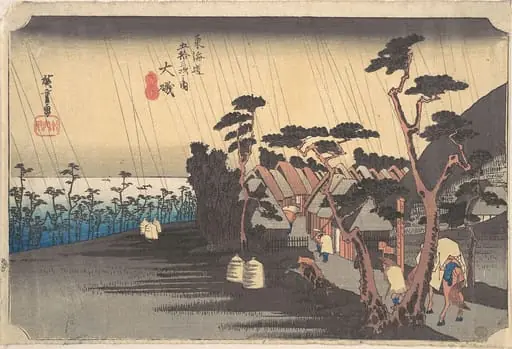 東海道五十三次之内 大磯 虎ケ雨|Tiger Rain at Ōiso Station
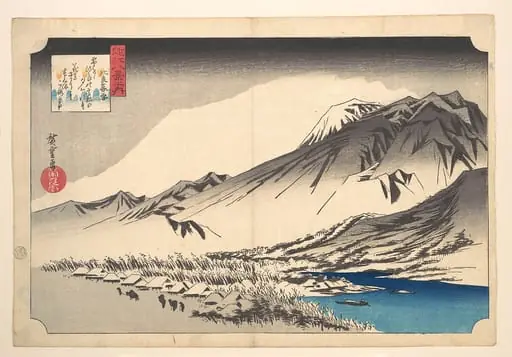 近江八景之内 比良暮雪|Evening Snow on Mount Hira