Artwork
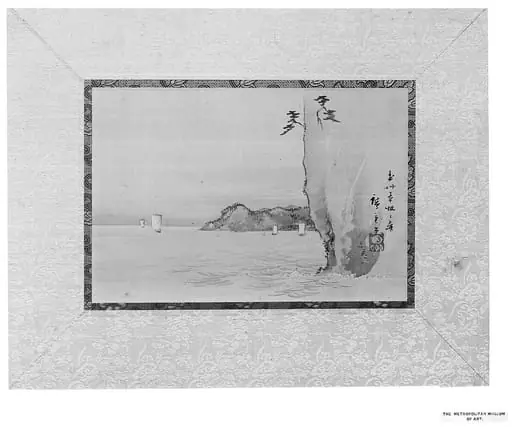
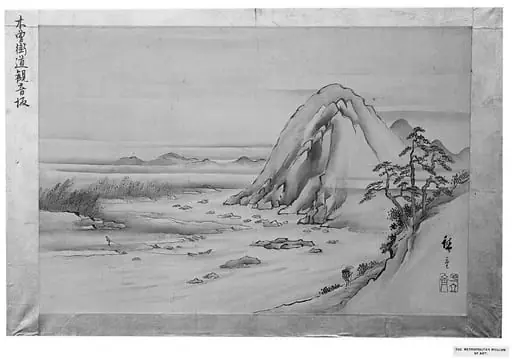
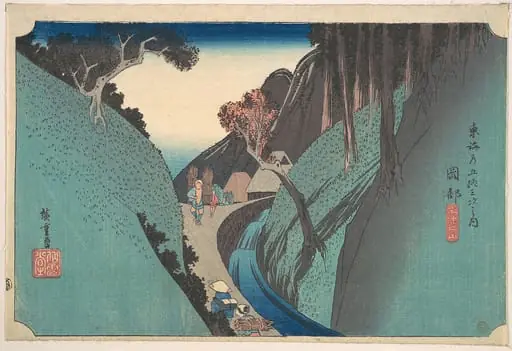
東海道五十三次 御油 古街道本野ヶ原|Goyu
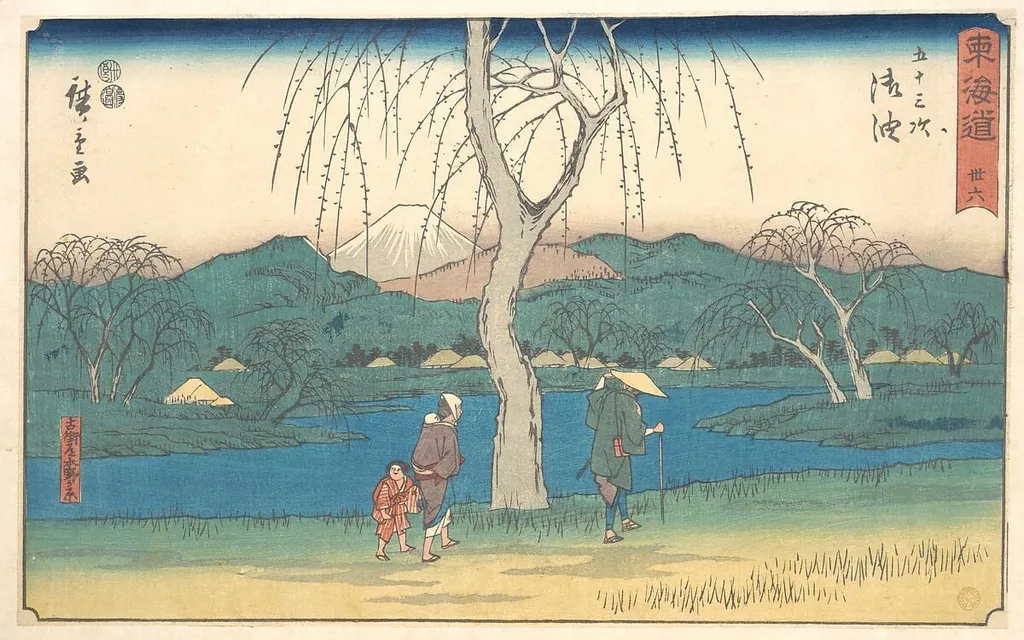
東海道五十三次 御油 古街道本野ヶ原|Goyu is an ink print by the Romanticist artist Utagawa Hiroshige. It dates from 1840 and is held in the collection of the Metropolitan Museum of Art.
About this work
Overview
Created around 1840 by Utagawa Hiroshige, this woodblock print is one of fifty-three scenes in the series *The Fifty-three Stations of the Tōkaidō*.
Created around 1840 by Utagawa Hiroshige, this woodblock print is one of fifty-three scenes in the series *The Fifty-three Stations of the Tōkaidō*. It depicts the Goyu post station along the major road connecting Edo and Kyoto. Unlike typical ukiyo-e subjects centered on urban life, Hiroshige focused on quiet, natural landscapes, capturing the atmosphere of travel through subtle seasonal and spatial cues.
Subject & Meaning
The scene shows three travelers—a pair of adults and a child—pausing near a bare, drooping tree by a riverside. Behind them, mist softens the outline of a distant mountain and a cluster of modest huts. The stillness of the figures and the muted environment suggest a moment of rest along a long journey, evoking solitude and the passage of time rather than activity or spectacle.
Technique & Style
Hiroshige employed flat areas of color and minimal linework to suggest depth and texture. The pale blue sky, muted greens and yellows of the ground, and hazy mountain forms create atmospheric perspective. Bare branches and soft mist are rendered with delicate, sparse strokes, while cross-hatching subtly defines shadows and surfaces without heavy detail, reinforcing the print’s tranquil mood.
History & Provenance
The print was produced during Hiroshige’s most prolific period, when the *Tōkaidō* series gained widespread popularity across Japan. It was originally printed in multiple copies for public sale. The Metropolitan Museum of Art now holds one of the surviving impressions, preserving its original ink and color on paper as a representative example of mid-Edo period printmaking.
Context
The Tōkaidō was the most traveled route in Edo-period Japan, used by merchants, pilgrims, and samurai. Hiroshige’s series documented each station not as bustling hubs but as quiet, often solitary moments in nature. This approach reflected a growing cultural appreciation for transient beauty and the emotional resonance of landscapes, aligning with broader aesthetic ideals of the time.
Legacy
Hiroshige’s *Tōkaidō* series influenced later generations of artists, both in Japan and abroad, particularly in the way landscape was composed for emotional effect. The quiet, atmospheric quality of *Goyu* exemplifies a shift in ukiyo-e from theatrical subjects to contemplative scenes, helping to redefine the genre’s potential for lyrical expression.
Artist & collection
Artist
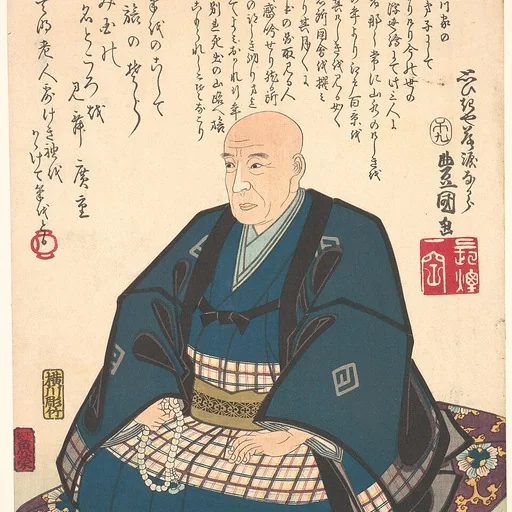
Utagawa Hiroshige (歌川 広重) or Andō Hiroshige (安藤 広重), born Andō Tokutarō (安藤 徳太郎; 1797 – 12 October 1858), was a Japanese ukiyo-e artist, considered the last great master of that tradition.