Artwork
東海道五十三次之内 岡部 宇津の山|Okabe; Utsu no Yama
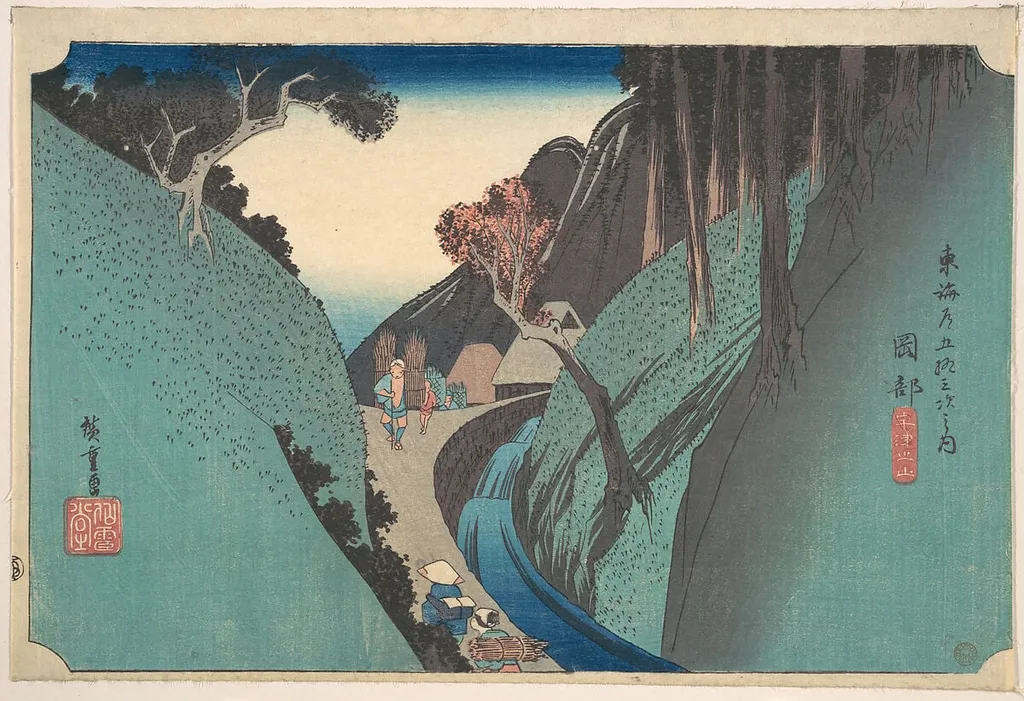
東海道五十三次之内 岡部 宇津の山|Okabe; Utsu no Yama is an ink print by the Romanticist artist Utagawa Hiroshige. It dates from 1834 and is held in the collection of the Metropolitan Museum of Art.
About this work
Overview
This woodblock print, Okabe; Utsu no Yama, is part of Utagawa Hiroshige's series The Fifty-three Stations of the Tōkaidō, created around 1834. It depicts a scenic landscape along the Tōkaidō road, a major route in Japan during the Edo period.
Subject & Meaning
The print shows a winding road through a hilly landscape with houses, travelers, and trees. A river runs alongside the path, and a bright red tree stands out against the blue-green hills. The scene captures a moment of everyday life on the Tōkaidō road, blending natural beauty with human activity.
Technique & Style
Hiroshige used ink and color on paper to create the print, employing sharp lines to convey texture and simple yet bold colors. The composition is characteristic of his style, which often featured atmospheric landscapes in a horizontal format, combining natural elements with human presence.
Artist & collection
Artist
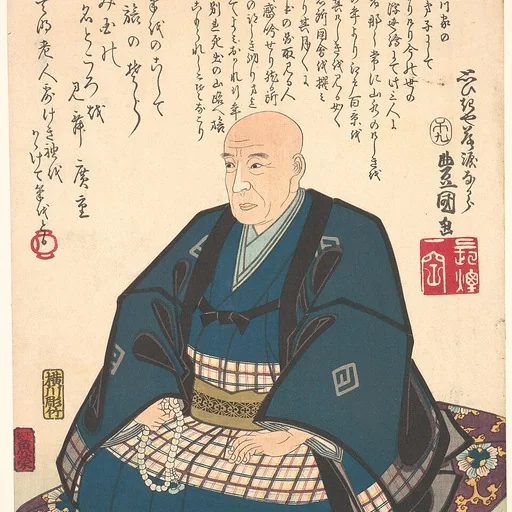
Utagawa Hiroshige (歌川 広重) or Andō Hiroshige (安藤 広重), born Andō Tokutarō (安藤 徳太郎; 1797 – 12 October 1858), was a Japanese ukiyo-e artist, considered the last great master of that tradition.

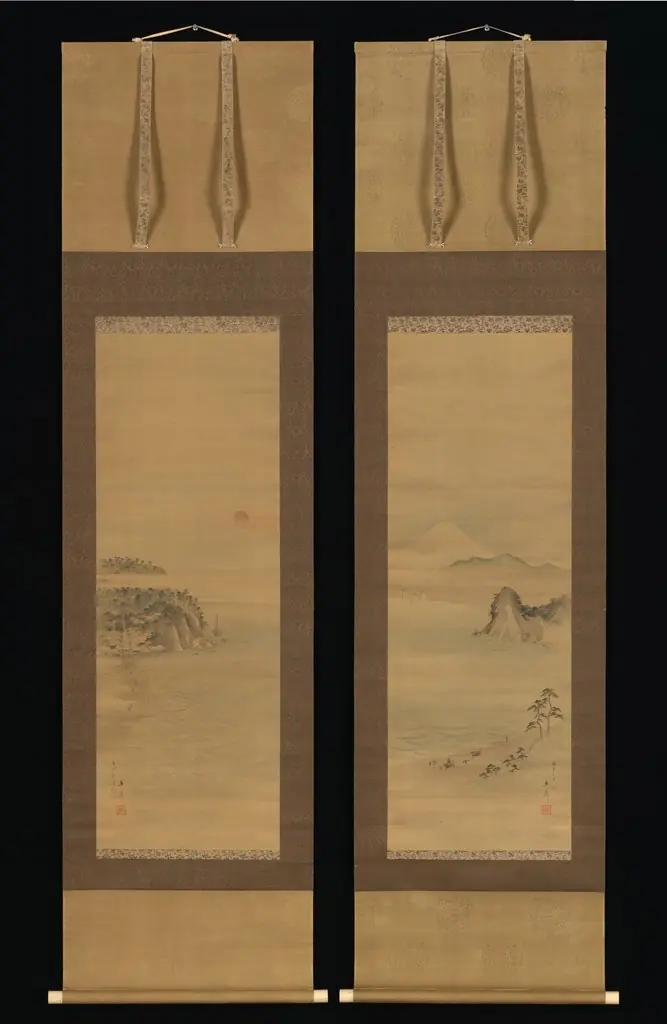
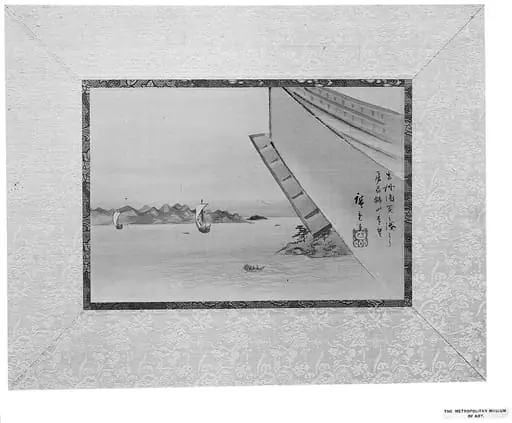
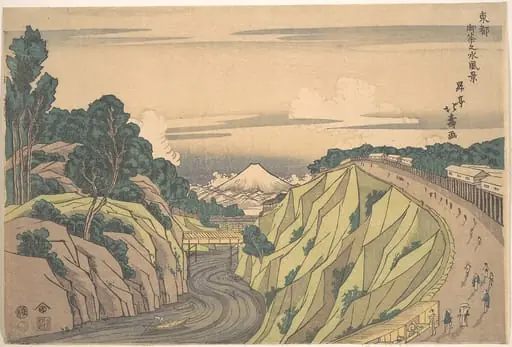 Untitled
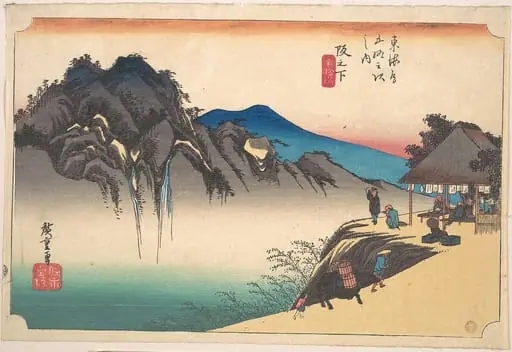 東海道五十三次之内 阪之下 筆捨嶺|Saka-no-shita, Fude-sute Mine
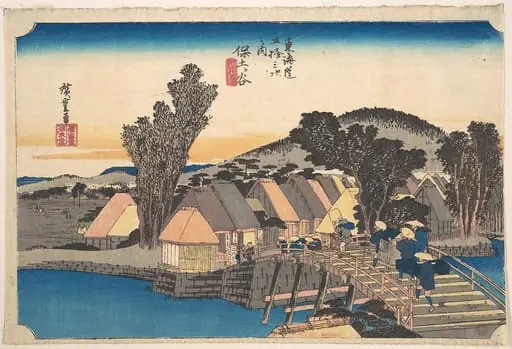 東海道五十三次之内 保土ヶ谷 新町橋|Hodogaya Station and Shinkame Bridge
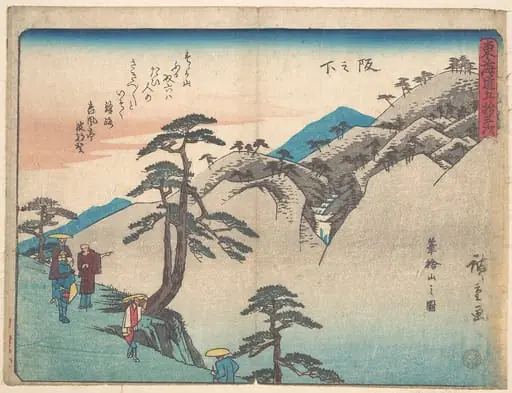 東海道五十三次 坂下|Saka-no-shita
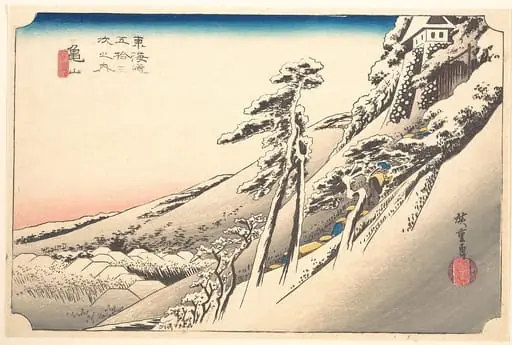 東海道五十三次之内 亀山 雪晴|Clear Weather after Snow
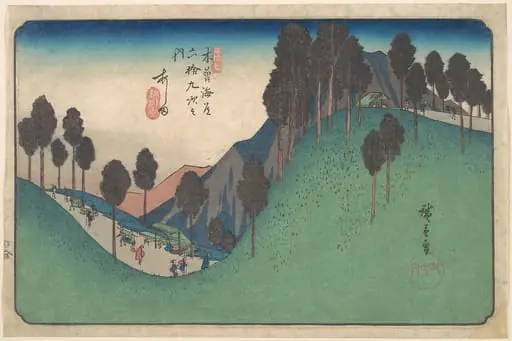 木曽海道六拾九次之内 あし田|Ashida Station
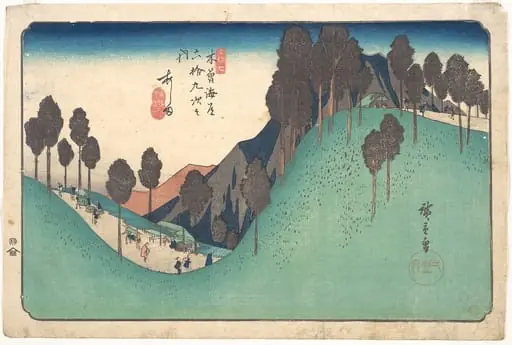 木曽海道六拾九次之内 芦田|Ashida Station
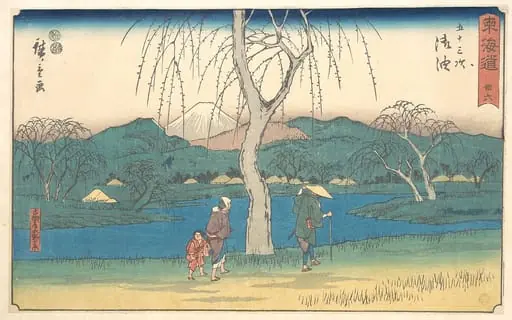 東海道五十三次 御油 古街道本野ヶ原|Goyu
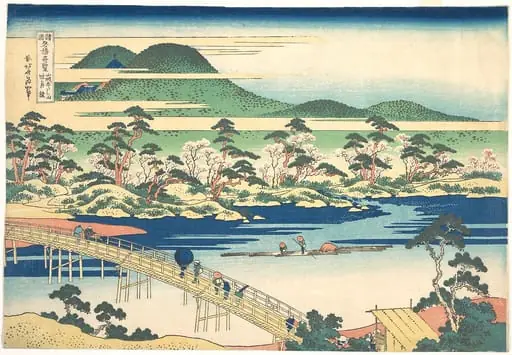 諸國名橋奇覧 山城あらし山吐月橋 |Togetsu Bridge at Arashiyama in Yamashiro, from the series Remarkable Views of Bridges in Various Provinces (Shokoku meikyō kiran)