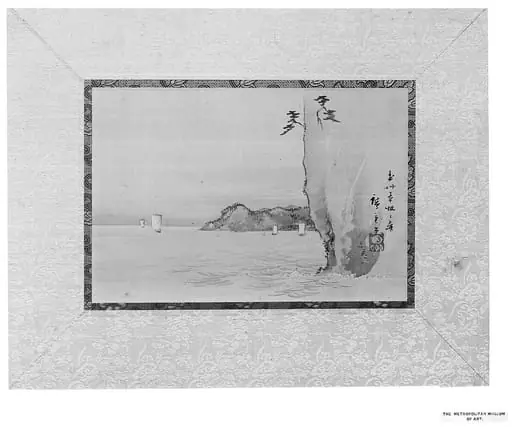
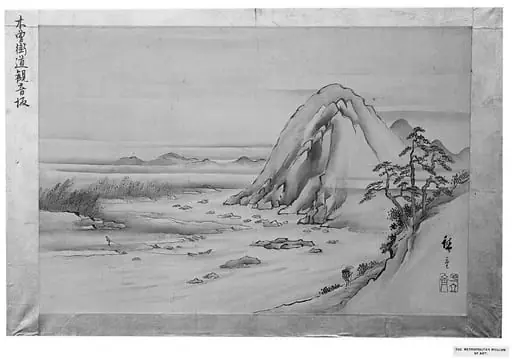
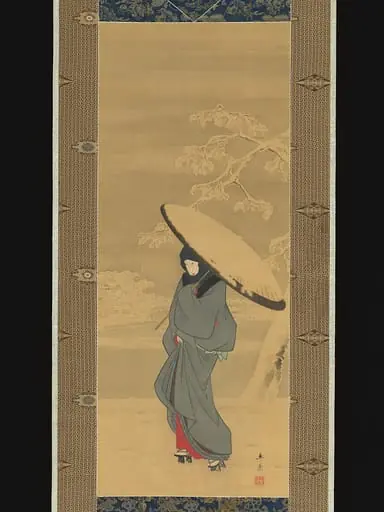
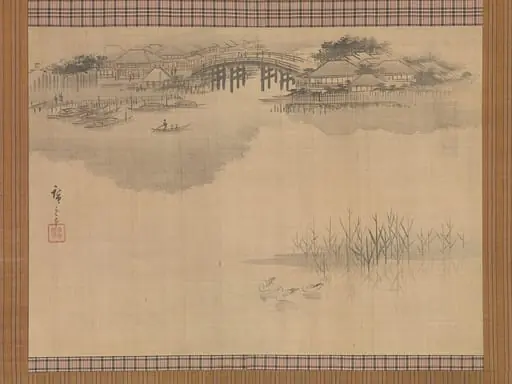
Artwork
東海道五十三次 箱根|Hakone
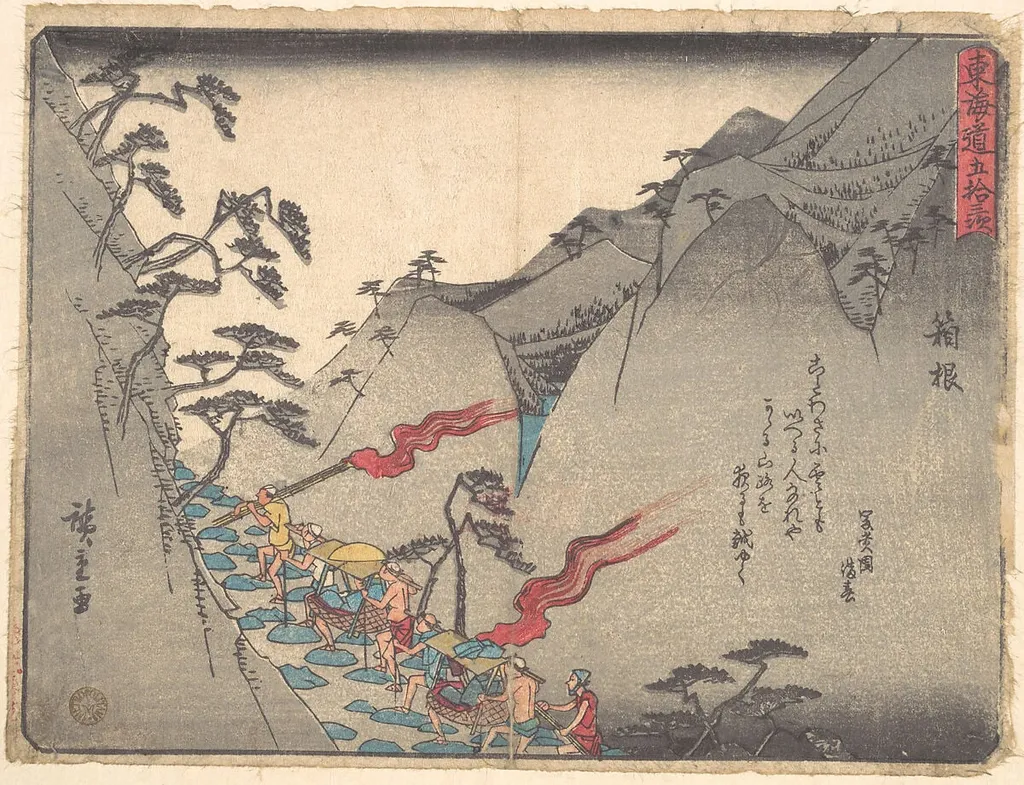
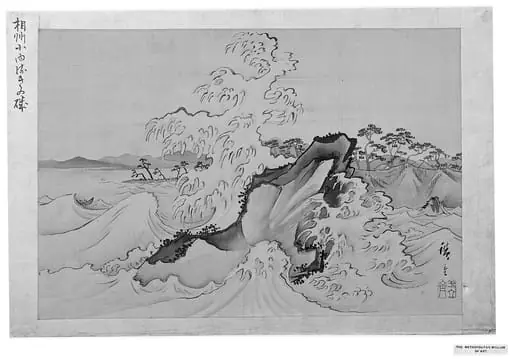
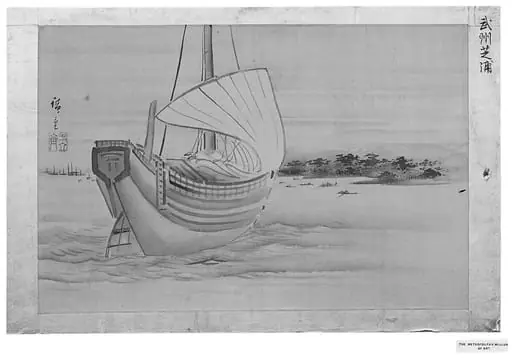
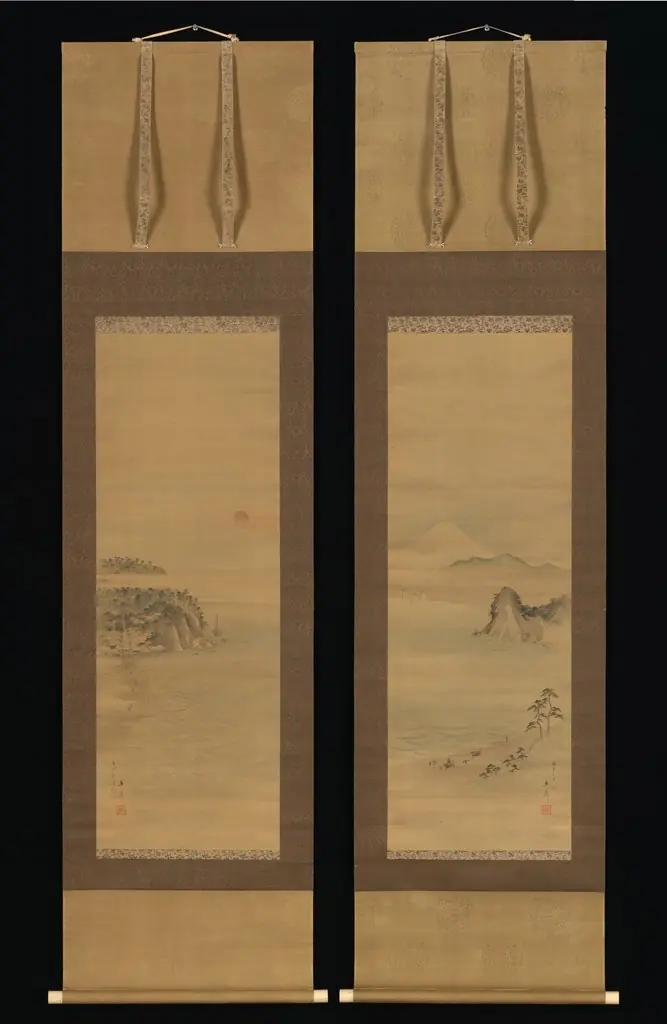
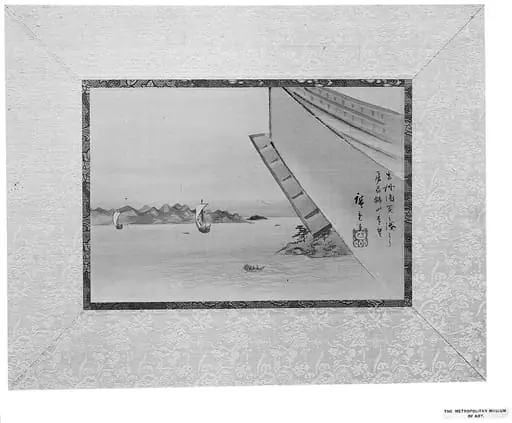
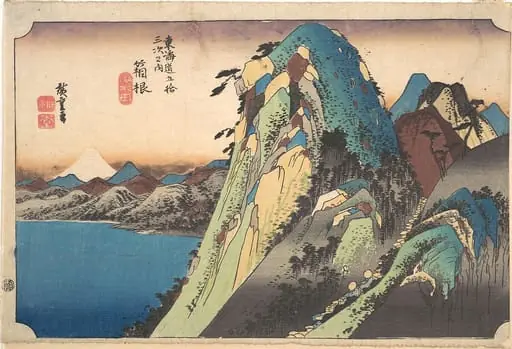
東海道五十三次 箱根|Hakone is an ink print by the Romanticist artist Utagawa Hiroshige. It dates from 1838 and is held in the collection of the Metropolitan Museum of Art.
About this work
Overview
Hakone is a woodblock print from Utagawa Hiroshige's series The Fifty-three Stations of the Tōkaidō, created around 1838. It depicts a scene along the historic Tōkaidō road, which connected Edo (modern-day Tokyo) and Kyoto.
Subject & Meaning
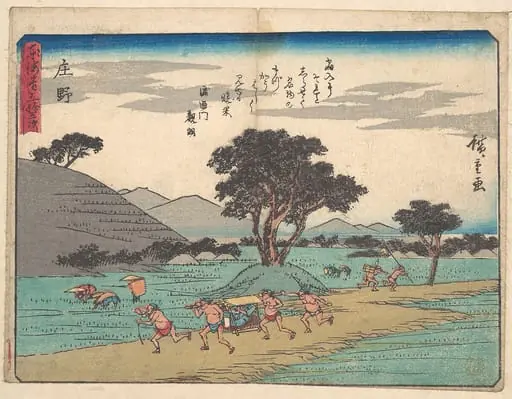
The print captures a moment of everyday life on the Tōkaidō, showing travelers, including those carrying goods, ascending a steep mountainous path lined with tall pine trees. Red banners add a pop of color, symbolizing the presence of merchants or travelers.
Technique & Style
Hiroshige employed sharp black lines to convey texture in the natural elements, such as rocks and trees. The use of ink and color on paper, combined with meticulous details in the figures and landscape, contributes to the print's sense of realism.
History & Provenance
Created during the Edo period (1603–1868), Hakone is part of a tradition of Japanese travel imagery. The print is now held in the collection of The Metropolitan Museum of Art.
Context
As a ukiyo-e artist, Hiroshige diverged from the genre's typical focus on urban entertainment by emphasizing landscapes. Hakone reflects this shift, highlighting the beauty of Japan's natural scenery along a major travel route.
Artist & collection
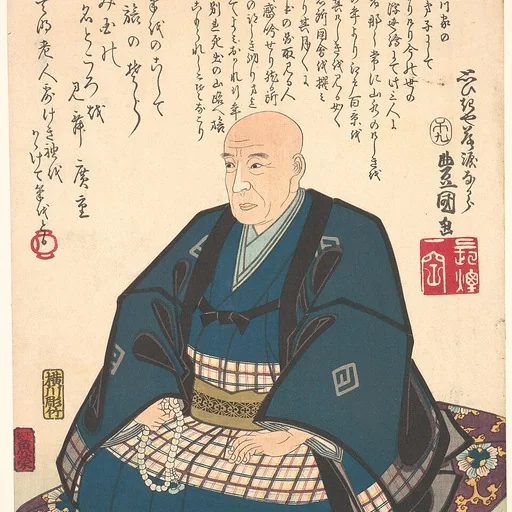
Artist
Utagawa Hiroshige (歌川 広重) or Andō Hiroshige (安藤 広重), born Andō Tokutarō (安藤 徳太郎; 1797 – 12 October 1858), was a Japanese ukiyo-e artist, considered the last great master of that tradition.