Artwork
Kingfisher and Chinese Bellflowers
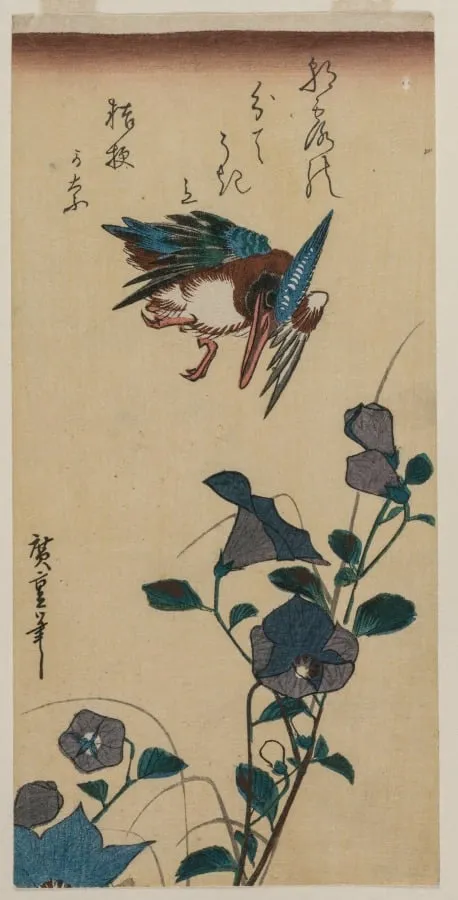
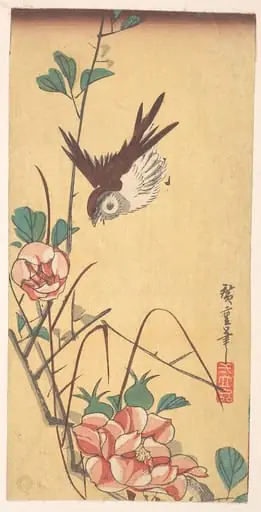
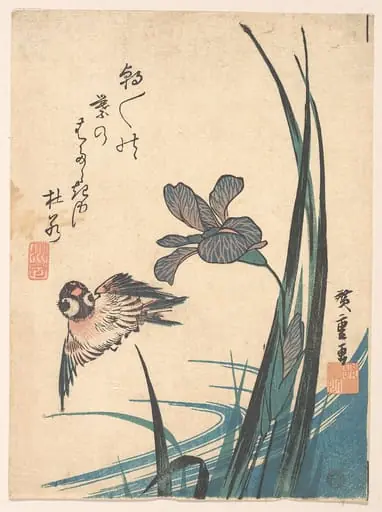
Kingfisher and Chinese Bellflowers is a print by the Romanticist artist Utagawa Hiroshige. It dates from 1834 and is held in the collection of the Cleveland Museum of Art.
About this work
Overview
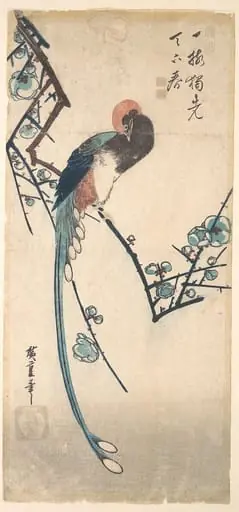
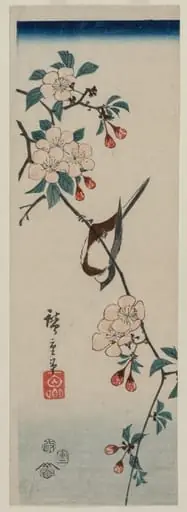
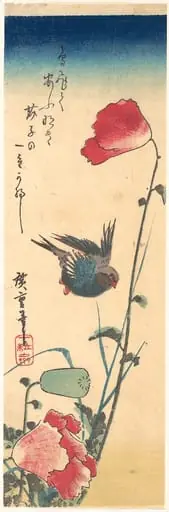
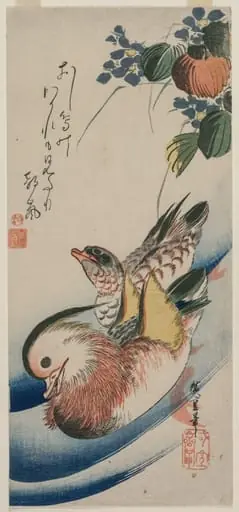
Created circa 1834 by Utagawa Hiroshige, a prominent ukiyo‑e artist of the Edo period, this woodblock print portrays a vivid blue kingfisher perched amid Chinese bellflowers. The composition is rendered on a light beige ground that accentuates the bird’s plumage and the delicate foliage, offering a concise yet striking study of a natural scene.
Subject & Meaning
The image focuses on a solitary kingfisher, its wings slightly unfurled, set against dark green leaves and clusters of purple bellflower blossoms, some still in bud. By isolating the bird within a tranquil botanical setting, Hiroshige emphasizes the fleeting beauty of wildlife, diverging from the genre’s usual emphasis on urban life, courtesans, or theatrical figures.
Technique & Style
Executed in the ukiyo‑e woodblock tradition, the print employs bold, flat areas of color contrasted with subtle gradations to convey the bird’s iridescent feathers. The minimal background allows the intricate line work of the foliage to emerge, while a short Japanese poem inscribed along the margins adds a lyrical dimension, reinforcing the work’s quiet atmosphere.
History & Provenance
The print is part of the permanent collection of the Cleveland Museum of Art. It reflects Hiroshige’s later period, when he increasingly turned his attention to natural subjects, expanding the thematic range of ukiyo‑e beyond its conventional urban motifs.
Artist & collection
Artist
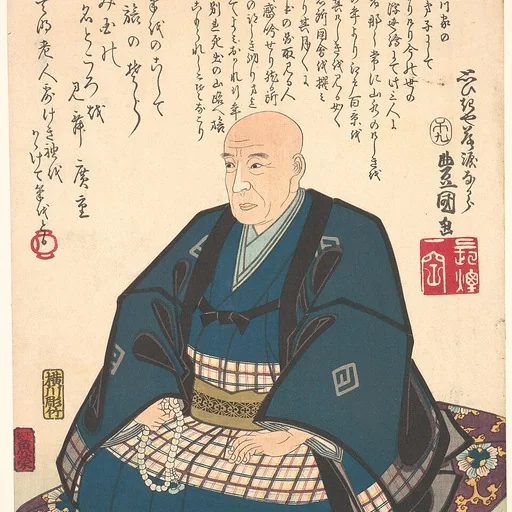
Utagawa Hiroshige (歌川 広重) or Andō Hiroshige (安藤 広重), born Andō Tokutarō (安藤 徳太郎; 1797 – 12 October 1858), was a Japanese ukiyo-e artist, considered the last great master of that tradition.