Artwork
歌川広重画 菊に雉|Pheasant with Chrysanthemums
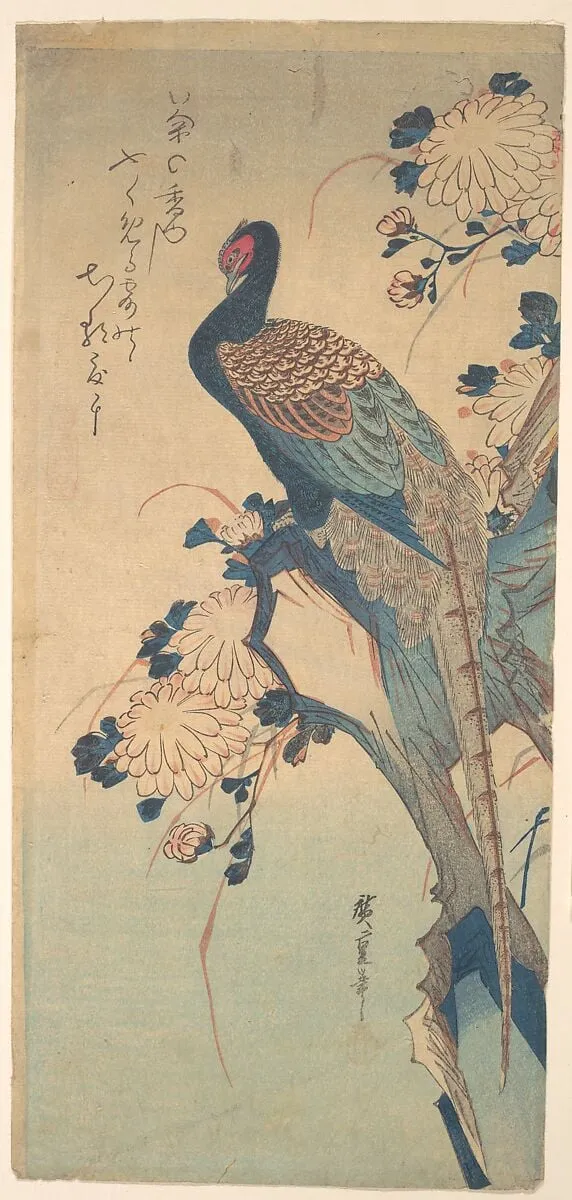
歌川広重画 菊に雉|Pheasant with Chrysanthemums is an ink print by the Romanticist artist Utagawa Hiroshige. It dates from 1835 and is held in the collection of the Metropolitan Museum of Art.
About this work
Overview
Utagawa Hiroshige’s woodblock print *Pheasant with Chrysanthemums* dates to roughly 1835. Executed in the narrow hosoban format, the work combines ink outlines with applied colour on paper. Unlike the artist’s famed landscape series, this piece concentrates on a single natural motif, presenting a solitary bird amid seasonal flowers.
Subject & Meaning
The image centers on a pheasant perched on a slender branch, its plumage rendered in muted browns and blues, while a vivid red throat draws the eye. Surrounding the bird are chrysanthemums in deep violet and white, some still tightly closed, suggesting the transition of seasons and the quiet elegance of the natural world.
Technique & Style
Hiroshige employed the traditional ukiyo‑e process: a carved woodblock provided the inked outlines, and separate blocks applied colour pigments. The hosoban size, long and narrow, emphasizes linear composition. Fine line work defines the bird’s feathers, while flat washes of colour give the chrysanthemums a subtle depth, reflecting the period’s attention to detail and restraint.
History & Provenance
Created during the Edo period, the print forms part of Hiroshige’s broader output beyond his celebrated travel series such as *The Fifty‑three Stations of the Tōkaidō*. While the work was likely produced for the commercial market of the time, it now resides in museum collections that specialize in Japanese prints, illustrating the artist’s range beyond urban scenes.
Artist & collection
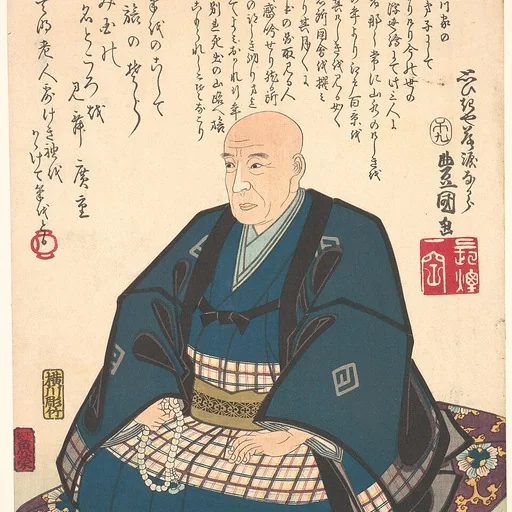
Artist
Utagawa Hiroshige (歌川 広重) or Andō Hiroshige (安藤 広重), born Andō Tokutarō (安藤 徳太郎; 1797 – 12 October 1858), was a Japanese ukiyo-e artist, considered the last great master of that tradition.

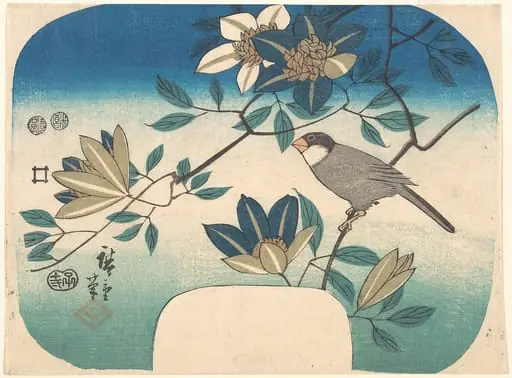 歌川広重画 鉄線花に鳥|Clematis and Bird
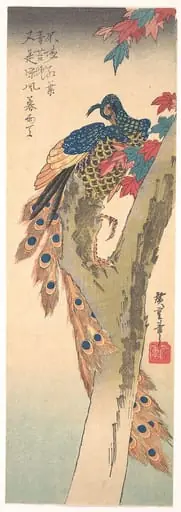 歌川広重画 楓に孔雀|A Peacock Perched on a Maple Tree
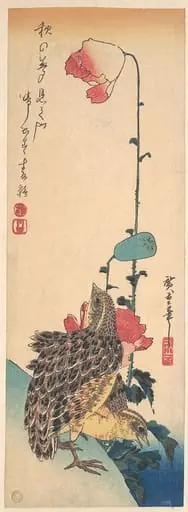 歌川広重画 罌栗に鶉|A Pair of Quails and Poppies
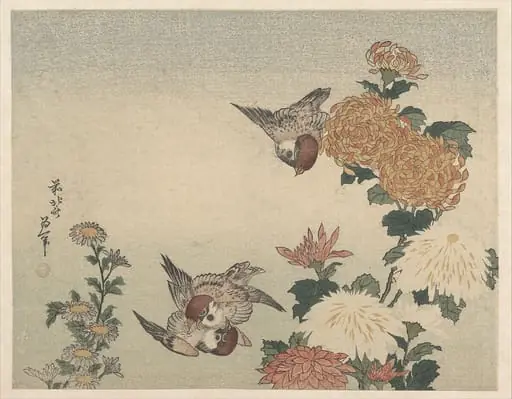 葛飾北斎画 菊に雀|Sparrows and Chrysanthemums
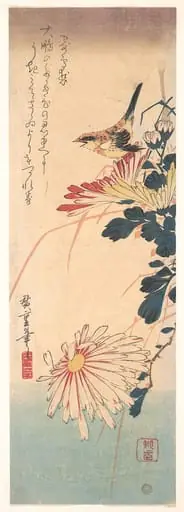 歌川広重画 菊に鷦鷯 |A Wren and Chrysanthemums
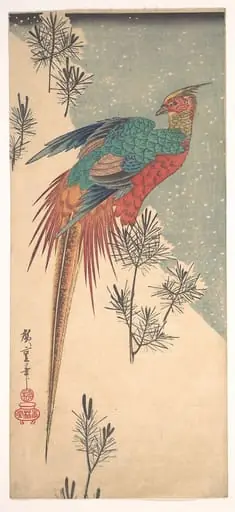 歌川広重画 雪中小松に錦雉|Golden Pheasant and Pine Shoots in Snow
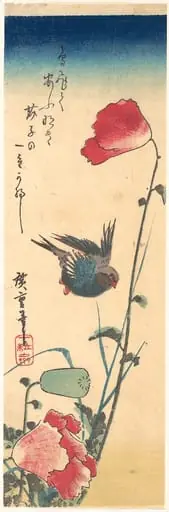 歌川広重画 芥子に瑠璃鳥|A Bluebird and Poppies
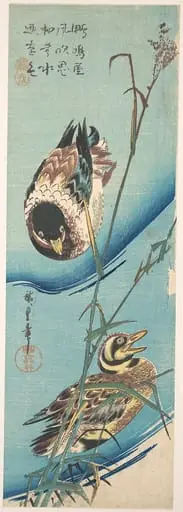 歌川広重画 雪中芦に鴨|Mallard Ducks and Snow-covered Reeds
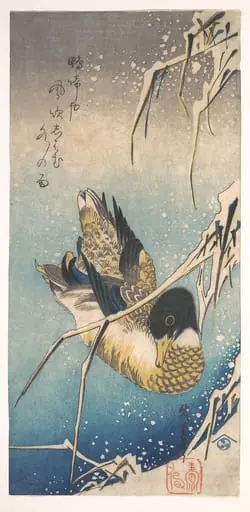 歌川広重画 雪中芦に鴨|Mallard and Snow-covered Reeds