Artwork
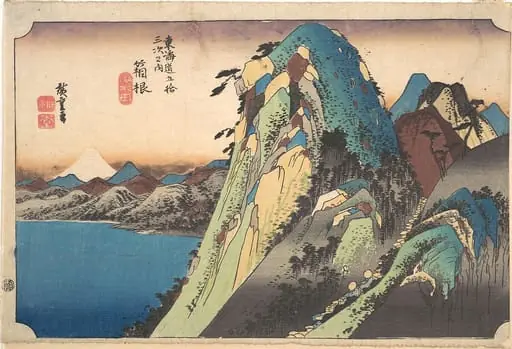
Picture of the Lake at Hakone, from the series 53 Stations of the Tokaido
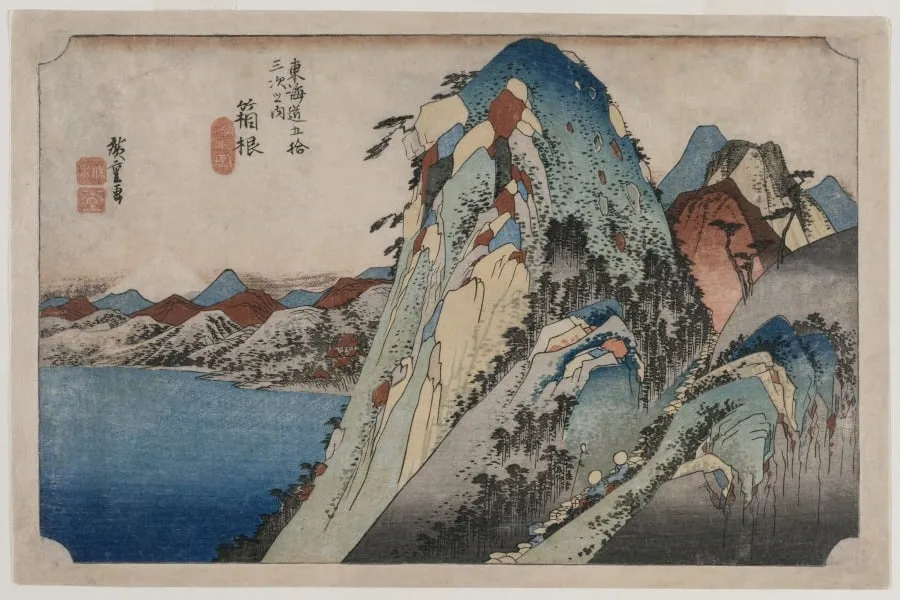
Picture of the Lake at Hakone, from the series 53 Stations of the Tokaido is a print by the Romanticist artist Utagawa Hiroshige. It dates from 1833 and is held in the collection of the Cleveland Museum of Art.
About this work
Overview
Unlike earlier ukiyo-e prints focused on actors and courtesans, Hiroshige turned his attention to the natural and human landscapes encountered by travelers.
Created in 1833 by Utagawa Hiroshige, this woodblock print is part of the series The Fifty-three Stations of the Tōkaidō, which documents the journey along Japan’s primary coastal road. Unlike earlier ukiyo-e prints focused on actors and courtesans, Hiroshige turned his attention to the natural and human landscapes encountered by travelers. This work exemplifies his shift toward landscape as a central subject, capturing the quiet rhythm of the journey rather than urban spectacle.
Subject & Meaning
The scene depicts Lake Hakone, a tranquil stretch of water framed by distant mountains and sparse vegetation. A lone traveler crosses a wooden bridge, suggesting movement through the landscape without disrupting its stillness. The composition conveys a sense of solitude and contemplation, reflecting the meditative experience of travel during the Edo period. It invites viewers to imagine the passage of time and the quiet dignity of everyday journeys.
Technique & Style
Hiroshige employed fine linework and subtle gradations of color to evoke atmosphere, particularly in the mist that softens the horizon. The use of perspective, with receding planes and minimal foreground detail, enhances the depth of the scene. His restrained palette—dominated by blues, grays, and muted greens—mirrors the cool, damp air of the highland lake. These techniques marked a departure from the bold contrasts of earlier ukiyo-e, favoring mood over spectacle.
History & Provenance
The print was produced during Hiroshige’s most prolific period, shortly after the series’ initial publication by the publisher Hoeido. It was widely distributed among middle-class travelers and urban dwellers who could not make the journey themselves. Copies circulated throughout Japan and later in Europe, where they influenced 19th-century Western artists. Its survival in multiple collections attests to its enduring appeal and the commercial success of the series.
Context
During the Edo period, the Tōkaidō road connected Edo (Tokyo) with Kyoto, serving as a vital artery for commerce, pilgrimage, and official travel. While the government regulated movement, the rise of a prosperous merchant class created demand for visual guides to the route. Hiroshige’s series responded to this cultural shift, transforming a practical path into a poetic record of regional identity and seasonal change.
Legacy
Hiroshige’s approach to landscape influenced generations of Japanese and Western artists, particularly in the development of Japonisme. His emphasis on atmosphere, seasonal nuance, and quiet human presence redefined the possibilities of woodblock printing. Though produced as popular prints, these works are now recognized as foundational to modern landscape representation in both Japanese and global art traditions.
Artist & collection
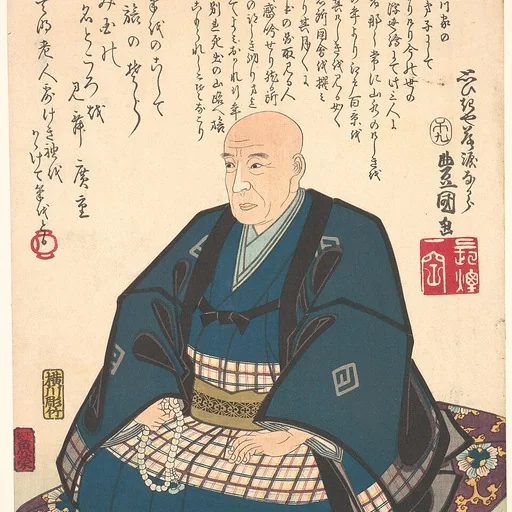
Artist
Utagawa Hiroshige (歌川 広重) or Andō Hiroshige (安藤 広重), born Andō Tokutarō (安藤 徳太郎; 1797 – 12 October 1858), was a Japanese ukiyo-e artist, considered the last great master of that tradition.

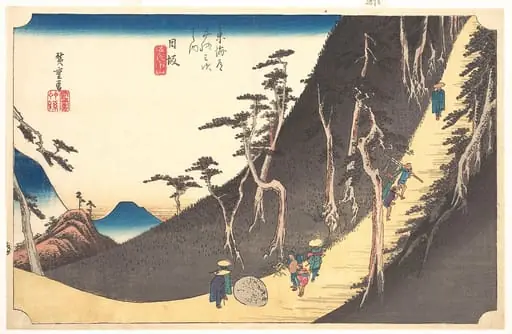 Nissaka-sayo no Naka Yama|東海道五十三次之内 日坂 佐夜の中山|Station Twenty-six: Nissaka, Sayo no Nakayama, from the Fifty-three Stations of the Tokaido
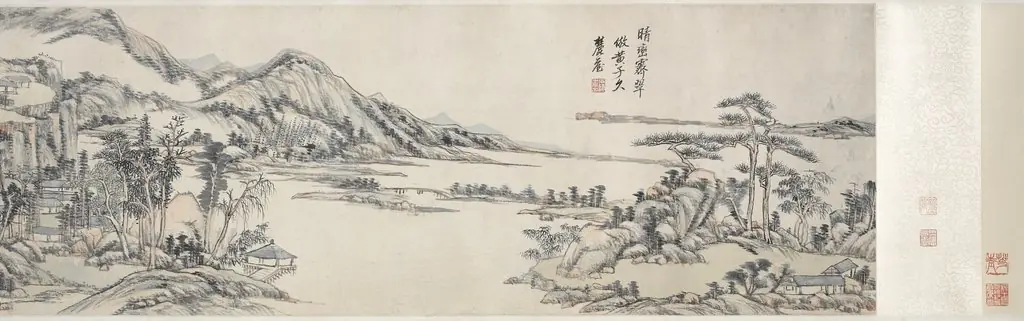 Green Peaks under Clear Sky: After Huang Gongwang
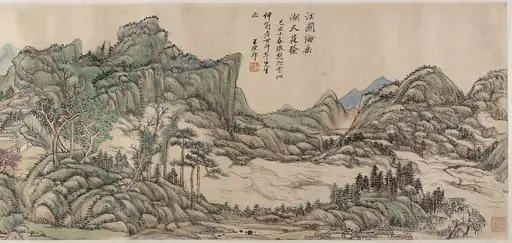 清 王原祁 江國垂綸圖 卷|Fishing in River Country at Blossom Time
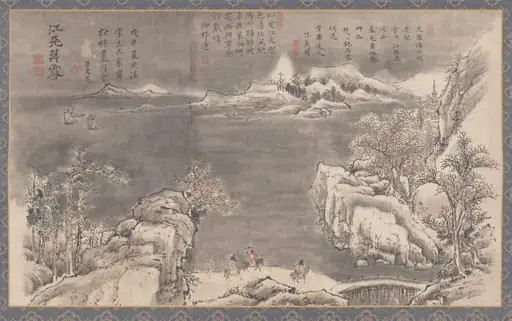 Evening Snow Blending River and Sky, from Eight Views of Xiao-Xiang
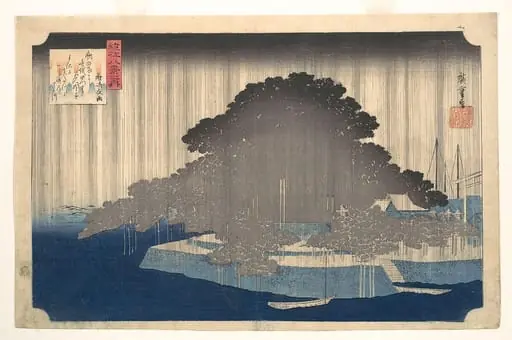 Karasaki no Yau|近江八景の内 唐崎夜雨|Evening Rain at Karasaki, Pine Tree
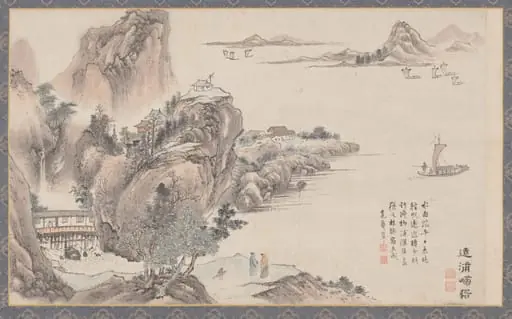 Returning Sails off a Distant Shores, from Eight Views of Xiao-Xiang
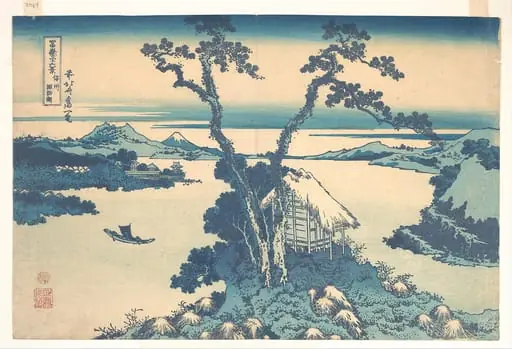 冨嶽三十六景 信州諏訪湖|Lake Suwa in Shinano Province (Shinshū Suwako), from the series Thirty-six Views of Mount Fuji (Fugaku sanjūrokkei)
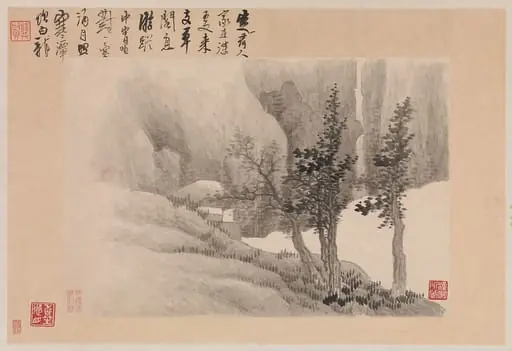 清 龔賢 自題山水十六開 冊|Landscapes with Poems
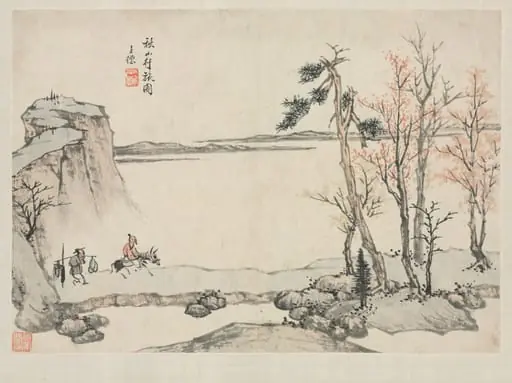 Landscape Album in Various Styles: Traveling in Autumn Mountains
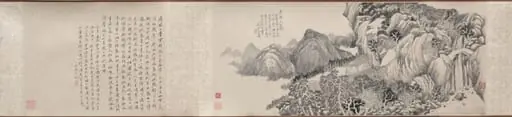 Dream Journey to Mt. Tiantai
 東海道五十三次之内 箱根 湖水図|Hakone; Kosui
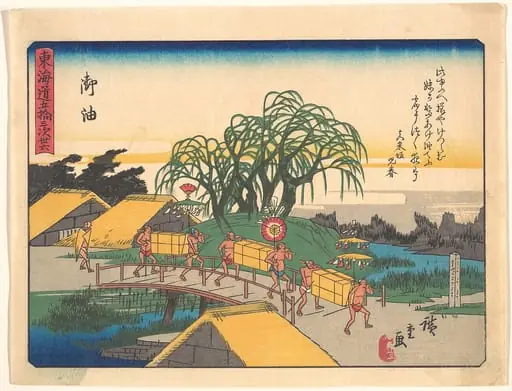 東海道五十三次 御油|Goyu, from the series The Fifty-three Stations of the Tōkaidō Road