Artwork
東海道五十三次 御油|Goyu, from the series The Fifty-three Stations of the Tōkaidō Road
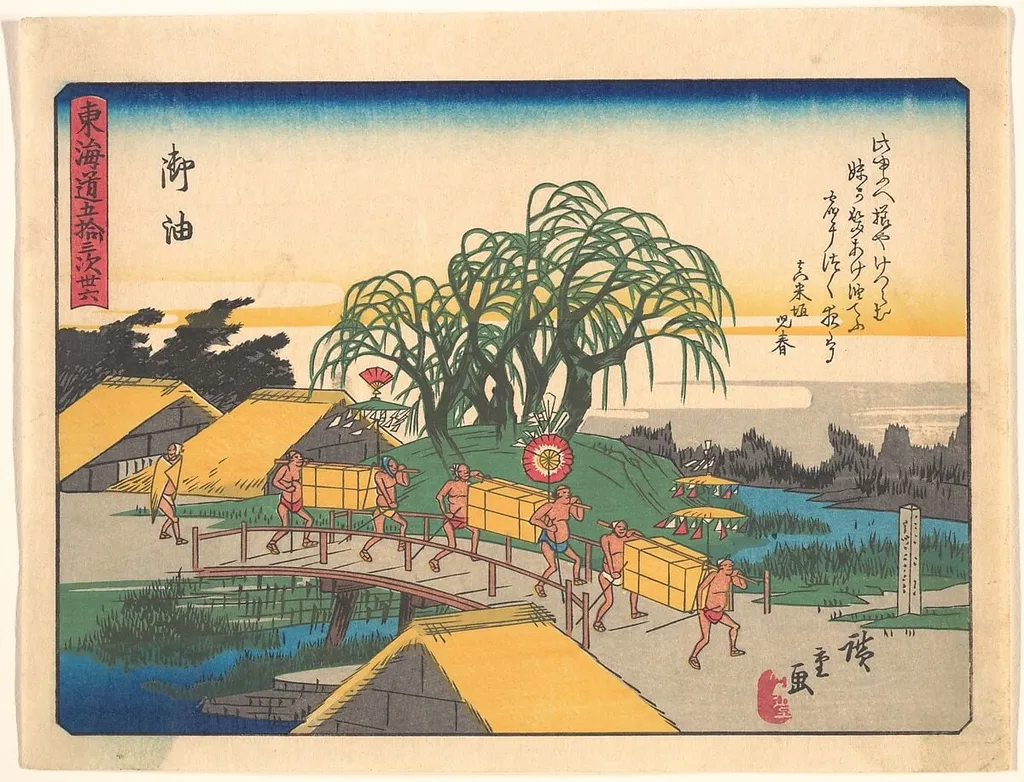
東海道五十三次 御油|Goyu, from the series The Fifty-three Stations of the Tōkaidō Road is an ink print by Utagawa Hiroshige. It is held in the collection of the Metropolitan Museum of Art.
About this work
Overview
This woodblock print, Goyu, is part of Utagawa Hiroshige's series The Fifty-three Stations of the Tōkaidō Road. Created in the Edo period, it depicts a scene along the Tōkaidō, a major route between Edo and Kyoto.
Subject & Meaning
The print shows travelers crossing a rickety bridge, emphasizing their collective effort rather than individual identities. The blurred faces and focus on the activity suggest a narrative centered on the journey.
Technique & Style
Executed in ink and color on paper, the print features bright, flat colors and a pale sky, evoking a storybook quality. The composition includes a prominent tree and thatched-roof houses, characteristic of Hiroshige's landscape style.
History & Provenance
Although the exact creation date is not specified, Hiroshige's series was produced during the Edo period, marking a departure from traditional ukiyo-e themes by focusing on landscapes and travel scenes.
Artist & collection
Artist
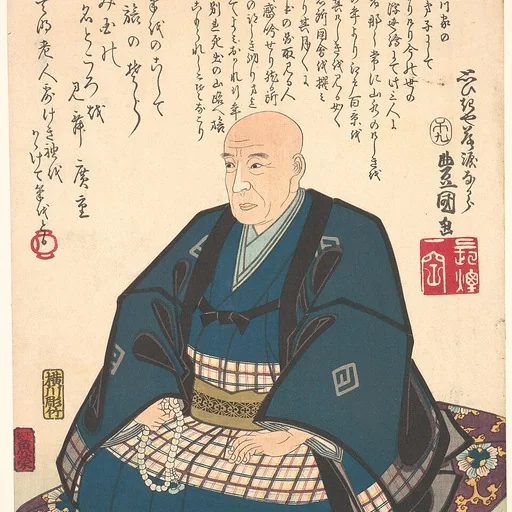
Utagawa Hiroshige (歌川 広重) or Andō Hiroshige (安藤 広重), born Andō Tokutarō (安藤 徳太郎; 1797 – 12 October 1858), was a Japanese ukiyo-e artist, considered the last great master of that tradition.

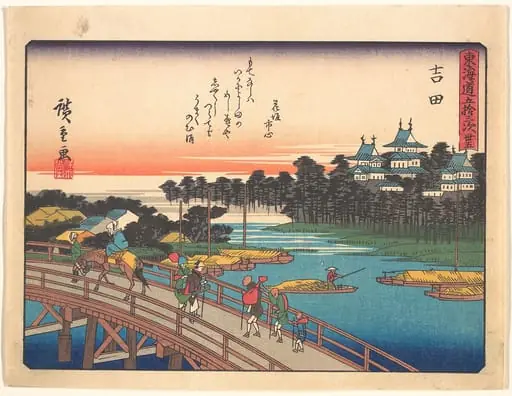 東海道五十三次 吉田|Yoshida, from the series The Fifty-three Stations of the Tōkaidō Road
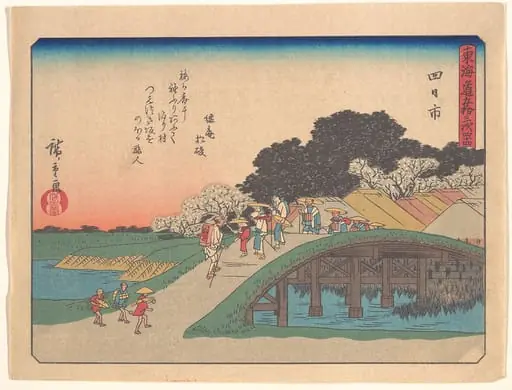 東海道五十三次 四日市|Yokkaichi, from the series The Fifty-three Stations of the Tōkaidō Road
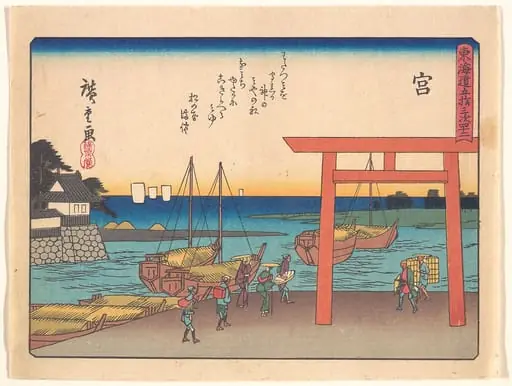 東海道五十三次 宮|Miya, from the series The Fifty-three Stations of the Tōkaidō Road
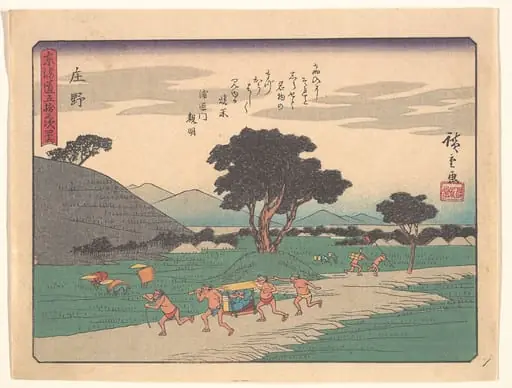 東海道五十三次 庄野|Shōno, from the series The Fifty-three Stations of the Tōkaidō Road
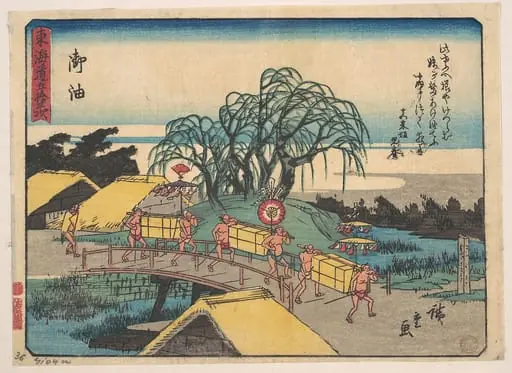 東海道五十三次 御油|Goyu
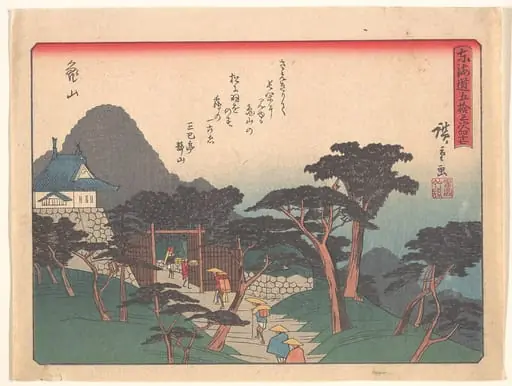 東海道五十三次 亀山|Kameyama, from the series The Fifty-three Stations of the Tōkaidō Road
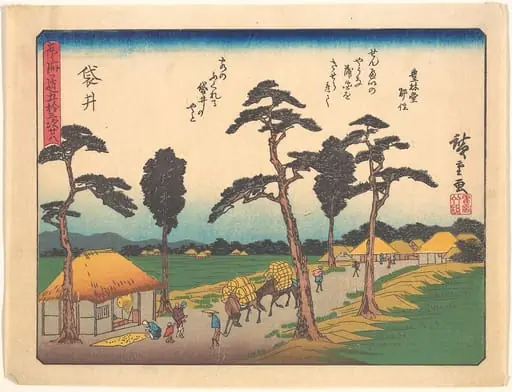 東海道五十三次 袋井|Fukuroi, from the series The Fifty-three Stations of the Tōkaidō Road
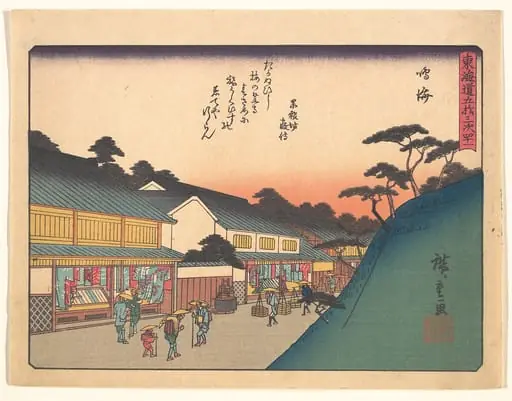 東海道五十三次 鳴海|Narumi, from the series The Fifty-three Stations of the Tōkaidō Road
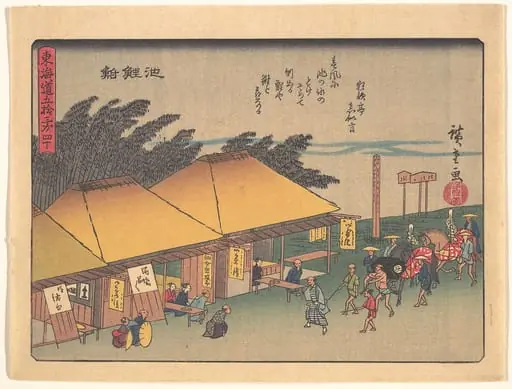 東海道五十三次 池鯉鮒|Chiryūshuku, from the series The Fifty-three Stations of the Tōkaidō Road
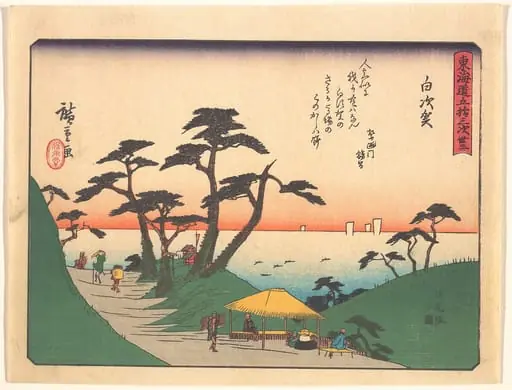 東海道五十三次 白須賀|Shirasuka, from the series The Fifty-three Stations of the Tōkaidō Road
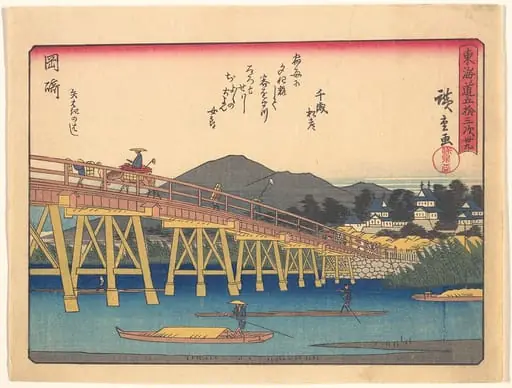 東海道五十三次 岡崎|Okazaki, from the series The Fifty-three Stations of the Tōkaidō Road