Artwork
The Fuji River in the Snow
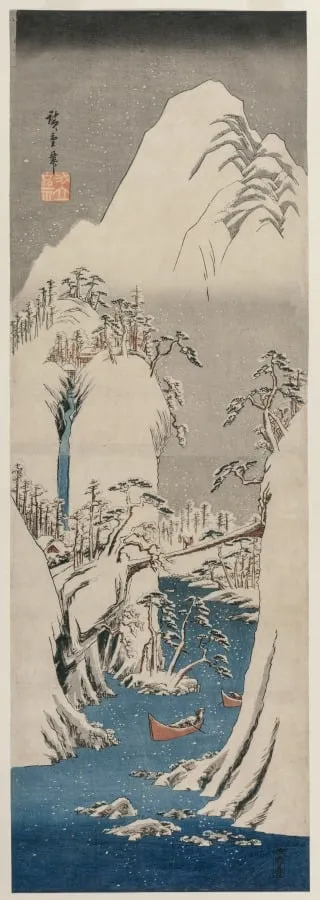
The Fuji River in the Snow is a print by the Romanticist artist Utagawa Hiroshige. It dates from 1841 and is held in the collection of the Cleveland Museum of Art.
About this work
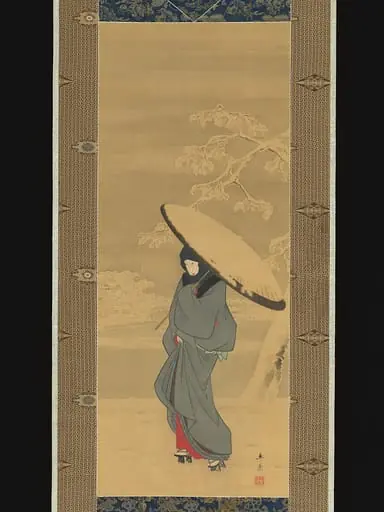
You see a serene Japanese landscape with snow-covered trees and a river in the painting.
The artist used simple lines and shapes to create a sense of calm. This style was popular during the Edo period, and Hiroshige was one of the artists who helped make it well-known.
Check out the work of artist: Utagawa Hiroshige (Japanese, 1797–1858) for more like this.
Overview
The Fuji River in the Snow is a 1841 ukiyo-e print by Utagawa Hiroshige, a prominent Edo period artist known for landscapes that deviated from the genre's typical urban themes.
Subject & Meaning
The print depicts a serene, snow-covered Japanese landscape along the Fuji River, emphasizing natural beauty and seasonal atmosphere, characteristic of Hiroshige's thematic explorations.
Technique & Style
Hiroshige employed simple, expressive lines and shapes to convey calmness, exemplifying his signature blend of subtlety and evocative sense of place.
History & Provenance
Created in 1841, the work is associated with Hiroshige's series exploring atmospheric and seasonal themes, such as *The Fifty-three Stations of the Tōkaidō*.
Context
This piece reflects the Edo period's aesthetic preferences, with Hiroshige contributing significantly to the popularity of ukiyo-e's naturalistic and travel-inspired subjects.
Legacy
As part of Hiroshige's oeuvre, *The Fuji River in the Snow* continues to represent the artist's influence on ukiyo-e's expansion beyond traditional urban themes.
Artist & collection
Artist
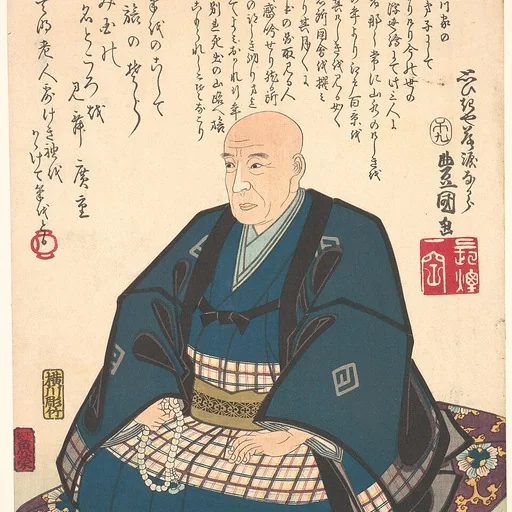
Utagawa Hiroshige (歌川 広重) or Andō Hiroshige (安藤 広重), born Andō Tokutarō (安藤 徳太郎; 1797 – 12 October 1858), was a Japanese ukiyo-e artist, considered the last great master of that tradition.

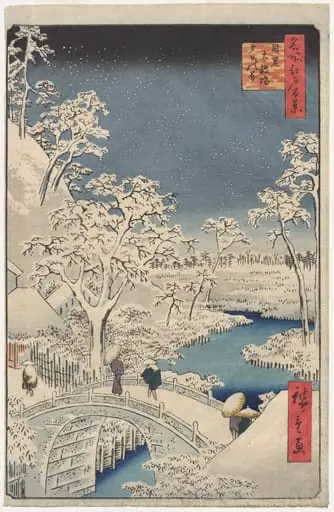 Meguro Drum Bridge and Sunset Hill, from One Hundred Views of Famous Places in Edo
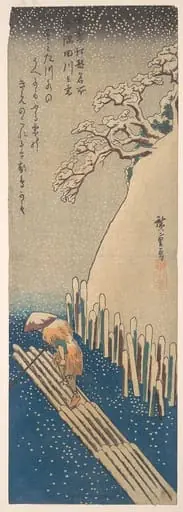 Untitled
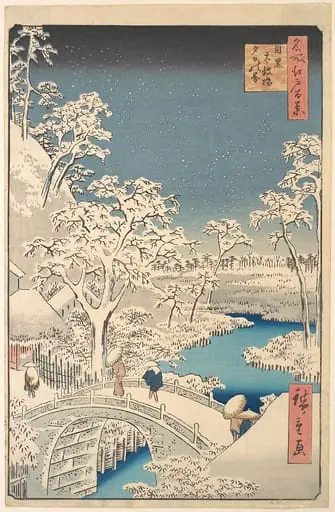 名所江戸百景 目黒太鼓橋夕日の岡|The Taiko (Drum) Bridge and the Yuhi Mound at Meguro
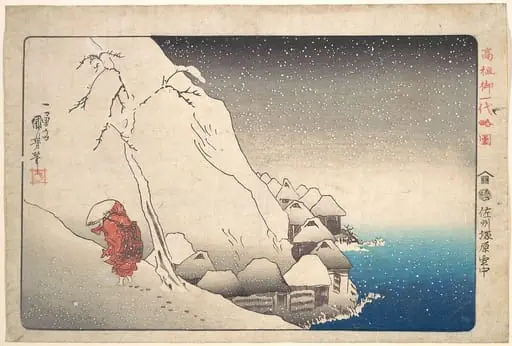 Sashu Tsukahara setchu|Nichiren in Snow at Tsukahara, Sodo Province
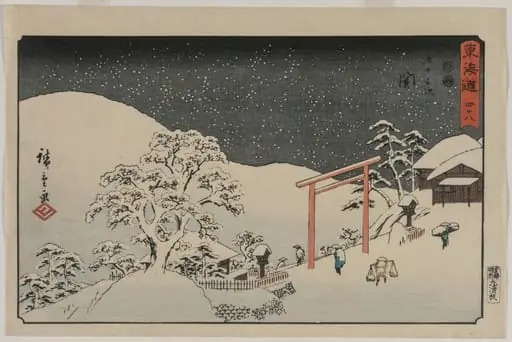 Seki, from the series The Fifty-Three Stations of the Tōkaidō
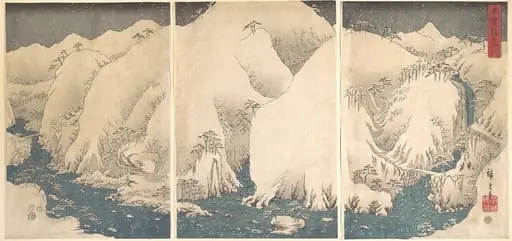 雪月花 木曽路之山川|Kiso Gorge in the Snow
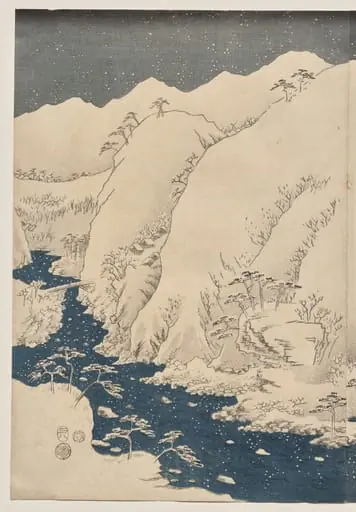 Mountain and River on the Kiso Road
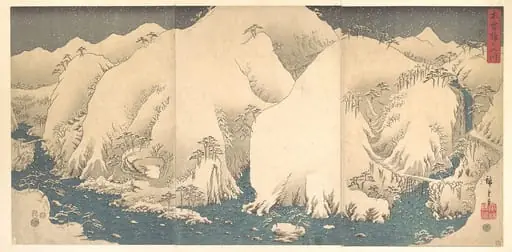 Kisojo no San Sen|木曽路之山川|The Kiso Mountains in Snow
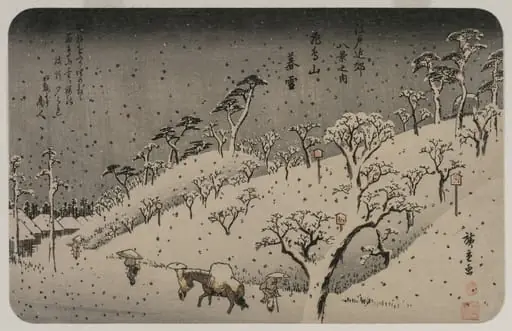 Evening Snow at Asuka Hill, from the series Eight Views of the Environs of Edo
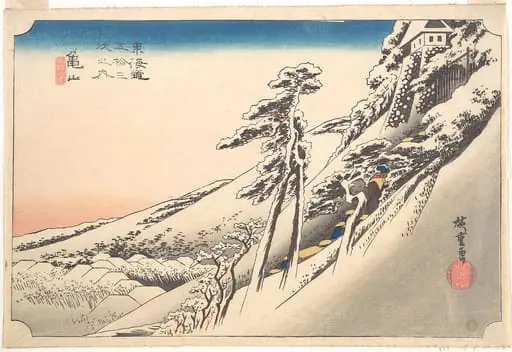 東海道五十三次之内 亀山 雪晴|Kameyama, Yuki Hare
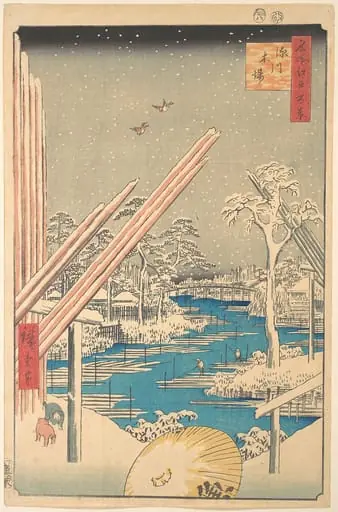 名所江戸百景 深川木場|The Lumber Yard at Fukagawa
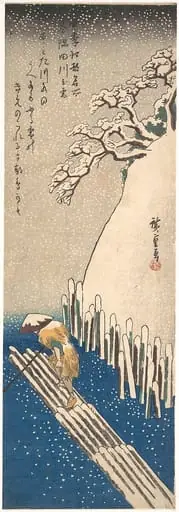 四季江都名所 冬 隅田川之雪|Snow on the Sumida River