Artwork
東海道五十三次之内 亀山 雪晴|Kameyama, Yuki Hare
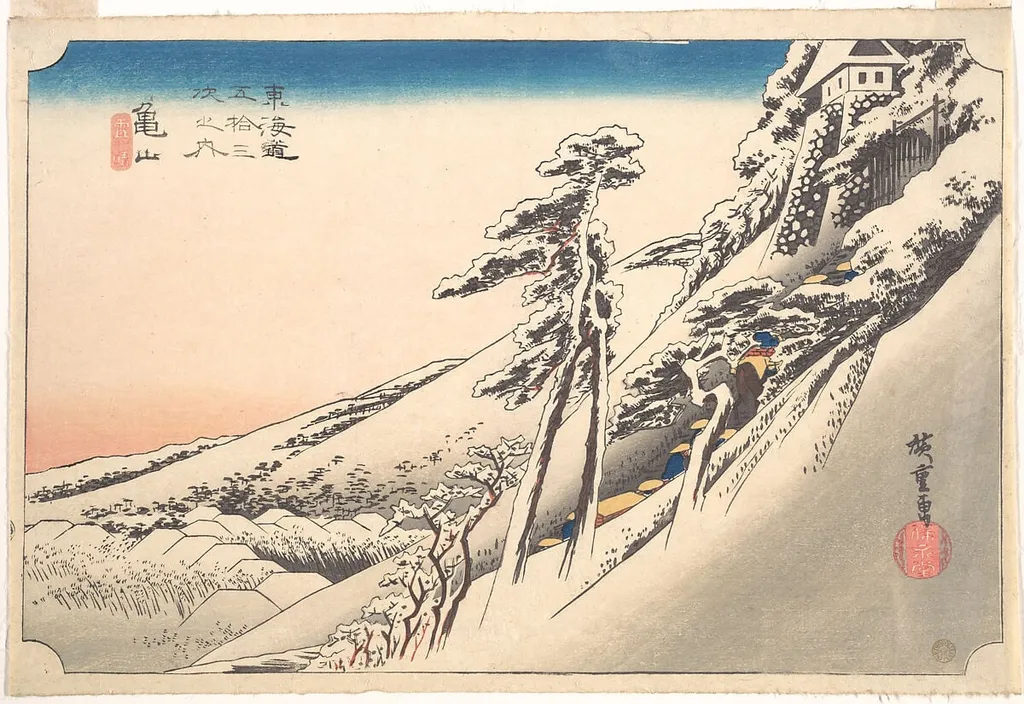
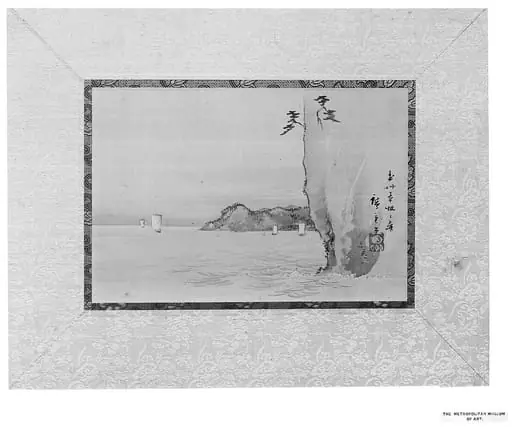
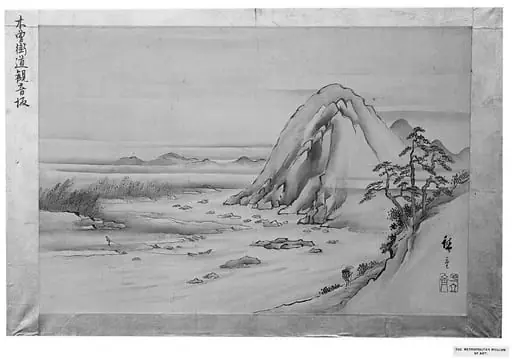
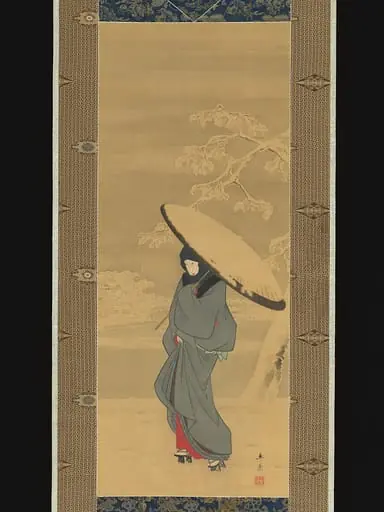
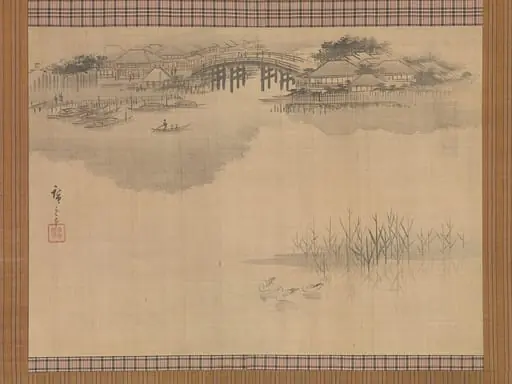
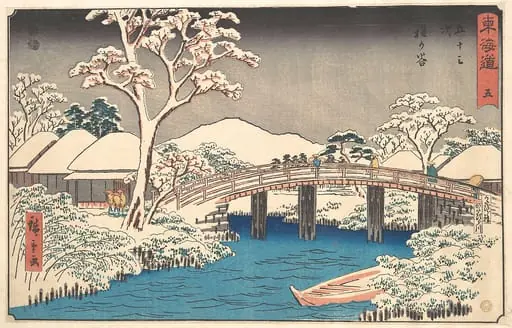
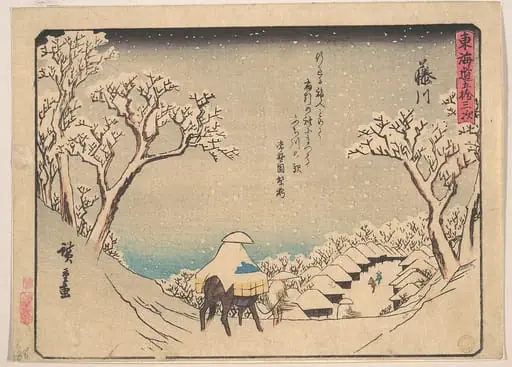
東海道五十三次之内 亀山 雪晴|Kameyama, Yuki Hare is an ink print by the Romanticist artist Utagawa Hiroshige. It dates from 1834 and is held in the collection of the Metropolitan Museum of Art.
About this work
Overview
Created around 1834 by Utagawa Hiroshige, this woodblock print is one of fifty-three scenes in the series *The Fifty-three Stations of the Tōkaidō*.
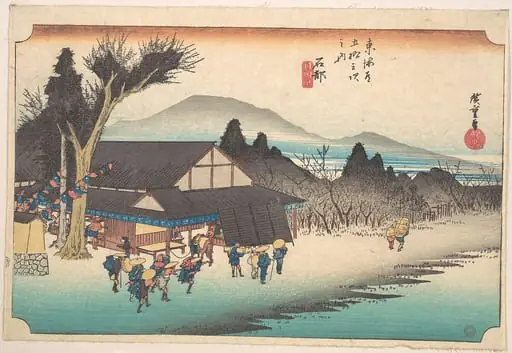
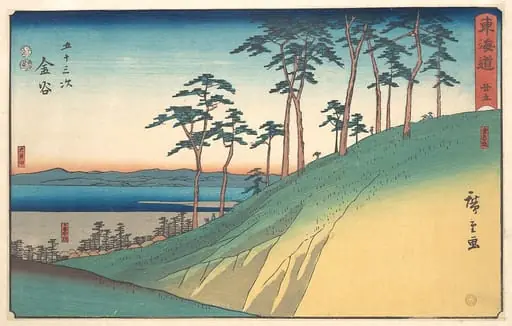
Created around 1834 by Utagawa Hiroshige, this woodblock print is one of fifty-three scenes in the series *The Fifty-three Stations of the Tōkaidō*. It depicts the Kameyama checkpoint along the major road connecting Edo and Kyoto. Unlike typical ukiyo-e themes centered on city life, Hiroshige focused on quiet, natural landscapes, capturing the atmosphere of travel through seasonal change and terrain.
Subject & Meaning
The scene portrays a winter journey along a snow-dusted mountain path, with travelers wrapped against the cold and a distant temple partially veiled in mist. The quiet solitude of the figures emphasizes the isolation and endurance required for travel in Edo-period Japan. The temple, half-concealed, suggests spiritual presence amid nature’s stillness, reinforcing themes of transience and quiet reverence.
Technique & Style
Hiroshige employed layered ink washes and delicate color gradients to suggest depth and texture. Thin, overlapping lines build shadow and form, particularly in the bare trees and snow-laden ground, using a method akin to cross-hatching. The pale blue sky and muted tones create a cool, atmospheric mood. The composition balances open space with subtle detail, guiding the eye along the winding path without overt drama.
History & Provenance
Produced during Hiroshige’s early career, the print was part of a commercially successful series commissioned by the publisher Hoeidō. It was widely distributed as a travel souvenir, reflecting growing public interest in pilgrimage and scenic routes. Original impressions are rare today, but the series as a whole helped define the landscape print genre in 19th-century Japan.
Context
The Tōkaidō was the most important travel route in Edo-period Japan, used by merchants, officials, and pilgrims. Stations like Kameyama served as rest stops, each with distinct topography and local character. Hiroshige’s series documented these places not as landmarks but as moments of human experience within nature, aligning with broader cultural appreciation for seasonal change and quiet observation.
Legacy
Hiroshige’s *Tōkaidō* series influenced later Japanese and Western artists, including Impressionists who admired his use of perspective and atmospheric effects. The print’s restrained palette and focus on everyday travel helped elevate landscape ukiyo-e beyond decorative art, establishing it as a medium for emotional and observational depth in Japanese visual culture.
Artist & collection
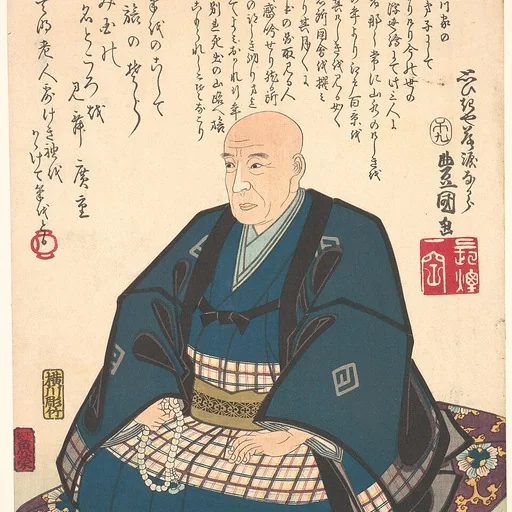
Artist
Utagawa Hiroshige (歌川 広重) or Andō Hiroshige (安藤 広重), born Andō Tokutarō (安藤 徳太郎; 1797 – 12 October 1858), was a Japanese ukiyo-e artist, considered the last great master of that tradition.