Artwork
名所江戸百景 目黒太鼓橋夕日の岡|The Taiko (Drum) Bridge and the Yuhi Mound at Meguro
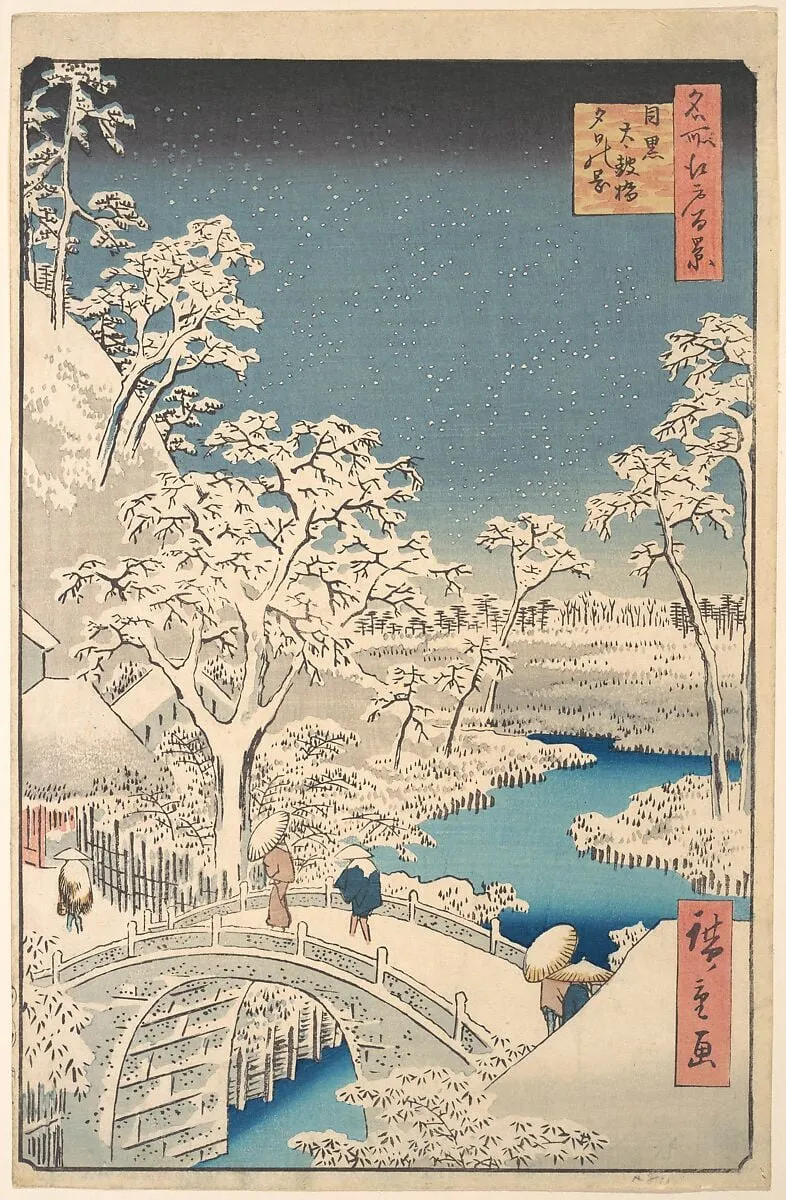
名所江戸百景 目黒太鼓橋夕日の岡|The Taiko (Drum) Bridge and the Yuhi Mound at Meguro is an ink print by the Impressionist artist Utagawa Hiroshige. It dates from 1857 and is held in the collection of the Metropolitan Museum of Art.
About this work
Overview
A small sign bearing Japanese characters appears on the right edge of the composition.
In 1857 Utagawa Hiroshige produced a vertical woodblock print titled *The Taiko (Drum) Bridge and the Yuhi Mound at Meguro* for his series *One Hundred Famous Views of Edo*. The image captures a curved wooden bridge spanning a river, set against a wintry landscape of bare trees, a dusted ground and a dark blue sky punctuated by stars. A small sign bearing Japanese characters appears on the right edge of the composition.
Subject & Meaning
The scene focuses on the arched bridge, whose drum‑like silhouette serves as the central element linking the riverbanks. Figures cross the bridge, suggesting ordinary travel, while the surrounding quiet snow and distant mountain convey a sense of seasonal transition and the subtle beauty of everyday Edo life.
Technique & Style
Hiroshige employs the ukiyo‑e woodblock method, using flat areas of ink and color to define form. Simple geometric shapes and limited tonal variation create depth, while the restrained palette of whites, blues and muted earth tones emphasizes the stillness of the winter setting. The bridge’s sturdy yet delicate rendering reflects the artist’s skill in balancing line and color.
History & Provenance
The print belongs to the later phase of Hiroshige’s career, when he was recognized as a leading figure in the ukiyo‑e tradition. As part of the *One Hundred Famous Views of Edo* series, it was widely distributed in the mid‑19th century and contributed to the growing popularity of landscape subjects over the earlier focus on urban entertainment.
Context
During the Edo period, bridges such as the Taiko Bridge were vital crossing points and common motifs in travel literature. Hiroshige’s inclusion of this site aligns with contemporary interest in documenting recognizable locales, offering viewers a visual record of the region’s geography and seasonal character.
Legacy
The work exemplifies Hiroshige’s shift toward landscape imagery that influenced later Japanese and Western artists. Its compositional clarity and atmospheric treatment of winter have been cited as reference points for subsequent printmakers exploring the interplay of architecture and natural environment.
Artist & collection
Artist
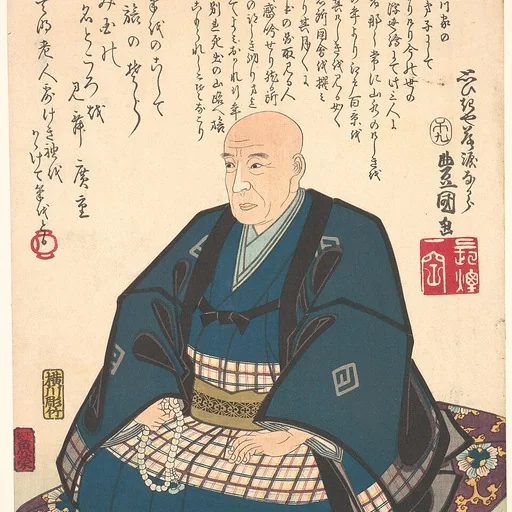
Utagawa Hiroshige (歌川 広重) or Andō Hiroshige (安藤 広重), born Andō Tokutarō (安藤 徳太郎; 1797 – 12 October 1858), was a Japanese ukiyo-e artist, considered the last great master of that tradition.

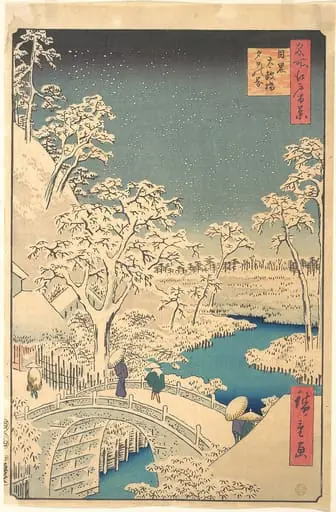 名所江戶百景 目黒太鼓橋夕ひの岡|Taiko Bridge, Meguro, on a Snowy Evening
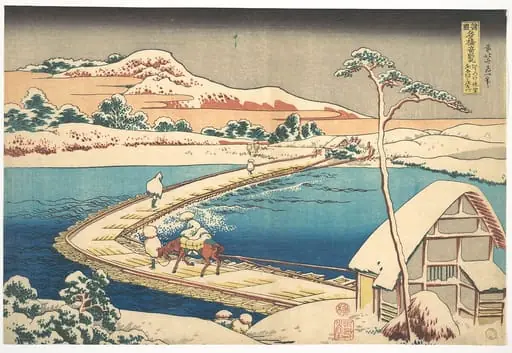 諸國名橋奇覧 かうつけ佐野ふなはしの古づ|Old View of the Boat-bridge at Sano in Kōzuke Province (Kōzuke Sano funabashi no kozu), from the series Remarkable Views of Bridges in Various Provinces (Shokoku meikyō kiran)
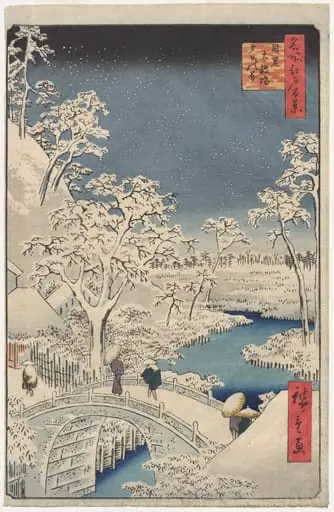 Meguro Drum Bridge and Sunset Hill, from One Hundred Views of Famous Places in Edo
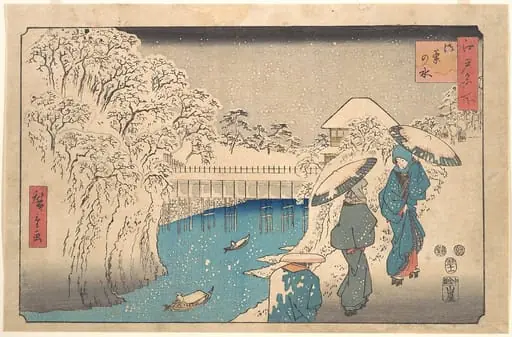 江戸名所 御茶の水|Meguro
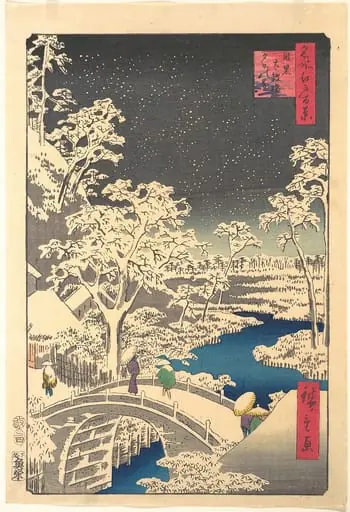 名所江戸百景 目黒太鼓橋夕ひの岡|Ochanomizu
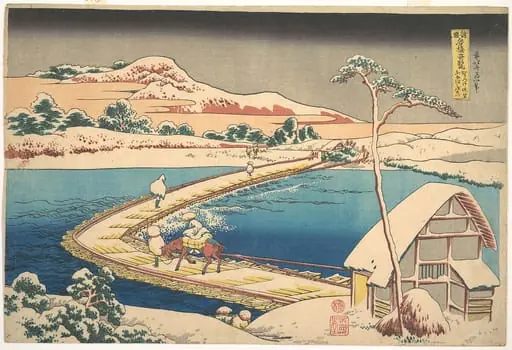 諸國名橋奇覧 かうつけ佐野ふなはしの古づ|Old View of the Boat-bridge at Sano in Kōzuke Province (Kōzuke Sano funabashi no kozu), from the series Remarkable Views of Bridges in Various Provinces (Shokoku meikyō kiran)
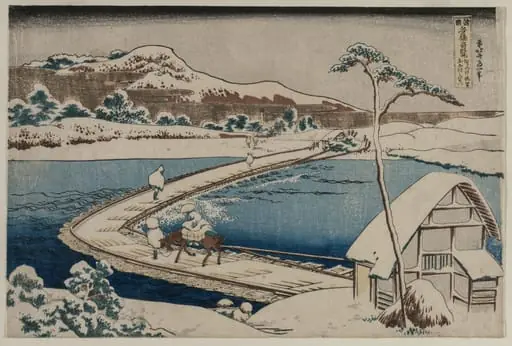 An Ancient Picture of the Boat Bridge at Sano in Kozuke Province from the series Curious Views of Famous Bridges in the Provinces
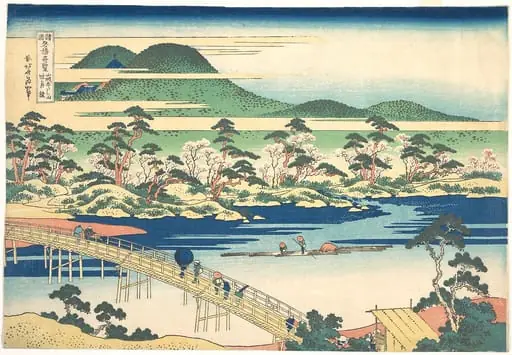 諸國名橋奇覧 山城あらし山吐月橋 |Togetsu Bridge at Arashiyama in Yamashiro, from the series Remarkable Views of Bridges in Various Provinces (Shokoku meikyō kiran)