Artwork
江戸高名会亭尽 亀戸裏門 玉屋|Kameido Uramon (Tama-ya)
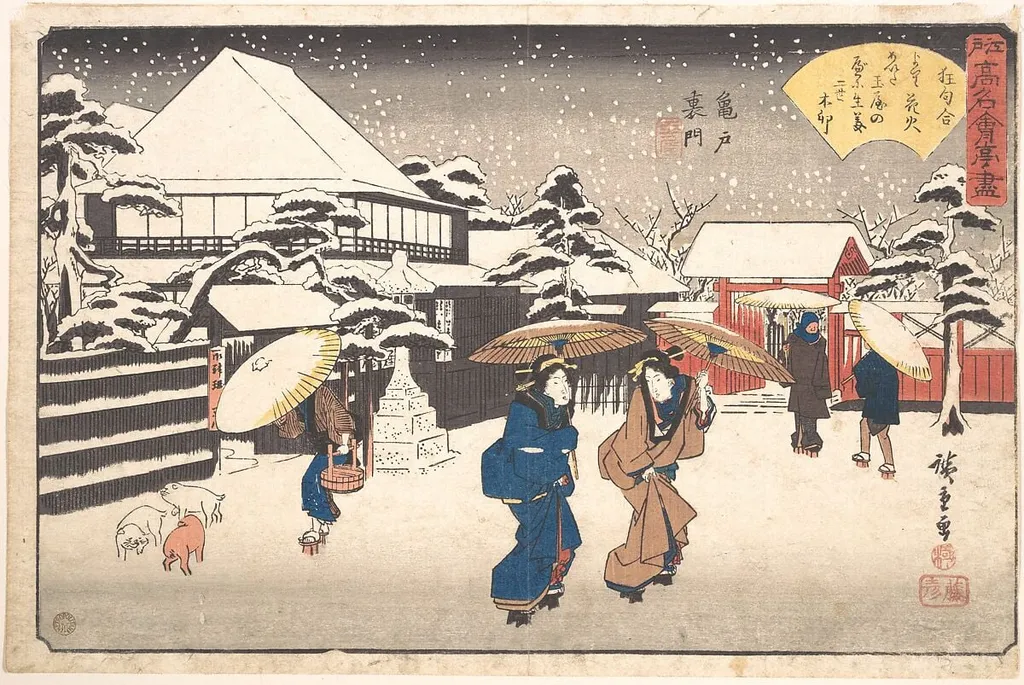
江戸高名会亭尽 亀戸裏門 玉屋|Kameido Uramon (Tama-ya) is an ink print by the Romanticist artist Utagawa Hiroshige. It dates from 1840 and is held in the collection of the Metropolitan Museum of Art.
About this work
Overview
Titled *Kameido Uramon (Tama-ya)*, it depicts a quiet winter moment at the rear entrance of a well-known teahouse in the Kameido district.
Created around 1840 by Utagawa Hiroshige, this woodblock print is part of a series documenting everyday scenes across Edo. Titled *Kameido Uramon (Tama-ya)*, it depicts a quiet winter moment at the rear entrance of a well-known teahouse in the Kameido district. Rendered in ink and color on paper, the work exemplifies Hiroshige’s shift toward landscape and atmospheric detail, moving beyond the genre’s typical focus on actors and courtesans.
Subject & Meaning
The scene captures pedestrians navigating a snowfall near the back gate of the Tama-ya teahouse, their figures small against the architecture. Figures in traditional attire, some sheltering under umbrellas, suggest ordinary life continuing through seasonal hardship. The quietude of the moment reflects a contemplative view of urban existence, emphasizing harmony between people and environment rather than spectacle or drama.
Technique & Style
Hiroshige employed subtle gradations of color and delicate linework to convey the softness of falling snow and the weight of accumulated white on trees and rooftops. The triangular roof of the building and the sparse tree forms are rendered with restrained detail, creating depth through layering and atmospheric perspective. The palette favors muted tones, enhancing the stillness of the winter scene without theatrical contrast.
History & Provenance
The print was produced during Hiroshige’s most prolific period, when he was refining his approach to landscape series. It entered the collection of The Metropolitan Museum of Art through documented acquisitions of Edo-period prints, likely in the early 20th century. Its preservation reflects growing Western interest in ukiyo-e as artistic documents of daily life, not merely commercial products.
Context
Kameido was a known stop along the Kōshū Kaidō road, and the Tama-ya teahouse served travelers and locals alike. Winter scenes in ukiyo-e were uncommon, making this print distinctive. Hiroshige’s focus on such ordinary, weather-worn moments aligned with broader Edo-period cultural appreciation for transient beauty and seasonal change, resonating with poetic traditions like waka and haiku.
Legacy
This print contributed to the international recognition of Hiroshige as a master of mood and place. Its quiet composition influenced later Western artists, including Impressionists, who admired its emphasis on light, weather, and everyday rhythm. Today, it remains a key example of how ukiyo-e transformed urban observation into enduring visual poetry.
Artist & collection
Artist
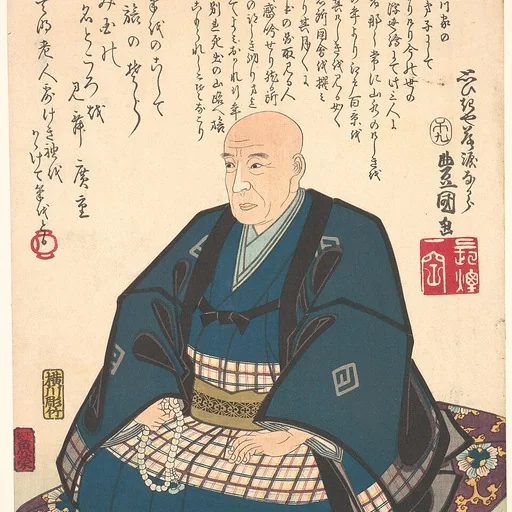
Utagawa Hiroshige (歌川 広重) or Andō Hiroshige (安藤 広重), born Andō Tokutarō (安藤 徳太郎; 1797 – 12 October 1858), was a Japanese ukiyo-e artist, considered the last great master of that tradition.

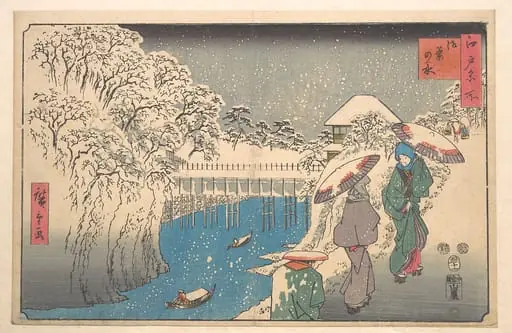 江戸名所 御茶之水|Ochanomizu
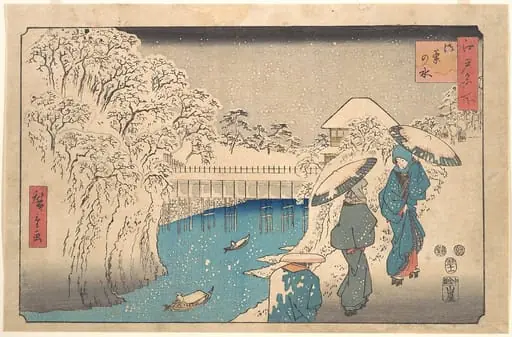 江戸名所 御茶の水|Meguro
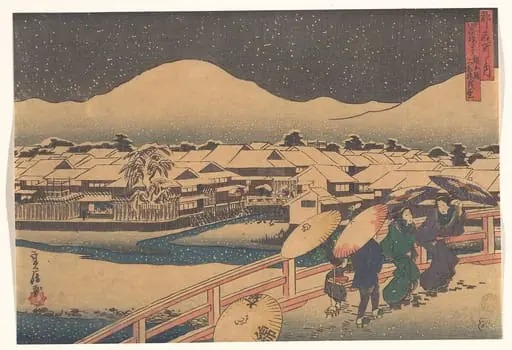 Untitled
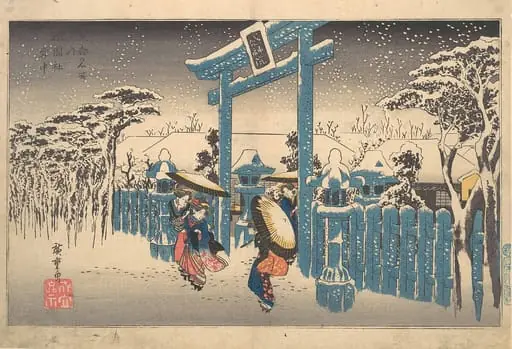 歌川広重画 「京都名所之内 祇園社雪中」|The Gion Shrine in Snow, from the series Famous Views of Kyoto (Kyōto meisho no uchi)
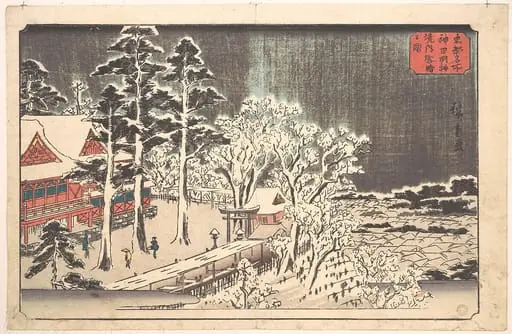 東都名所 神田明神境内雪晴之図|“Clear Weather after Snow in the Precincts of the Kanda Myōjin Shrine” (Kanda Myōjin keidai yukibare no zu), from the series Famous Places in the Eastern Capital (Tōto meisho)
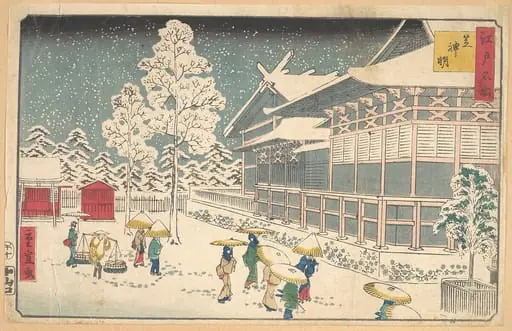 江戸名所 芝神明|Famous Places of Edo: Shiba Shinmei
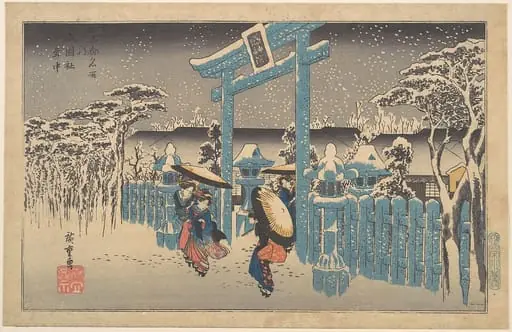 京都名所之内 祇園社雪中|Gion Shrine in Snow
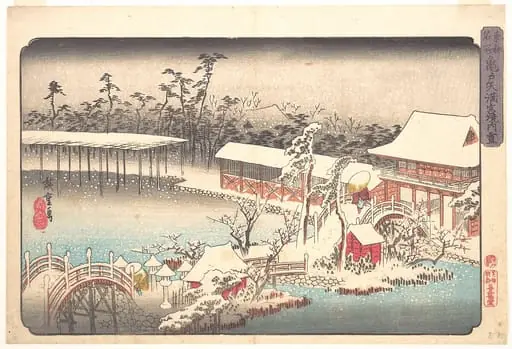 Kameido Tenmangu keidai no yuki|東都名所 亀戸天満宮境内雪|Tenmangū Shrine at Kameido in Snow
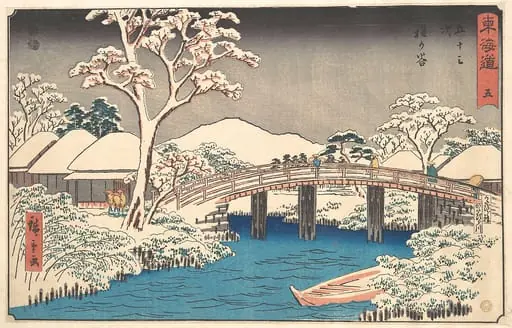 東海道五十三次 程ヶ谷 かたびら橋 かたびら川|Hodogaya