Artwork
六十余州名所図会 備後 阿武門観音堂|Kannondo, Abuto, Bingo Province, from the series Views of Famous Places in the Sixty-Odd Provinces
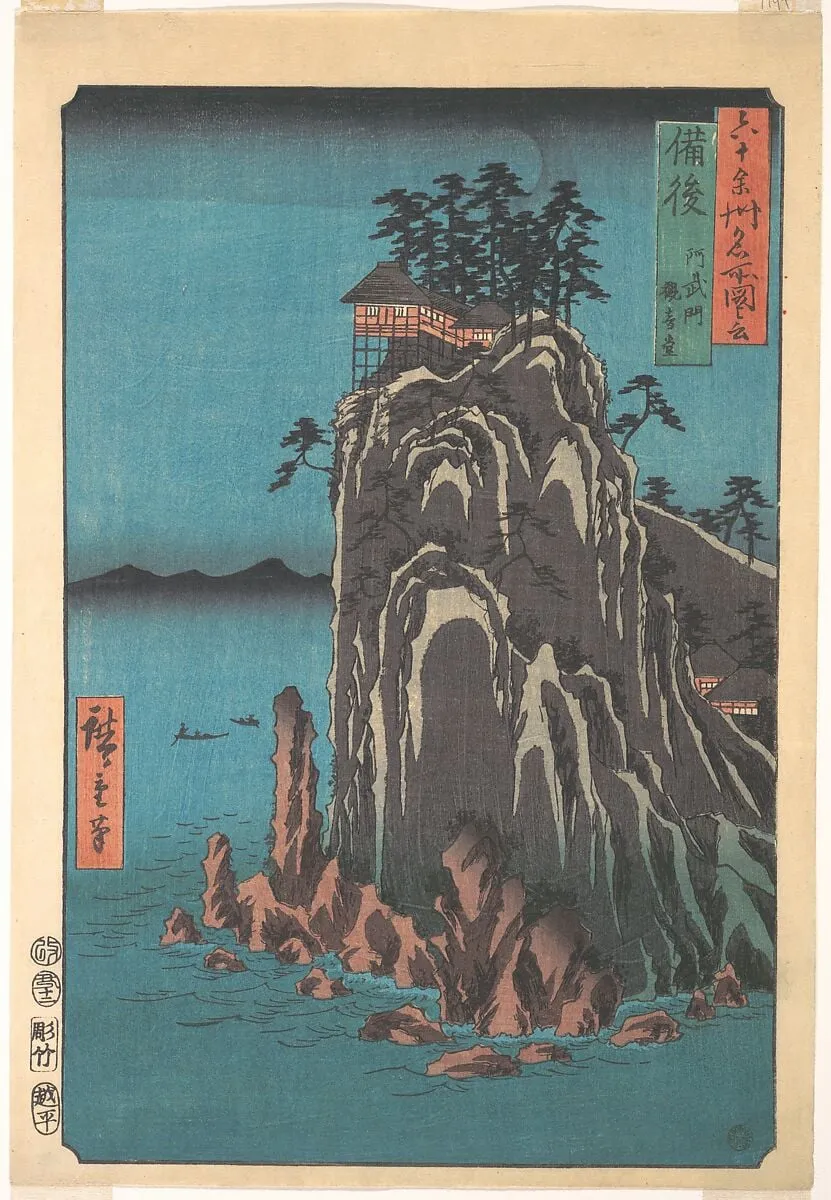
六十余州名所図会 備後 阿武門観音堂|Kannondo, Abuto, Bingo Province, from the series Views of Famous Places in the Sixty-Odd Provinces is an ink print by the Romanticist artist Utagawa Hiroshige. It dates from 1853 and is held in the collection of the Metropolitan Museum of Art.
About this work
Overview
Executed in ink and color on paper, it reflects Hiroshige’s interest in topographical accuracy and atmospheric landscape.
Created around 1853 by Utagawa Hiroshige, this woodblock print is part of the series *Views of Famous Places in the Sixty-Odd Provinces*, which documented regional landmarks across Japan. Unlike many ukiyo-e works centered on urban life, this print focuses on a quiet, remote shrine site in Bingo Province. Executed in ink and color on paper, it reflects Hiroshige’s interest in topographical accuracy and atmospheric landscape.
Subject & Meaning
The print depicts Kannondo Hall, a Buddhist shrine perched atop a steep cliff at Abuto, a site of pilgrimage in western Japan. The structure is small against the towering rock face, suggesting spiritual humility amid nature. Below, calm water and distant mountains imply isolation and contemplation. The scene evokes reverence for sacred geography rather than human activity, aligning with Edo-period ideals of nature as a vessel for devotion.
Technique & Style
Hiroshige employed fine linework to define the cliff’s rugged surface and delicate brushstrokes for the foliage of sparse trees. Colors are restrained—soft blues, grays, and earth tones—enhancing the print’s quiet mood. The composition centers the cliff, using verticality to guide the eye upward, while boats and horizon line provide horizontal balance. The print’s precision reflects the collaborative woodblock process, with carvers and printers translating Hiroshige’s design with subtlety.
History & Provenance
The print was produced during the final years of the Edo period, when travel literature and illustrated guides gained popularity among the urban middle class. Though originally published as part of a commercial series, individual prints like this one were collected for their regional significance. Surviving examples are held in museum collections, including the Museum of Fine Arts, Boston, and the British Museum, indicating early international interest.
Context
Hiroshige’s series emerged as Japan’s road networks expanded and domestic travel became more accessible. The *Sixty-Odd Provinces* project responded to public curiosity about distant places, blending geography with cultural memory. While urban scenes dominated ukiyo-e, Hiroshige’s focus on shrines and natural landmarks offered an alternative vision—one that honored pilgrimage routes and regional identity over entertainment.
Legacy
This print exemplifies Hiroshige’s influence on later landscape traditions, both in Japan and abroad. His atmospheric compositions inspired 19th-century European artists, including the Impressionists, who admired his use of space and tone. Though not widely known outside specialist circles today, the work remains a quiet testament to the Edo-period integration of place, faith, and artistic observation.
Artist & collection
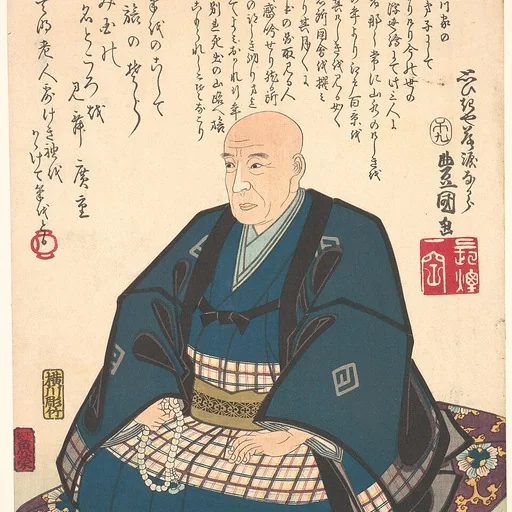
Artist
Utagawa Hiroshige (歌川 広重) or Andō Hiroshige (安藤 広重), born Andō Tokutarō (安藤 徳太郎; 1797 – 12 October 1858), was a Japanese ukiyo-e artist, considered the last great master of that tradition.

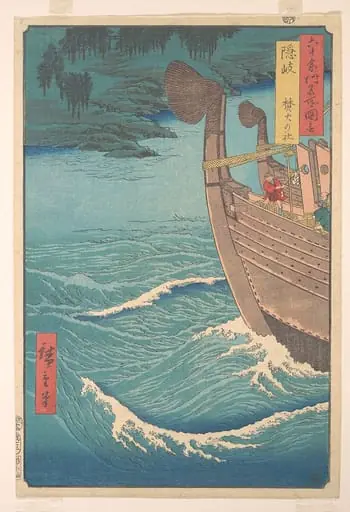 六十余州名所図会 隠岐 焚火の社|The Takihi Shrine, Oki Province, from the series Views of Famous Places in the Sixty-Odd Provinces
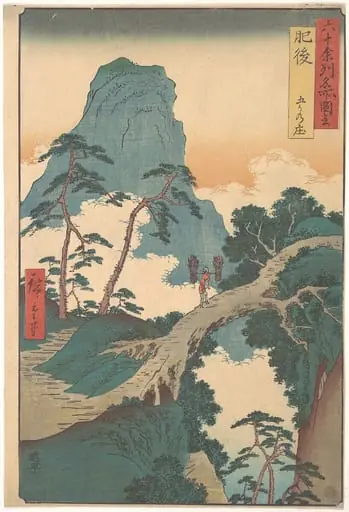 六十余州名所図会 肥後 五ヶの庄|Goka no Shō, Higo Province, from the series Views of Famous Places in the Sixty-Odd Provinces
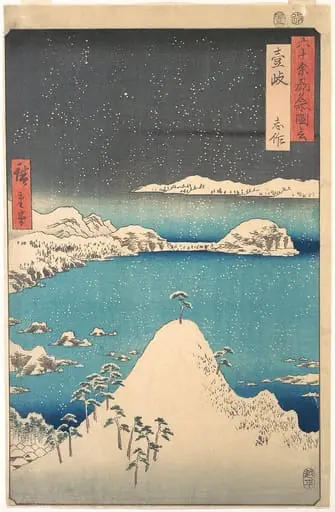 六十余州名所図会 壱岐 志作|Snowfall at Shimasaku, Iki Province, from the series Views of Famous Places in the Sixty-Odd Provinces
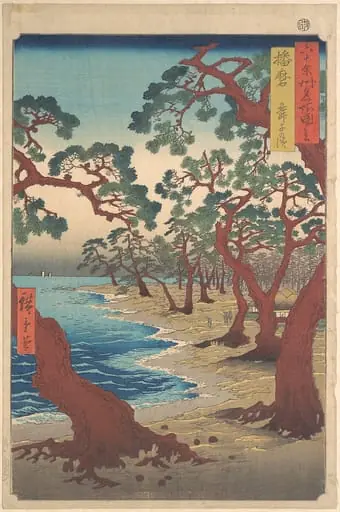 六十余州名所図会 播磨 舞子の浜|Maiko Beach, Harima Province, from the series Views of Famous Places in the Sixty-Odd Provinces
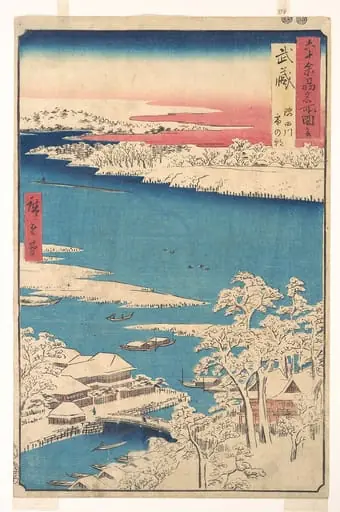 六十余州名所図会 武蔵 隅田川 雪の朝|Morning after a Snowfall, the Sumida River, Musashi Province, from the series Views of Famous Places in the Sixty-Odd Provinces
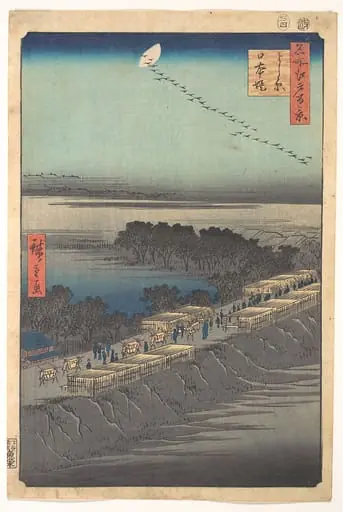 「名所江戸百景 よし原 日本堤」|“Nihon Embankment at Yoshiwara,” from the series One Hundred Famous Views of Edo (Meisho Edo hyakkei, Yoshiwara, Nihonzutsumi)