Artwork
歌川広重画 雪中芦に鴨|Mallard and Snow-covered Reeds
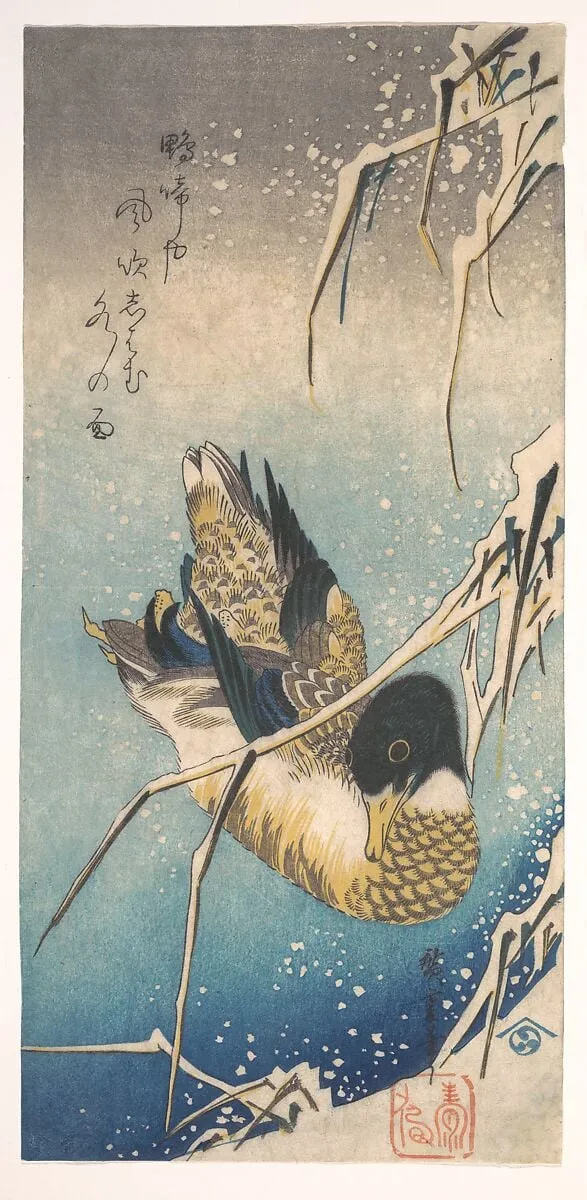
歌川広重画 雪中芦に鴨|Mallard and Snow-covered Reeds is an ink print by the Romanticist artist Utagawa Hiroshige. It dates from 1843 and is held in the collection of the Metropolitan Museum of Art.
About this work
Overview
Executed in ink and color on paper, it belongs to a series of nature-focused works that diverged from the urban and theatrical themes common in ukiyo-e.
Created around 1843, this woodblock print by Utagawa Hiroshige presents a solitary mallard resting among reeds blanketed in snow. Executed in ink and color on paper, it belongs to a series of nature-focused works that diverged from the urban and theatrical themes common in ukiyo-e. Hiroshige’s attention to seasonal atmosphere and quiet observation marks a shift toward lyrical landscape representation in Japanese printmaking.
Subject & Meaning
The print centers on a mallard, its white-and-dark plumage rendered with subtle detail, perched on a slender reed amid a wintry landscape. The bird’s stillness and the falling snow evoke a sense of solitude and transient beauty. Rather than dramatizing action, Hiroshige emphasizes the quiet harmony between creature and environment, reflecting a contemplative engagement with nature’s subtle rhythms.
Technique & Style
Hiroshige employed bold, simplified outlines and restrained color palettes to isolate the bird against a muted, snow-laden background. The reeds are drawn with sharp, linear precision, contrasting with the soft, layered blues and grays suggesting depth and texture in the snow. Fine lines indicate falling flakes, while minimal shading enhances the print’s atmospheric stillness, characteristic of his mature landscape style.
History & Provenance
This print emerged during Hiroshige’s most productive period, following the success of his *Fifty-three Stations of the Tōkaidō* and preceding his *One Hundred Famous Views of Edo*. Though not part of a named series, it aligns with his growing interest in intimate natural scenes. Its survival in private and institutional collections attests to its enduring appeal among collectors of Edo-period prints.
Context
In the 1840s, ukiyo-e artists increasingly turned from bustling city life to the contemplative beauty of nature. Hiroshige’s focus on seasonal change and quiet moments resonated with literary traditions of waka poetry and Zen aesthetics. This print reflects a broader cultural shift toward appreciating impermanence and understated elegance, distinguishing his work from the more commercial themes of his contemporaries.
Legacy
Hiroshige’s winter scenes, including this print, influenced later Japanese and Western artists by demonstrating how emotional depth could be conveyed through minimalism and atmospheric detail. His approach to landscape as a vehicle for mood, rather than mere topography, helped redefine the possibilities of woodblock printing and contributed to the global appreciation of Japanese art in the 19th century.
Artist & collection
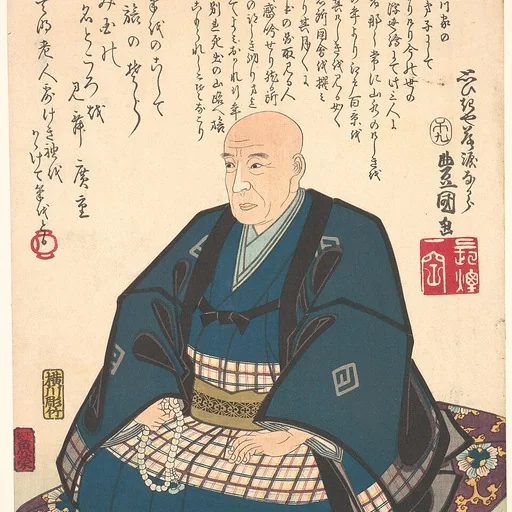
Artist
Utagawa Hiroshige (歌川 広重) or Andō Hiroshige (安藤 広重), born Andō Tokutarō (安藤 徳太郎; 1797 – 12 October 1858), was a Japanese ukiyo-e artist, considered the last great master of that tradition.

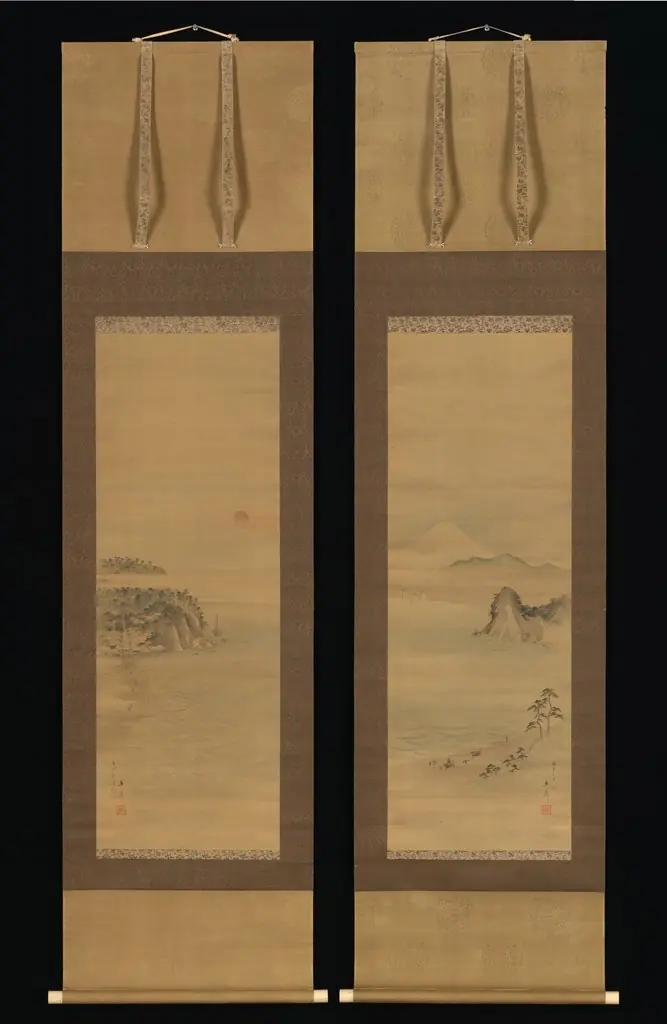
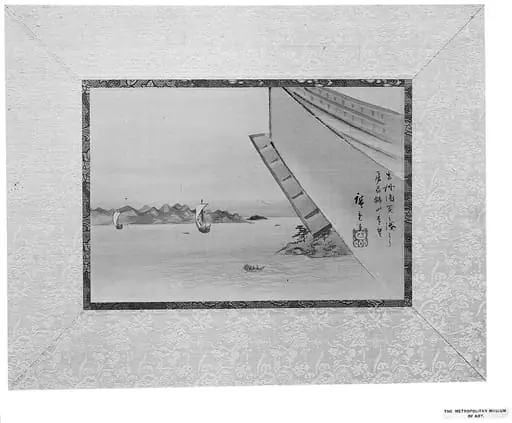
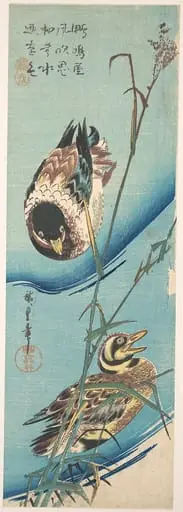 歌川広重画 雪中芦に鴨|Mallard Ducks and Snow-covered Reeds
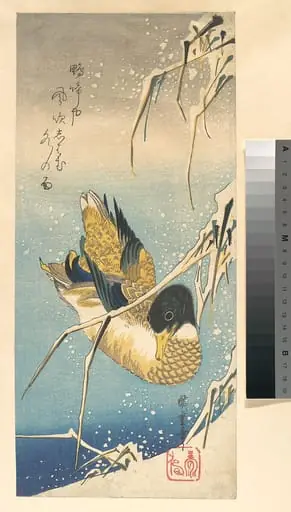 歌川広重画 雪中芦に鴨|Mallard Duck and Snow-covered Reeds
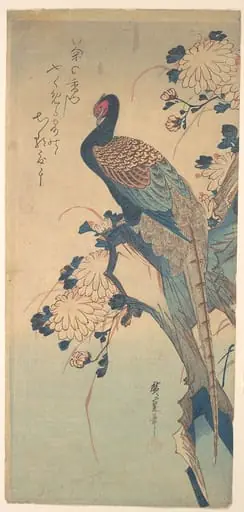 歌川広重画 菊に雉|Pheasant with Chrysanthemums
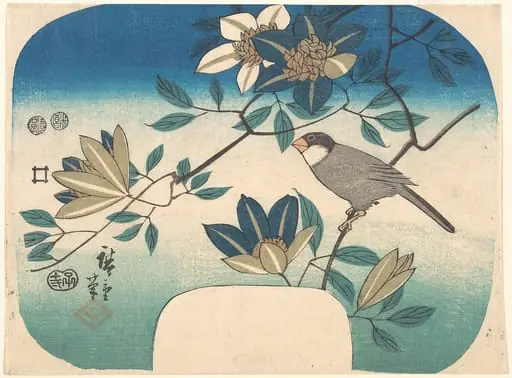 歌川広重画 鉄線花に鳥|Clematis and Bird
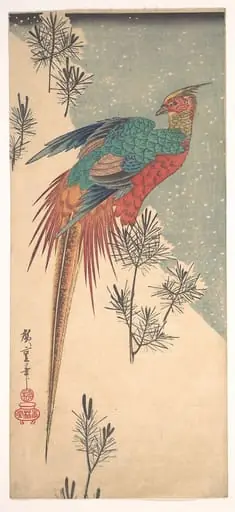 歌川広重画 雪中小松に錦雉|Golden Pheasant and Pine Shoots in Snow
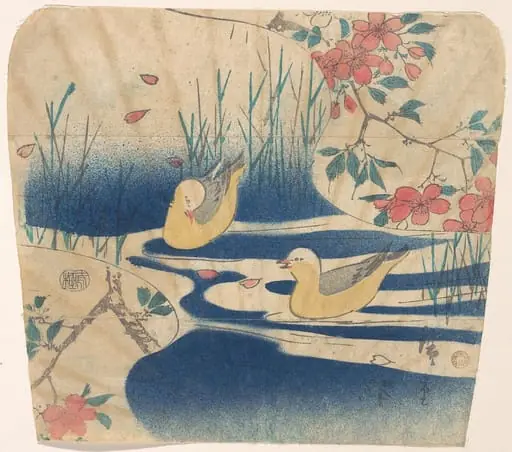 歌川広重画 桜花に都鳥|Hooded Gulls and Cherry Blossoms
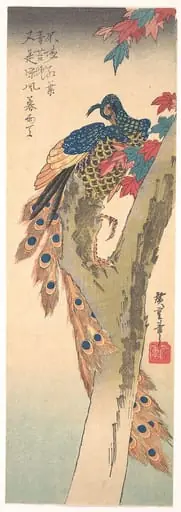 歌川広重画 楓に孔雀|A Peacock Perched on a Maple Tree
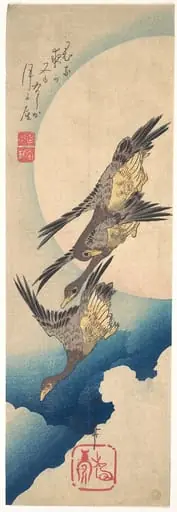 歌川広重画 月に雁|Wild Geese Flying under the Full Moon
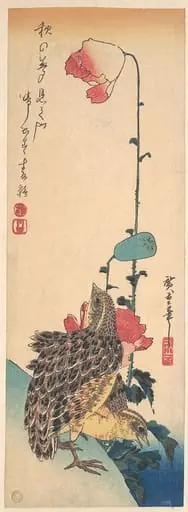 歌川広重画 罌栗に鶉|A Pair of Quails and Poppies
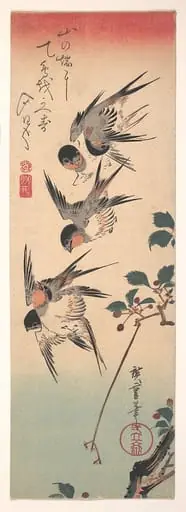 歌川広重画 山桜に燕|Swallows and Budding Wild Cherry