Artwork
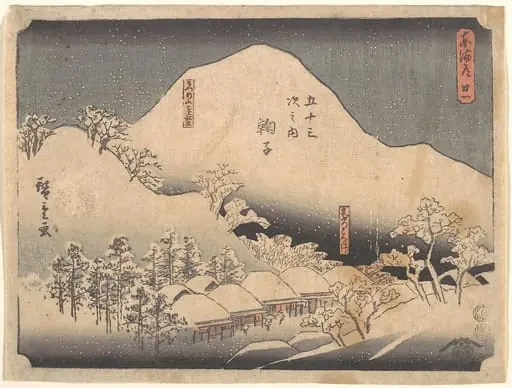
東海道五十三次 鞠子|Mariko, from the series Tokaidō (popularly known as the Reisho Tokaidō)
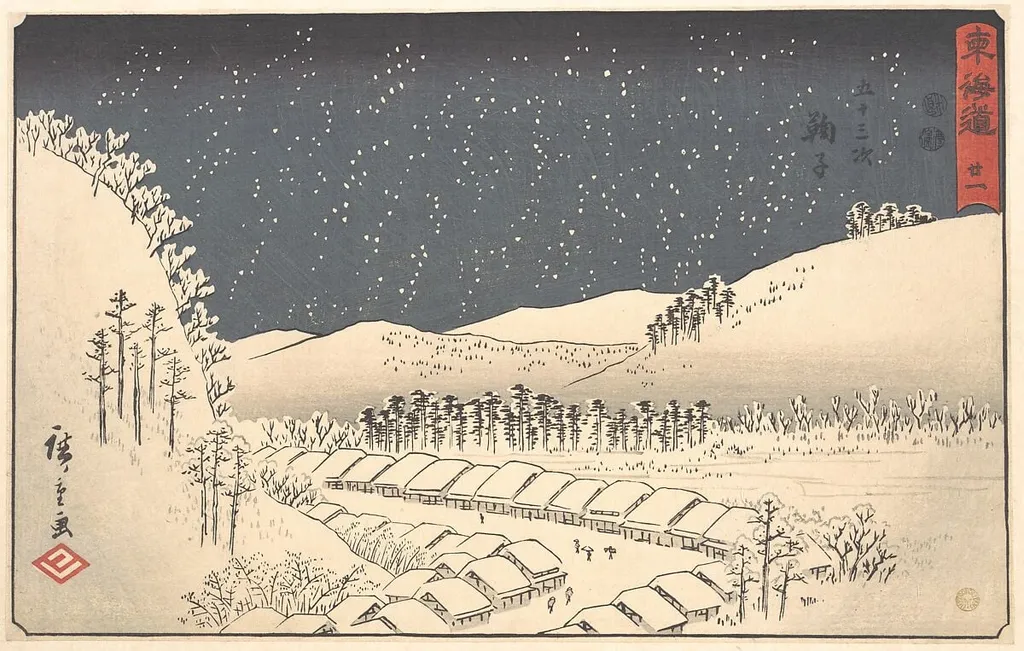
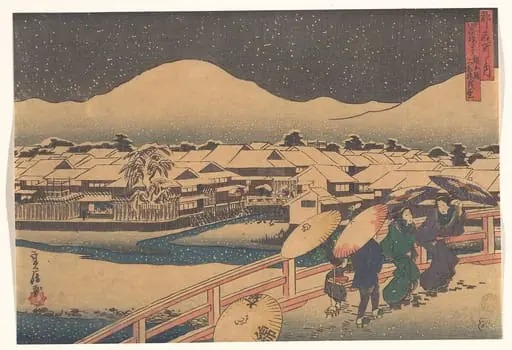
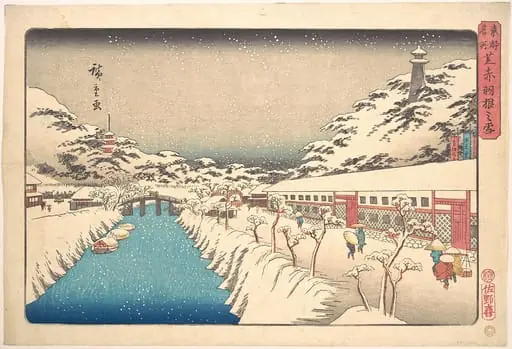
東海道五十三次 鞠子|Mariko, from the series Tokaidō (popularly known as the Reisho Tokaidō) is an ink print by the Romanticist artist Utagawa Hiroshige. It dates from 1840 and is held in the collection of the Metropolitan Museum of Art.
About this work
Overview
This woodblock print, Mariko, from the series Tokaidō, was created by Utagawa Hiroshige around 1840. It is part of a series depicting the fifty-three stations along the historic Tōkaidō road.
Subject & Meaning
The print depicts a serene snowy village scene at night, with houses and bare trees under a starry sky. A red banner with Japanese writing is visible on the right, possibly indicating the location.
Technique & Style
Hiroshige employed simple lines and soft colors to convey a sense of calm. The use of ink and color on paper captures the falling snow and the quiet atmosphere of the village.
Context
As a leading ukiyo-e artist of the late Edo period, Hiroshige focused on landscapes and scenes outside the traditional subjects of urban entertainment, expanding the genre's scope.
Artist & collection
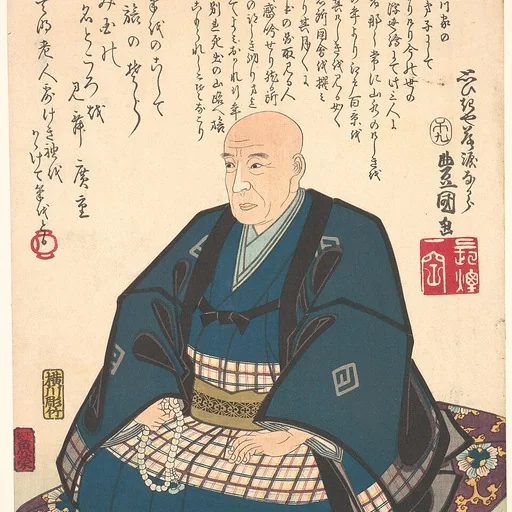
Artist
Utagawa Hiroshige (歌川 広重) or Andō Hiroshige (安藤 広重), born Andō Tokutarō (安藤 徳太郎; 1797 – 12 October 1858), was a Japanese ukiyo-e artist, considered the last great master of that tradition.

 Untitled
 Untitled
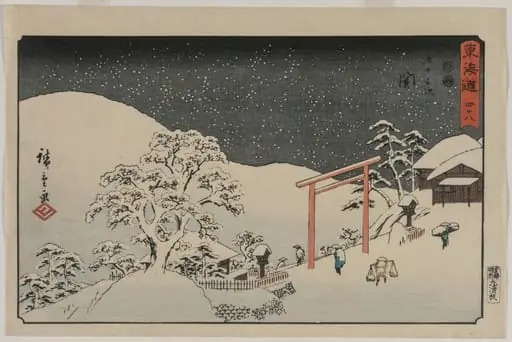 Seki, from the series The Fifty-Three Stations of the Tōkaidō
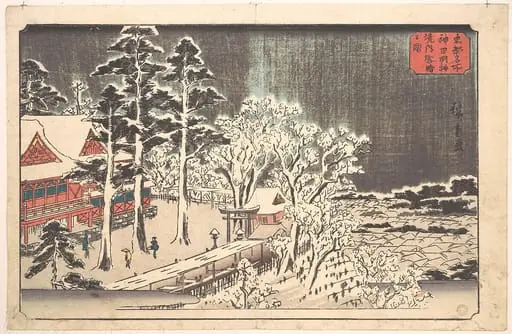 東都名所 神田明神境内雪晴之図|“Clear Weather after Snow in the Precincts of the Kanda Myōjin Shrine” (Kanda Myōjin keidai yukibare no zu), from the series Famous Places in the Eastern Capital (Tōto meisho)
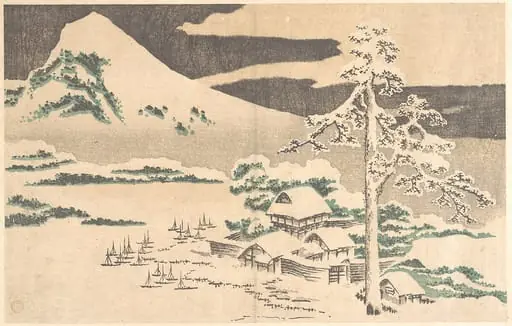 Untitled
 Untitled
 東都名所 芝赤羽根之雪|Shiba, Akabane no Yuki