Artwork
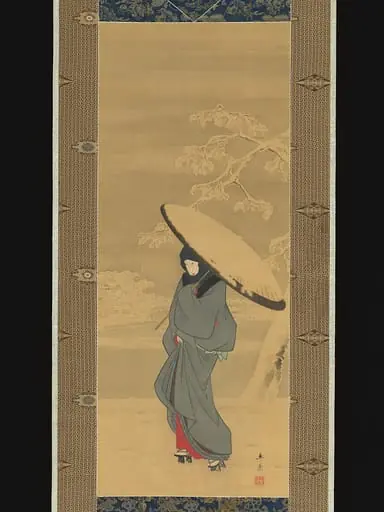
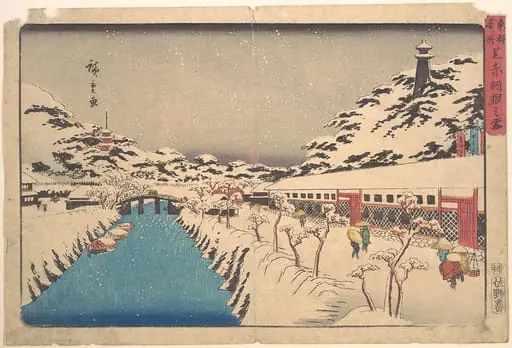
東都名所 芝赤羽根之雪|Shiba, Akabane no Yuki
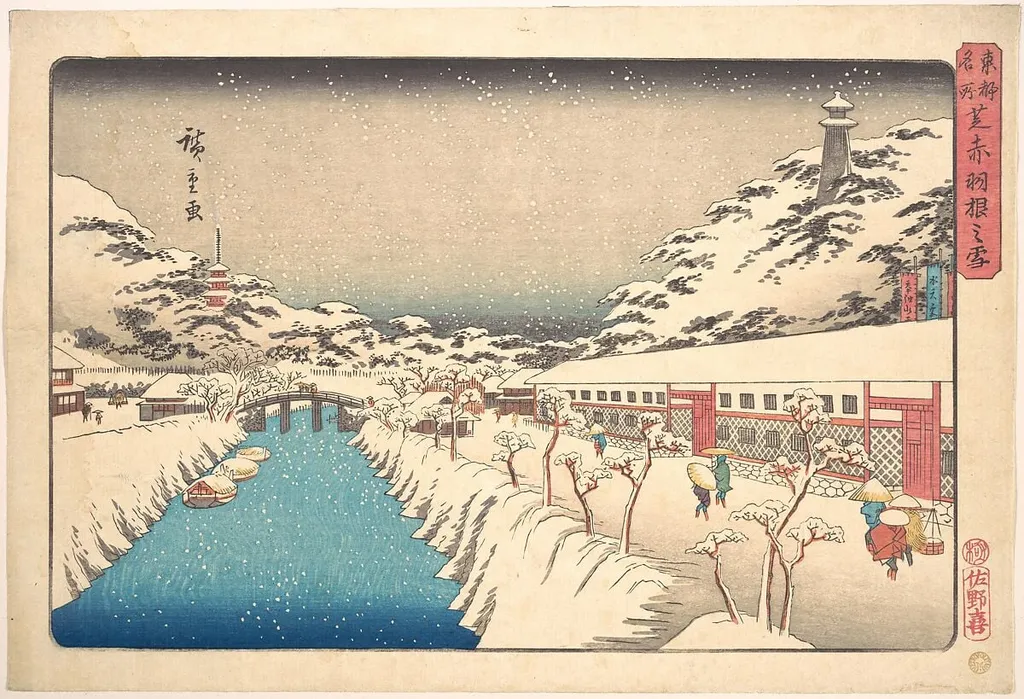
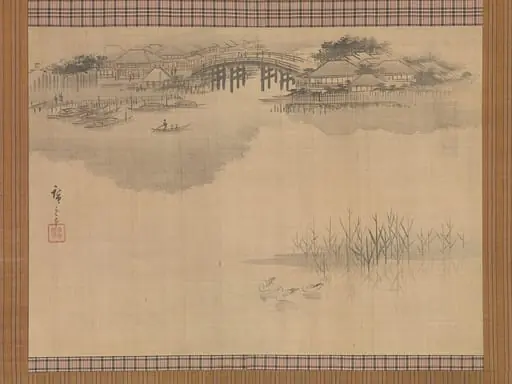
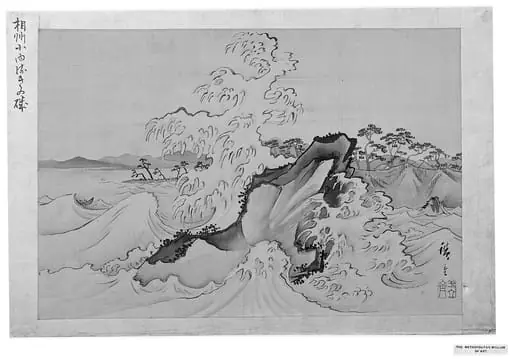
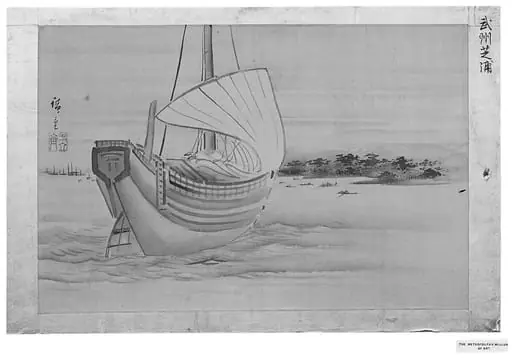
東都名所 芝赤羽根之雪|Shiba, Akabane no Yuki is an ink print by the Romanticist artist Utagawa Hiroshige. It dates from 1837 and is held in the collection of the Metropolitan Museum of Art.
About this work
Overview
Created around 1837, this woodblock print by Utagawa Hiroshige is part of his broader exploration of Edo’s landscapes beyond urban nightlife.
Created around 1837, this woodblock print by Utagawa Hiroshige is part of his broader exploration of Edo’s landscapes beyond urban nightlife. It captures a quiet winter scene in the Shiba and Akabane districts, where snow settles over residential areas and natural features. Unlike many ukiyo-e works centered on actors or courtesans, this piece emphasizes atmosphere and place, reflecting Hiroshige’s growing interest in seasonal change and topography.
Subject & Meaning
The scene depicts a snow-covered river flanked by a wooden bridge and clustered buildings, with figures moving along paths and rooftops dusted in white. A distant tower rises beside rolling hills, anchoring the composition in a recognizable part of Edo. The quiet activity suggests daily life continuing through winter, not as spectacle but as routine. The falling snow and muted tones convey stillness, evoking the transient, contemplative mood associated with seasonal shifts in Japanese aesthetics.
Technique & Style
Hiroshige employed fine woodblock carving to render delicate snowflakes and layered textures in clothing and architecture. Subtle gradations of gray ink suggest overcast skies, while minimal color—likely pale blues and whites—enhances the chill without overwhelming the scene. His use of perspective, with receding hills and a low horizon, creates depth without Western linear techniques, relying instead on atmospheric recession and spatial layering typical of Edo-period landscape prints.
History & Provenance
The print was produced during Hiroshige’s early period of landscape-focused work, preceding his famous *One Hundred Famous Views of Edo* series. It likely circulated as a single-sheet print, popular among Edo’s middle class who collected scenes of familiar locales. While exact early ownership records are sparse, similar prints from this era were widely distributed, contributing to Hiroshige’s reputation as a chronicler of the city’s changing seasons and neighborhoods.
Context
In the 1830s, Edo’s population was growing, and urban dwellers sought visual connections to their surroundings beyond the pleasure quarters. Hiroshige’s focus on outlying districts like Shiba and Akabane reflected a broader cultural interest in local topography and seasonal rhythms. This print aligns with a shift in ukiyo-e from entertainment to introspection, mirroring the era’s literary and artistic trends that valued quiet observation over bold drama.
Legacy
This work exemplifies Hiroshige’s role in redefining ukiyo-e as a medium for landscape and mood rather than celebrity. His emphasis on weather, light, and place influenced later Japanese artists and, through exports, European Impressionists. Though less celebrated than his later series, prints like this one laid the groundwork for a new visual language—one that found poetry in ordinary, wintry moments of the city.
Artist & collection
Artist
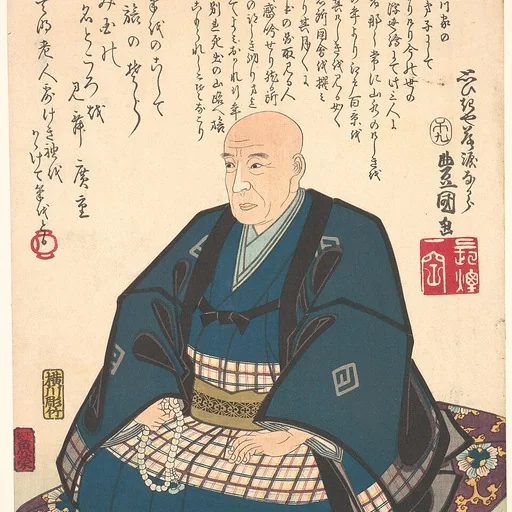
Utagawa Hiroshige (歌川 広重) or Andō Hiroshige (安藤 広重), born Andō Tokutarō (安藤 徳太郎; 1797 – 12 October 1858), was a Japanese ukiyo-e artist, considered the last great master of that tradition.

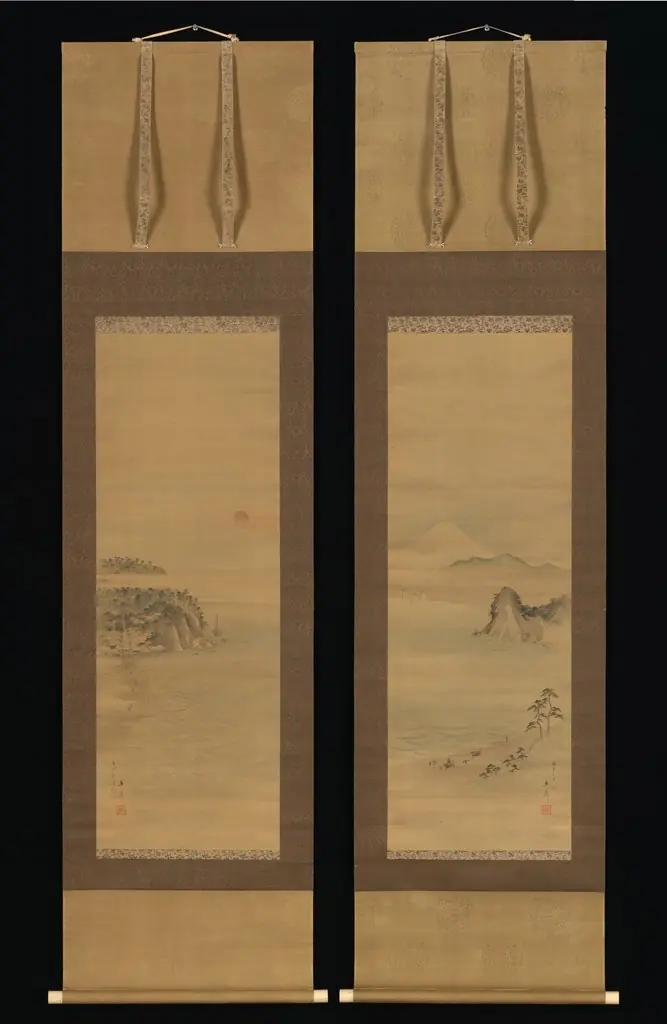
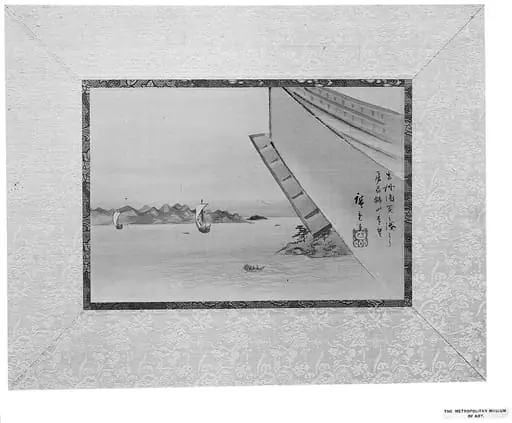
 Atagoshita Yabu-Kōji|東都名所 芝赤羽根之雪|Winter Landscape
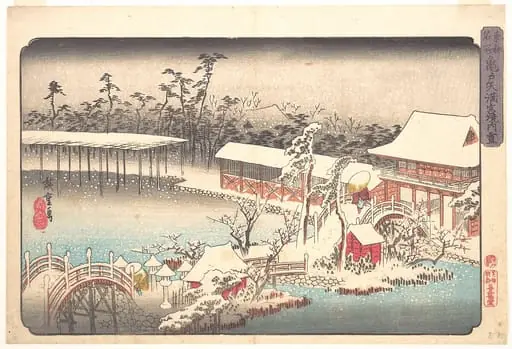 Kameido Tenmangu keidai no yuki|東都名所 亀戸天満宮境内雪|Tenmangū Shrine at Kameido in Snow
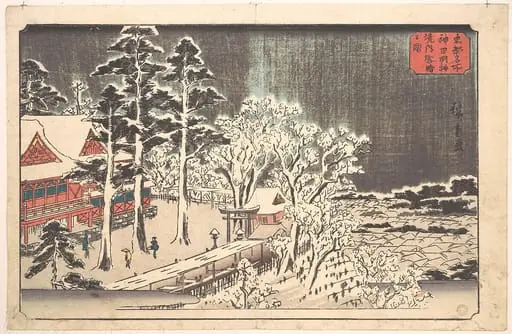 東都名所 神田明神境内雪晴之図|“Clear Weather after Snow in the Precincts of the Kanda Myōjin Shrine” (Kanda Myōjin keidai yukibare no zu), from the series Famous Places in the Eastern Capital (Tōto meisho)
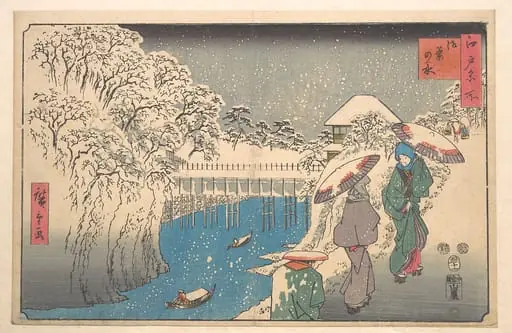 江戸名所 御茶之水|Ochanomizu
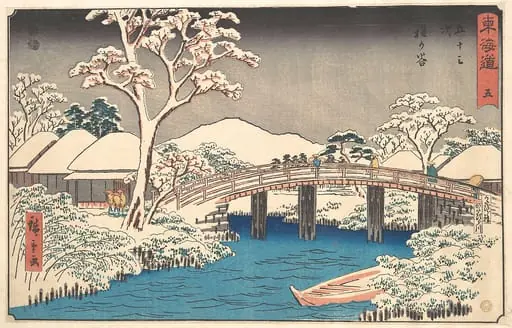 東海道五十三次 程ヶ谷 かたびら橋 かたびら川|Hodogaya
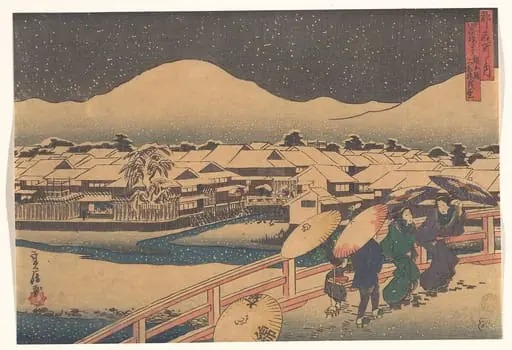 Untitled