Artwork
東海道五十三次 宮 七里の渡し 熱田鳥居 寝覚の里|Miya
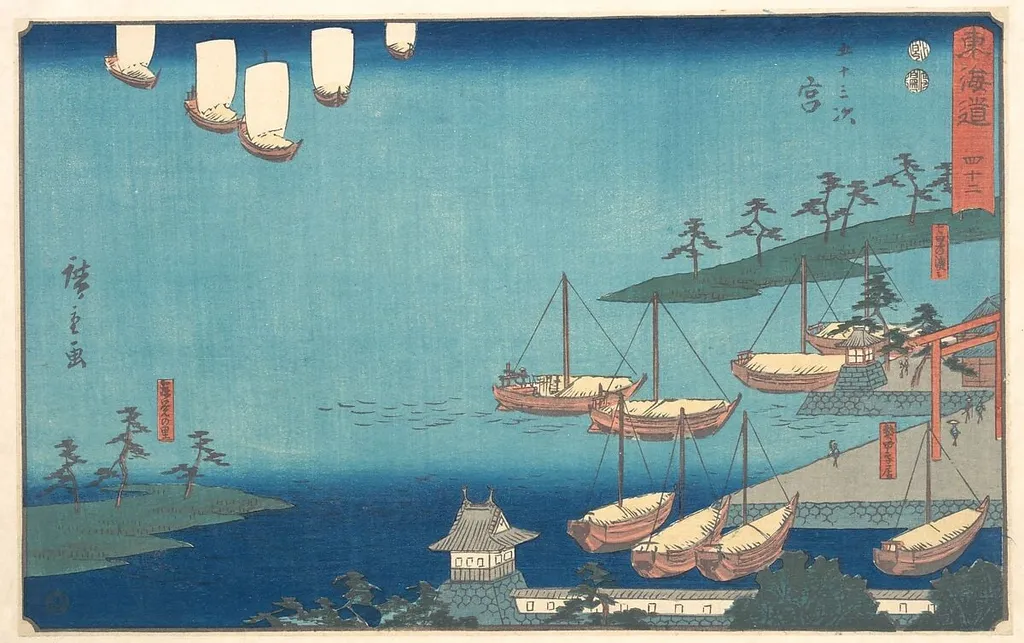
東海道五十三次 宮 七里の渡し 熱田鳥居 寝覚の里|Miya is an ink print by the Romanticist artist Utagawa Hiroshige. It dates from 1840 and is held in the collection of the Metropolitan Museum of Art.
About this work
Overview
Created around 1840 by Utagawa Hiroshige, this woodblock print forms part of his extensive series illustrating the fifty-three post stations along the Tōkaidō, the principal highway linking Edo and Kyoto. The image captures a quiet coastal scene, emphasizing the interplay of sea, sky, and modest architecture, and exemplifies Hiroshige’s shift toward landscape subjects within the ukiyo‑e tradition.
Subject & Meaning
The composition presents a calm shoreline where a line of small vessels drifts on gentle blue water, some bearing sails, others occupied by figures. To the right, a low stone wall and a tiled-roof building anchor the scene, suggesting a modest harbor settlement. The tranquil atmosphere invites contemplation of everyday travel and the natural environment that framed Edo‑period journeys.
Technique & Style
Executed with traditional woodblock methods, the work combines black ink outlines with layered pigments to render subtle gradients of blue and muted earth tones. Hiroshige’s handling of perspective—flattened depth with a broad sky and distant horizon—creates a sense of spaciousness, while the delicate rendering of clouds and water surface reflects his skill in conveying atmospheric conditions.
History & Provenance
The print was produced as a commercial illustration for the popular Tōkaidō series, which circulated widely among travelers and urban collectors during the late Edo period. Original impressions were distributed in Japan and later entered European collections in the late 19th century, contributing to the growing Western interest in Japanese prints.
Context
During the early 19th century, the Tōkaidō road served as a vital conduit for commerce and communication. Hiroshige’s series documented each station’s distinctive landscape, offering viewers a visual itinerary of the route. This particular view reflects the coastal character of the Miya area, highlighting the everyday life of fishermen and travelers along the sea‑facing segment of the highway.
Artist & collection
Artist
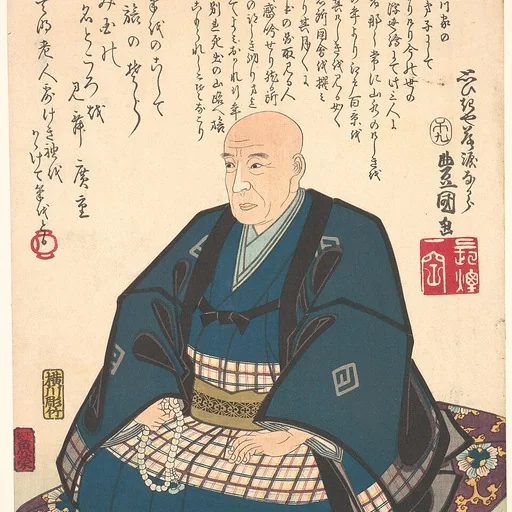
Utagawa Hiroshige (歌川 広重) or Andō Hiroshige (安藤 広重), born Andō Tokutarō (安藤 徳太郎; 1797 – 12 October 1858), was a Japanese ukiyo-e artist, considered the last great master of that tradition.

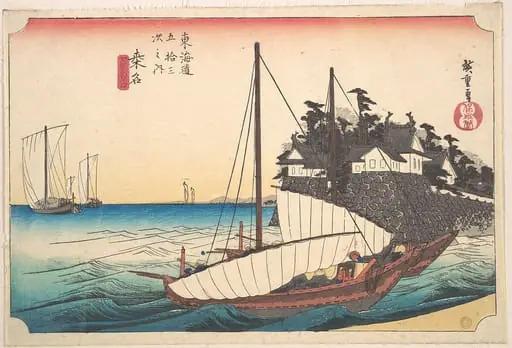 東海道五十三次之内 桑名 七里渡口|Kuwana, Shichi-Ri Watashi Guchi
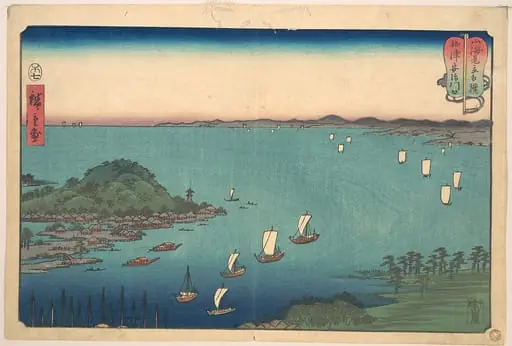 山海見立相撲 摂津安治川口|The Harbor of Ajikawa, Settsu Province
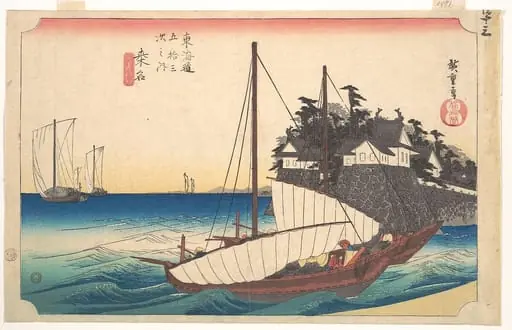 東海道五十三次之内 桑名 七里渡口|Station Forty-Three: Kuwana, Seven-Ri Ferry at the Port, from the Fifty-Three Stations of the Tokaido
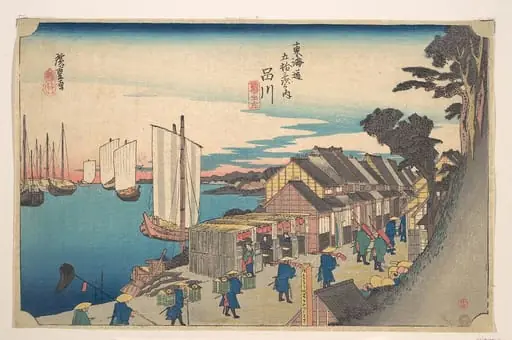 東海道五十三次之内 品川 諸侯出立|Shinagawa; Shoko Detachi
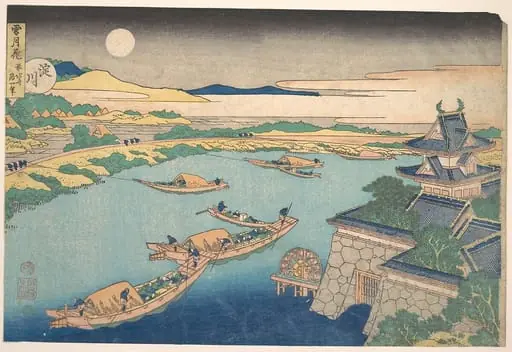 雪月花 淀川|Moonlight on the Yodo River (Yodogawa), from the series Snow, Moon, and Flowers (Setsugekka)
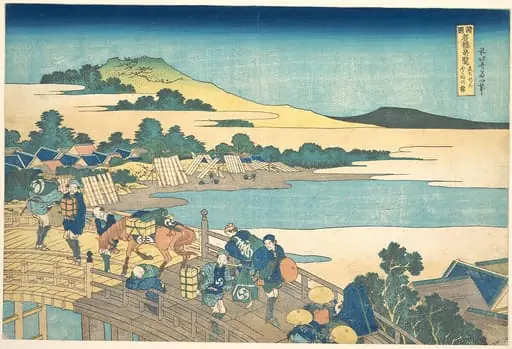 諸國名橋奇覧 ゑちぜんふくゐの橋|Fukui Bridge in Echizen Province (Echizen Fukui no hashi), from the series Remarkable Views of Bridges in Various Provinces (Shokoku meikyō kiran)
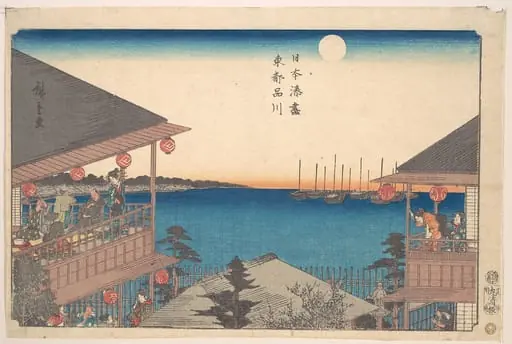 日本湊尽 東都品川|Toto, Shinagawa