Artwork
東海道五十三次之内 桑名 七里渡口|Kuwana, Shichi-Ri Watashi Guchi
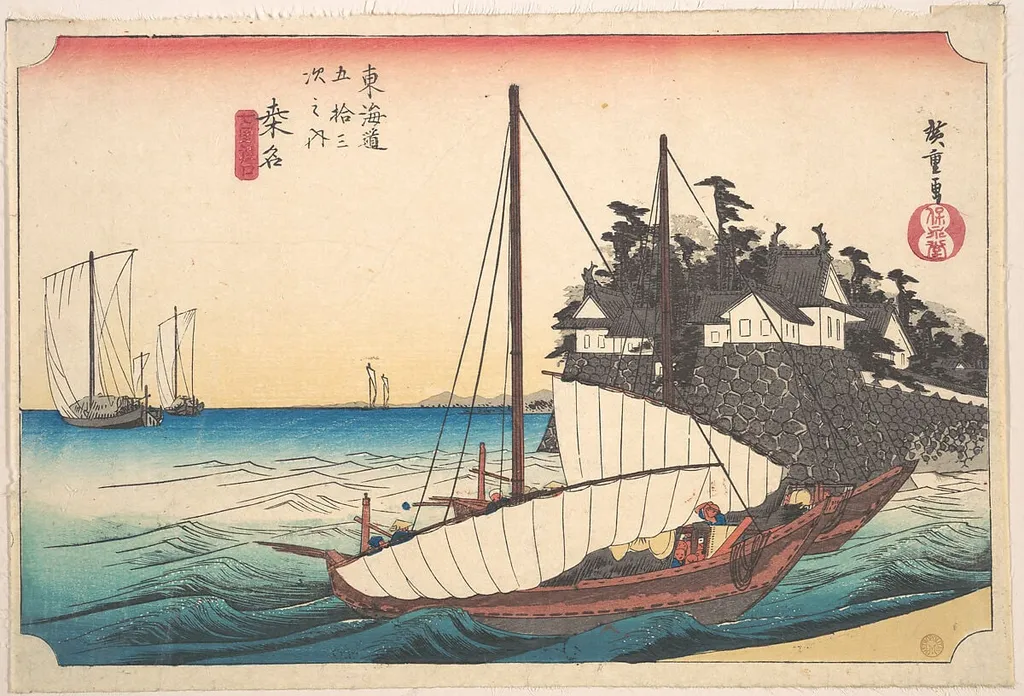
東海道五十三次之内 桑名 七里渡口|Kuwana, Shichi-Ri Watashi Guchi is an ink print by the Romanticist artist Utagawa Hiroshige. It dates from 1834 and is held in the collection of the Metropolitan Museum of Art.
About this work
Overview
This woodblock print, 'Kuwana, Shichi-Ri Watashi Guchi', is part of Utagawa Hiroshige's 'The Fifty-three Stations of the Tōkaidō' series, created around 1834. It depicts a riverside scene at Kuwana, featuring travelers and the surrounding landscape.
Subject & Meaning
The print shows a busy waterway with three boats and a rocky shore with buildings and trees. The scene likely represents a ferry crossing, capturing the activity and atmosphere of a key stop along the Tōkaidō road that connected Edo to Kyoto.
Technique & Style
Hiroshige used bold outlines and simple colors to convey the scene's energy. The composition is characterized by wavy blue and white lines in the water and a light sky, creating a clear and lively depiction of the riverside crossing.
Artist & collection
Artist
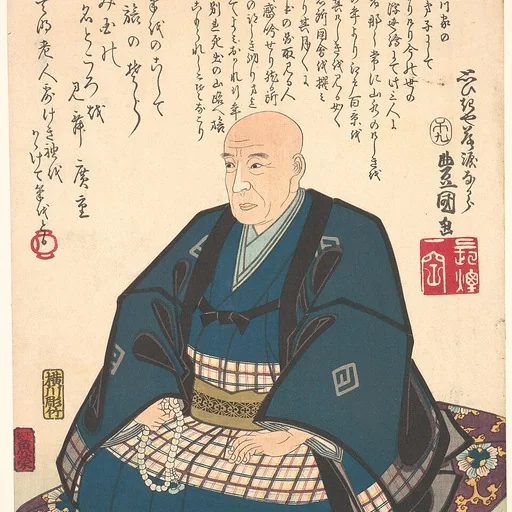
Utagawa Hiroshige (歌川 広重) or Andō Hiroshige (安藤 広重), born Andō Tokutarō (安藤 徳太郎; 1797 – 12 October 1858), was a Japanese ukiyo-e artist, considered the last great master of that tradition.

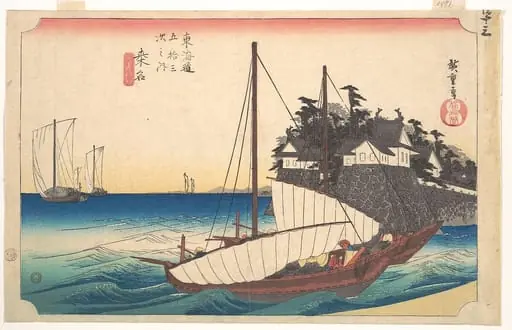 東海道五十三次之内 桑名 七里渡口|Station Forty-Three: Kuwana, Seven-Ri Ferry at the Port, from the Fifty-Three Stations of the Tokaido
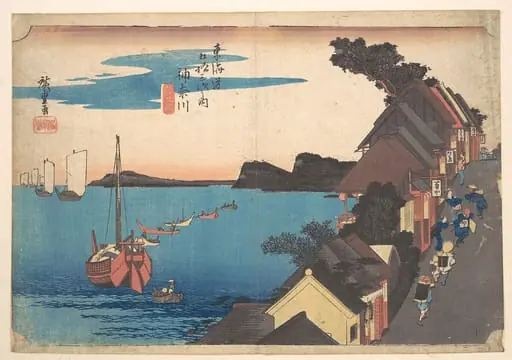 東海道五十三次之内 神奈川 台之景|View of Kangawa at Sunset
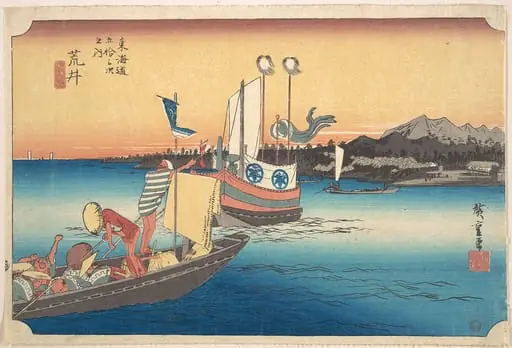 東海道五十三次之内 荒井 渡舟の図|Arai, Tosen
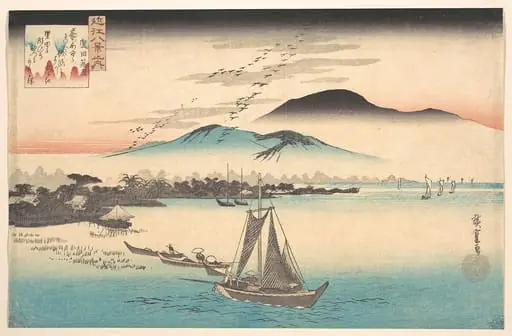 近江八景之内 堅田落雁|Geese Flying Down to Katada
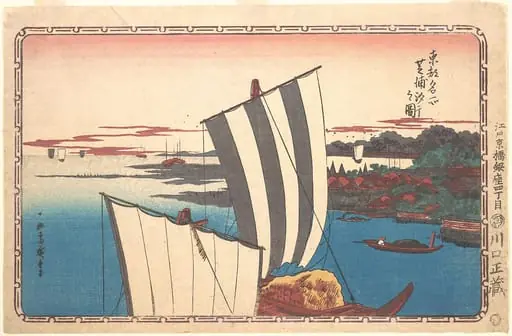 Shibaura, shiohi-gari no zu|東都名所 芝浦汐干之図|Shell Gathering at Shibaura
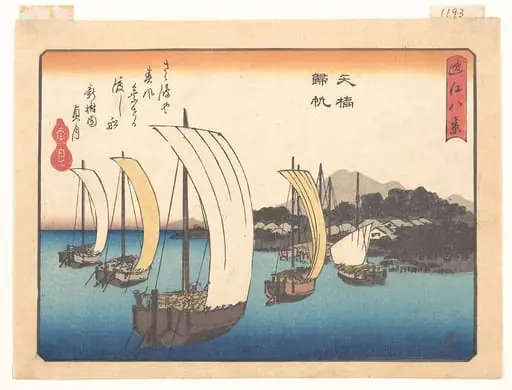 歌川広重画 「近江八景 矢橋帰帆」|Returning Fishing Boats at Yabase, from the series Eight Views of Ōmi (Ōmi hakkei)
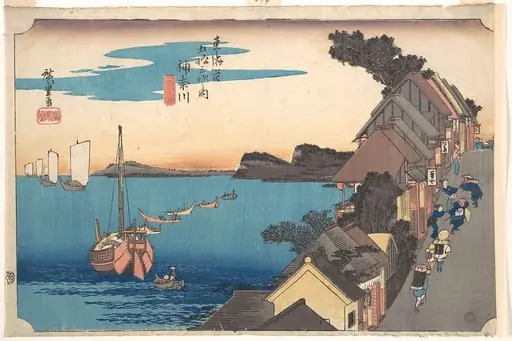 東海道五十三次之内 神奈川 宿台之景|View of the Kanagawa station at sunset