Artwork
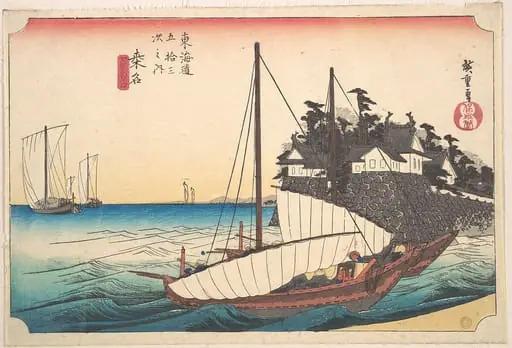
東海道五十三次之内 桑名 七里渡口|Station Forty-Three: Kuwana, Seven-Ri Ferry at the Port, from the Fifty-Three Stations of the Tokaido
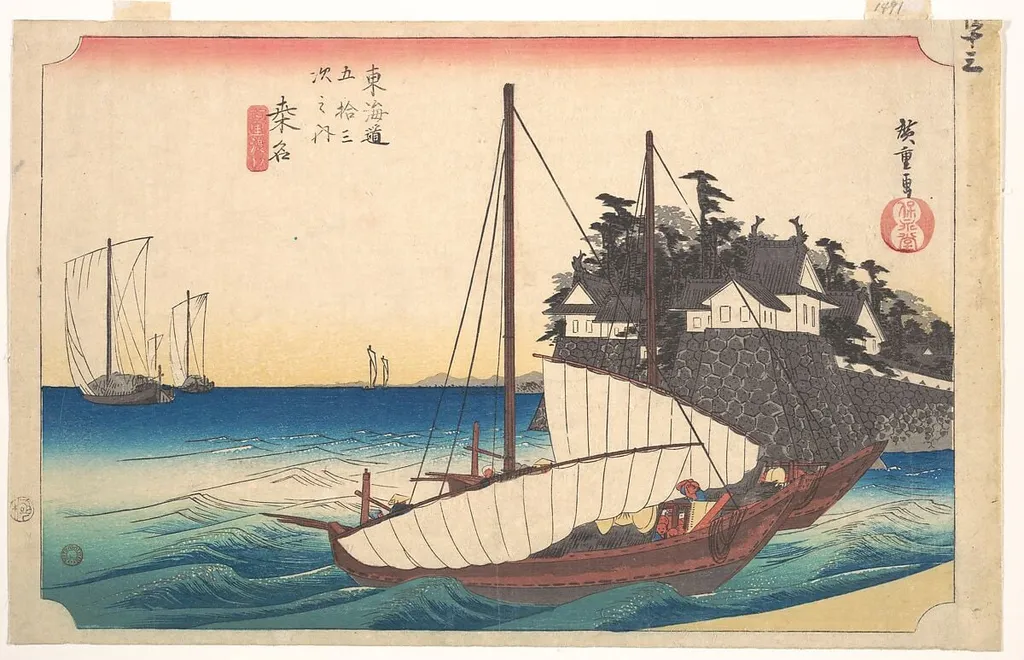
東海道五十三次之内 桑名 七里渡口|Station Forty-Three: Kuwana, Seven-Ri Ferry at the Port, from the Fifty-Three Stations of the Tokaido is an ink print by the Romanticist artist Utagawa Hiroshige. It dates from 1834 and is held in the collection of the Metropolitan Museum of Art.
About this work
Overview
Rendered in ink and color on paper, the work follows the horizontal format typical of the series.
Created around 1834 by Utagawa Hiroshige, this woodblock print is the forty-third in a series depicting the fifty-three post stations along the Tōkaidō, the primary road connecting Edo and Kyoto. Rendered in ink and color on paper, the work follows the horizontal format typical of the series. It captures a quiet moment of transit at Kuwana, where travelers cross a narrow coastal channel by ferry, reflecting the rhythm of daily travel during Japan’s Edo period.
Subject & Meaning
The scene centers on a crowded ferry crossing a shallow inlet, with two smaller vessels drifting nearby and a cluster of buildings nestled behind a line of dark trees. The ferry, laden with indistinct passengers, suggests the routine movement of people along the route. The calm water and muted sky convey a sense of quiet transit rather than drama, emphasizing the ordinary yet essential nature of travel in a society bound by road networks and seasonal journeys.
Technique & Style
Hiroshige employs simplified forms and strong outlines to suggest spatial depth, with the ferry’s bulk anchoring the foreground and the distant shore receding through subtle tonal shifts. The waves are rendered with swift, fluid brushwork in blue-green hues, while the sky is left pale and open. Figures are minimized to small, stylized shapes, reinforcing the scale of the landscape over individual identity. This approach reflects Hiroshige’s signature blend of observation and poetic restraint.
History & Provenance
The print was produced during Hiroshige’s early career, as part of a commercially successful series commissioned by the publisher Hoeidō. It was one of many prints in the Fifty-Three Stations of the Tōkaidō, which helped define the ukiyo-e landscape genre. The series was widely distributed, contributing to Hiroshige’s reputation and influencing later artists both in Japan and abroad. Its survival in multiple collections attests to its enduring circulation.
Context
The Tōkaidō was the most traveled road in Edo-period Japan, used by merchants, pilgrims, and daimyō processions. Kuwana, as a key post station near the Ise Bay, served as a vital crossing point. The ferry depicted here was a practical necessity, as the waterway could not be crossed by land. Hiroshige’s focus on such functional sites marked a shift from traditional ukiyo-e themes of courtesans and actors toward the everyday rhythms of the common traveler.
Legacy
Hiroshige’s Tōkaidō series became a benchmark for landscape printmaking, influencing Western artists such as Van Gogh and Monet. His ability to convey atmosphere and movement through minimal means set a new standard for visual storytelling in woodblock prints. While not overtly political or dramatic, the series preserved a detailed record of Japan’s infrastructure and travel culture during a period of relative peace and stability.
Artist & collection
Artist
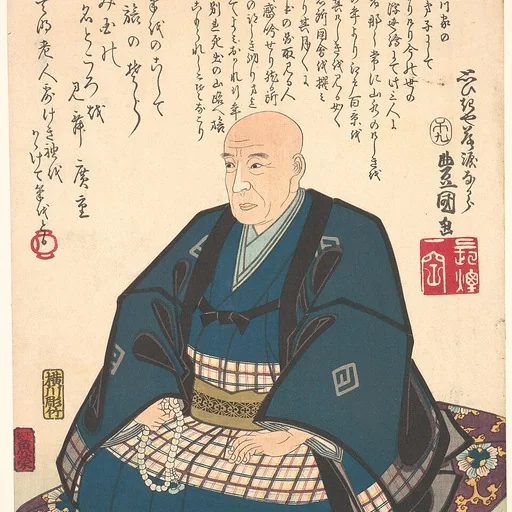
Utagawa Hiroshige (歌川 広重) or Andō Hiroshige (安藤 広重), born Andō Tokutarō (安藤 徳太郎; 1797 – 12 October 1858), was a Japanese ukiyo-e artist, considered the last great master of that tradition.